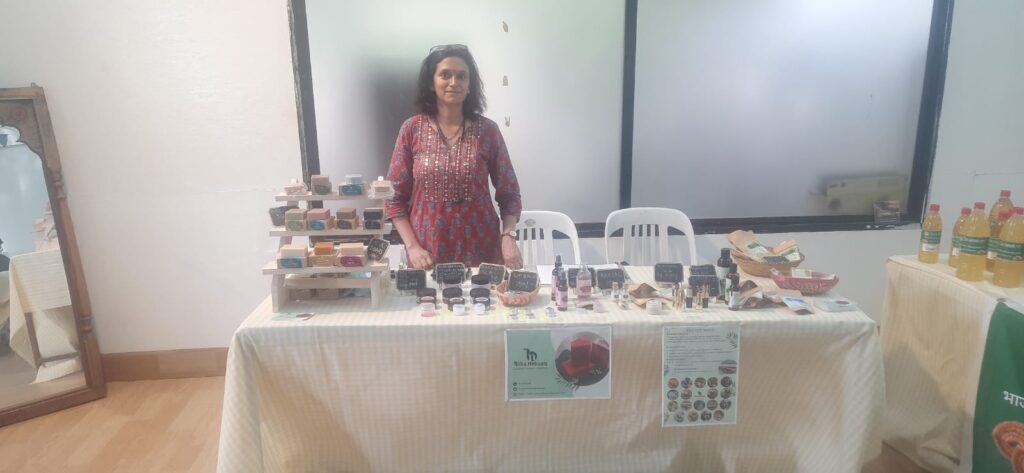
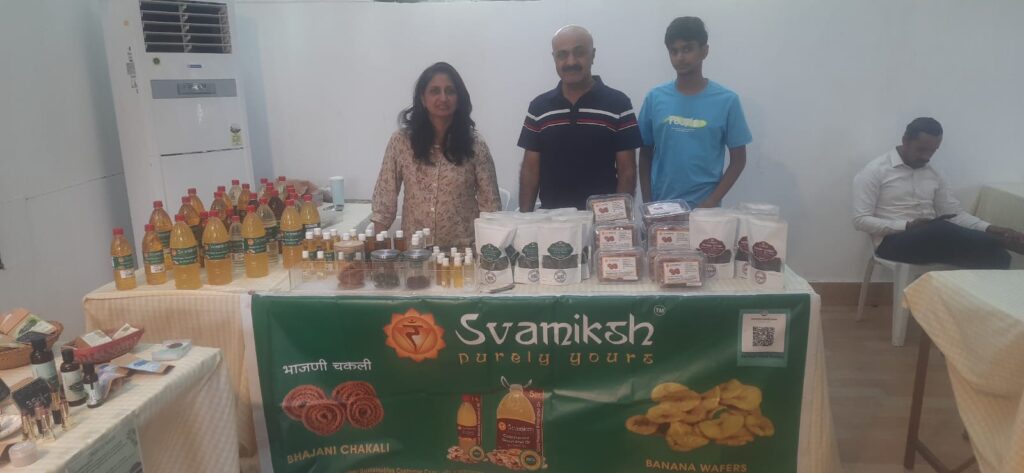
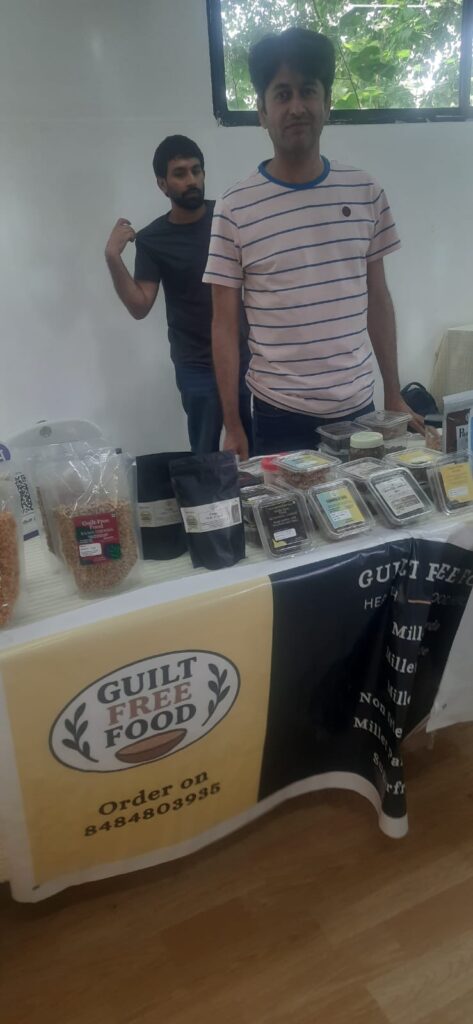
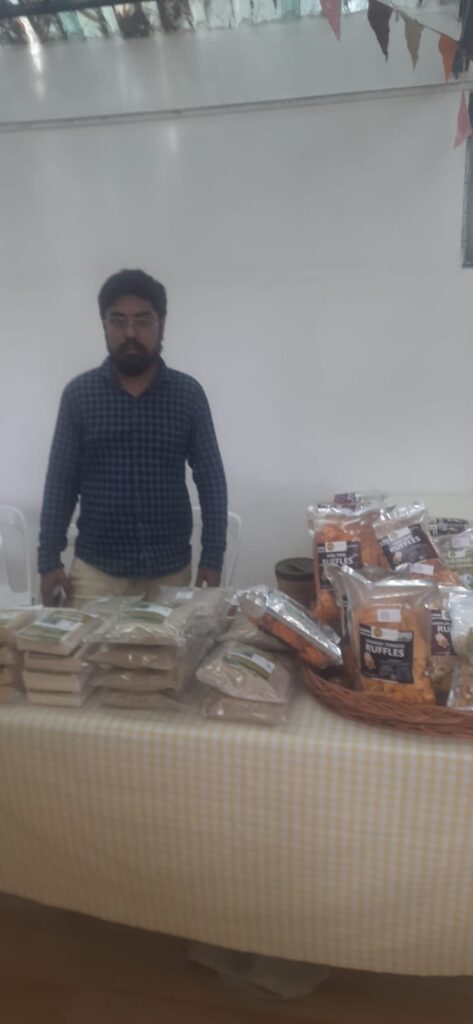
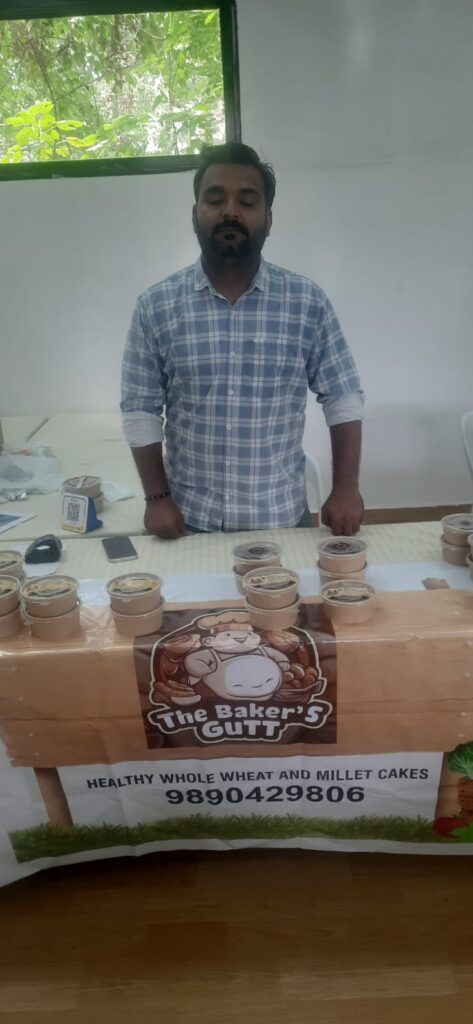
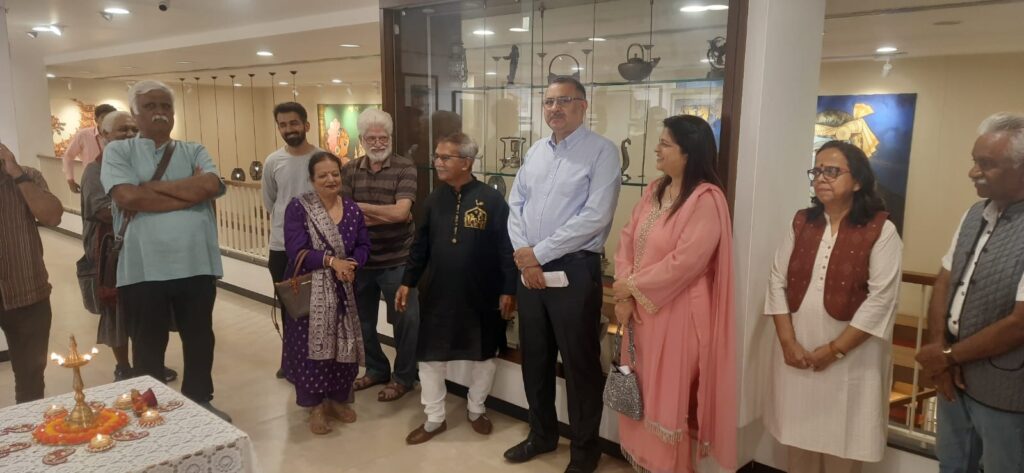
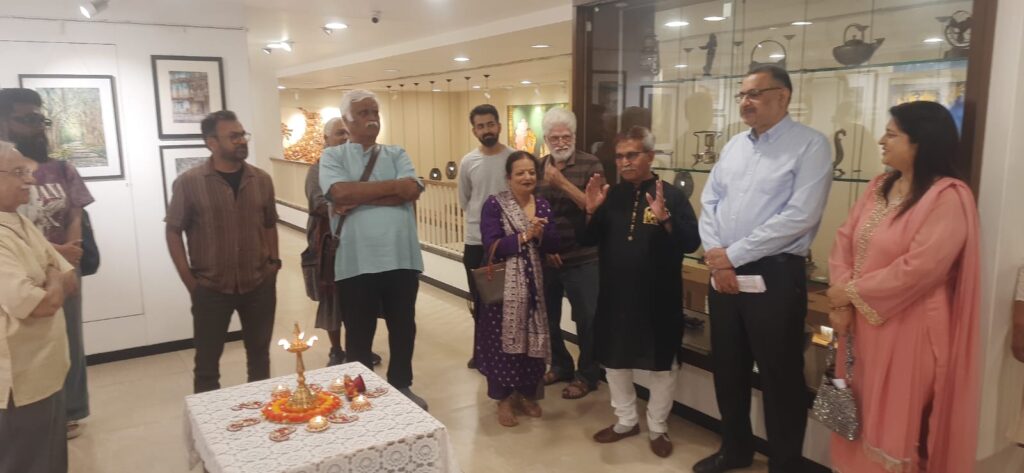
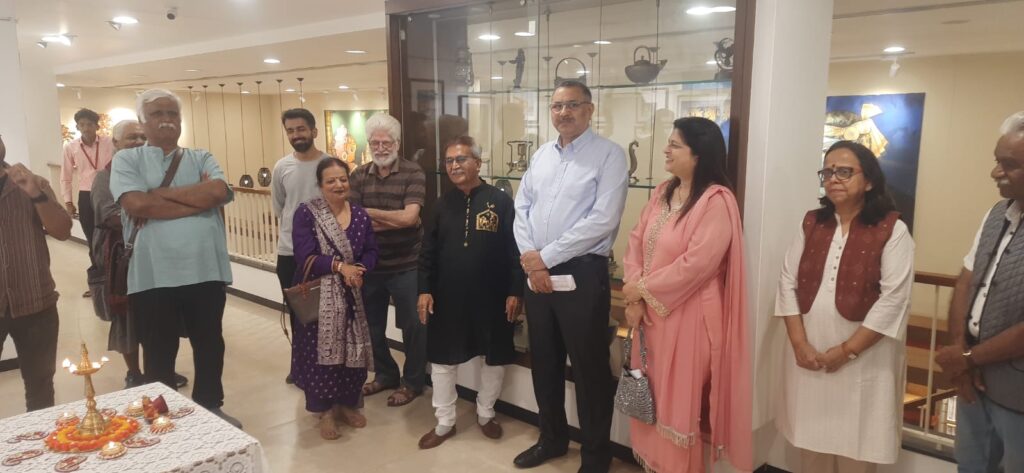
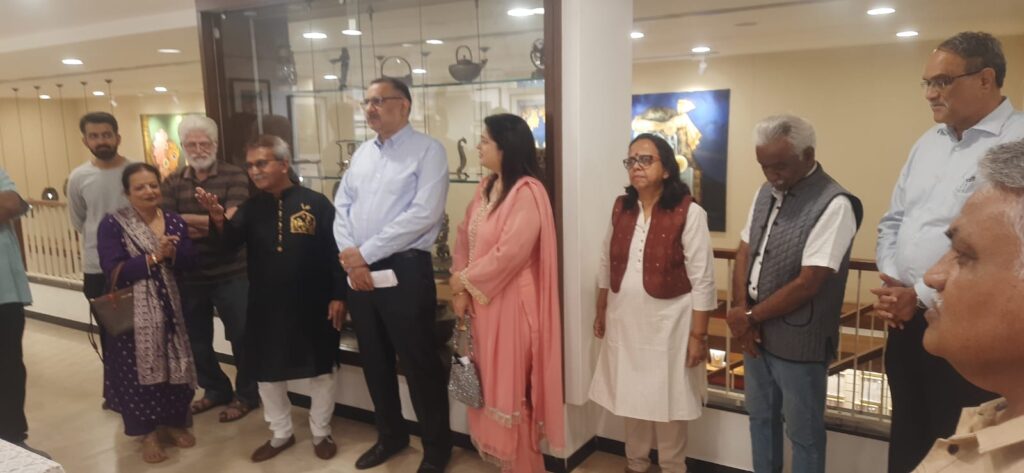
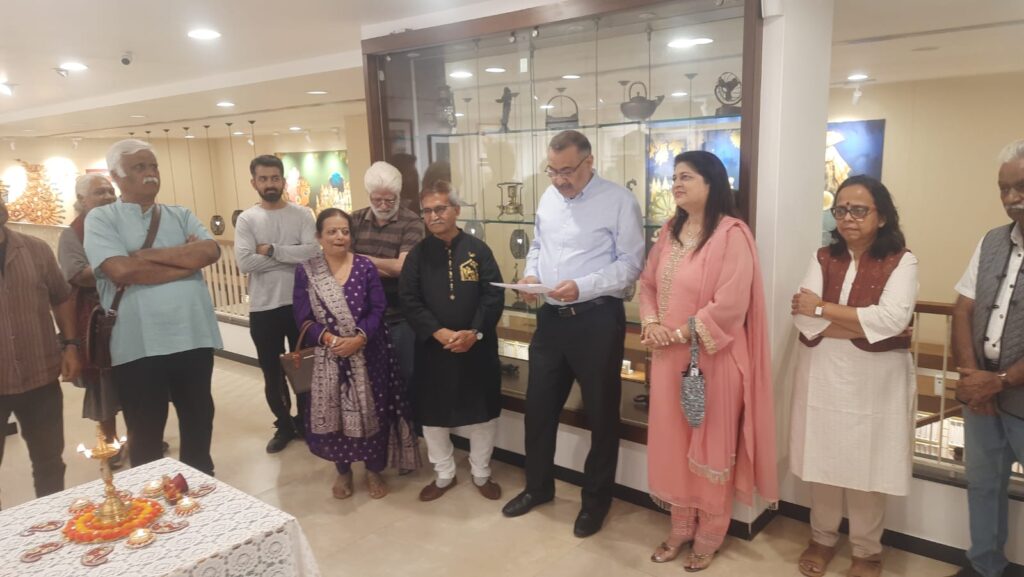
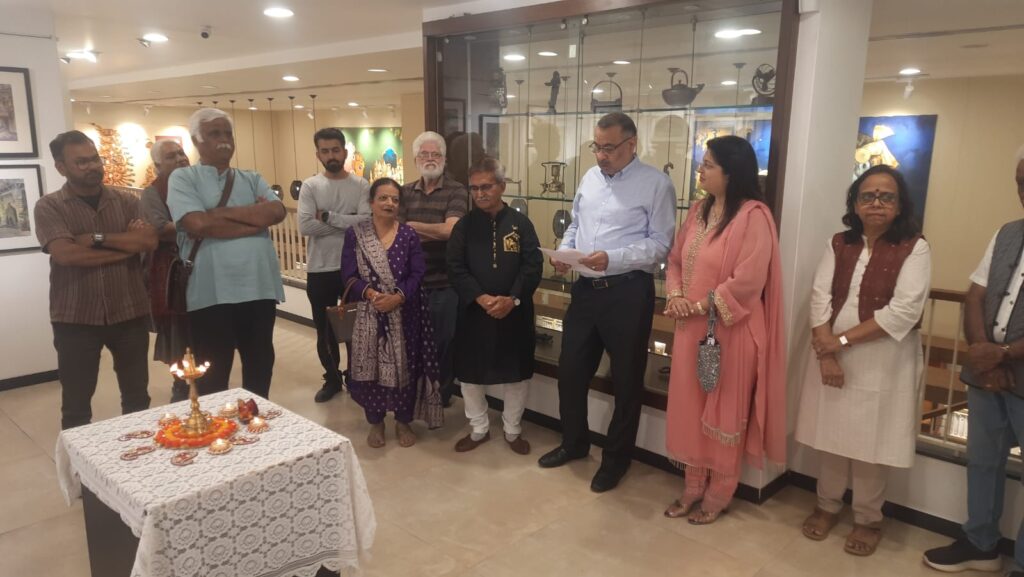
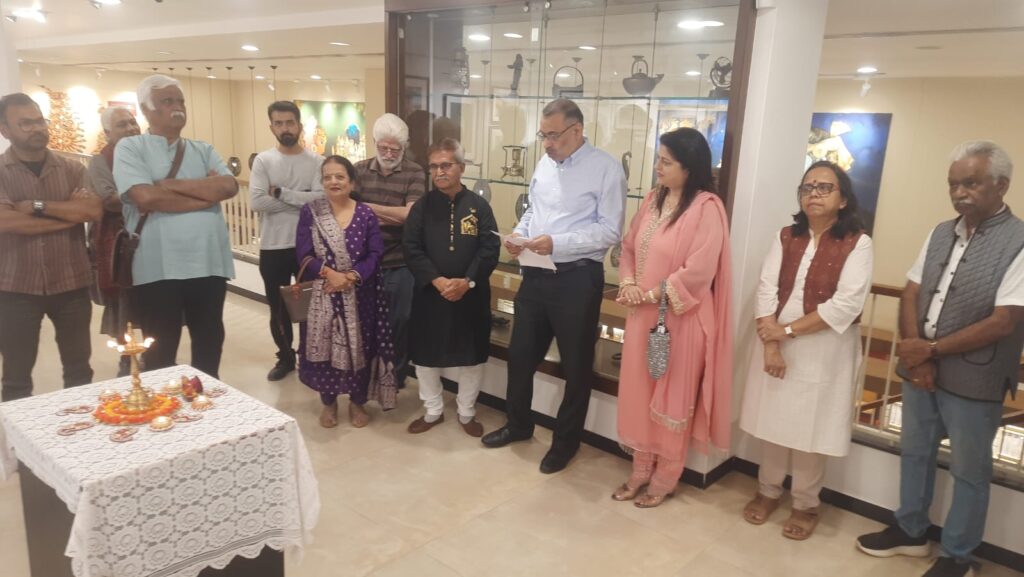
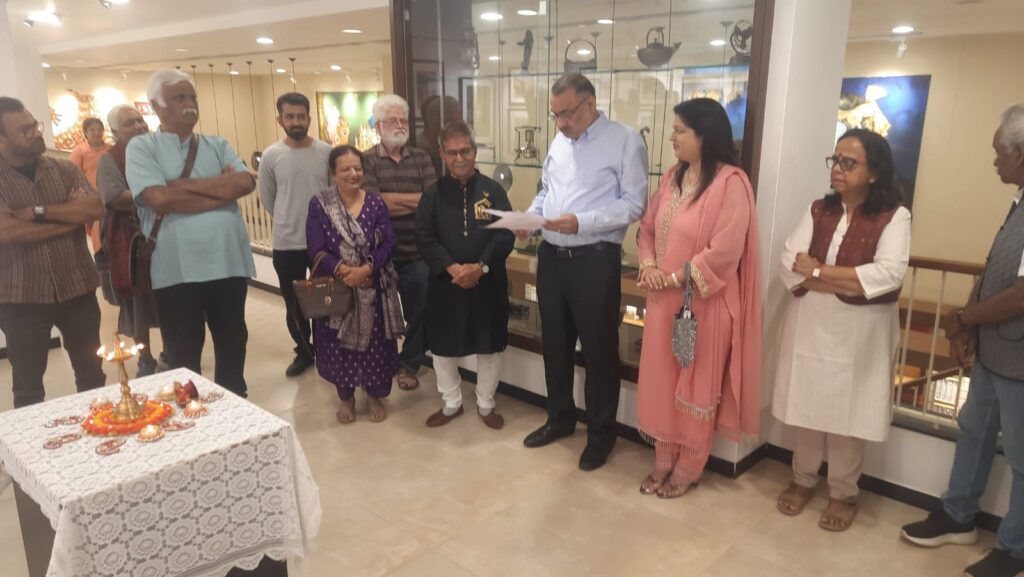
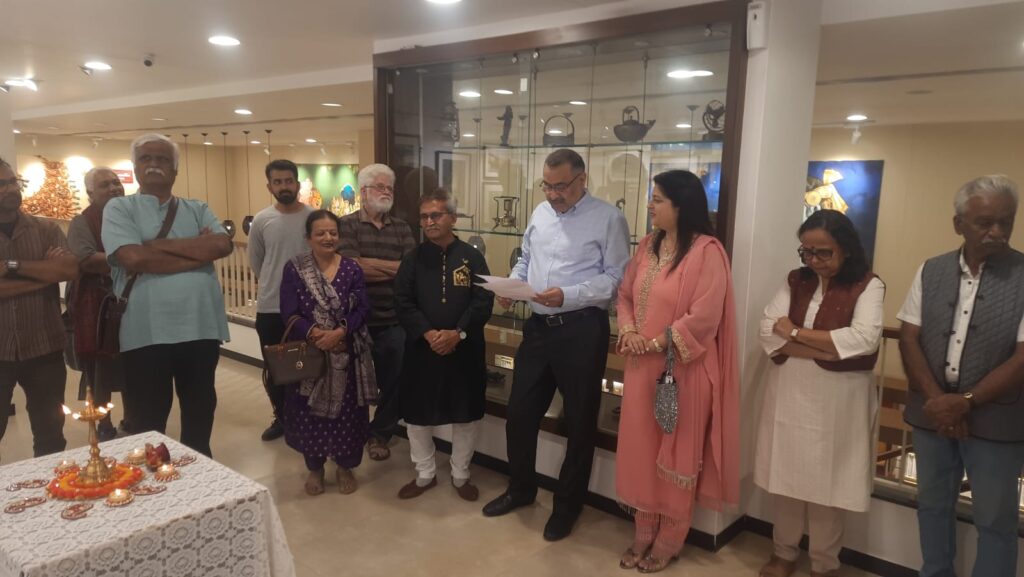
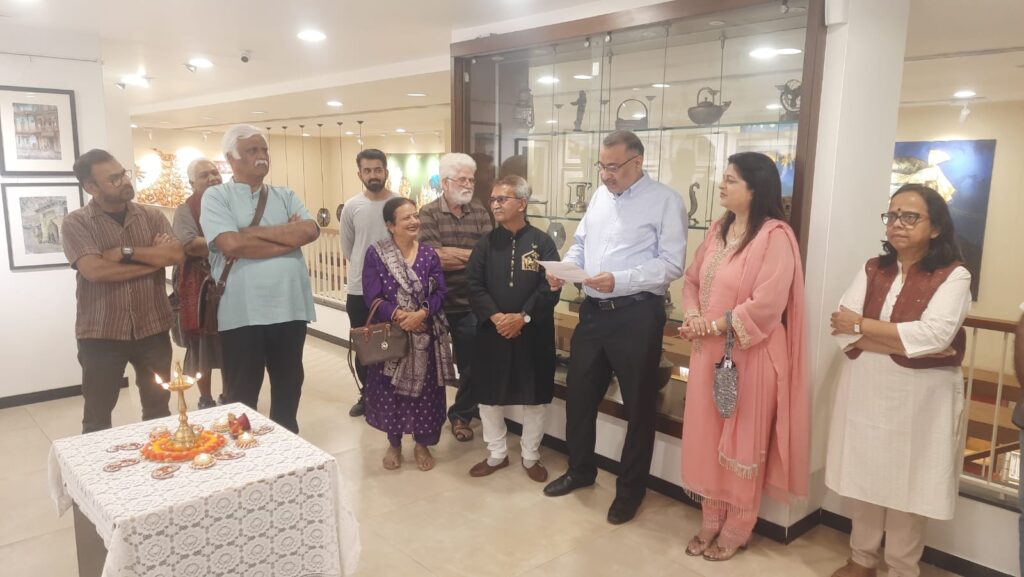
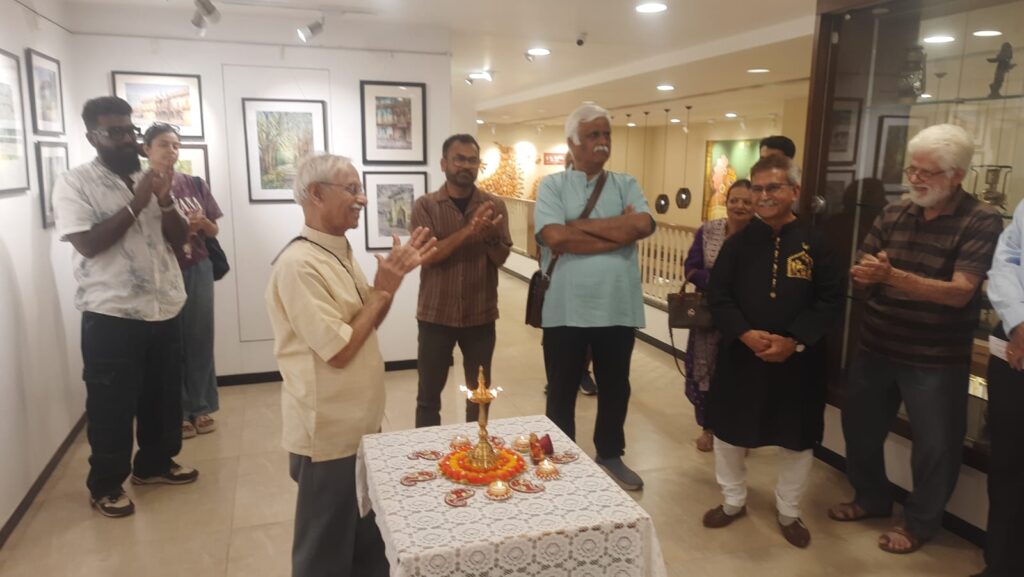
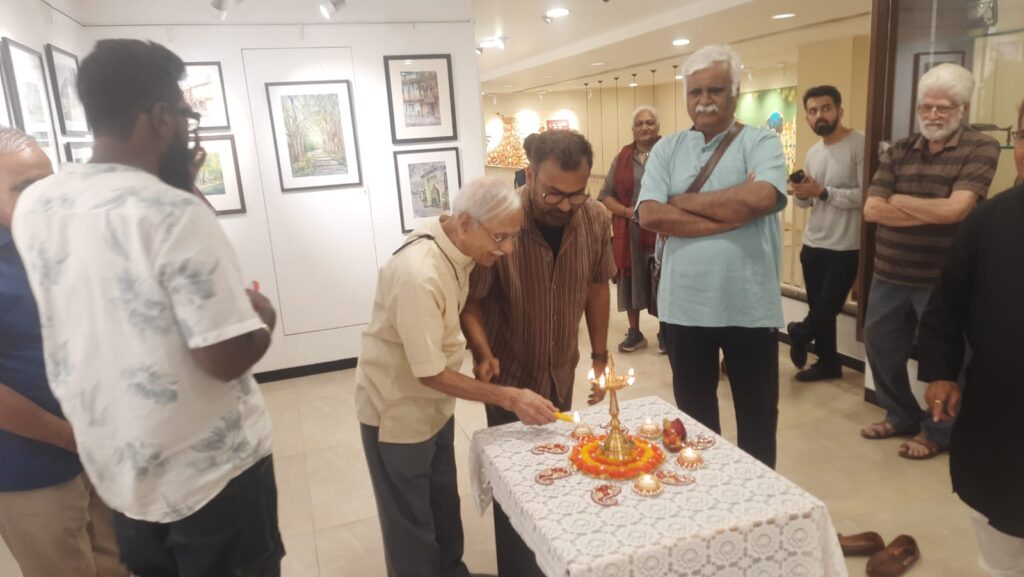
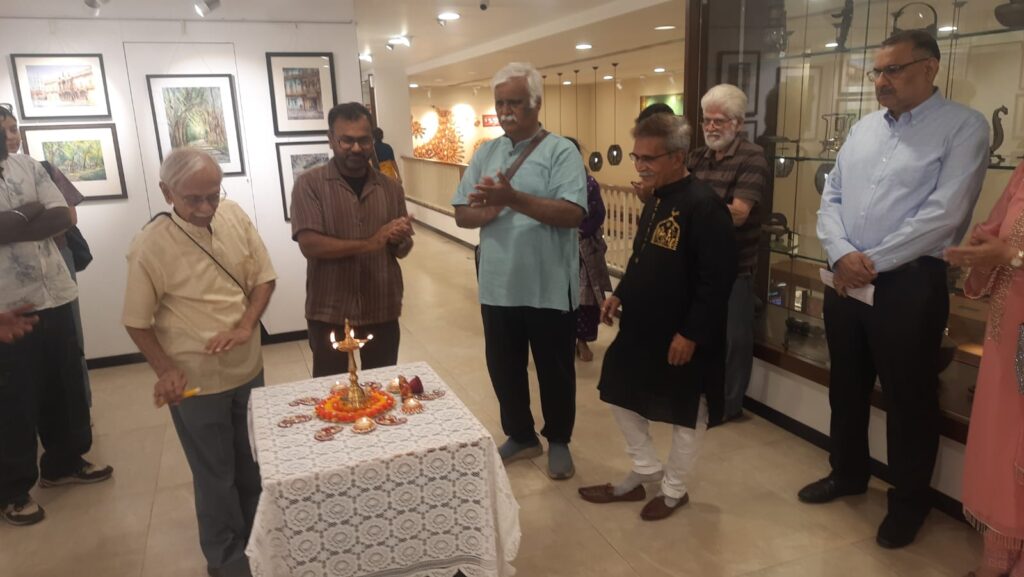
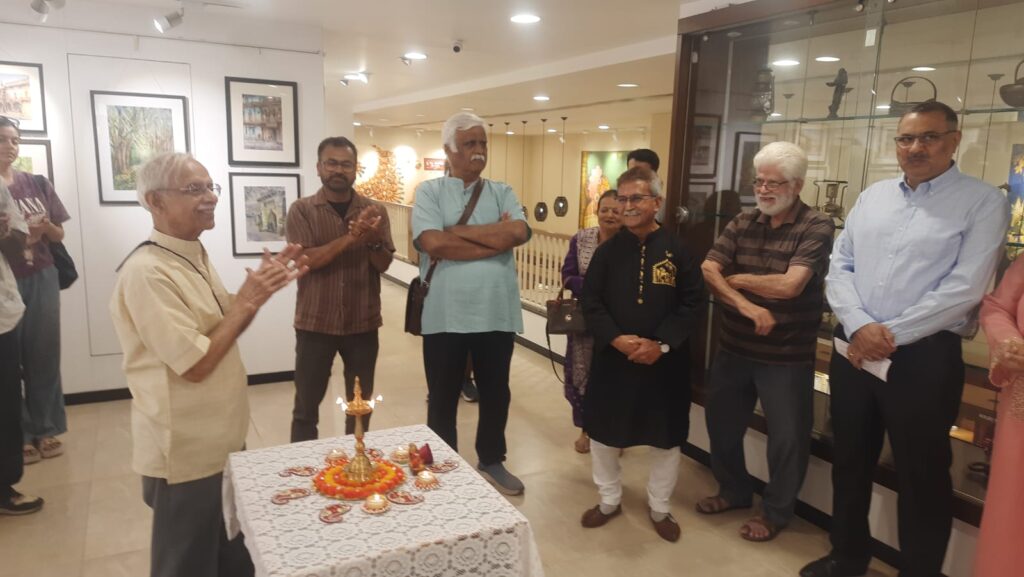
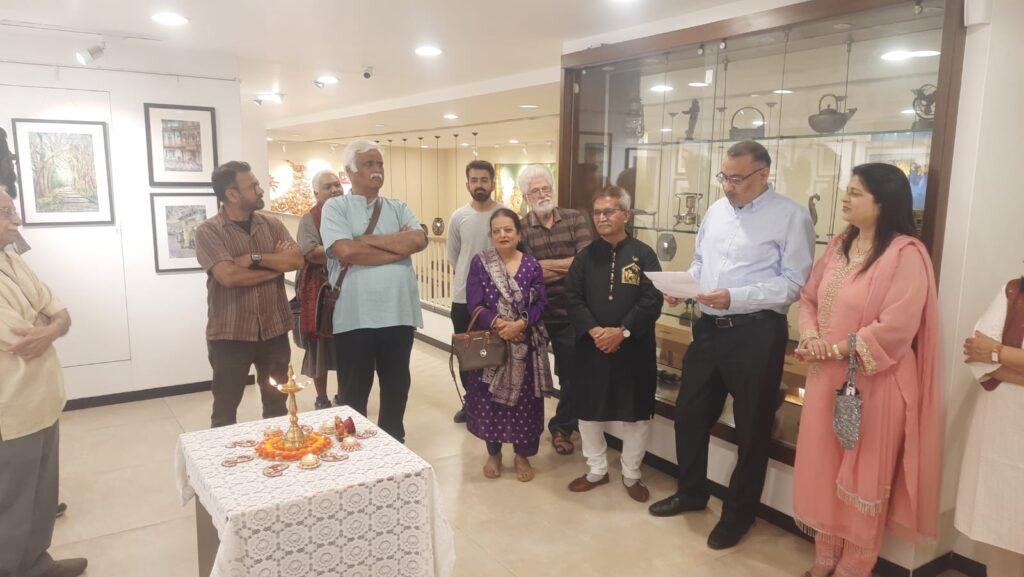
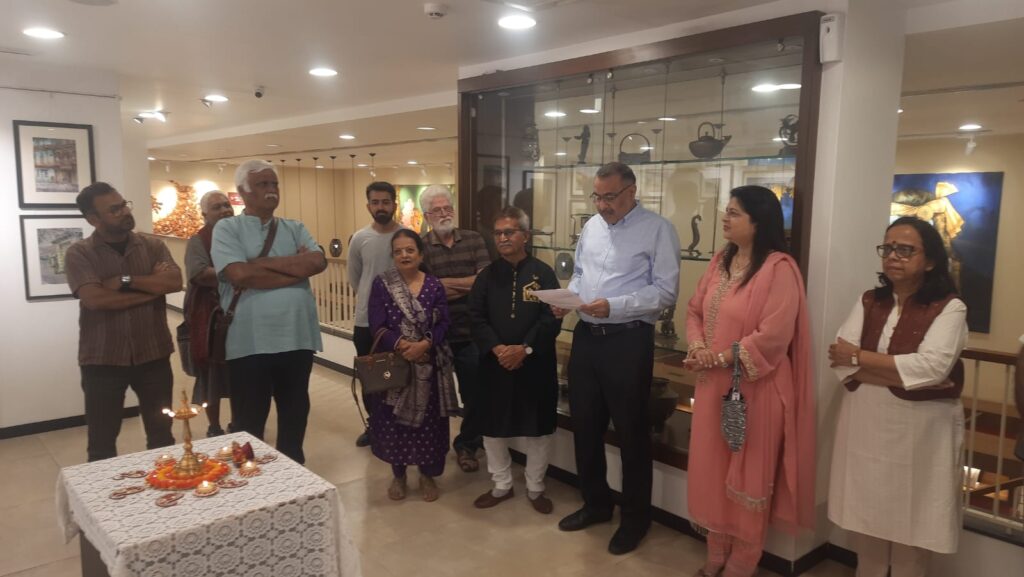
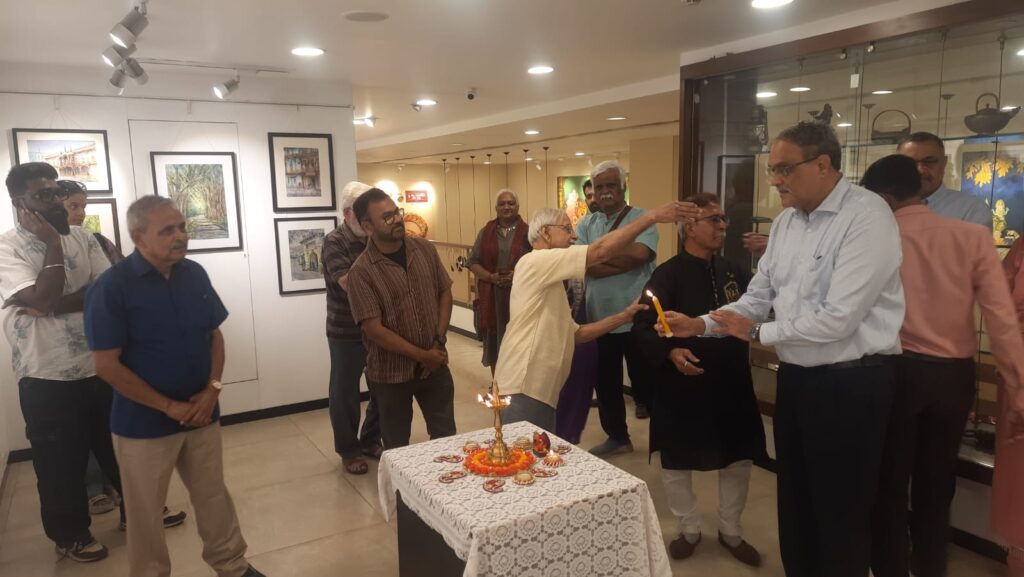
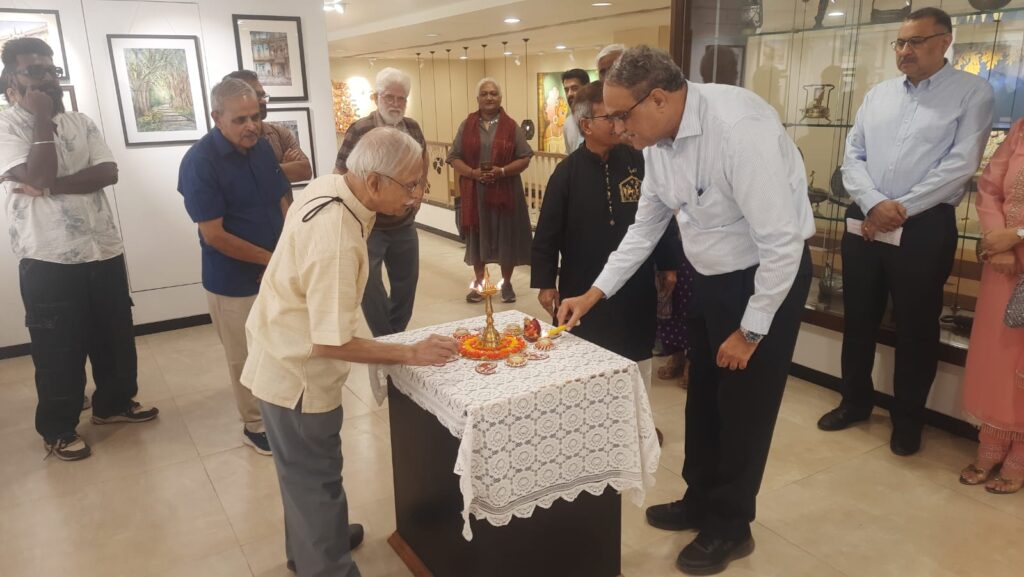
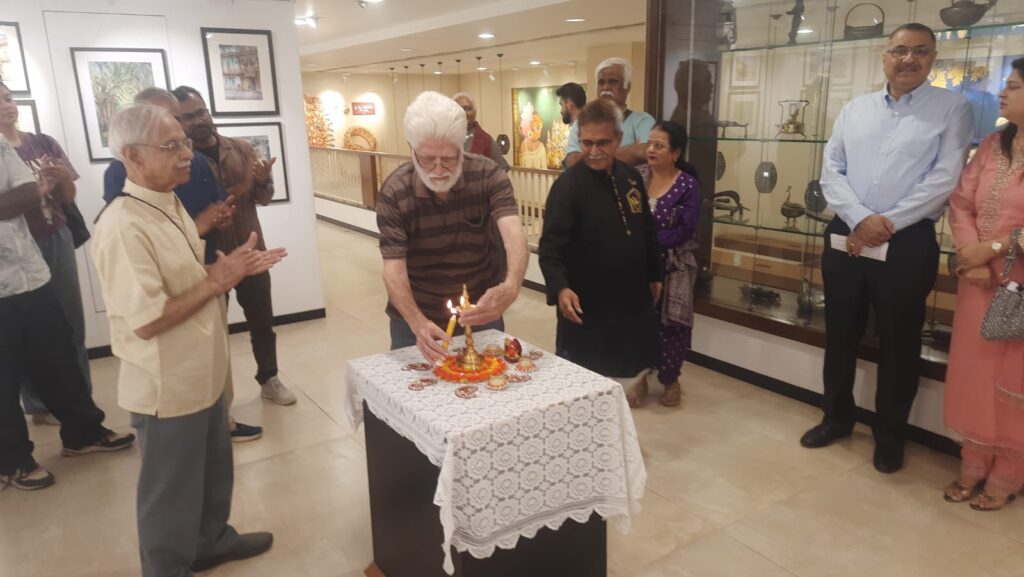
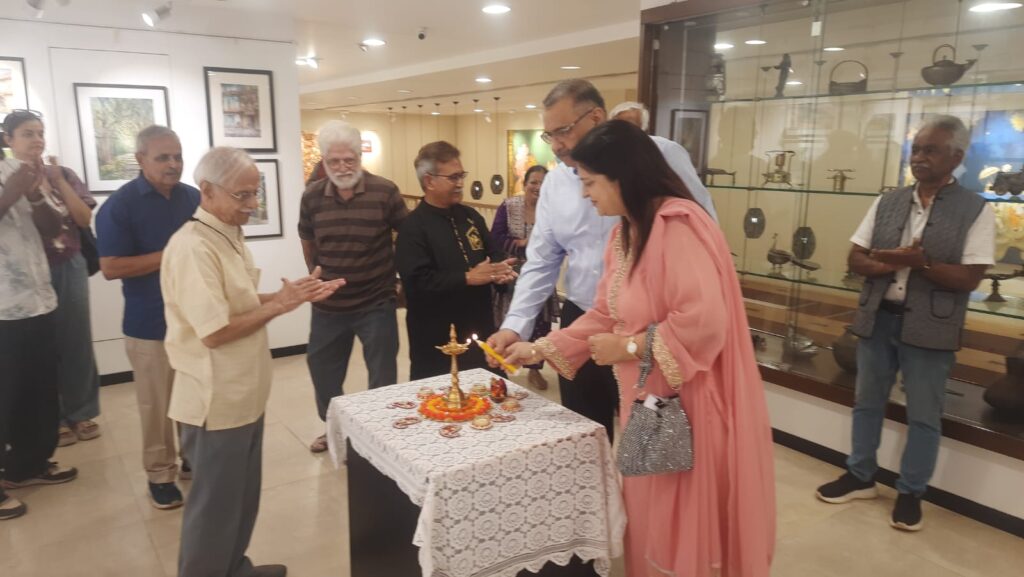
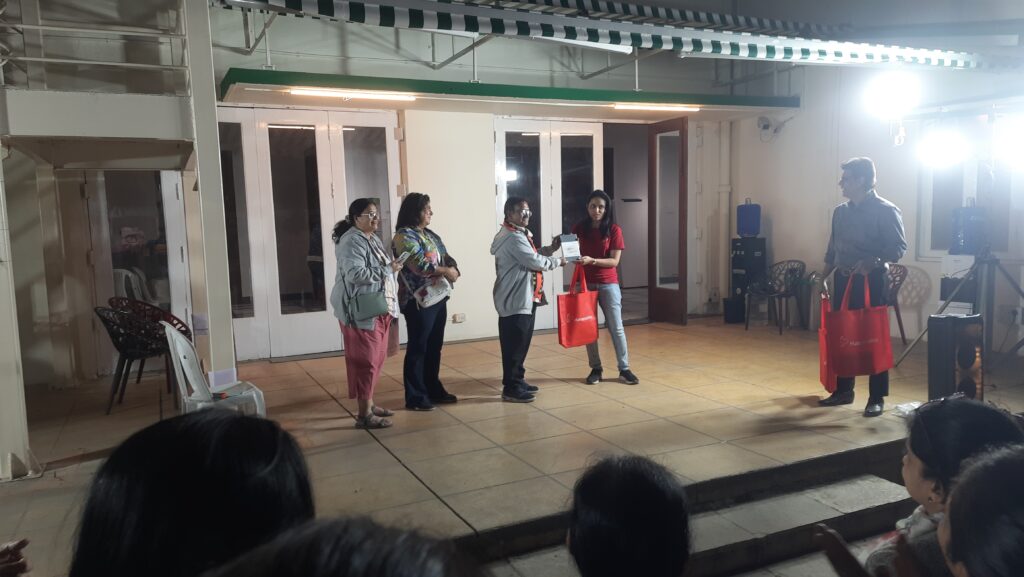
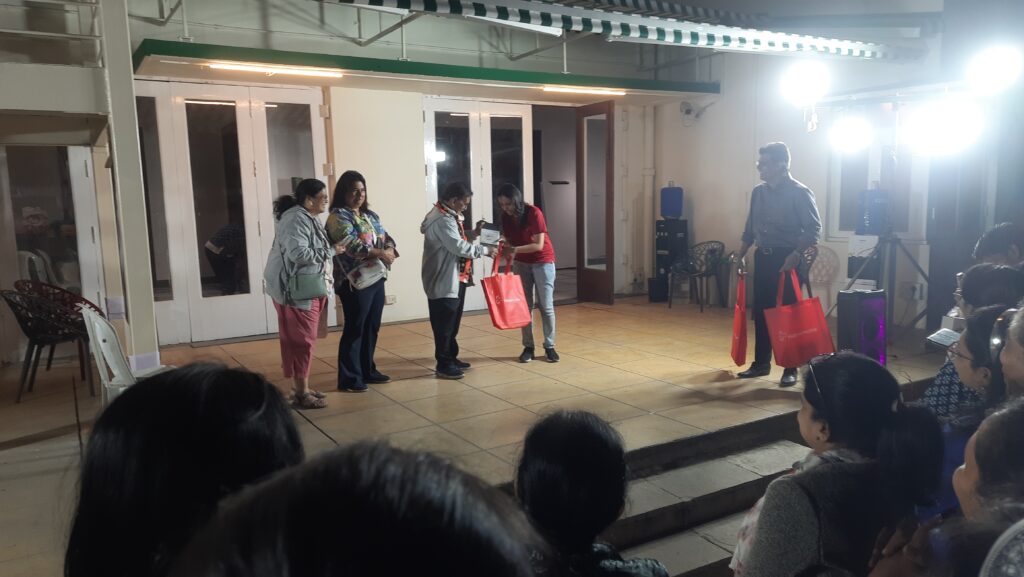
It’s heartening to see Pune leaning into its “cultural capital” roots by embracing the future of food, which, ironically, looks a lot like the past. Initiatives like the Earth Souk at Monalisa Kalagram aren’t just about shopping; they are about rebuilding a lost connection with the soil. Extending the Art gallery to artisanal food and making an excuse for a Mother’s Day gift hamper or for any festive occasion. Creating a unique experience for mothers and kids or grownups to treat their mothers for a memory inclusive of art, food and groceries.
Here is a breakdown of why this shift towards millets and mindful consumption is gaining such momentum:
Why the “Millet Revival” Matters?
Millets are often called “miracle grains” for a reason. While they were sidelined during the Green Revolution in favor of rice and wheat, their comeback is fueled by two major factors:
Environmental Resilience: Millets are incredibly hardy. They require significantly less water than rice and can grow in poor soil without the need for synthetic fertilizers.
Nutritional Powerhouse: They are gluten-free, have a low Glycemic Index (GI), and are packed with fiber, protein, and essential minerals like magnesium and iron.
At a Glance: What Earth Souk Offers
Category
Featured Highlights
The Grains
Ragi (Finger millet), Bajra (Pearl), Jowar (Sorghum), and minor millets like Foxtail and Kodo.
Pantry Staples
Cold-pressed oils, chemical-free jaggery, raw forest honey, and stone-ground spices.
Fresh Produce
Seasonal vegetables and fruits grown using regenerative farming practices.
Education
Workshops on cooking with millets and the “Farm-to-Fork” journey.
Beyond the Shopping Bag
The real value of events managed by community leaders like Akash Panavkar lies in the transparency they provide. In a typical supermarket, the “story” of your food is hidden behind plastic packaging. At the Earth Souk:
Direct Dialogue: You can actually talk to the person who grew your food, understanding the challenges of chemical-free farming.
Cultural Revival: By showcasing indigenous foods, the souk helps preserve traditional recipes and farming techniques that were on the verge of disappearing.
Community Building: It transforms the act of “buying groceries” into a social and educational experience, making sustainability feel like a collective journey rather than a chore.
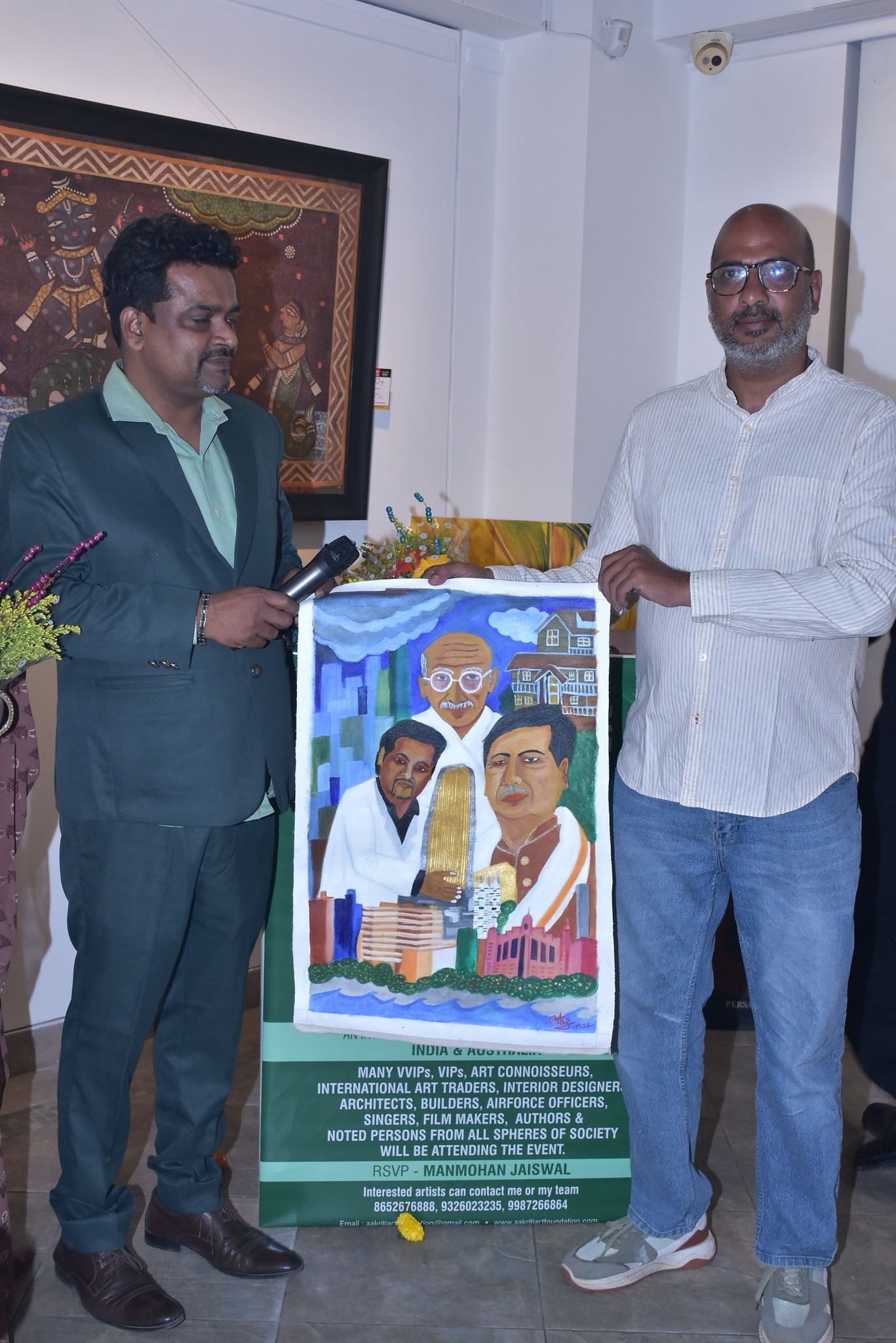
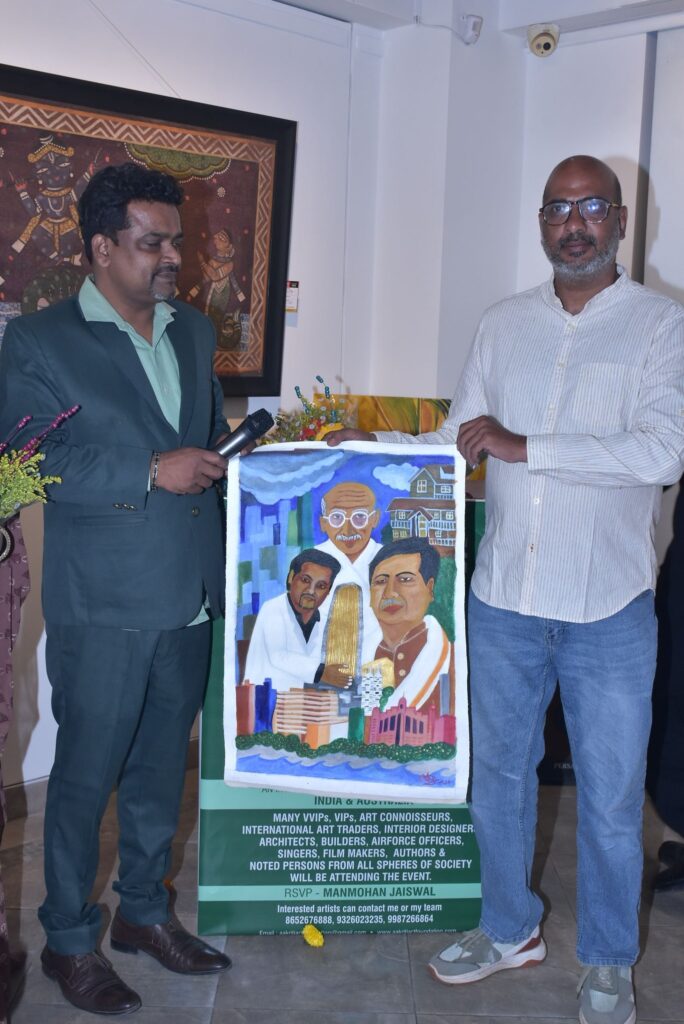
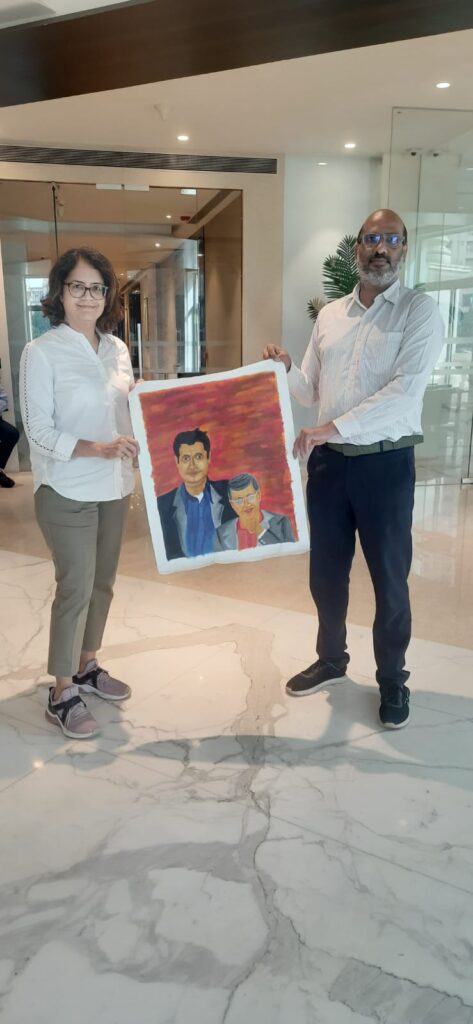
Four years ago, a simple meeting at the Cymroza Art Gallery sparked a lasting friendship. At the time, there was a dream to gift a portrait of the legendary Shri. Ratan Tata to the man himself made by one of Manmohan Jaiswal’s friends. Despite several attempts, that dream remained unfulfilled, and eventually, the great visionary passed away.
But where one door closed, another opened.
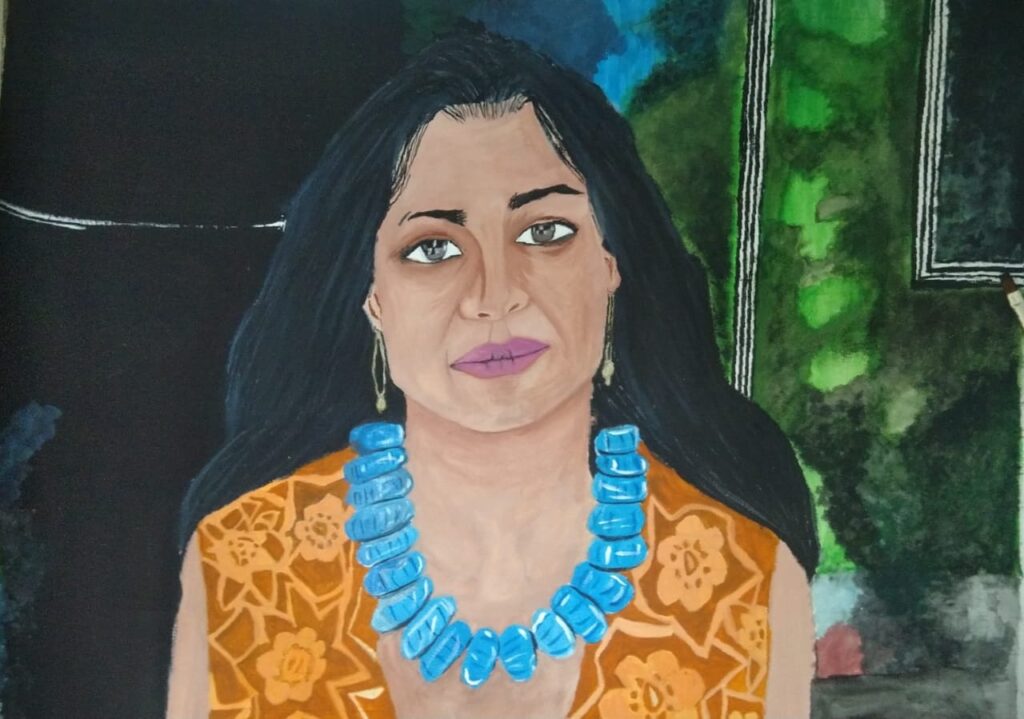
Inspired by the journey, the focus shifted toward creating new works, including collaborations that brought fresh perspectives to the canvas. This creative path wasn’t just about painting; it was about a larger mission: making art a part of everyday life in India. Some of my paintings also included Shumi Bose, a true inspiration, and my consicous motivation to make this happen.
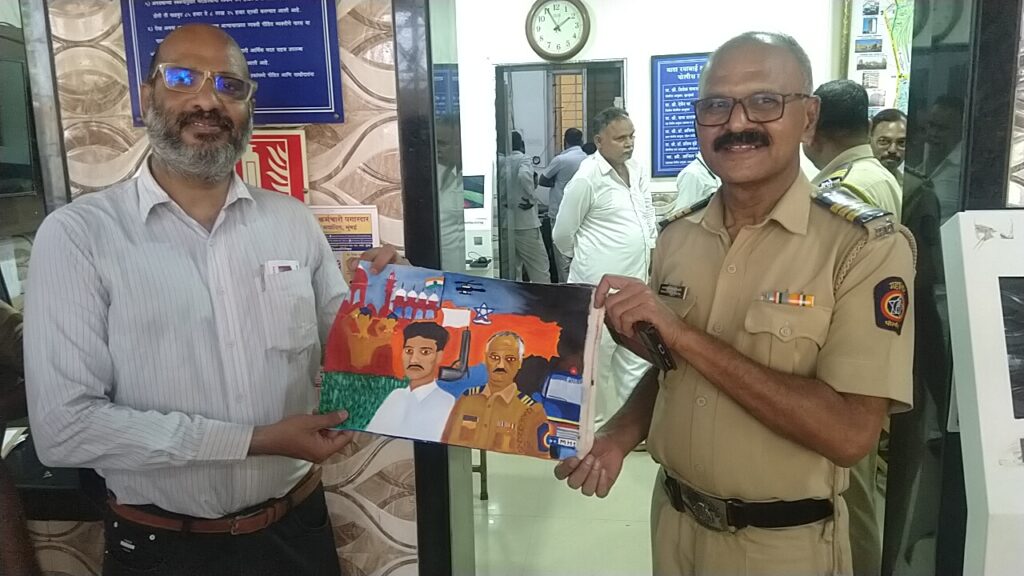
Now, as art takes centre stage on national platforms like NDTV for the portrait artist of the year, the journey has come full circle. Gifting this painting made by myself to Shri. Manmohan Jaiswal, a mentor and the founder of Aakriti Art Foundation, marks a beautiful milestone. It turns a missed opportunity from the past into a celebration of the future—one where art is finally gaining the importance it deserves.
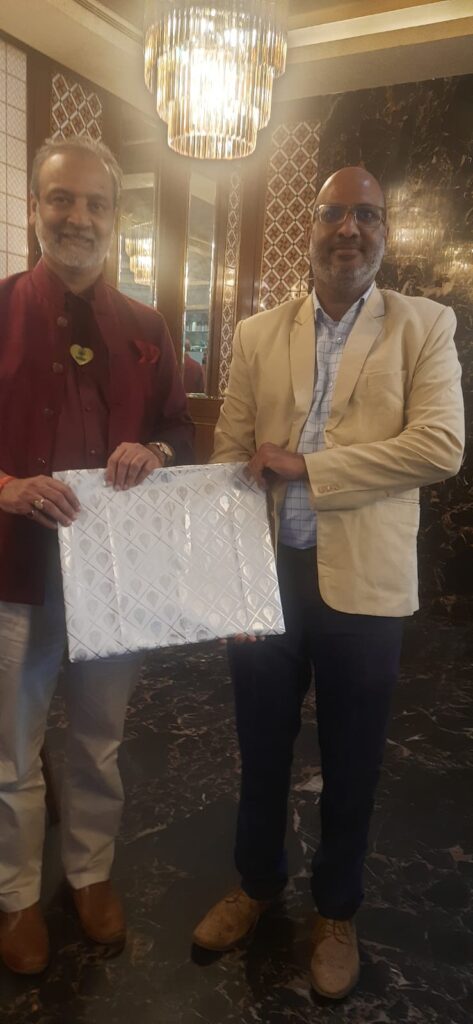
Manmohan Jaiswal at his 4th edition of the Art Festival by Aakriti Art Foundation, Mumbai.
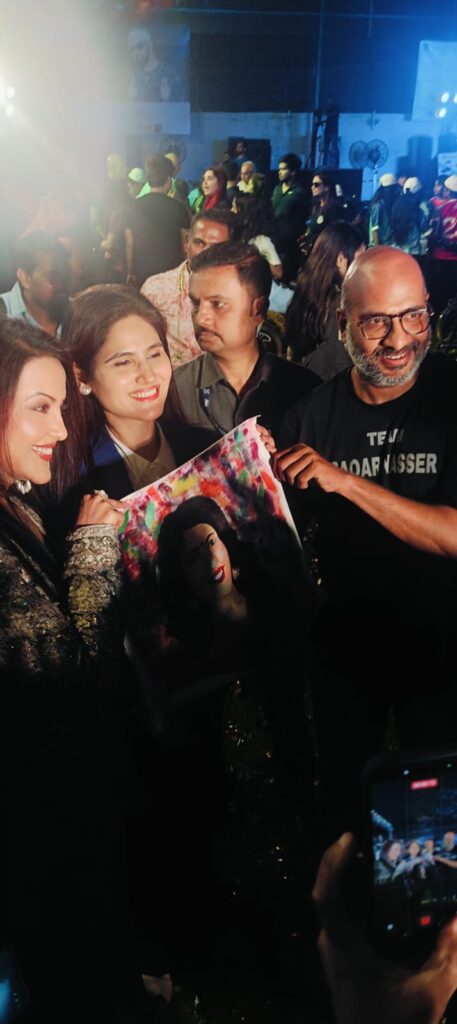
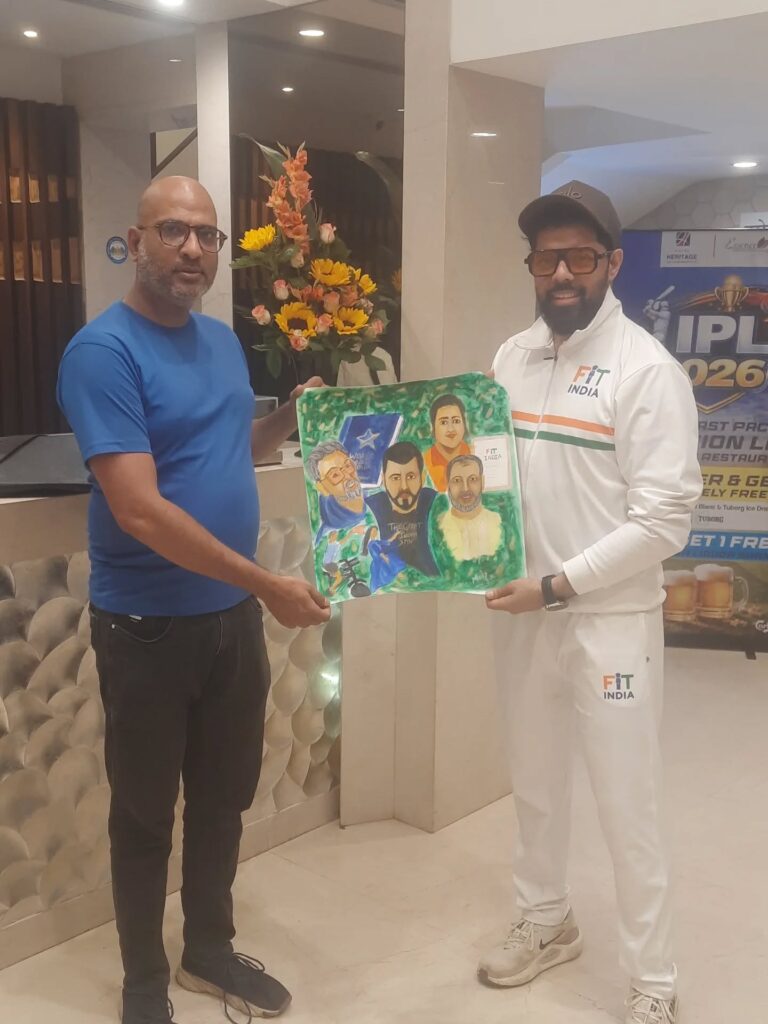
Amruta Fadnavis, at the Great Indian Spin.
Dr. Huz on his birthday, at the Punjab Grill restaurant.
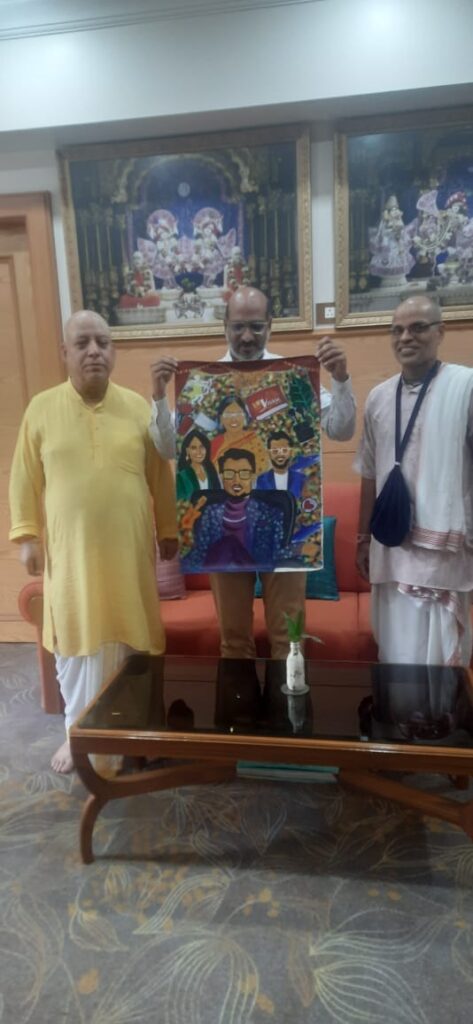
Shri Sura Das Prabhuji, at Kharghar Isckon
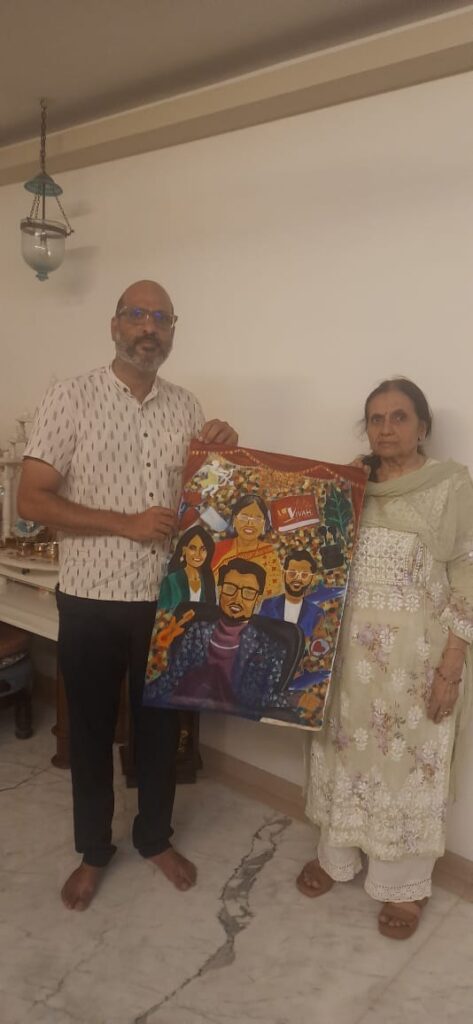
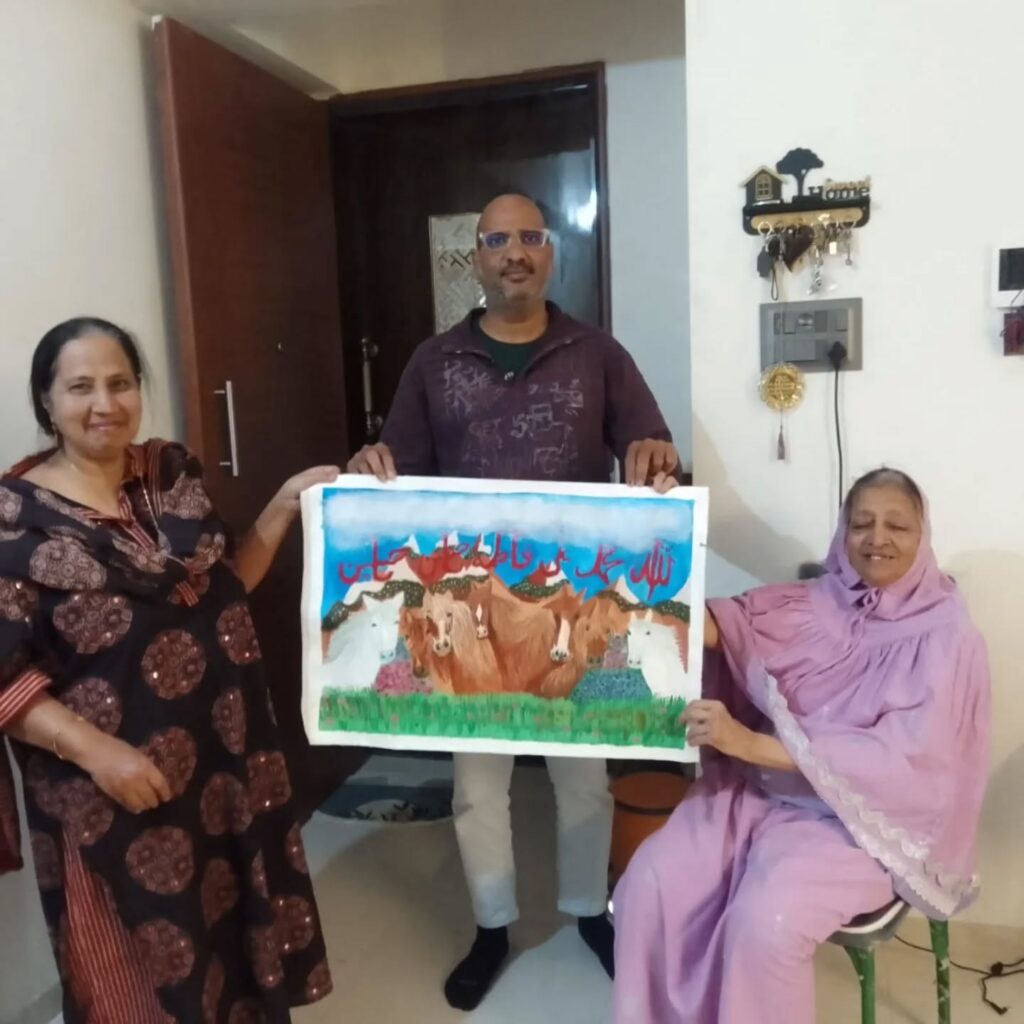
Smt. Bhagwati Mittal, at her residence.
Assistant to Dr. Niranjan Hiranandani and Darshan Hiranandani at the Powai Office.
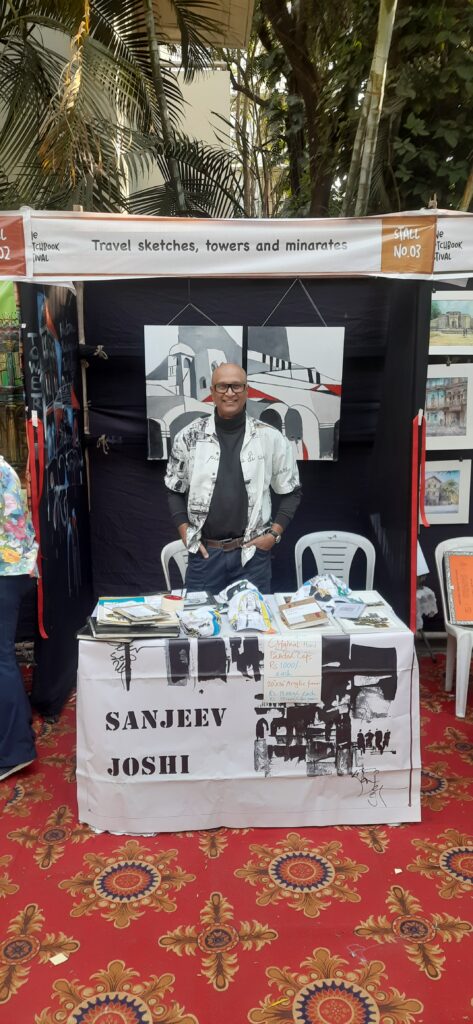
Ar. Sanjeev Joshi, stalwart of art and architecture restoration.
Mr. Baqar Nasser the Great Indian Spin at Byculla.
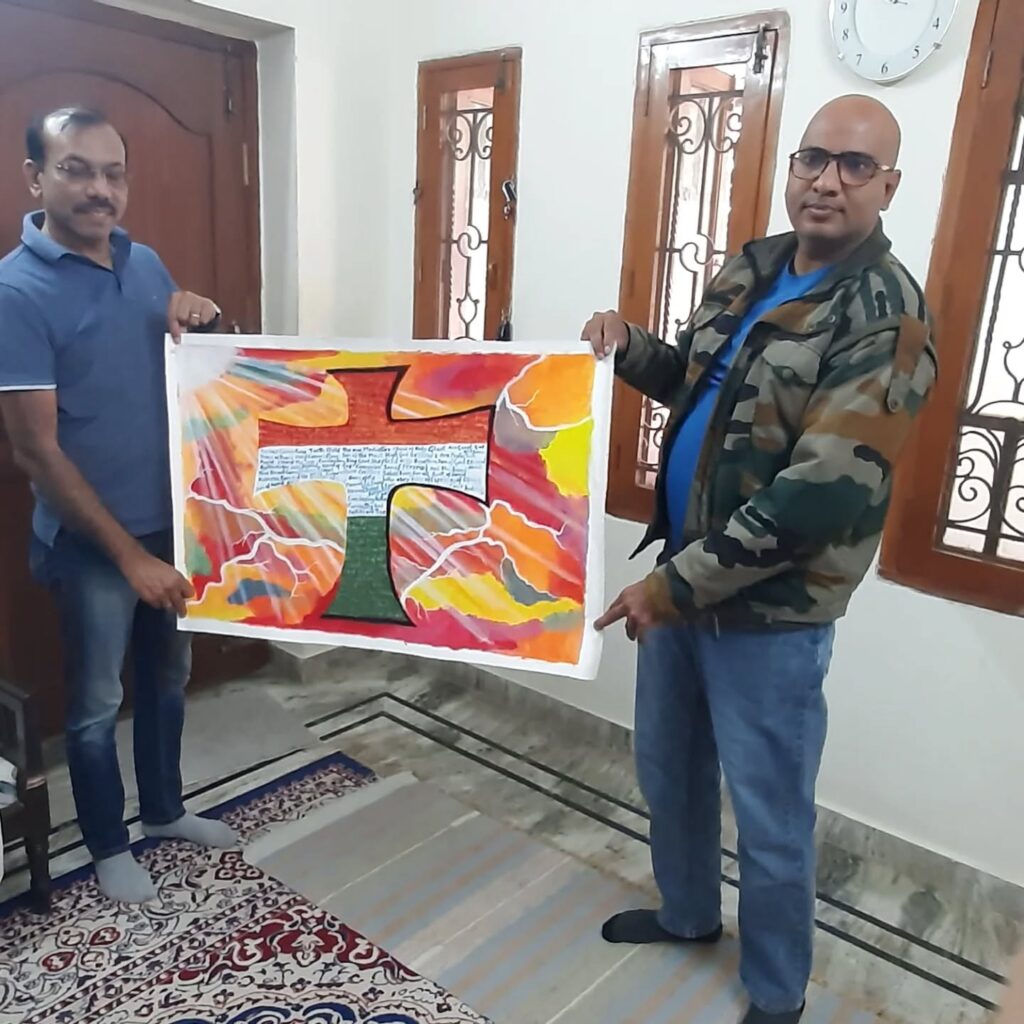
Mr. Jaoquim D’Souza, at Secunderabad.
Shri. Shabbir Shakir, at Secunderabad.
Smt. Fehmi Kantawala, at Moshi, Pune.
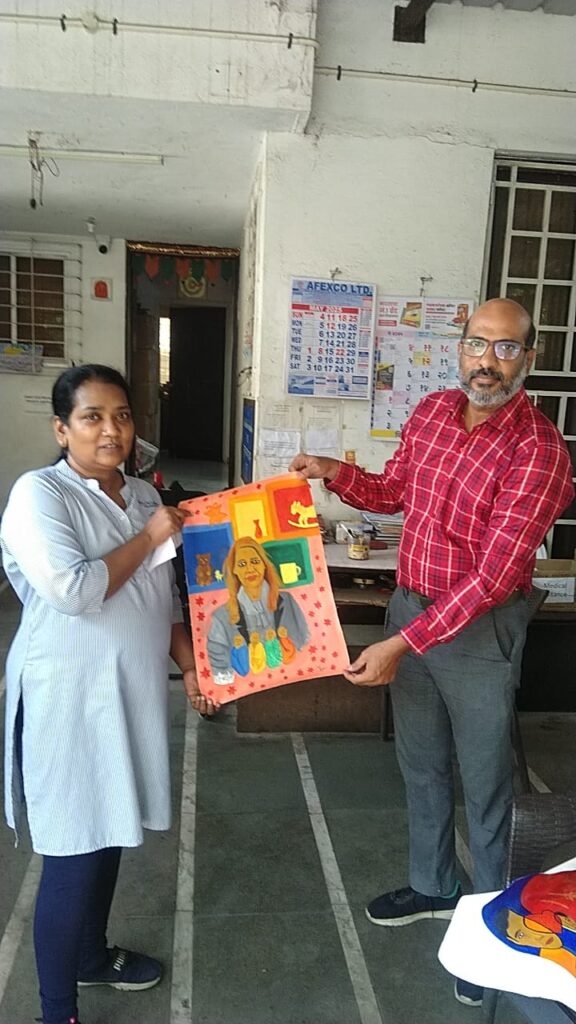
Smt. Yasmin Shaikh assistant to Smt. Ritu Chabbria at Muluk Madhav Foundation, Pune.
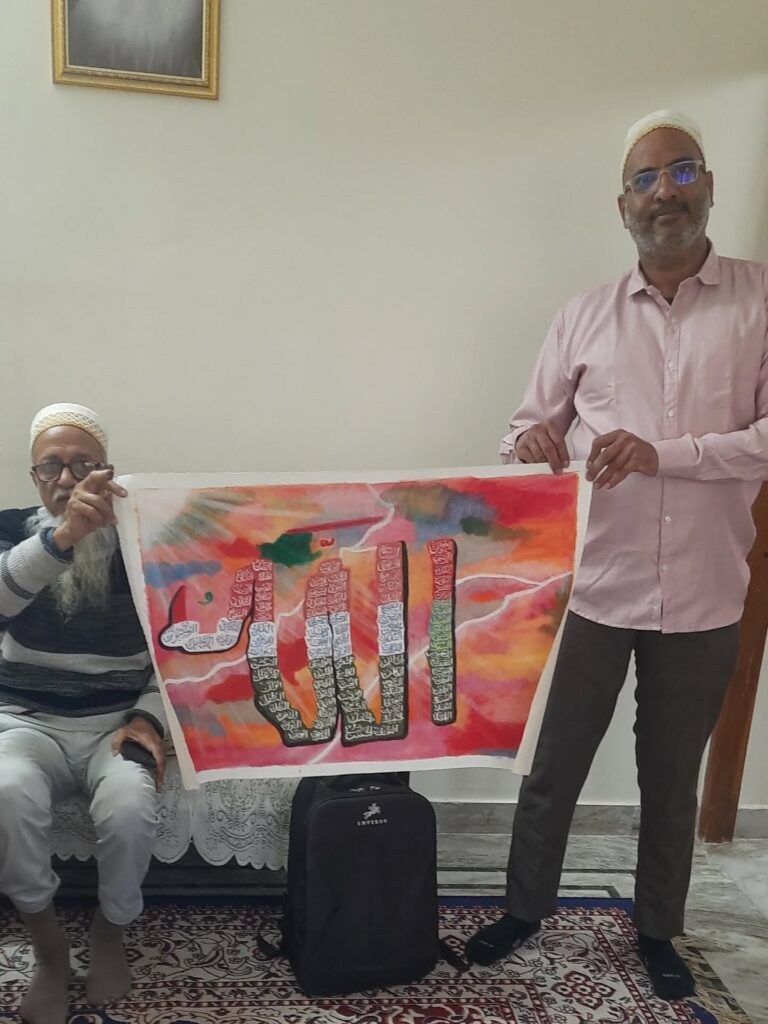
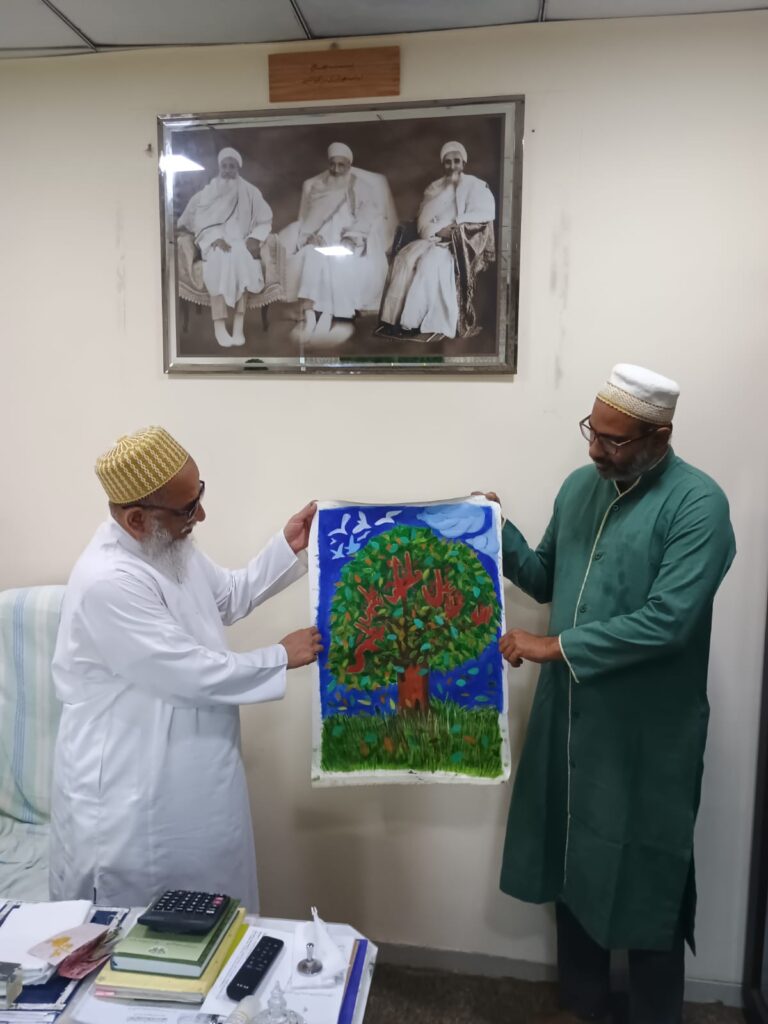
Amil Saheb Moiz Bhai Dalal, on the occasion of Moharram. The tree is at Jordan and is 1500 years old.
Shumi Bose, a portrait on canson paper and poster colours.
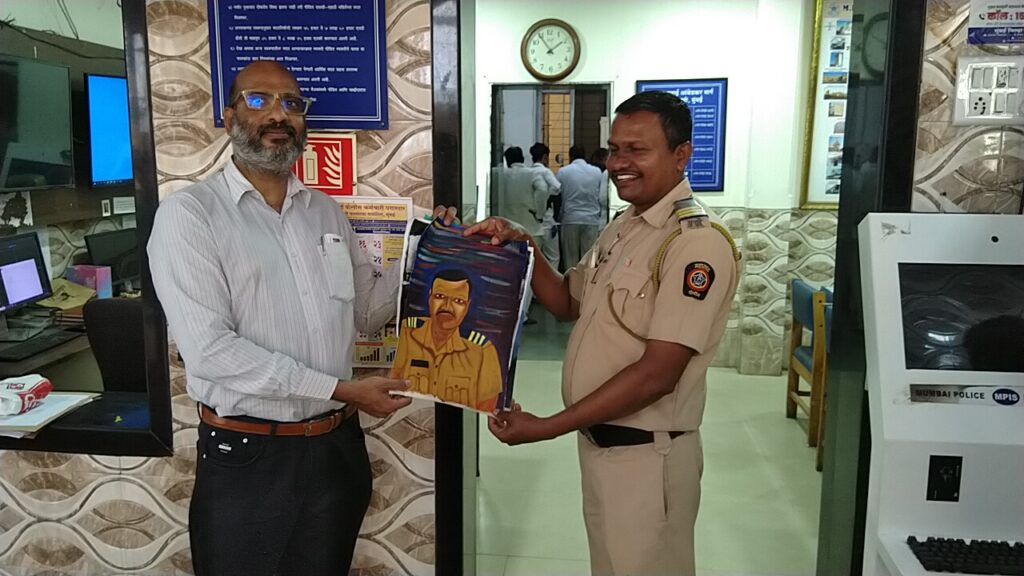
Head Constable Shri Laxmikant Barde, MRA Marg Police Stn.
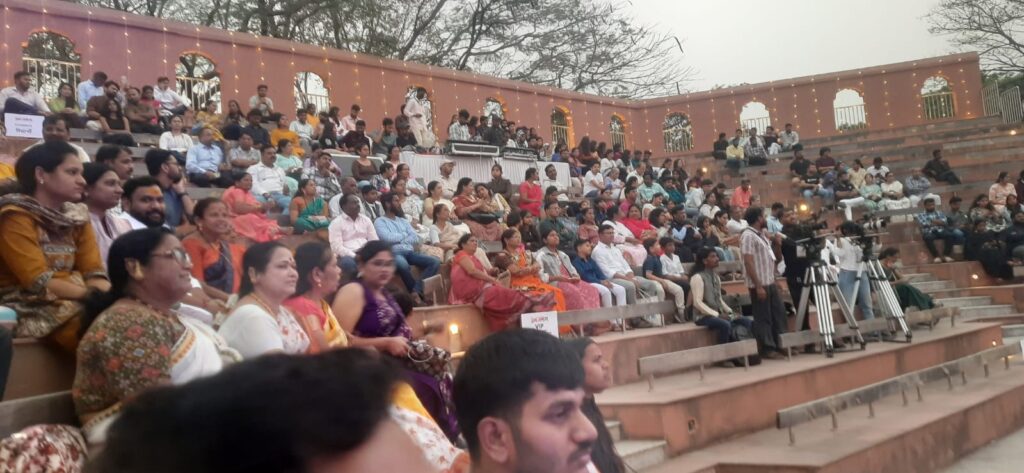
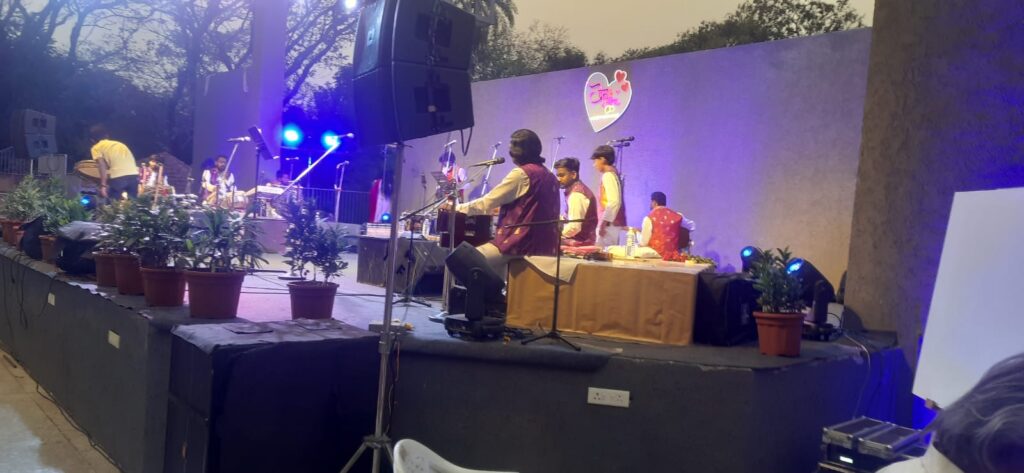
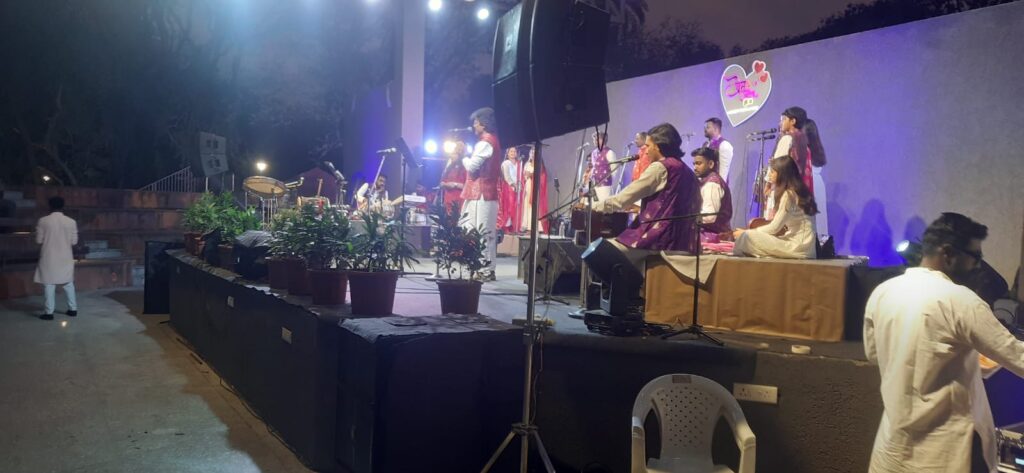
It was a fine evening, and the weather was most favourable for a T20 World Cup match, resulting in India’s victory by 61 runs. Marathi is a sweet language, as a famous quote, ‘Til gud Ghya ani god god bola’. Maharashtrians are known for sweet talking and sweetness in their nature. Prem Jalsa is an event organised by Jalsa Studio spreading a message of love with a motto of Ishq Mohobat zindabad, pyar mohobat zinndabad setting the evening mood to love and remove hate. Pyar Dosti Zindabad, Pyar Mohobat Zindabad, offering sarcasm to the audience in the election mood, in case anyone is interested in doing murdabad and zindabad.
Marathi songs were melodious, and the energy in the audience doubled when a 15-year-old boy performed a Marathi song, “Majhi Fiat”.
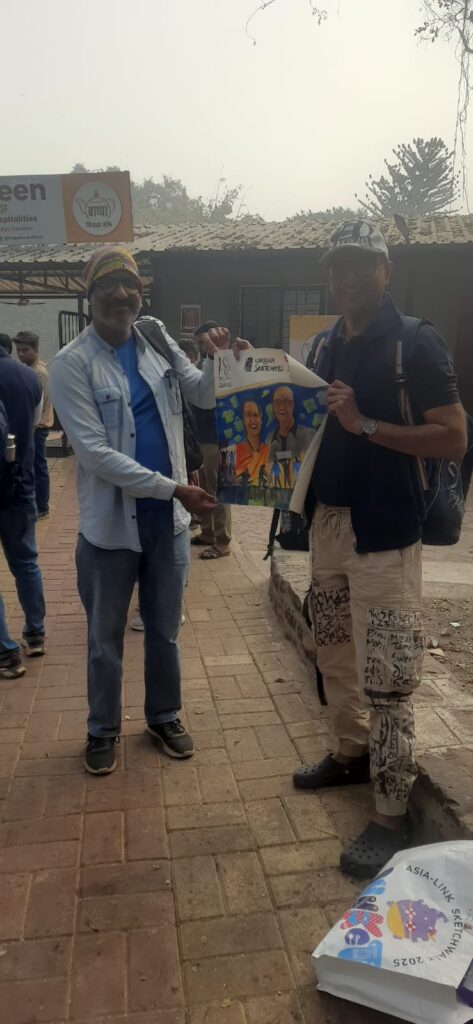
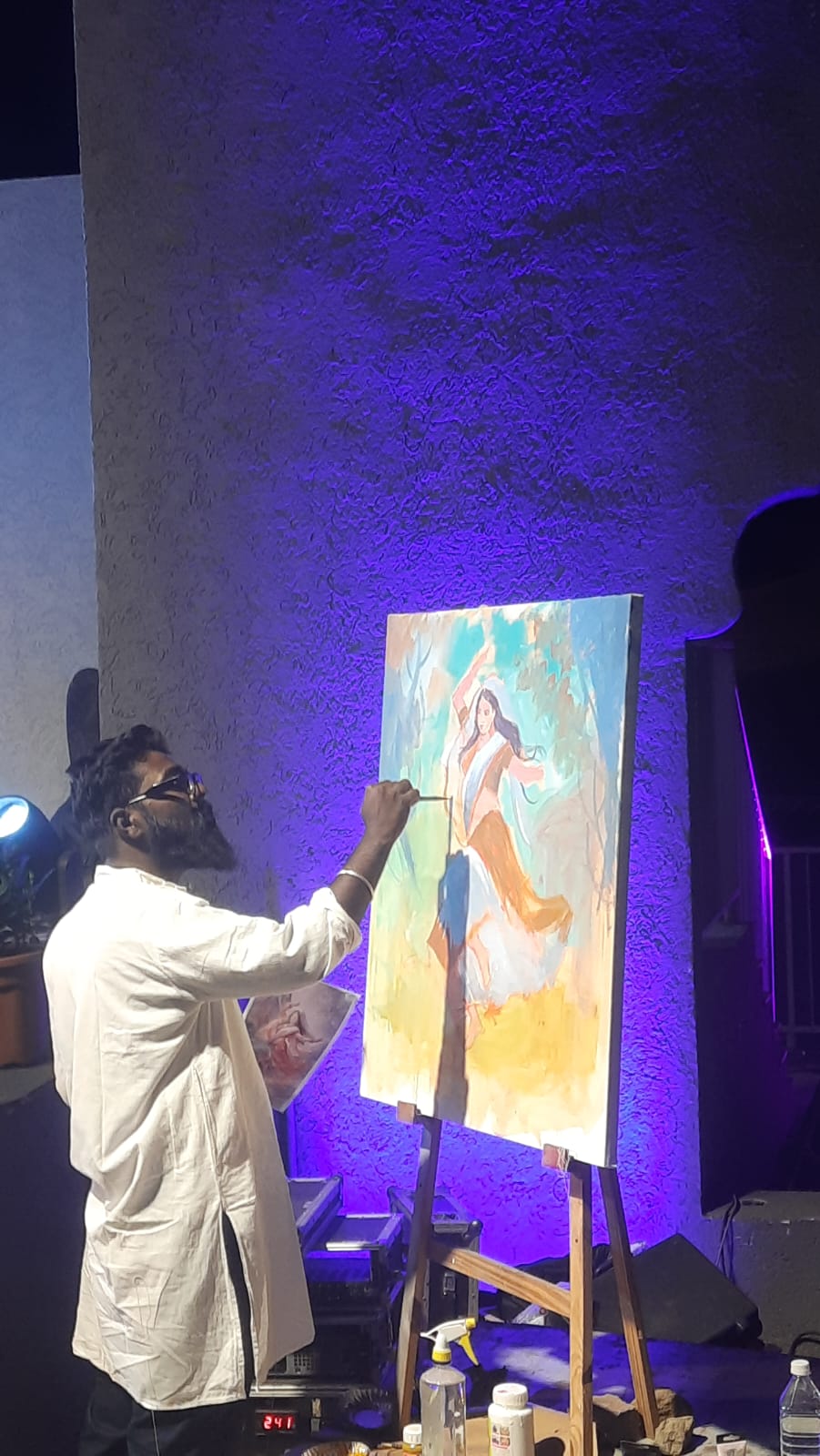
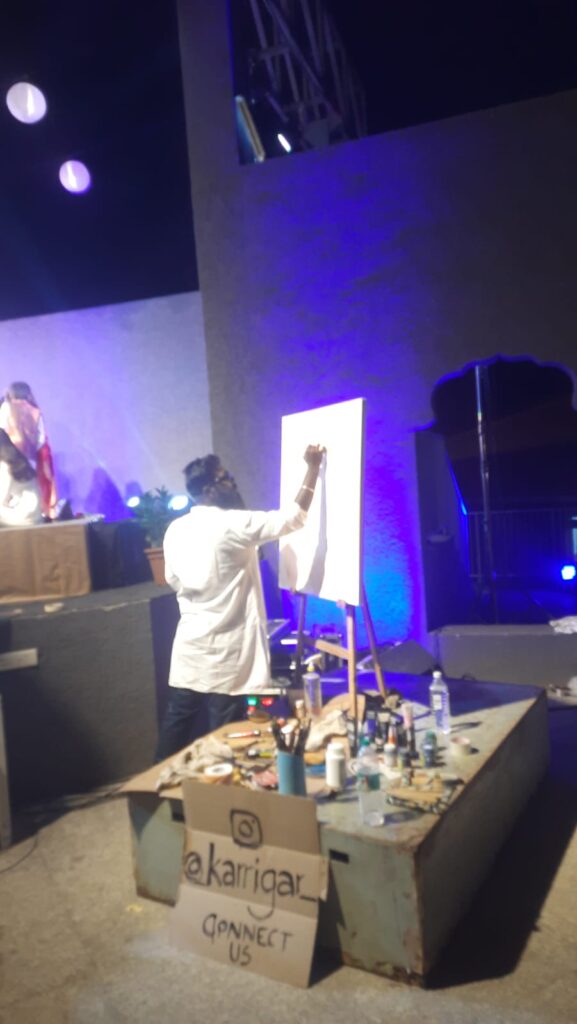
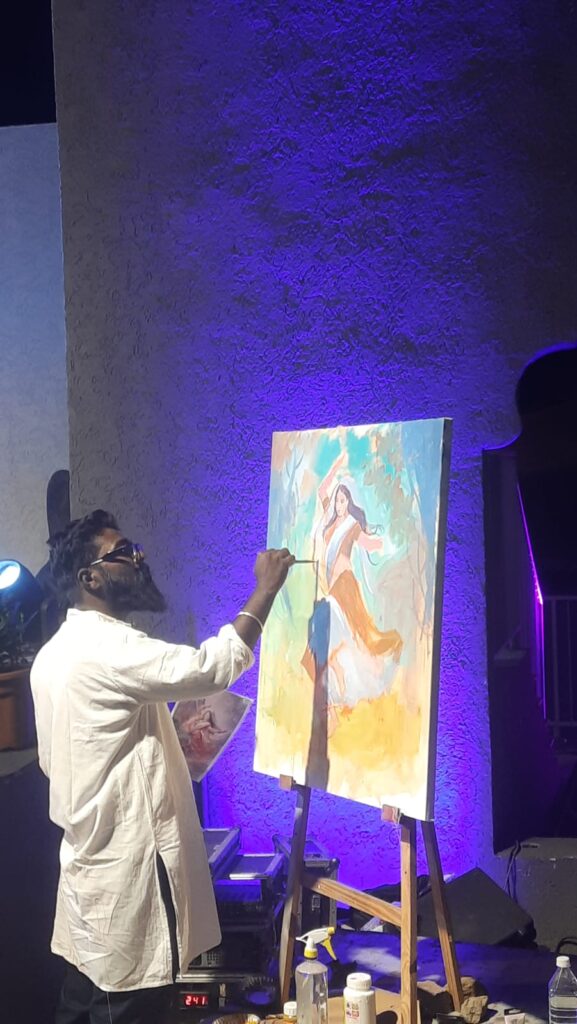
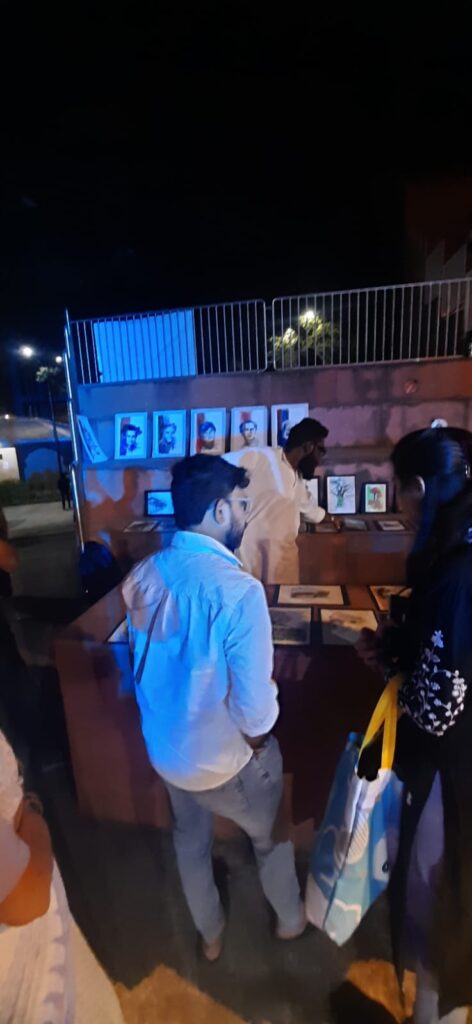
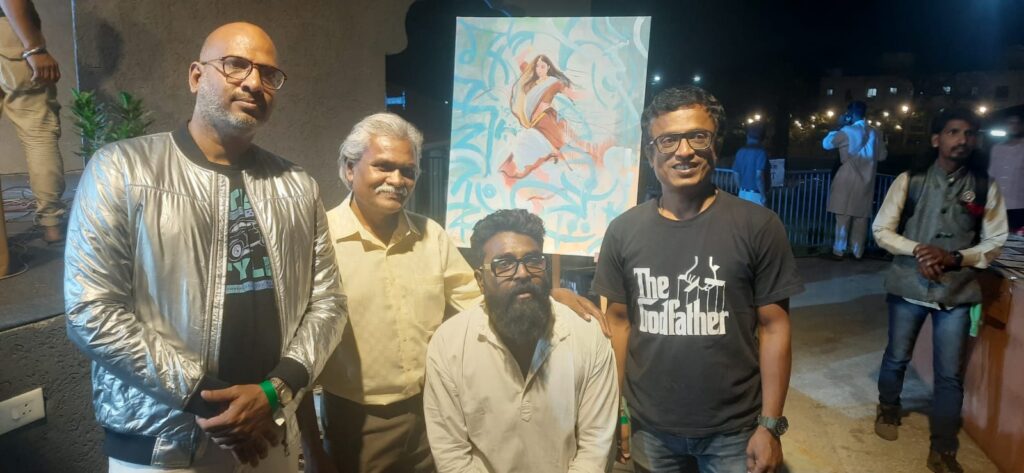
While Anirudh was painting his Radha, or the lady luck, in a dancing mood, with some fog and mist, he enjoyed the music and the painting while most of the audience was having a delightful experience of painting and music.
Lastly, Aniruddha and his friend Nami were invited on stage for a selfie, and the audience was asked to turn on their mobile torches to make a gesture of thanks through the lights.
With a final flourish, Aniruddha adds his calligraphy to the portraits. Attending a few viewers at his stall and ending the show with a selfie with friends.
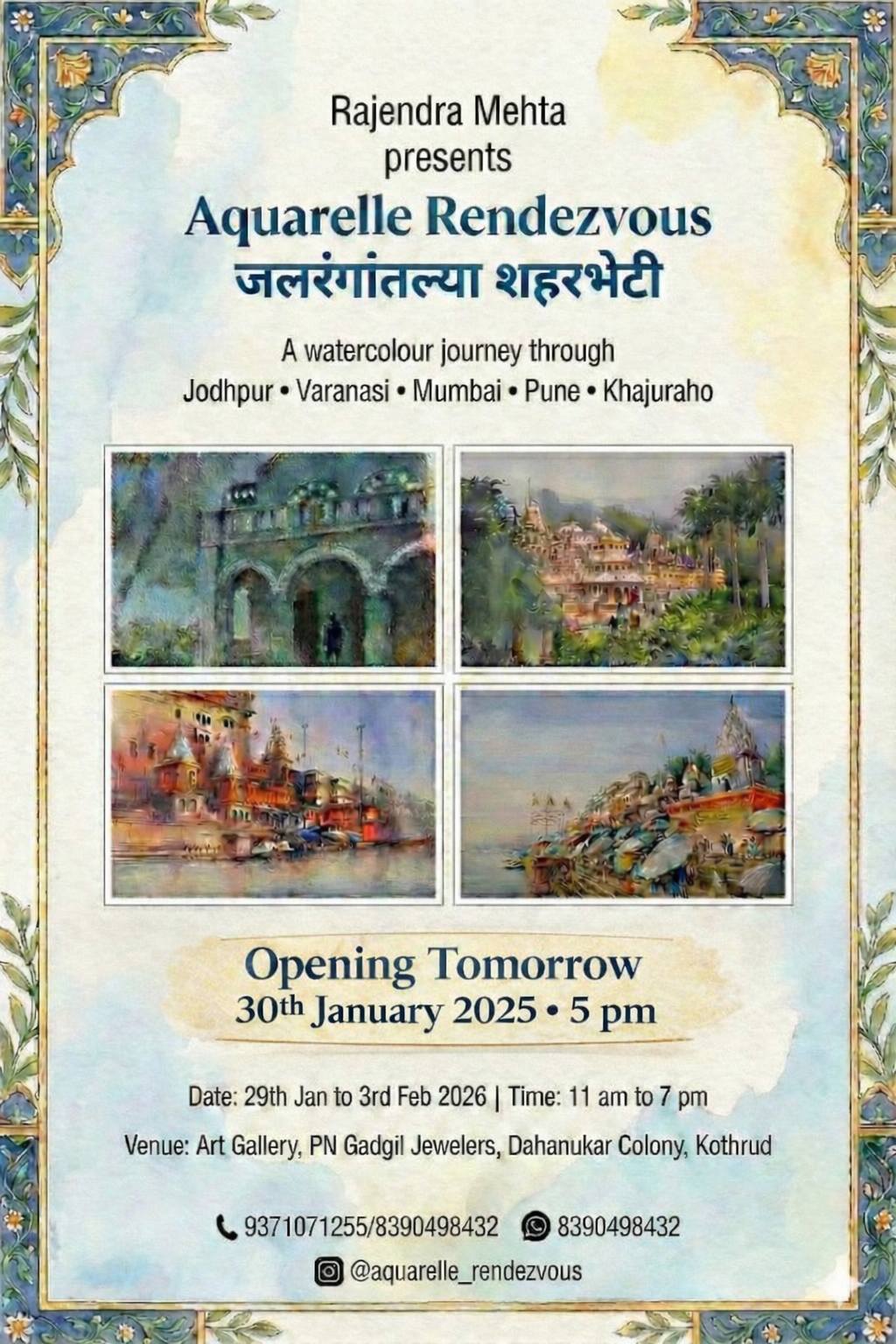
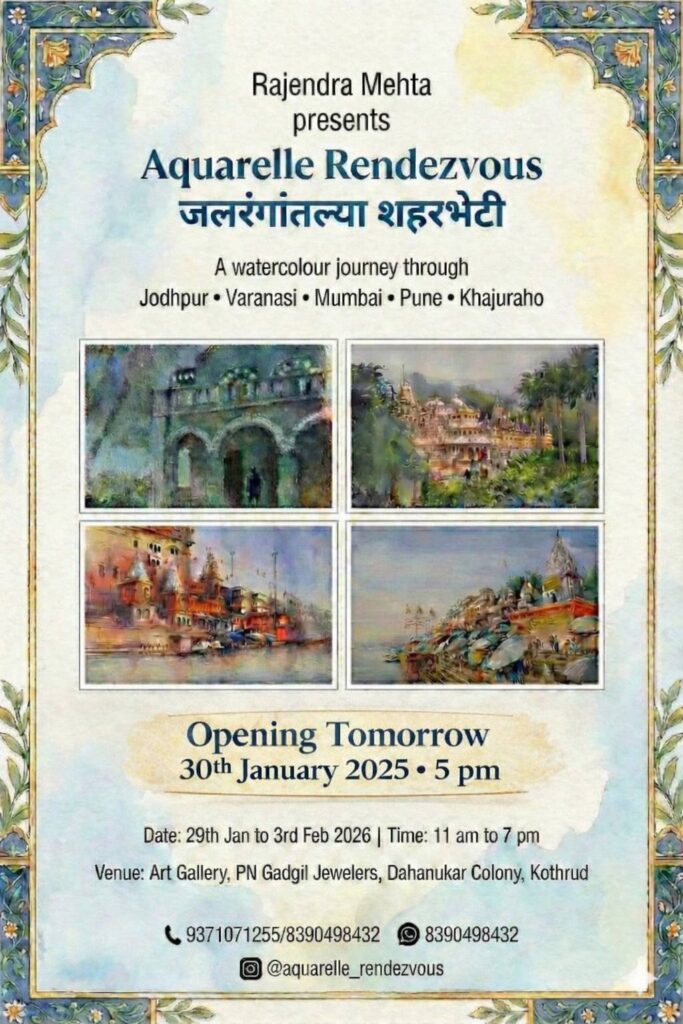
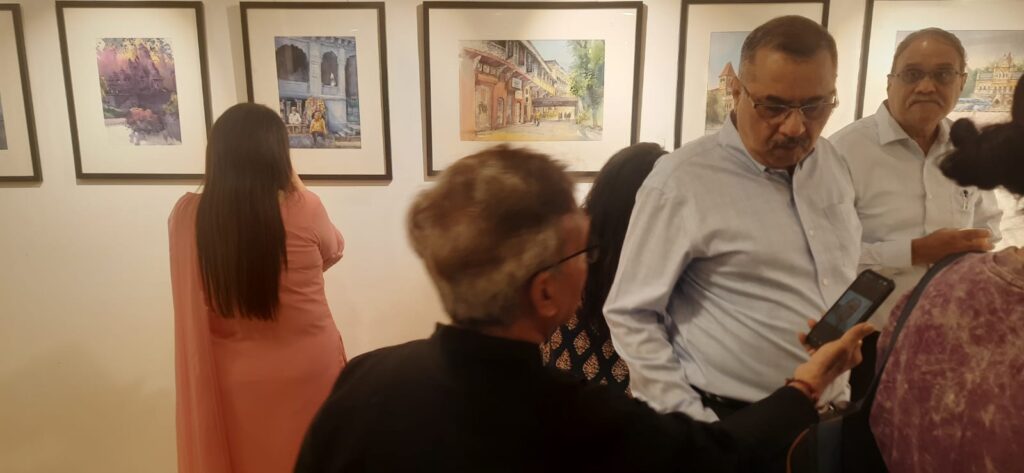
Born in Jodhpur, He was schooled at St. Vincent’s High School, Pune. It was a moment of joy when Rajendraji shared his memories through his paintings of 4 cities, Jodhpur, Mumbai, Pune and Khajuraho.
A gold medalist at Youth Art Festival, an urban sketcher and a member of the Water Colour Association.
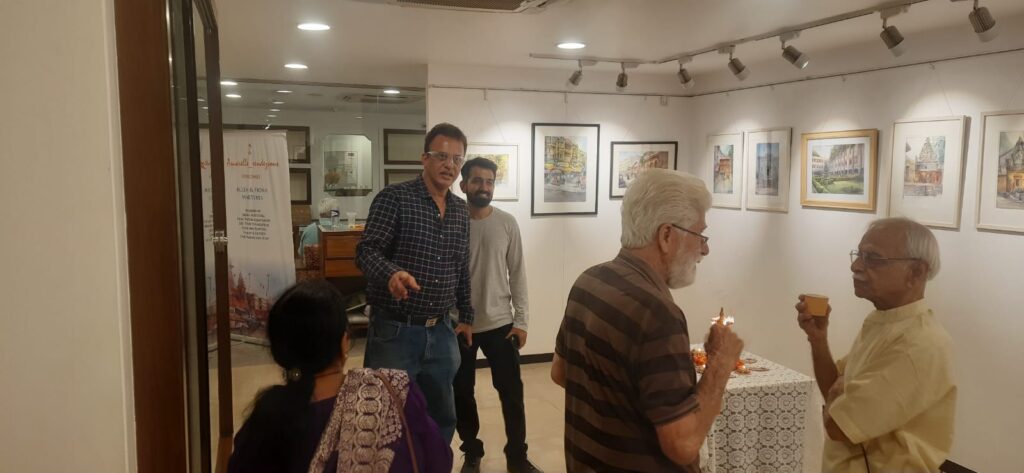
His friends from school accompanied and supported him for his solo show “Aquarelle Rendezvous”. Explaining his interest and knowledge about art and dedication towards artistic exploration and ideas. Having worked in business management and advertising, he has acquired specialised skills and developed a talent to showcase artistic sun and shade, life-like urban sketching, and watercolour paintings through his travel diaries.
An Audio of the Opening Dialogue. By Mr and Mrs Martyrs
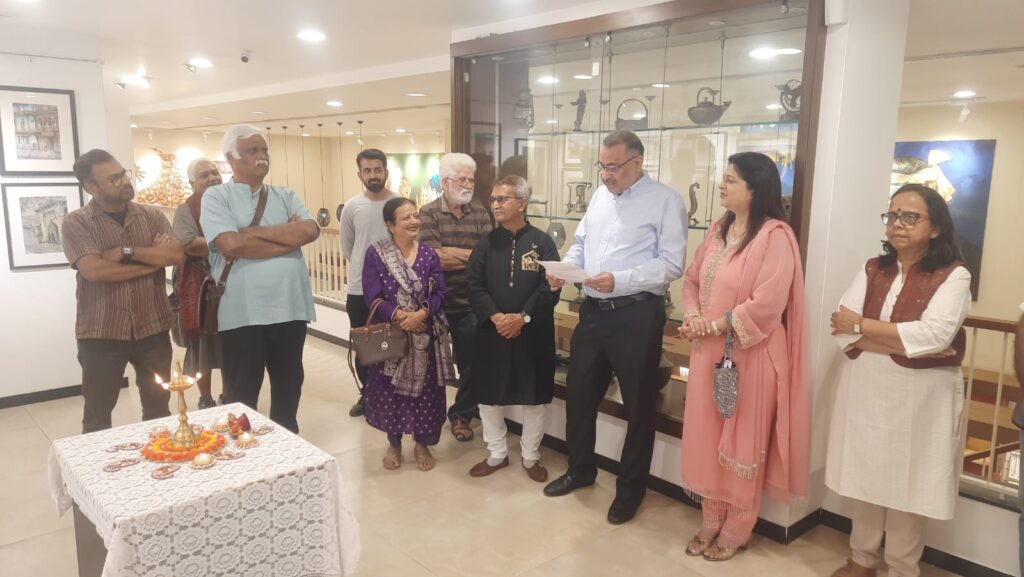
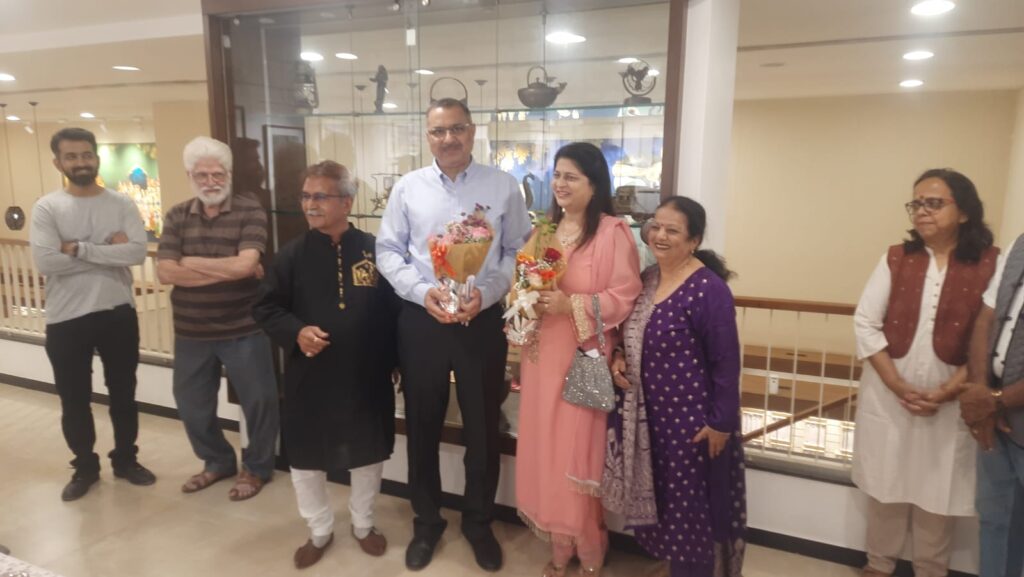
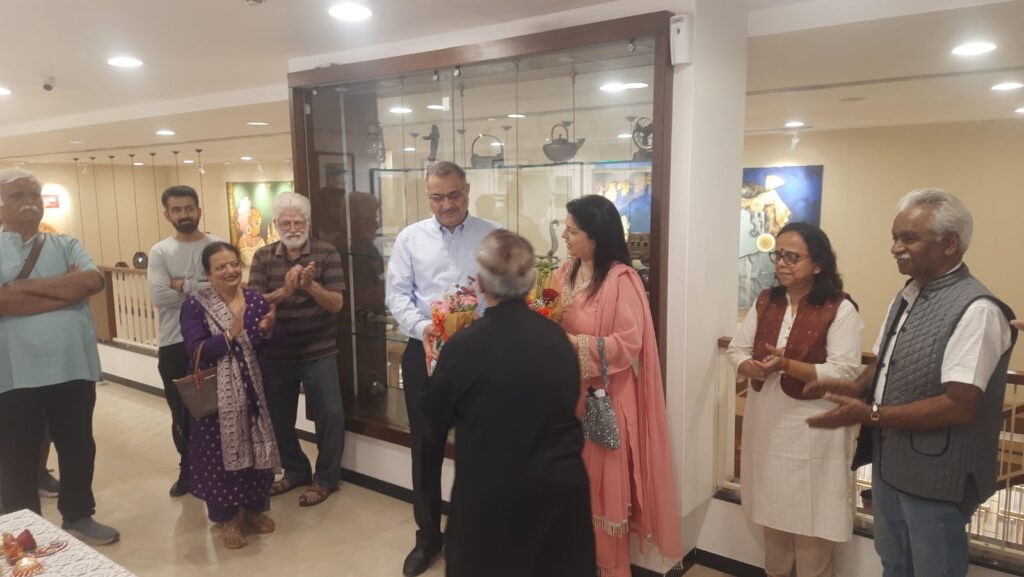
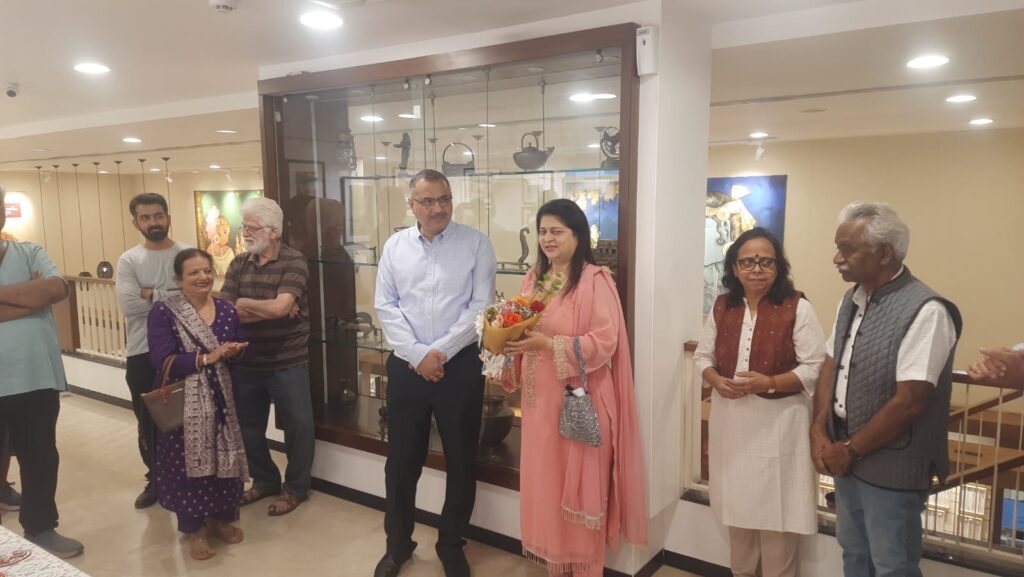
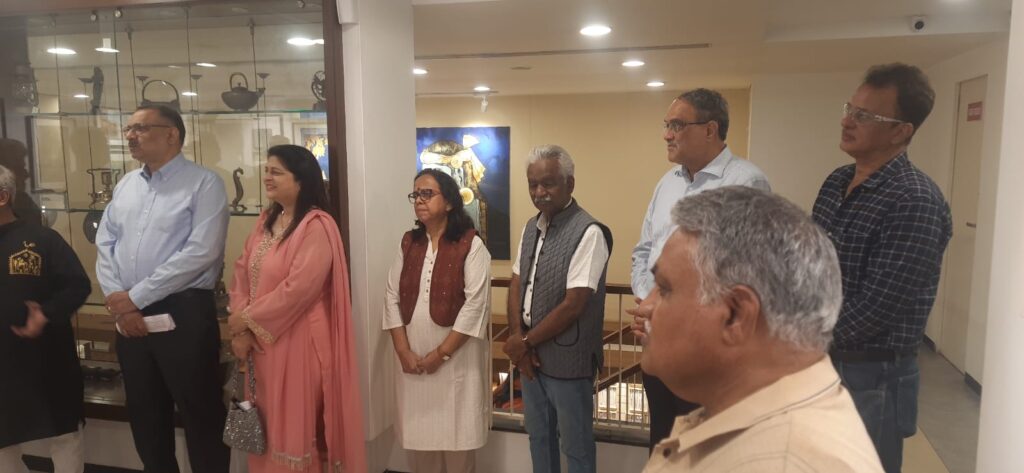
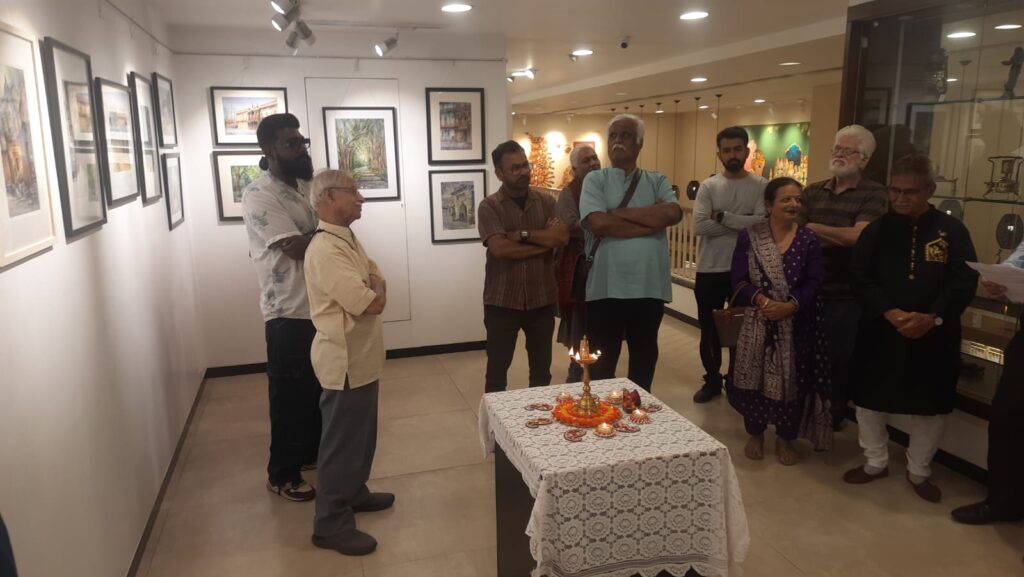
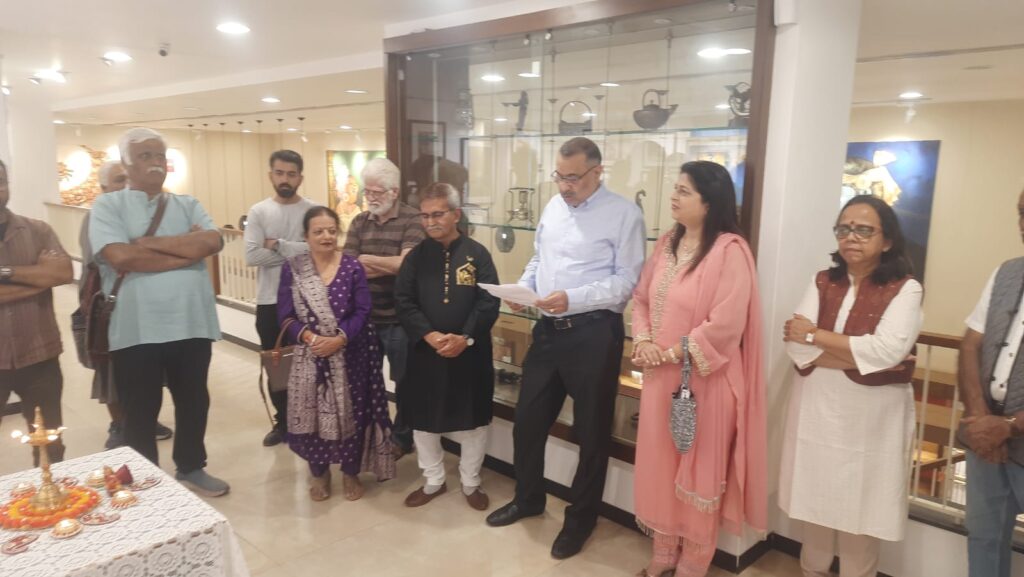
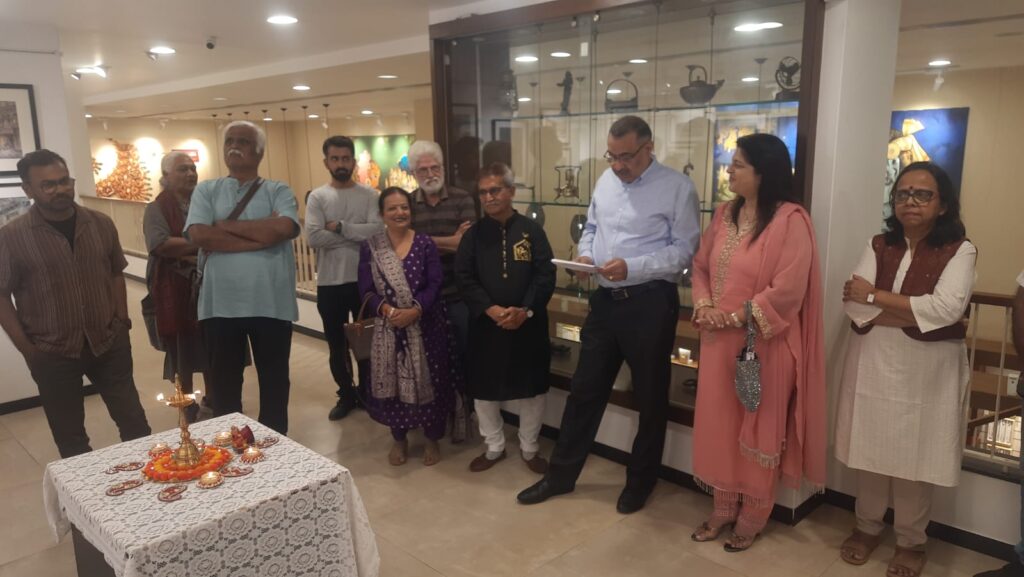
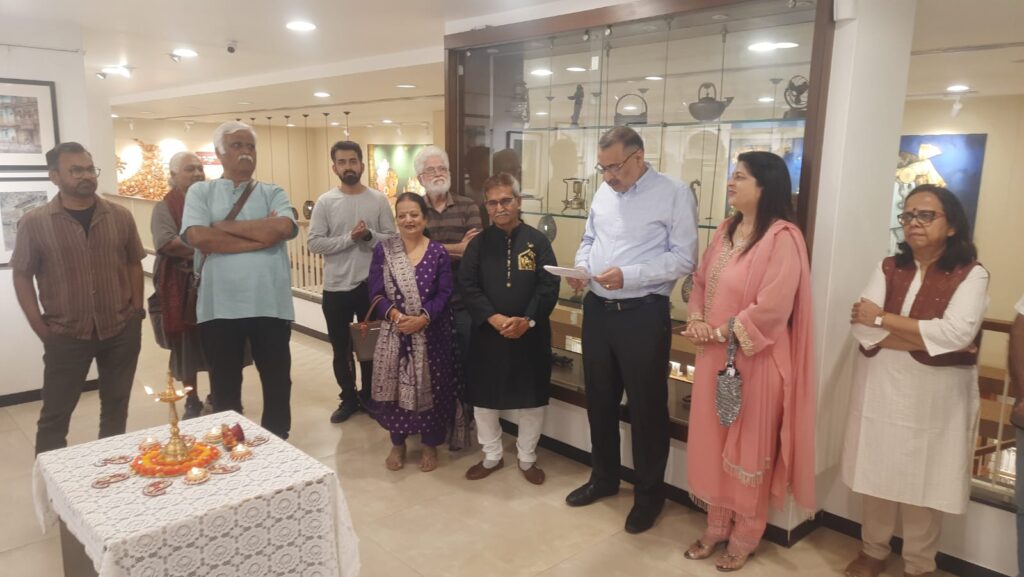
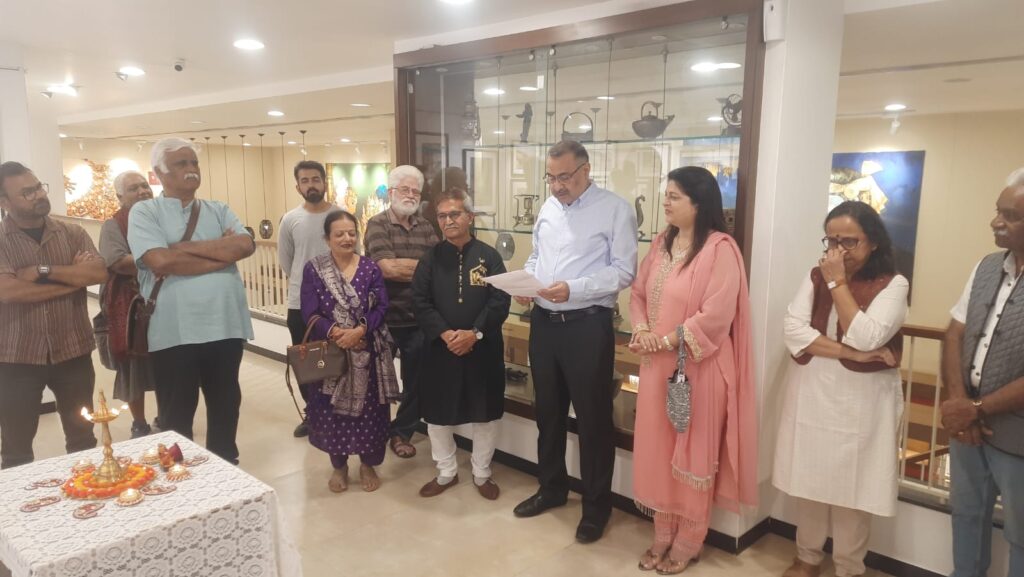
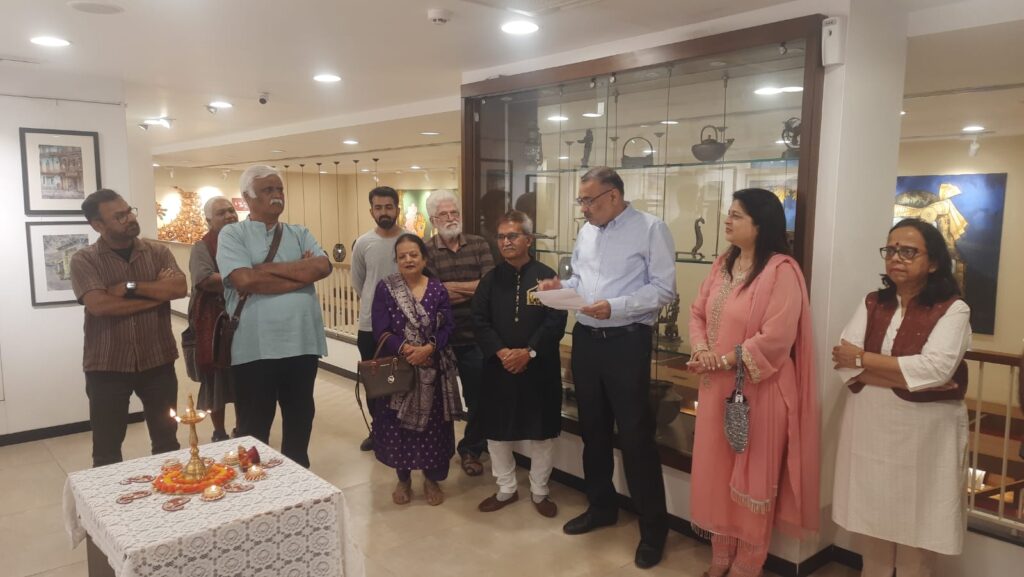
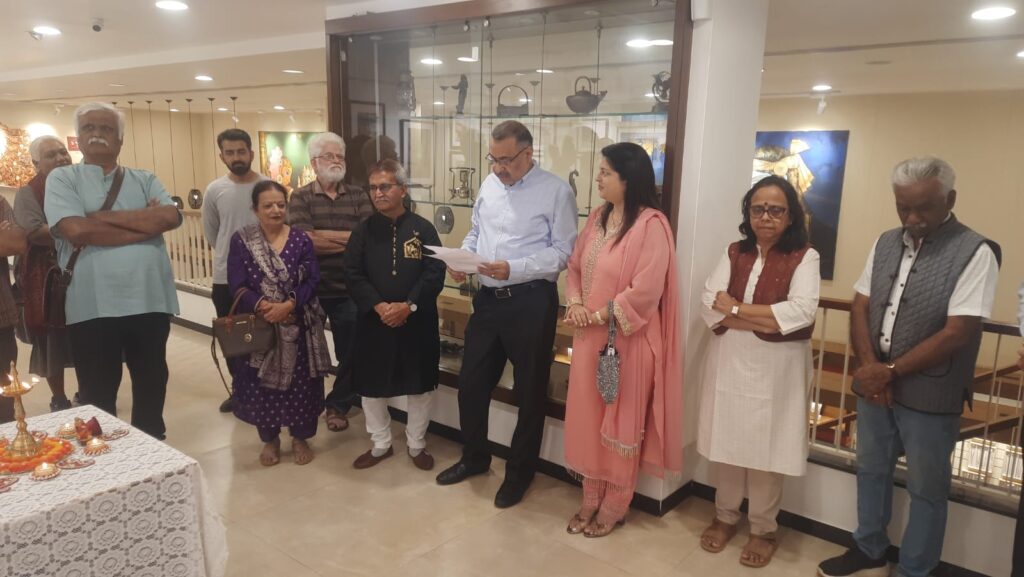
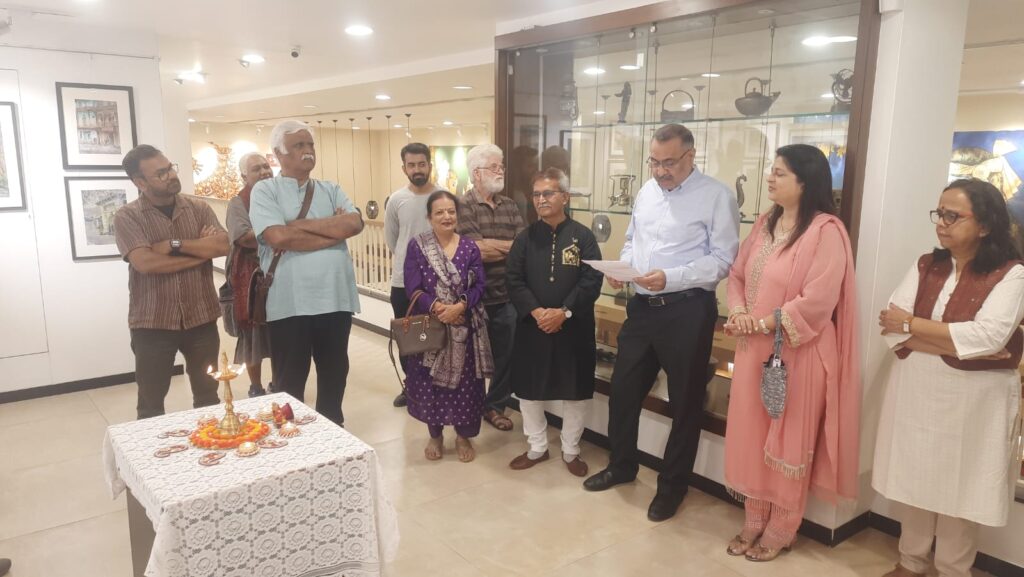
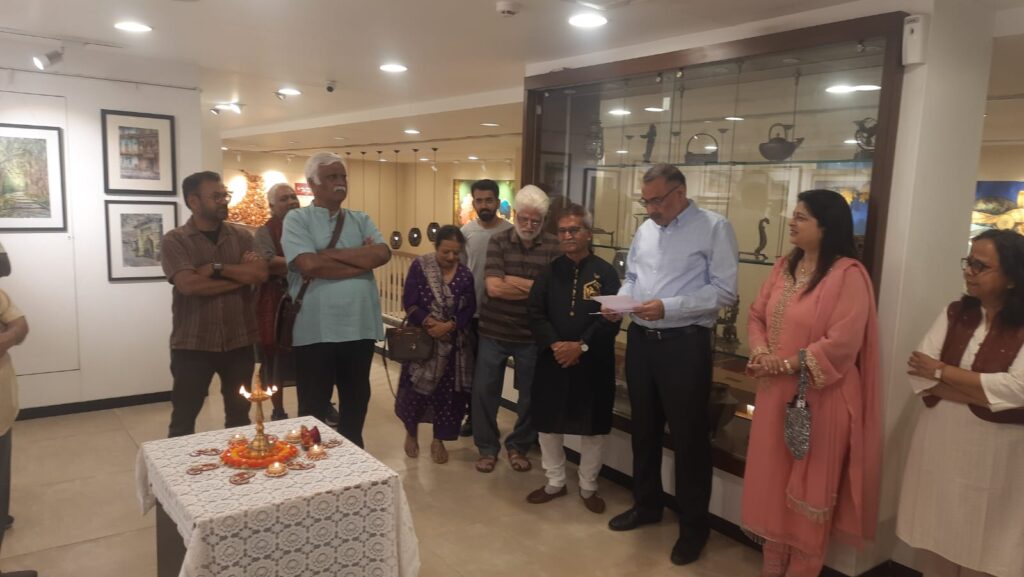
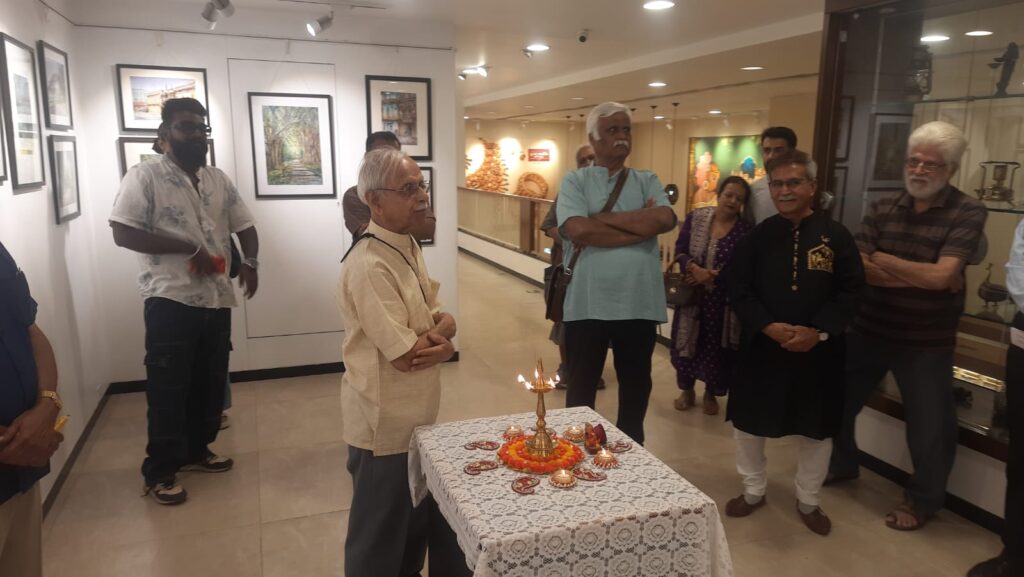
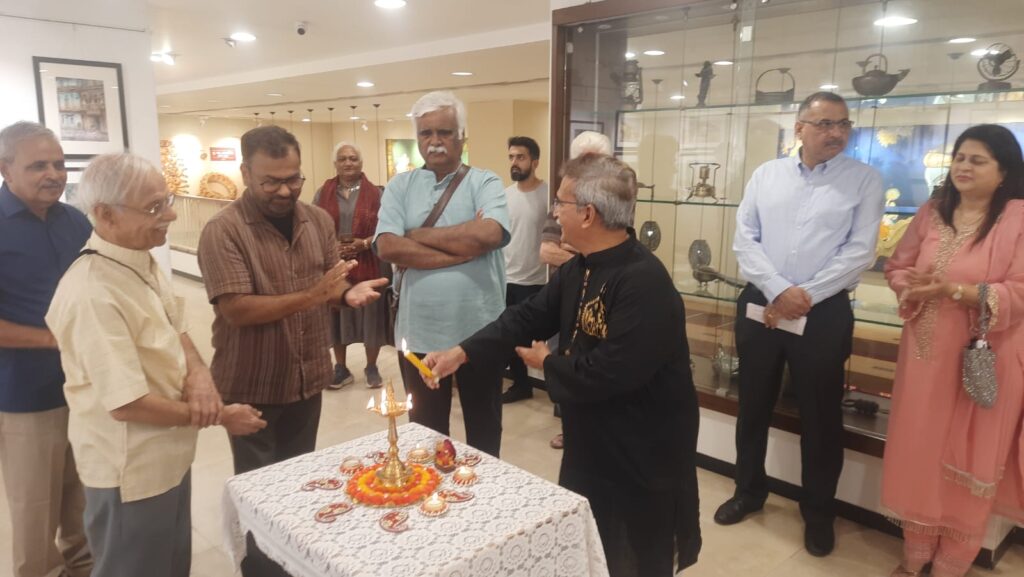
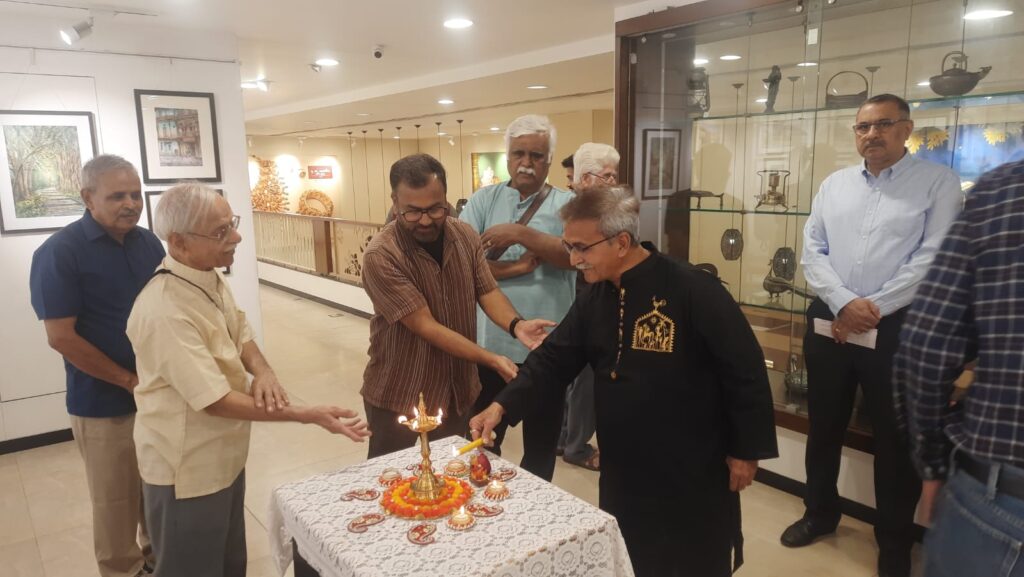
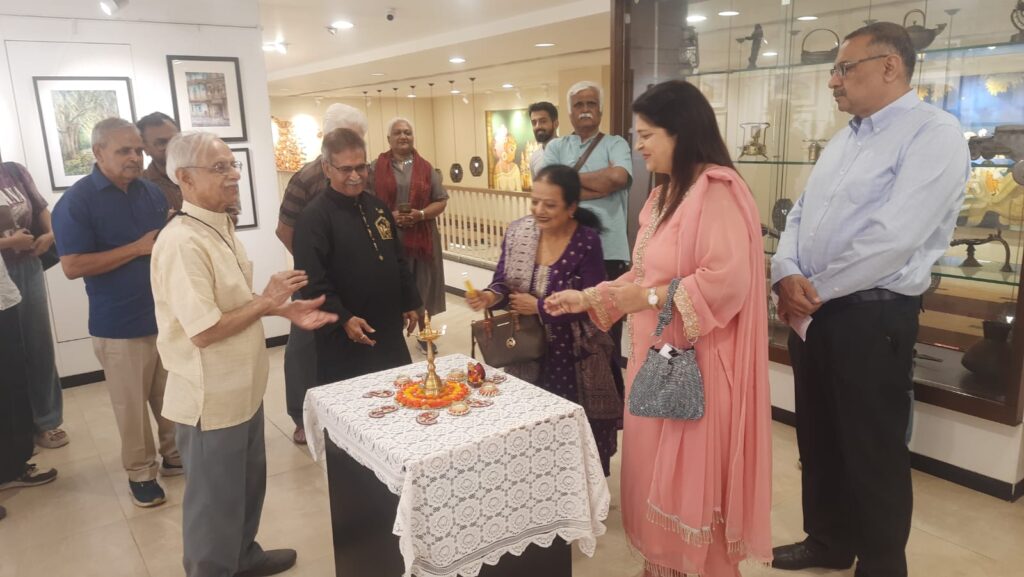
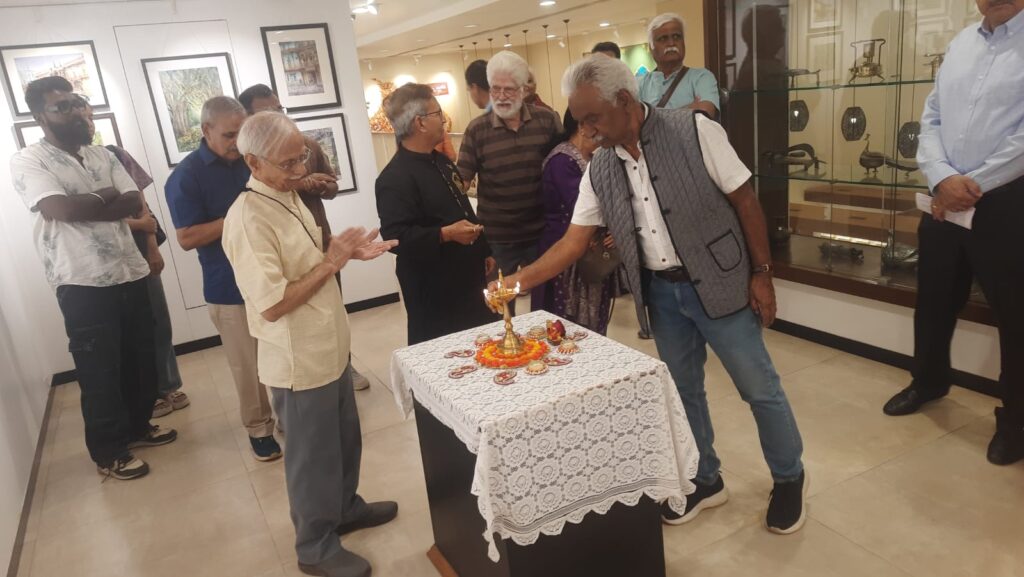
A special moment, Shri Rajendra Mehta’s friends Mr Allen and Mrs Fiona Martyr’s, share a moment of the lighting of the samai and then opening the show for viewing, purchase, while having a sip of tea and coffee. Urban Sketchers were a support system and special thanks to Shridhar Susumal who has been instrumental and key person in making this art show a grand success.
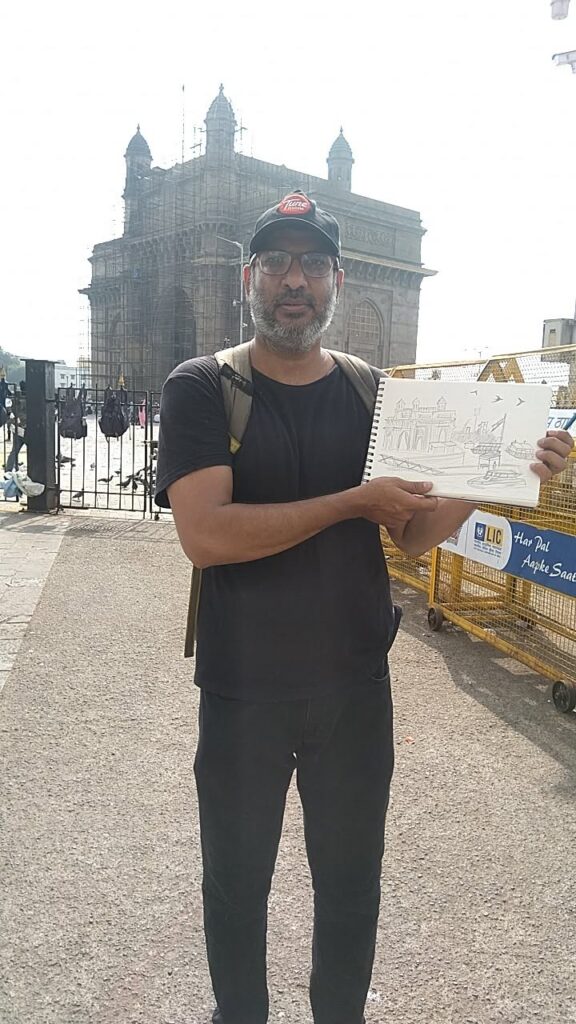
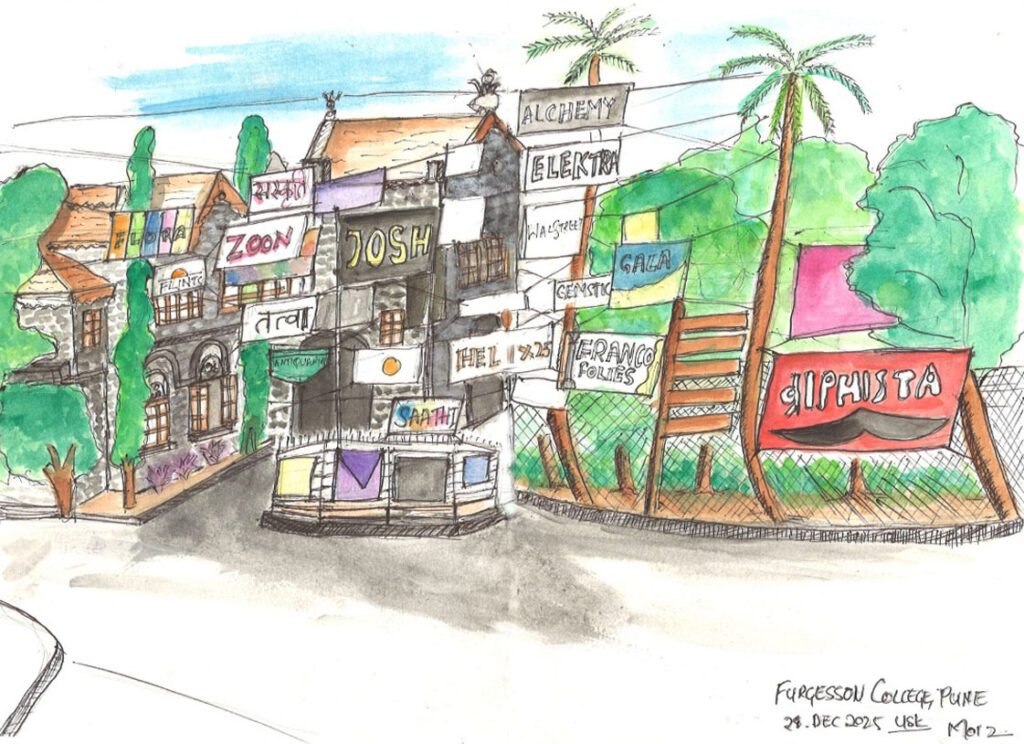
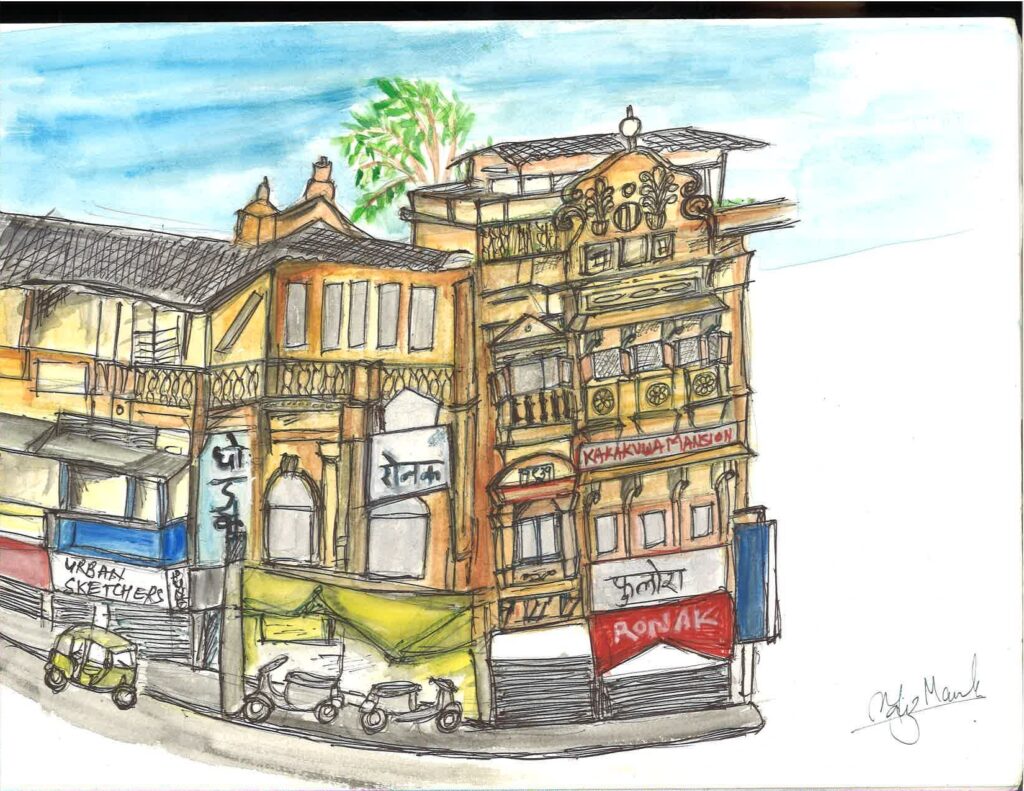
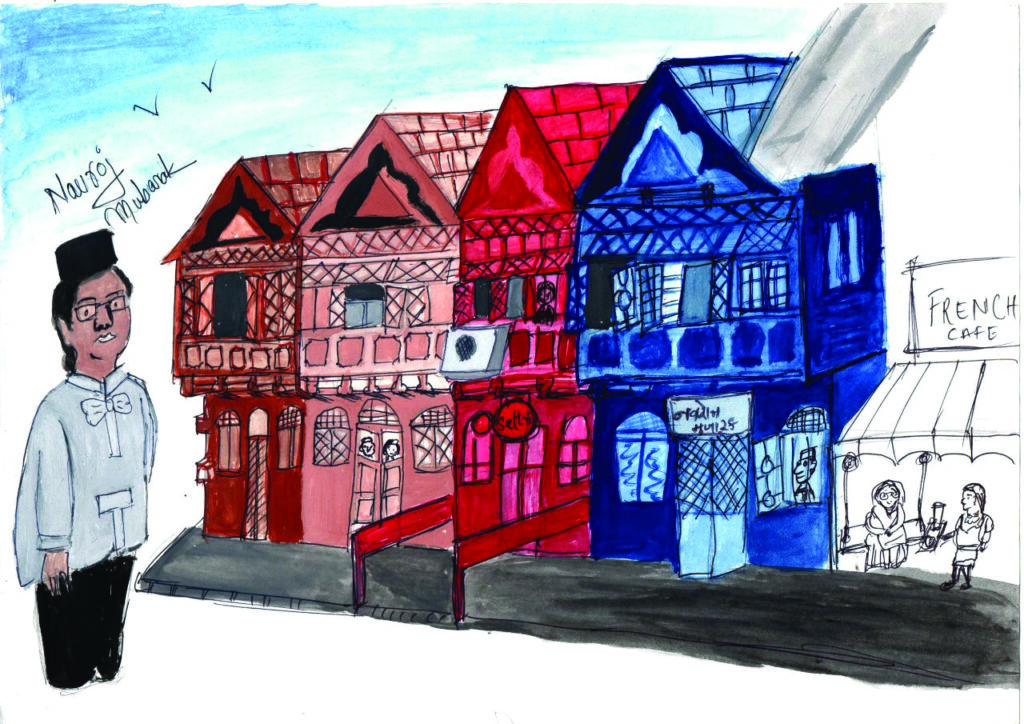
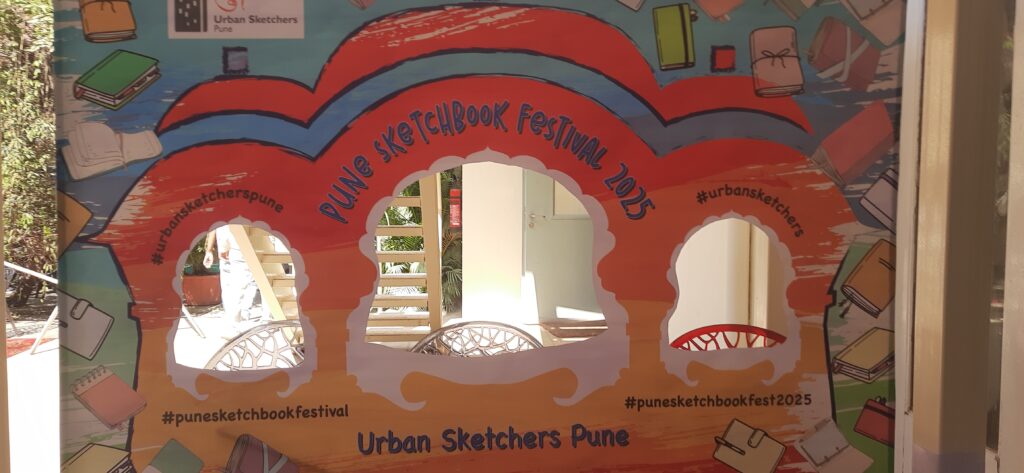
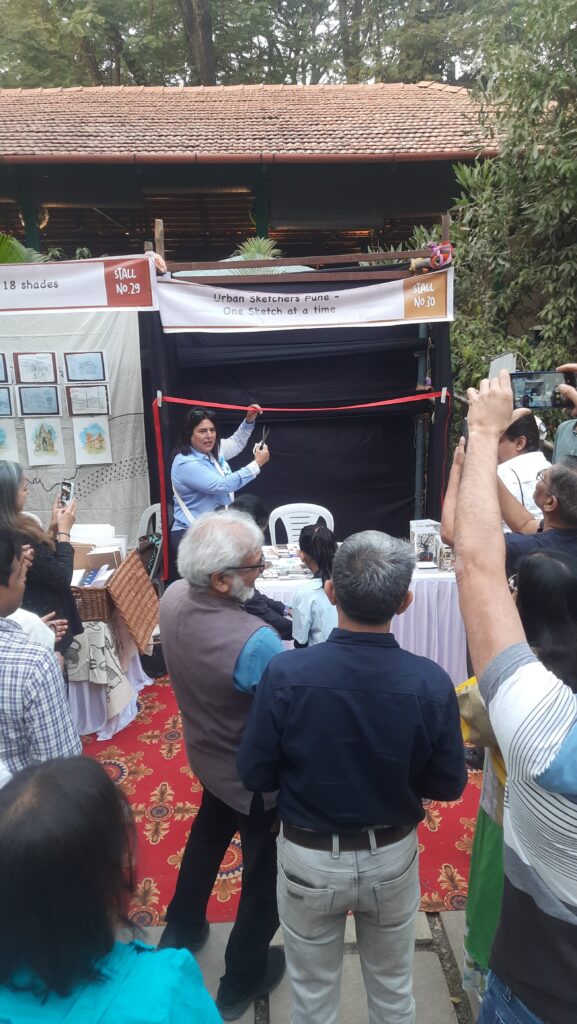
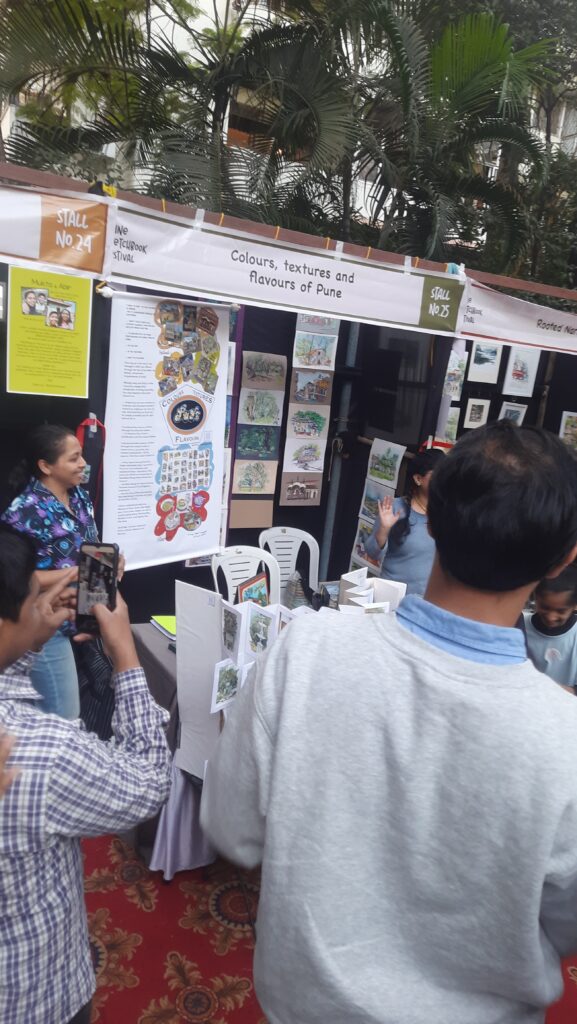
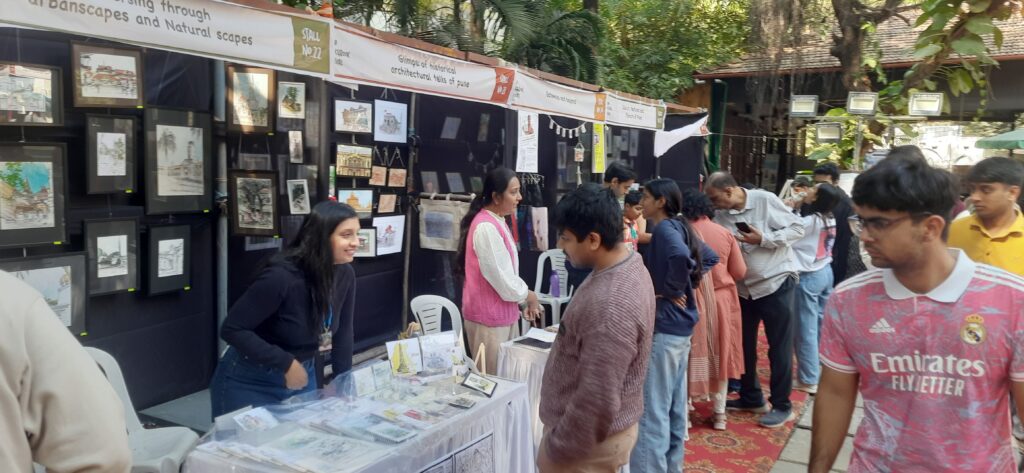
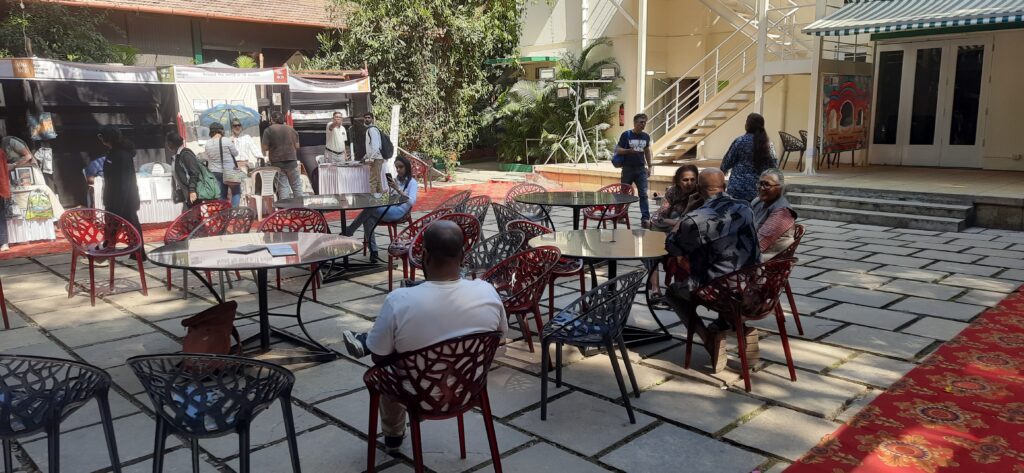
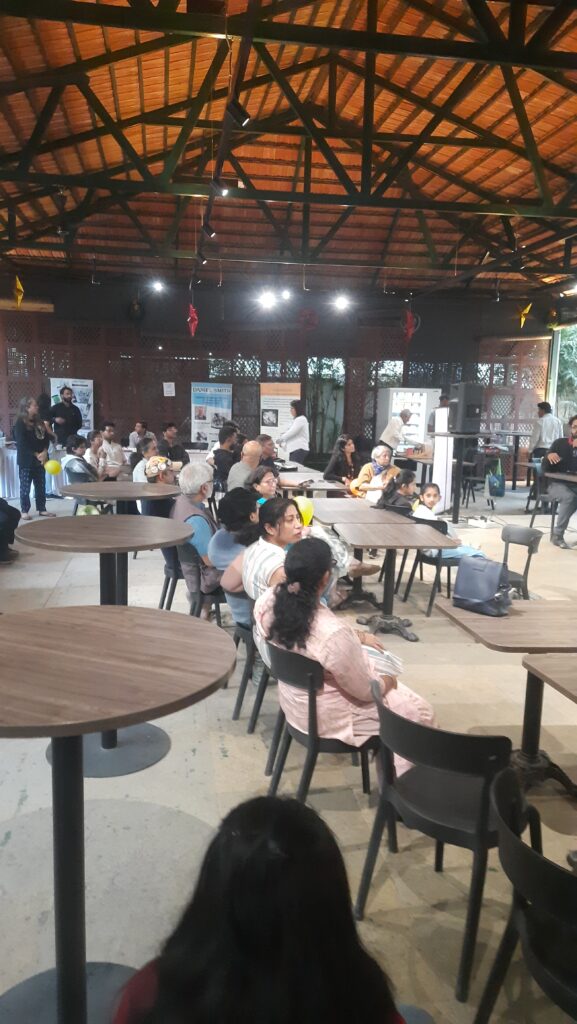
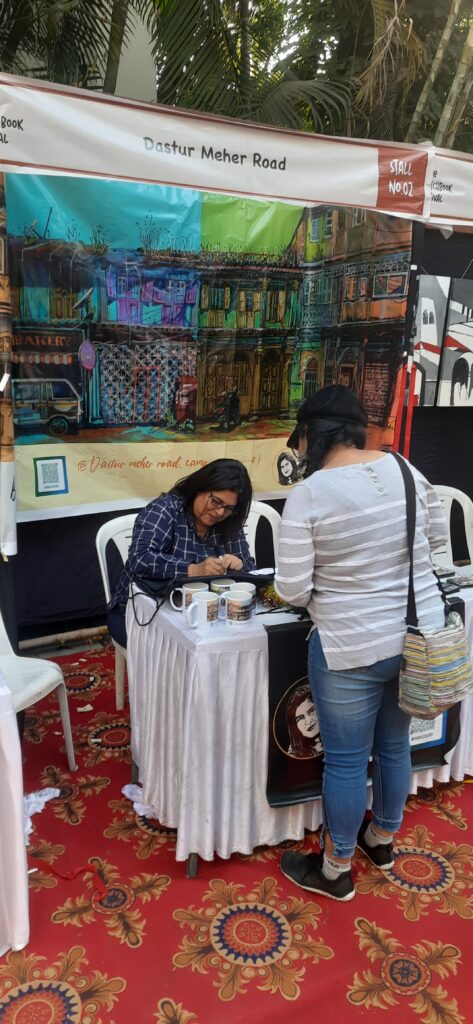
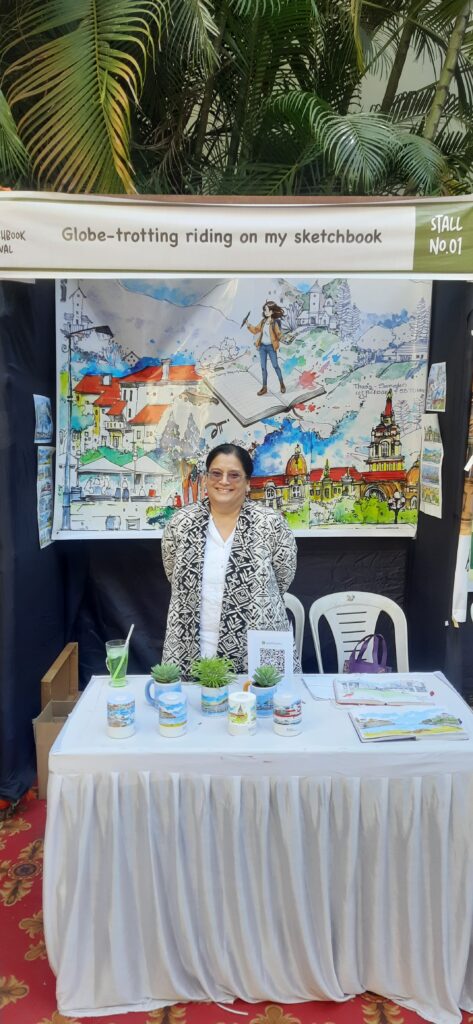
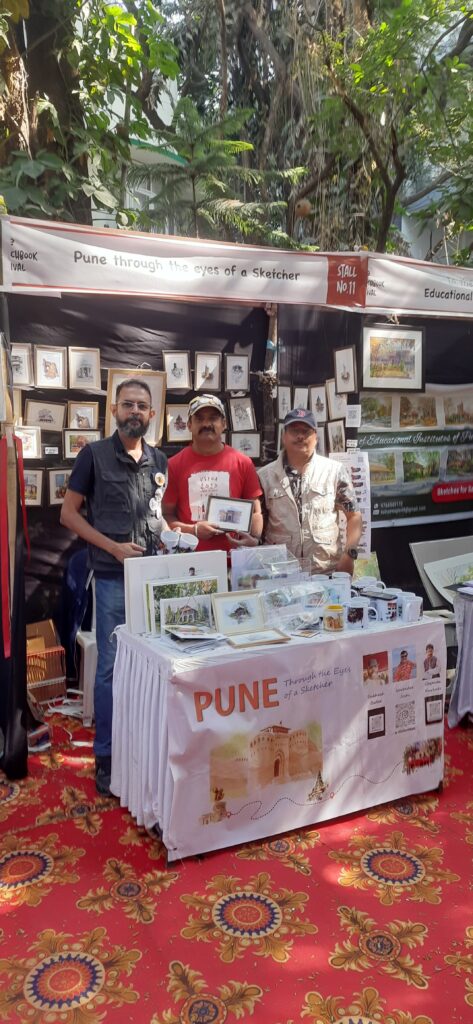
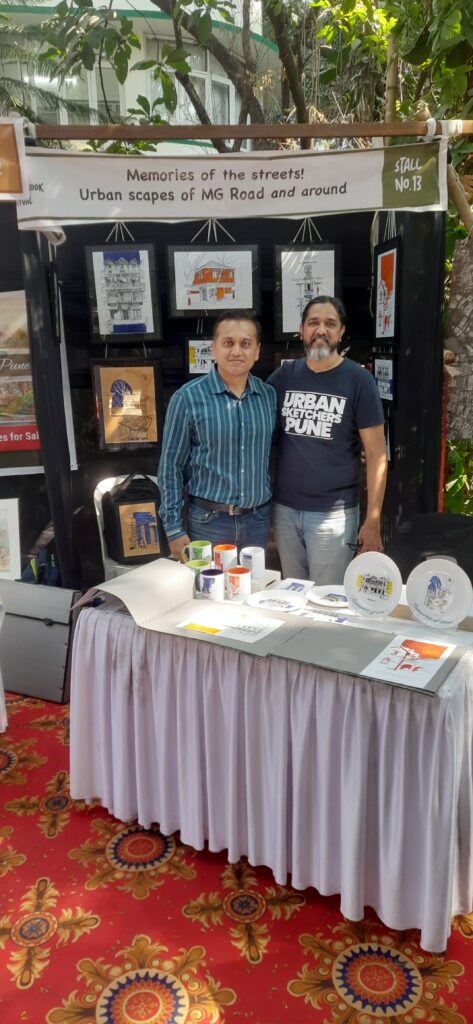
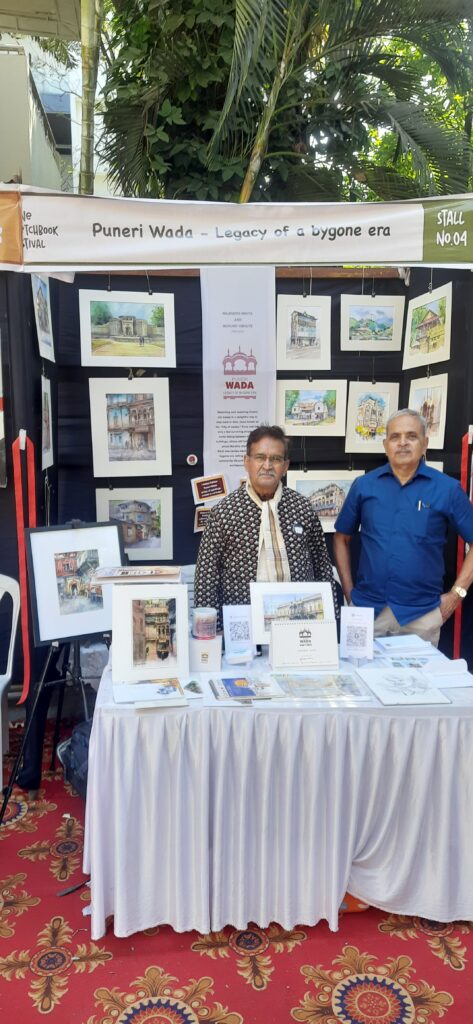
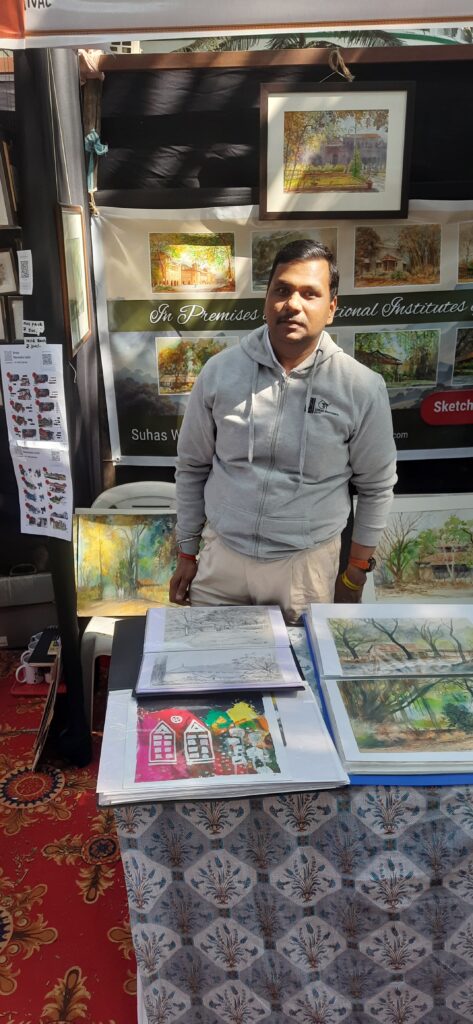
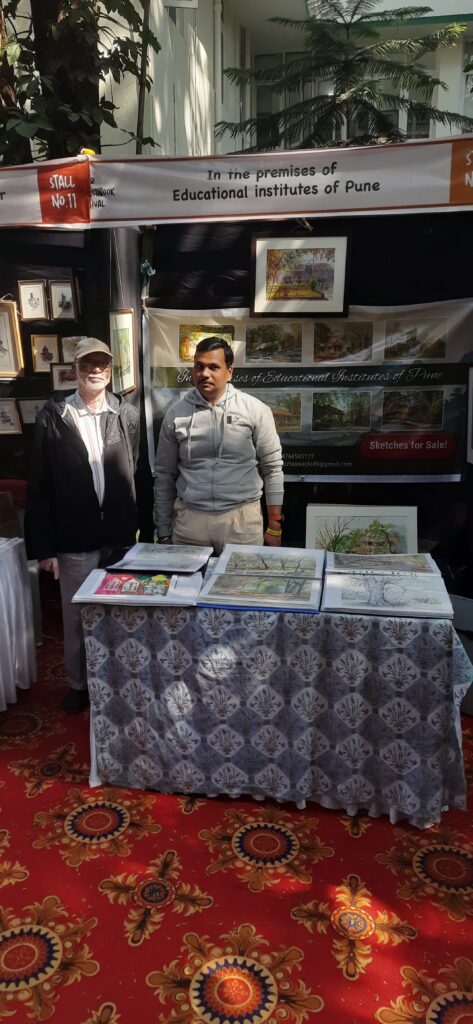
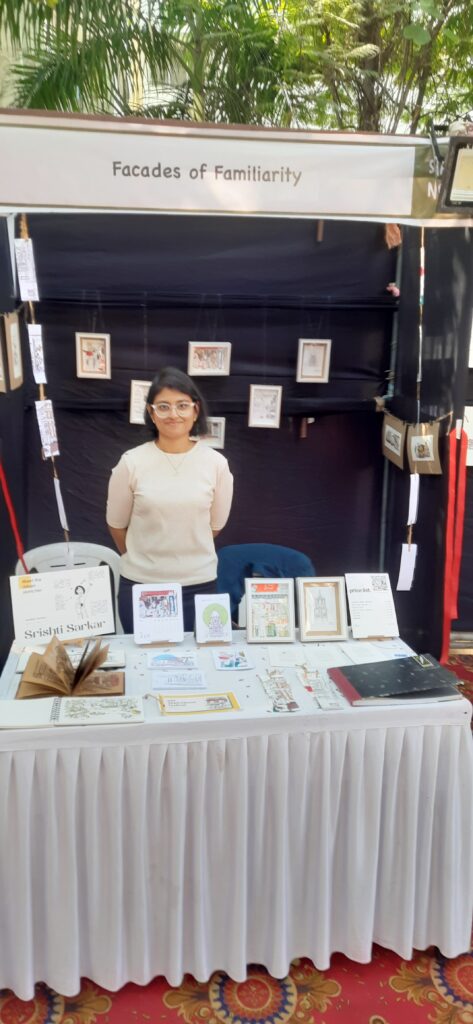
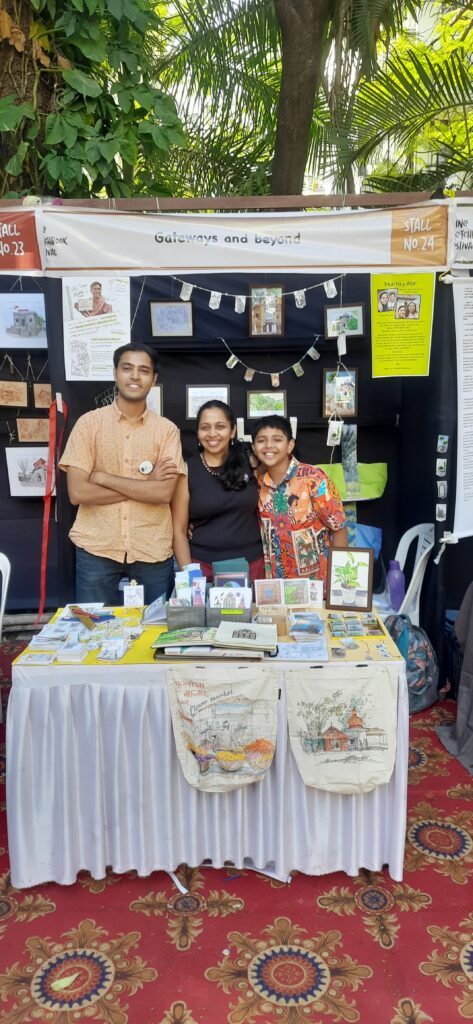
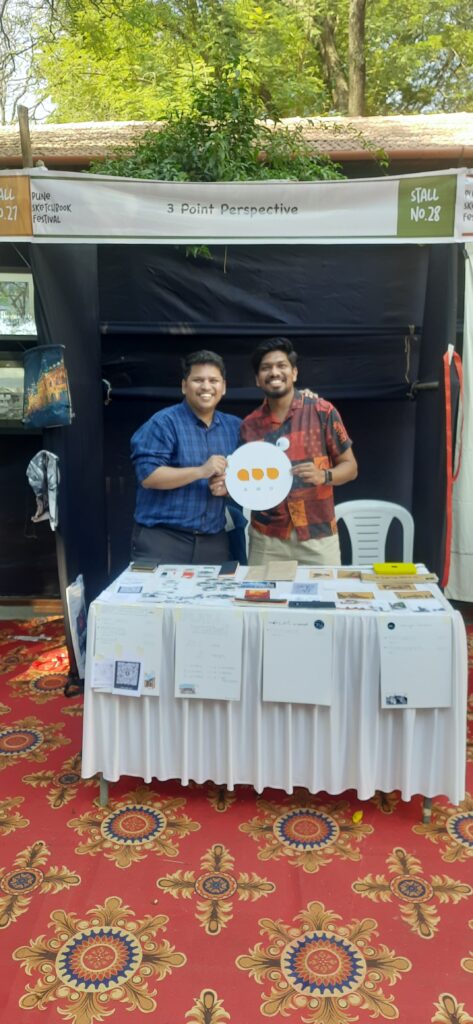
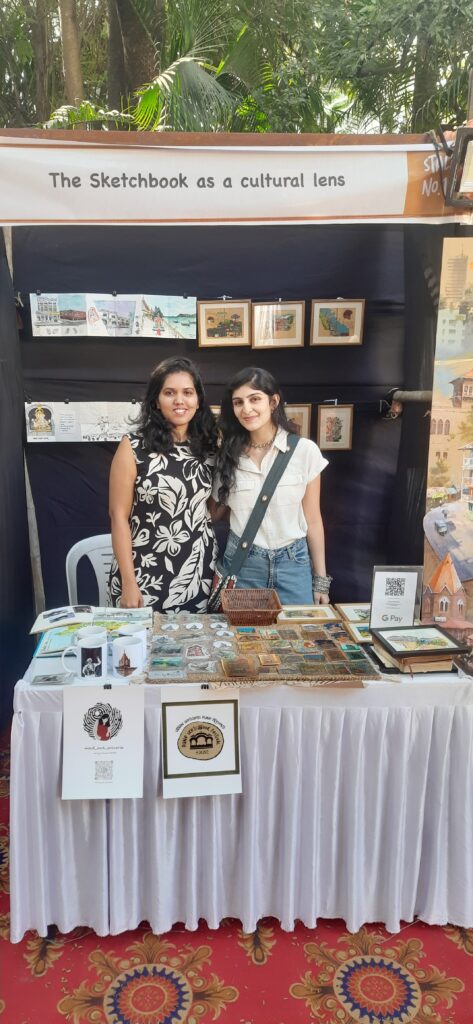
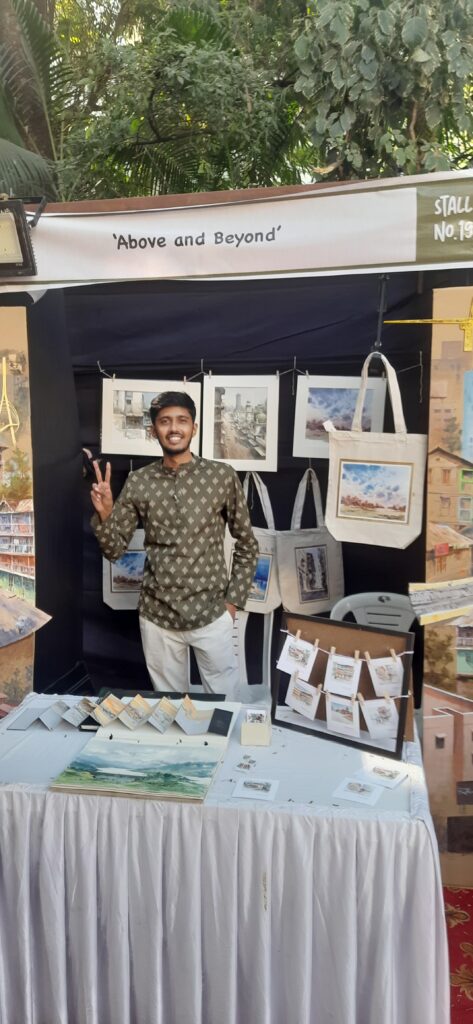
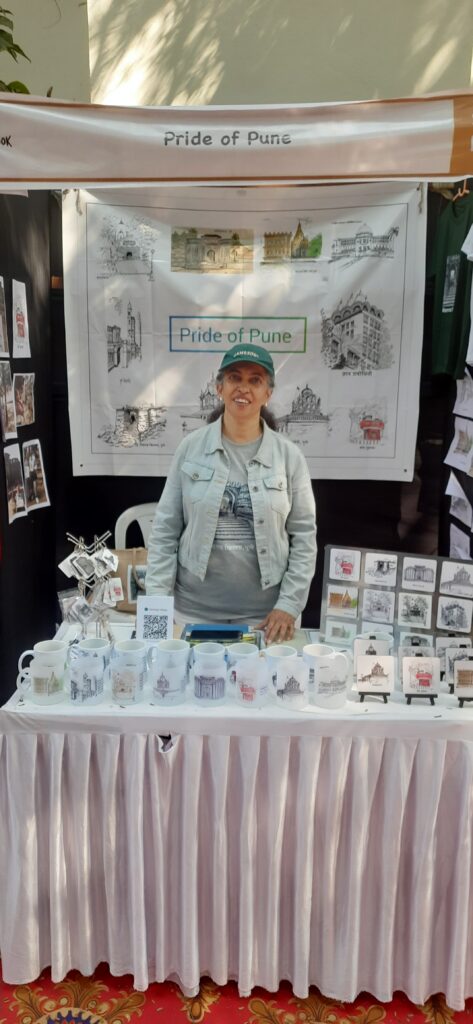
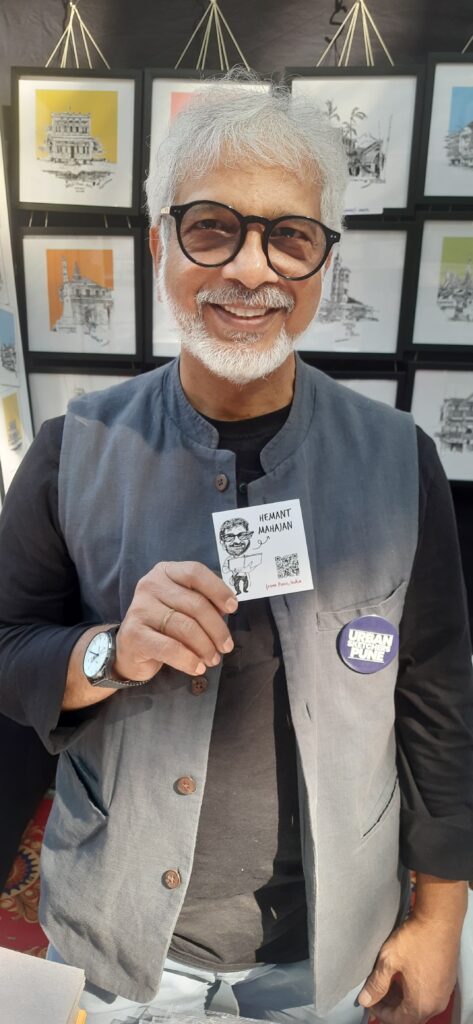
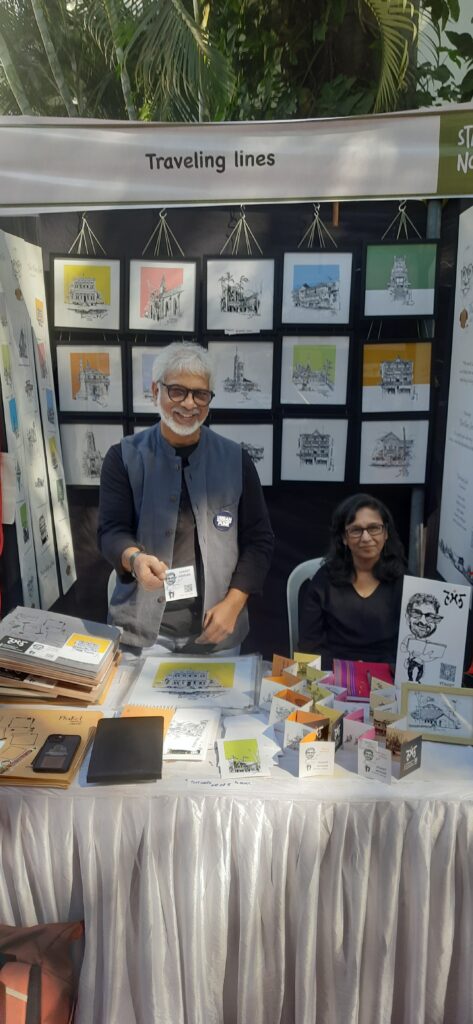
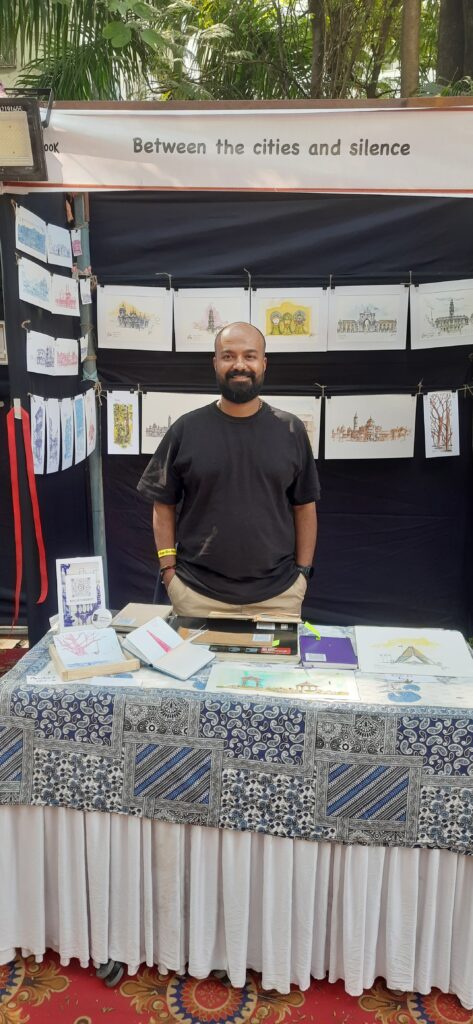
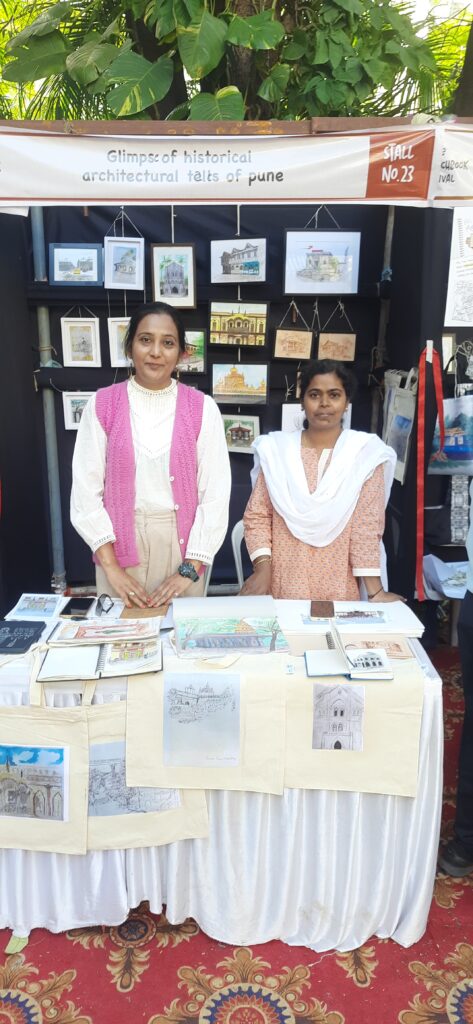
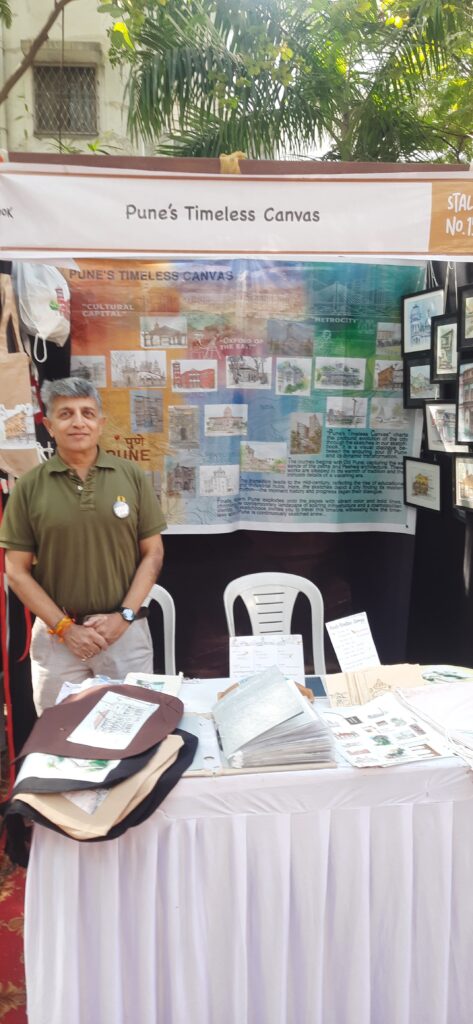
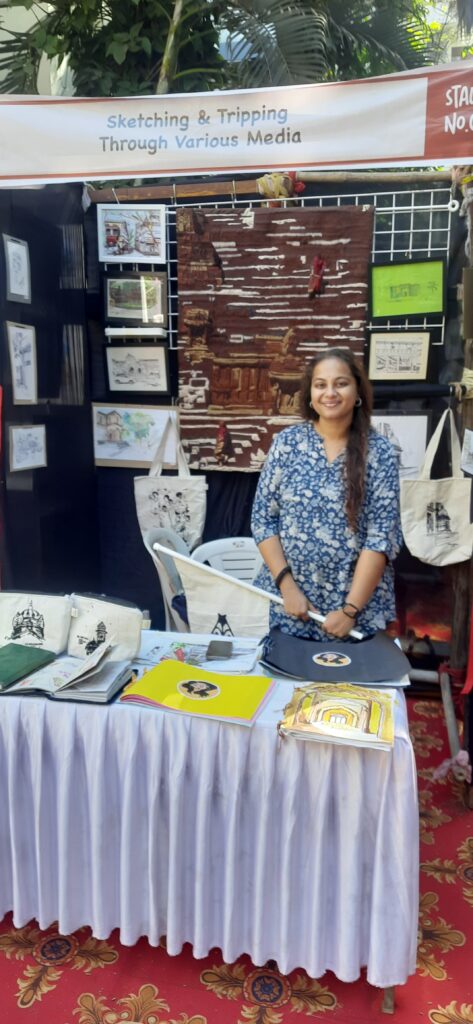
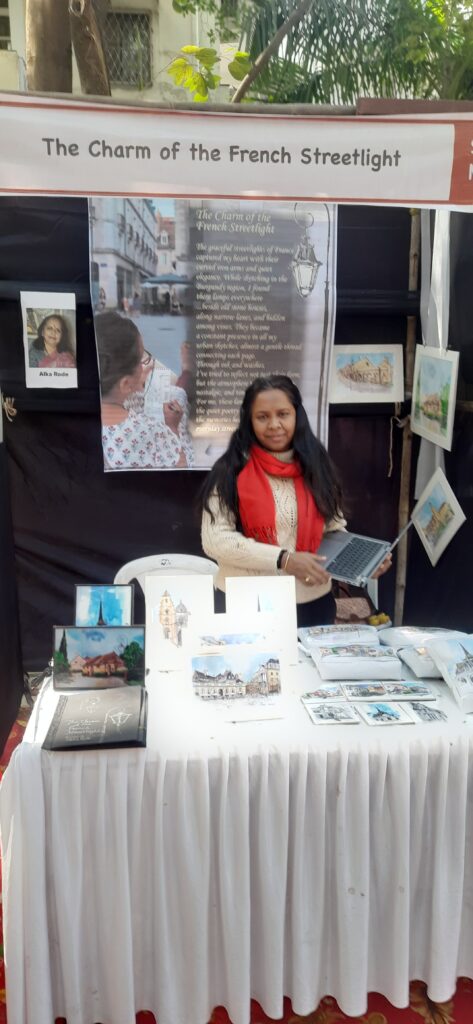
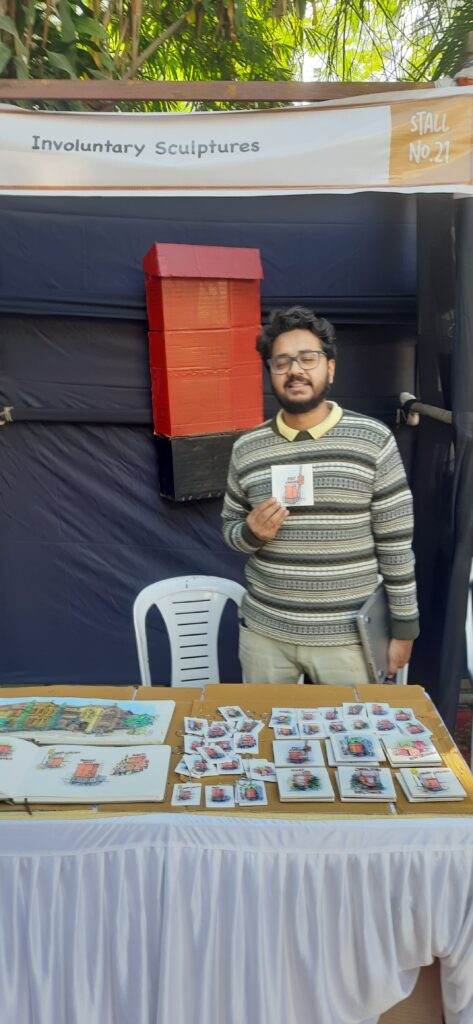
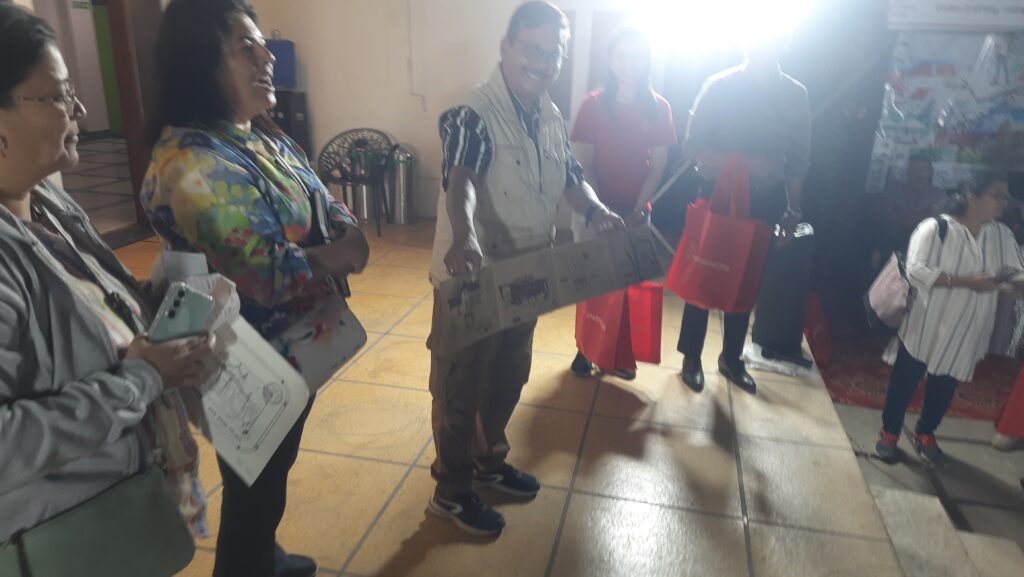
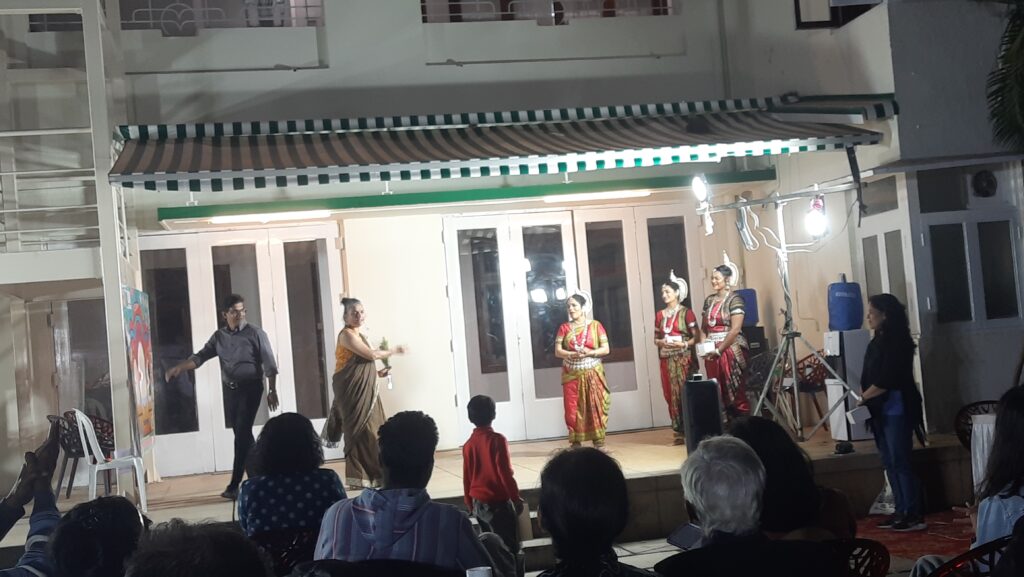
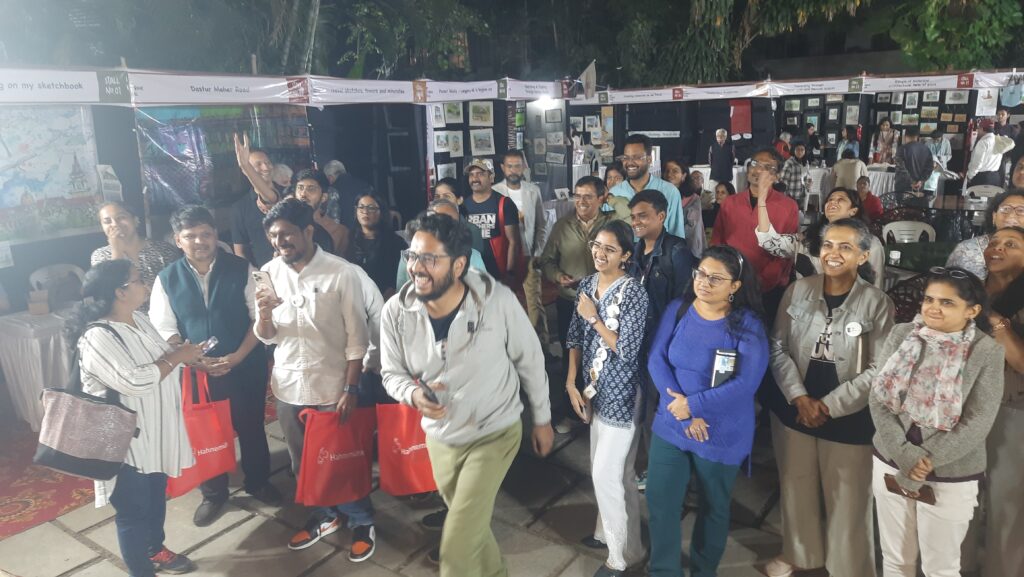
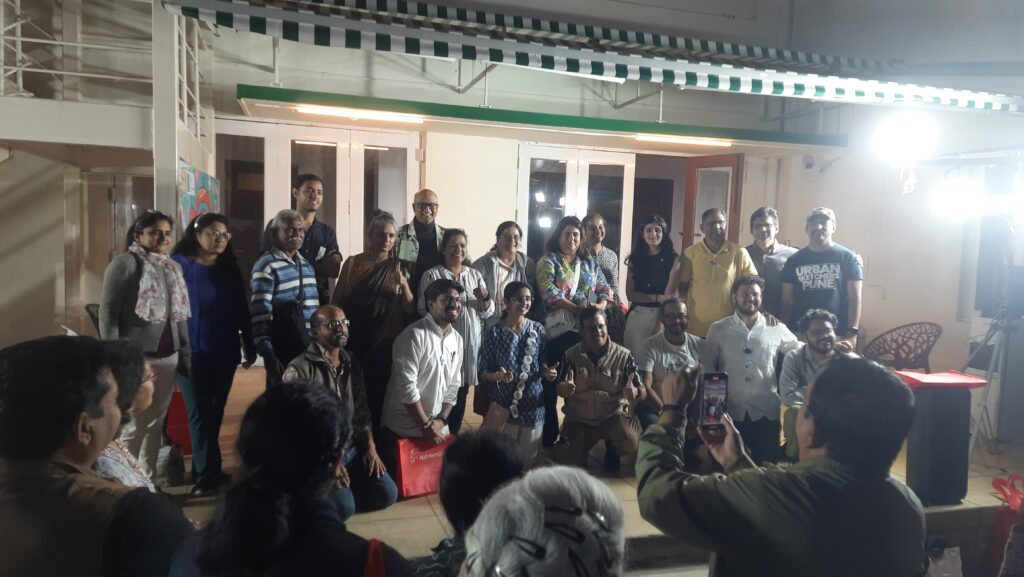
Pune Sketchbook Festival took place at the German Goethe Institute, Pune. The inaugural ceremony has a very interesting way to cut ribbons of neighbouring stall, passing a message to love their neighbour after which the festival began. USK Akash Rode started with a presentation about the festival, events each day.
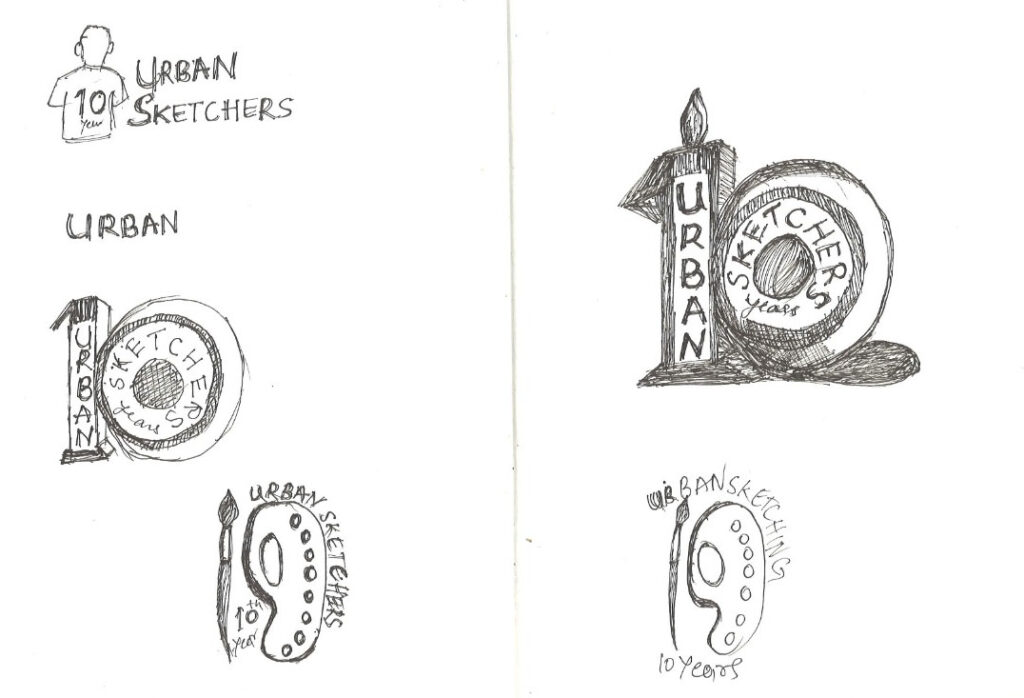
Urban Sketchers have a weekly meet on Sunday at 8:00 am for sketching various places in the city. These sketches have now become a souvenir as they take shape into merchandise such as mugs, postcards, calendars, coasters, bags, stamp-size stickers, bookmarks, T-shirts, quilts, caps, canvas paintings, and lamps. Urban Sketchers has a monthly magazine that shares a few thoughts on one sketch and a few techniques on how to sketch. Sketchbooks, colour palettes, and stalls to buy artist essentials like brushes, sketchbooks, colours, etc.
Lucky Draw coupon prizesPrize for Demos and Sketchbooks Treasure Hunt Clue SketchSketch a Story
Akash Rode was the ideator of the sketch hunt and had written the clues. The clues were fascinating and really nice to sketch these places. He is one of the main pillars of the organising team, and his contribution to the Sketchbook Festival was immense, earning him a big round of applause from all.
With an exciting note, a few pictures of all the volunteers that had been supportive towards making the festival a success.
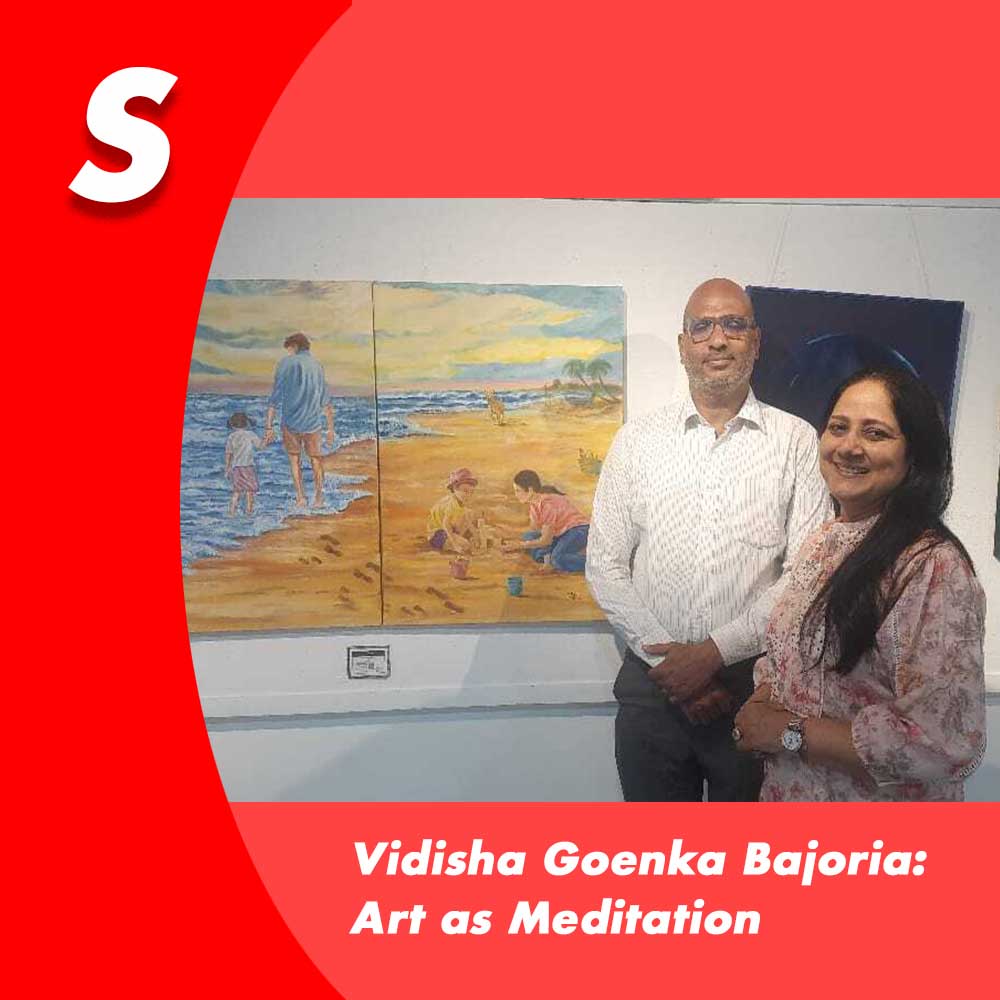
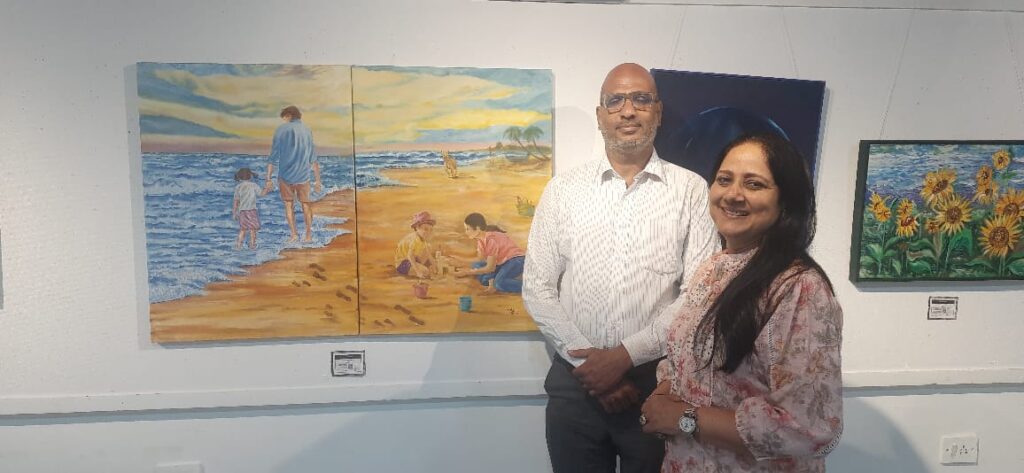
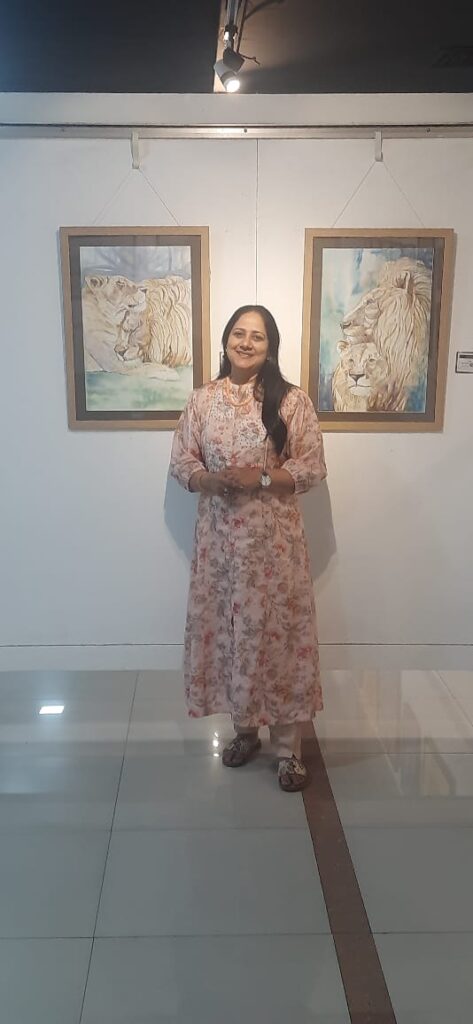
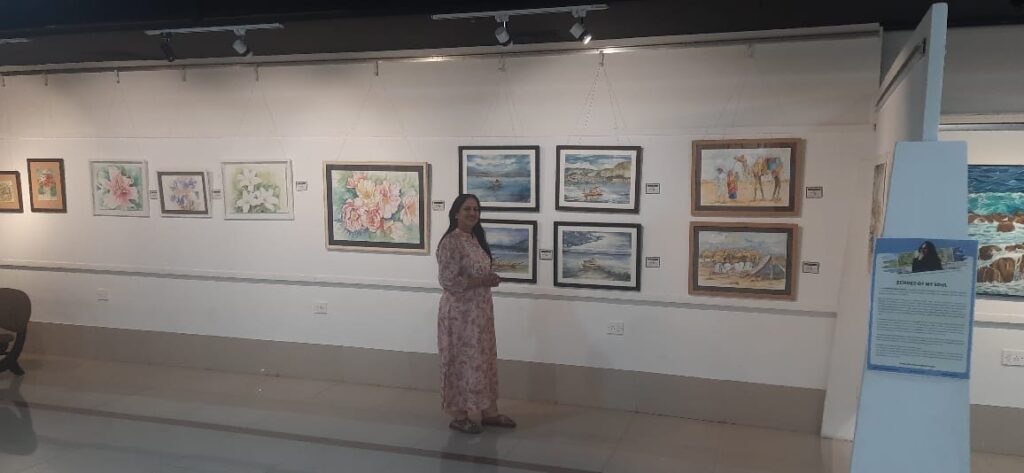
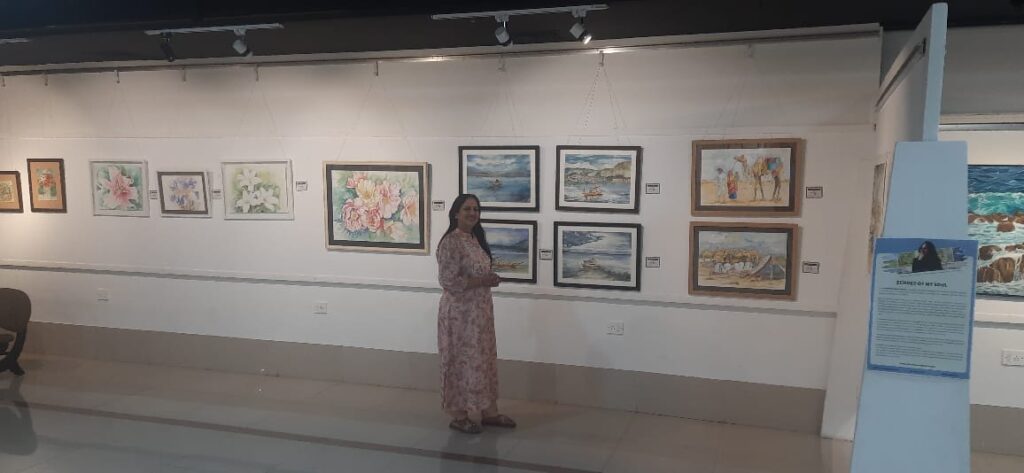
Artist and Reiki healer Vidisha Goenka Bajoria transforms painting into a meditative practice. Her work invites viewers to pause and reconnect with nature—admiring flowers, leaves, butterflies—moments often lost in life’s rush.
From Kolkata roots to Rajasthan influences, her art spans self-portraits, wildlife, and cultural landscapes. Each piece explores inner healing and self-consciousness, expressing how thoughts shape our reality.
Sacred Symbolism
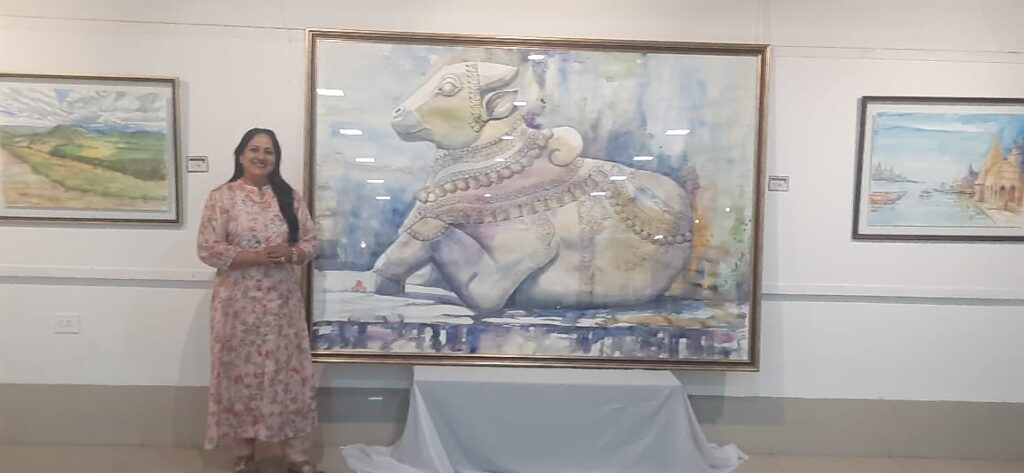
Large-scale Nandi watercolor painted on her bed—a challenging feat showcasing devotion and patience.
Protective Bonds
Lion couples watching over each other, symbolizing partnership and mutual care in relationships.
Spiritual Journey
Varanasi painting capturing an artist’s life span in one delightful, soul-stirring composition.
Cultural Roots
Rajasthan’s vibrant essence flows through her work, honoring heritage and identity through art.
Her book complements the exhibition, guiding readers toward healing and balance through inner soul energy. Launched at Raja Ravi Verma Art Gallery, Pune on Tuesday, 7 Oct 2025. Priced at 300 rupees.
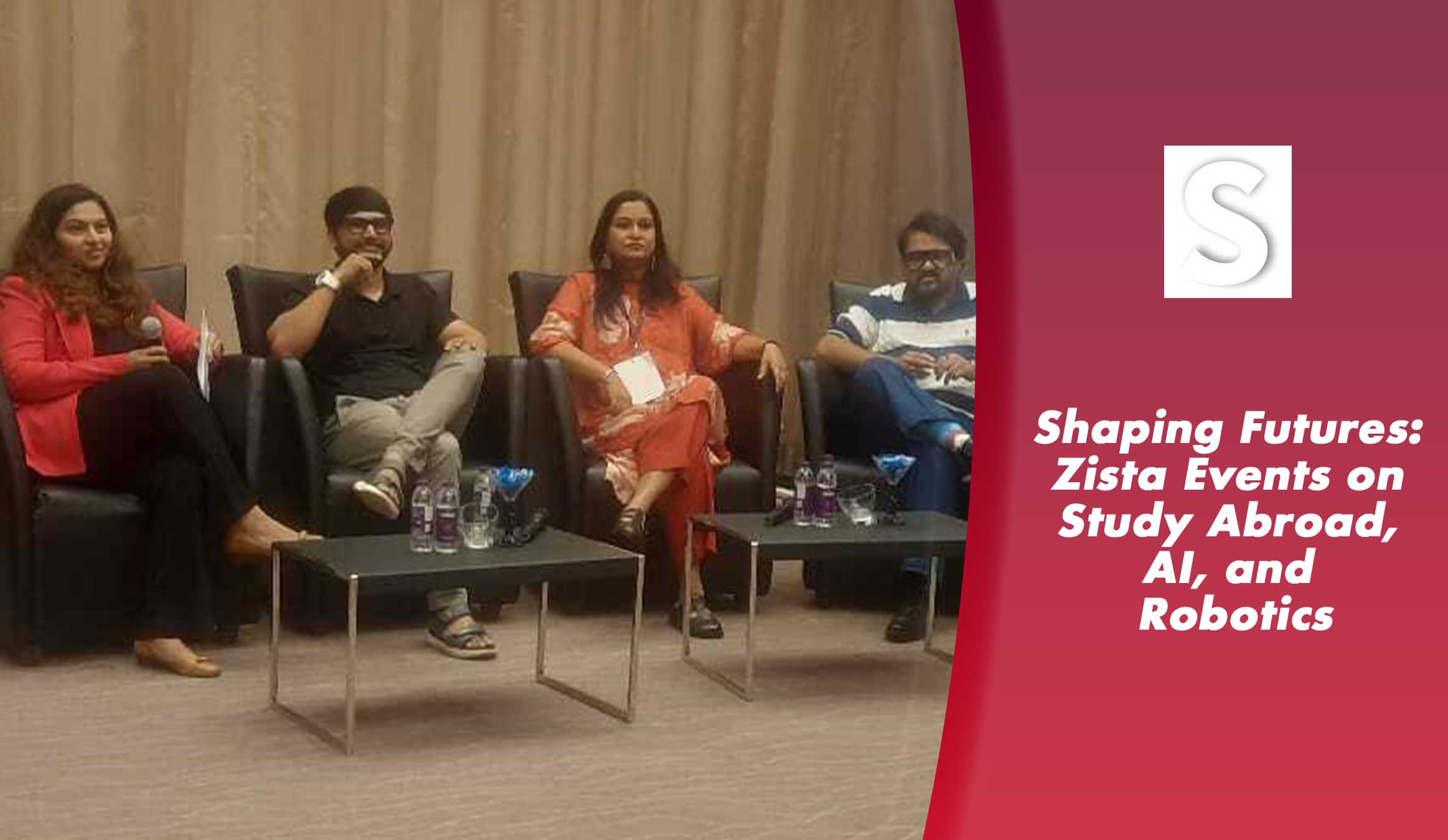
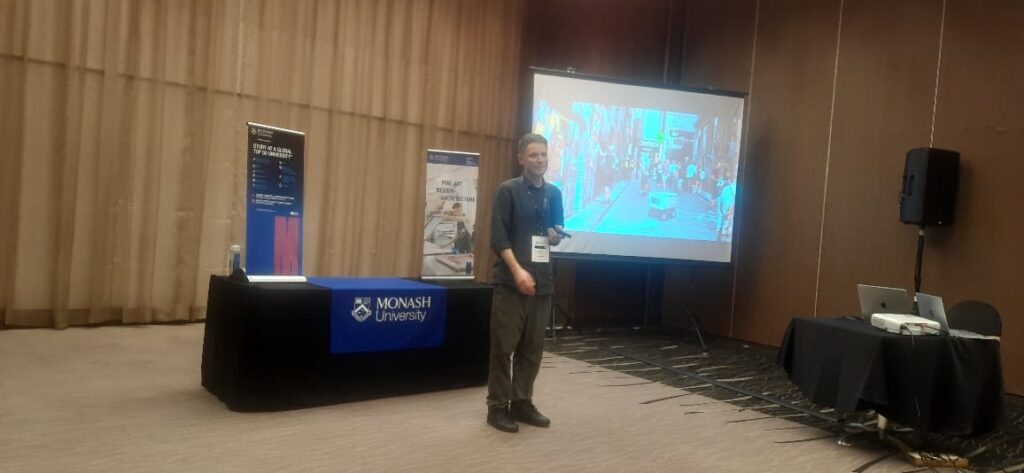
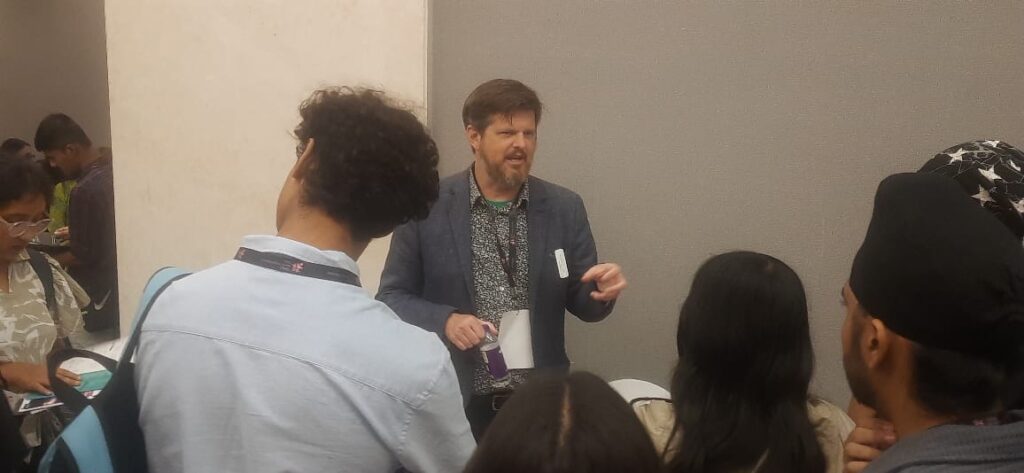
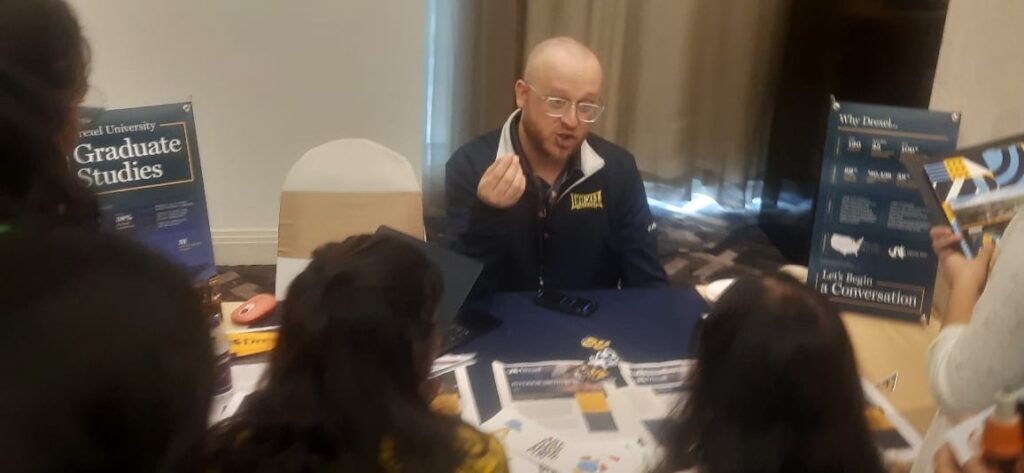
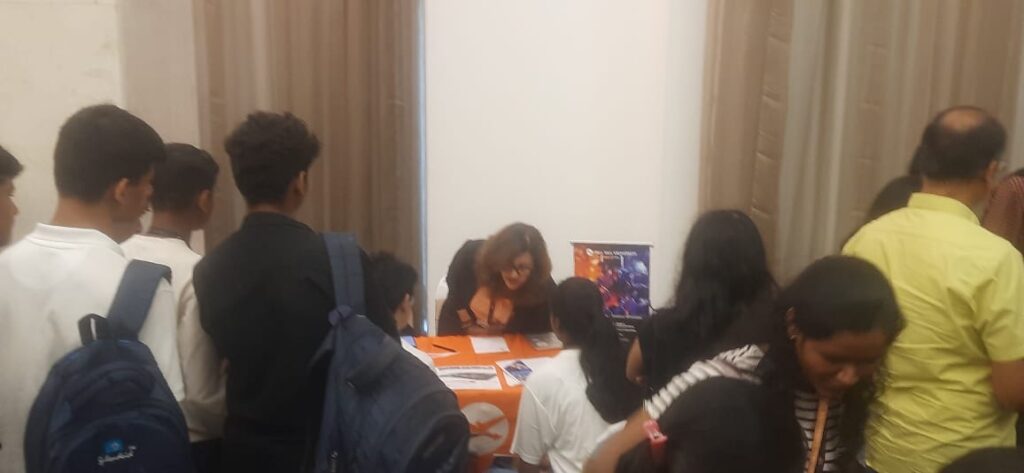
Zista Events recently hosted a groundbreaking seminar at ‘The O Hotel’ in Pune, setting new benchmarks for students aspiring to pursue higher education abroad, particularly in the cutting-edge fields of AI and Robotics. The event brought together leading academics and industry experts to shed light on the transformative impact of these technologies and the global opportunities they present.
Robotics: Redefining Human Potential
The session on robotics was spearheaded by Dr. Ilya Fridman, a distinguished professor and Head of the Department for Art and Design at Monash University. Dr. Fridman, renowned for his work on the ‘Robotic Library’—an innovative online resource cataloging robots for everyday life applications—captivated the audience with his vision of a future where robots seamlessly integrate into our lives, freeing humans from mundane and high-risk tasks.
Beyond the Minutiae: Robots for Dignified Living
Dr. Fridman elaborated on the process of conceptualizing and building robots, emphasizing the identification of tasks that can be automated to elevate human dignity. He highlighted how robots could take over labor-intensive, hazardous, or repetitive jobs such as mining, cleaning, and waste management. This allows humans to focus on higher-order thinking, creativity, and innovation, thereby reducing costs and improving efficiency across various sectors. The discussion also touched upon advanced robotic forms, including holographic robots, and the potential for artistic applications, such as motorizing or robotizing statues to enhance city aesthetics, drawing inspiration from local attractions like Tikuji-Ni-Wadi’s dinosaur robots.
AI’s Impact on Design & Communication
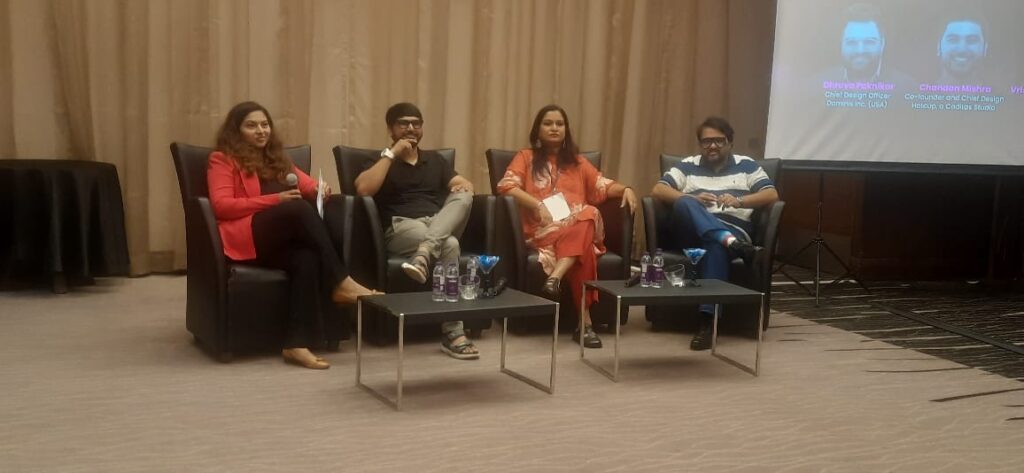
A subsequent session delved into the profound impact of Artificial Intelligence on the future of design and communication. Moderated by Mrs. Mitali, the panel featured prominent speakers Mr. Chandan, Mrs. Kulkarni, and Mr. Paknikar. The discussion underscored how AI is reshaping design from its aesthetic roots into a more deeply meaningful and functionally artistic representation. From advertising promotions to intricate packaging designs, AI is poised to streamline processes and perform tasks with unprecedented efficiency.
AI and the Evolving Job Market
The event saw significant audience engagement, with many questions revolving around AI’s influence on the job market. The consensus was that AI will increasingly digitize every facet of our lives, minimizing human intervention in routine tasks and liberating individuals from “minuscule jobs.” This shift is expected to free up human labor for more complex and creative endeavors, potentially leading to reduced costs for products and technologies. Historical examples, such as the old railway station weighing scales—an early form of automation—were cited to illustrate the long-standing progression of robotic integration into daily life.
The transformation is evident in industries like automotive manufacturing, where robotic arms have revolutionised assembly lines, and in stone cutting, showcasing AI’s capability in precision tasks.
Furthermore, the potential for robots to undertake high-risk roles like traffic management and firefighting was explored, painting a vivid picture of a safer and more efficient future powered by advanced technology. One logistic or warehousing example is Future Groups Warehouse, which is completely robotic located at Chakan Road, Pune, which was inaugurated by Shree Nitin Gadkari.
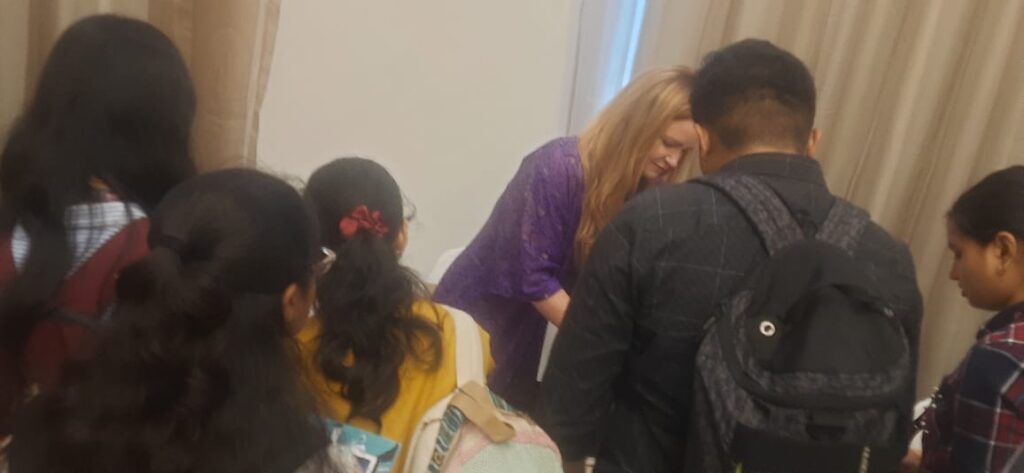
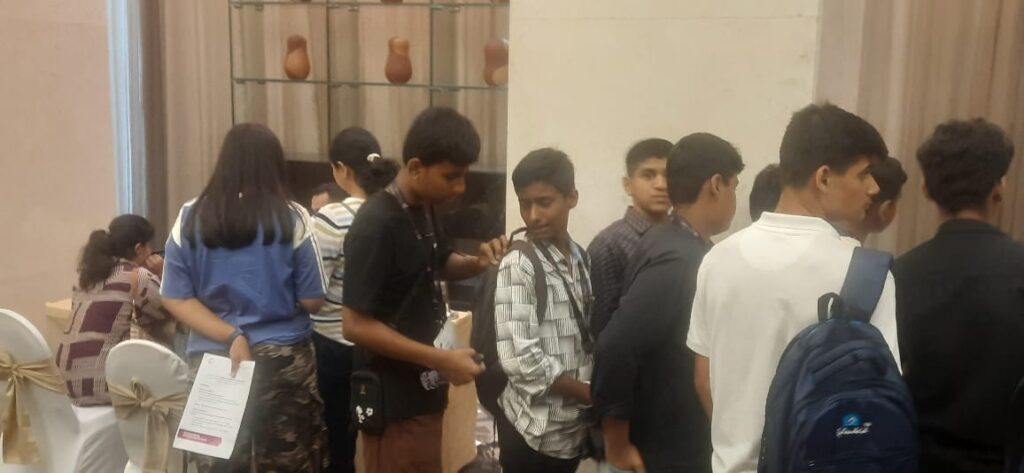
The event concluded with a networking tea, allowing attendees the invaluable opportunity for one-on-one interactions with representatives from various universities, further facilitating their study abroad aspirations.
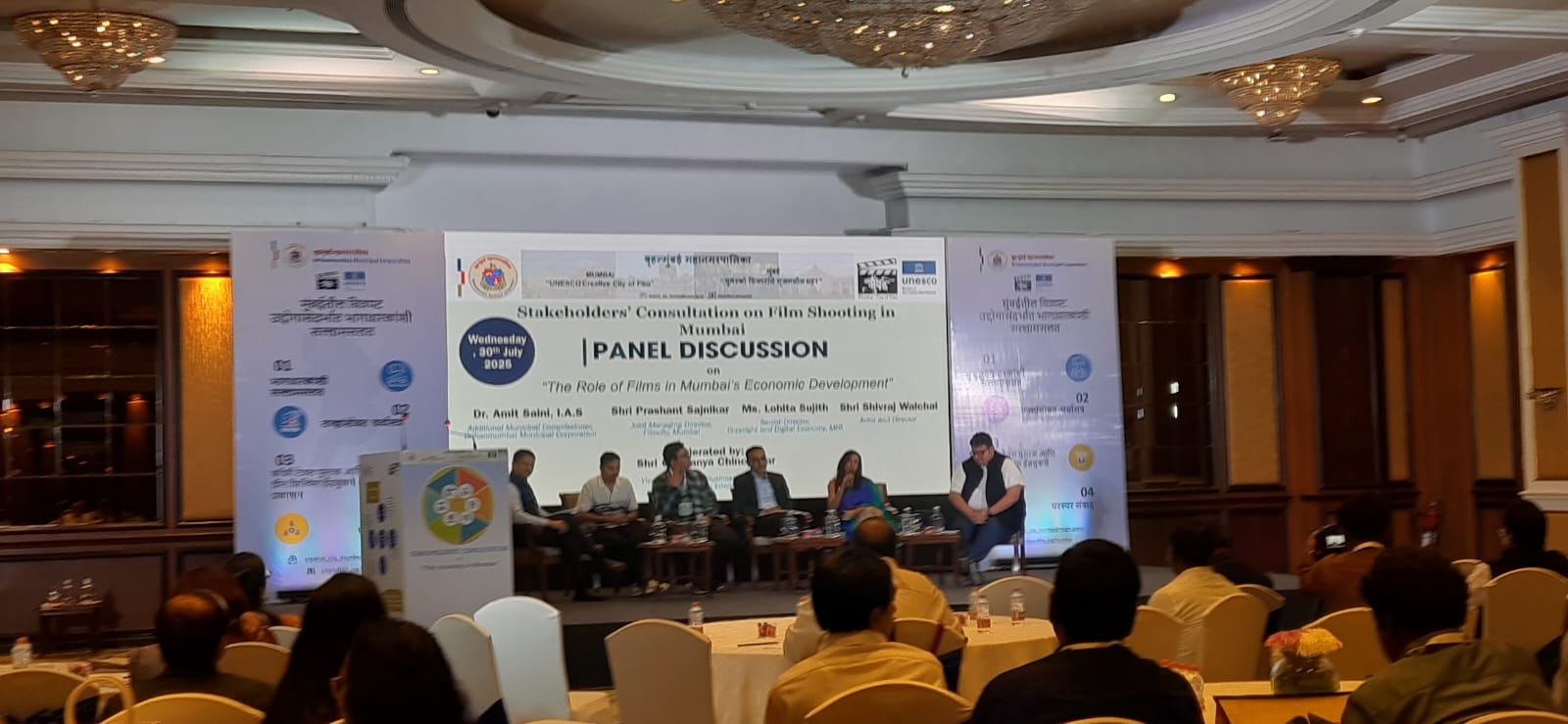
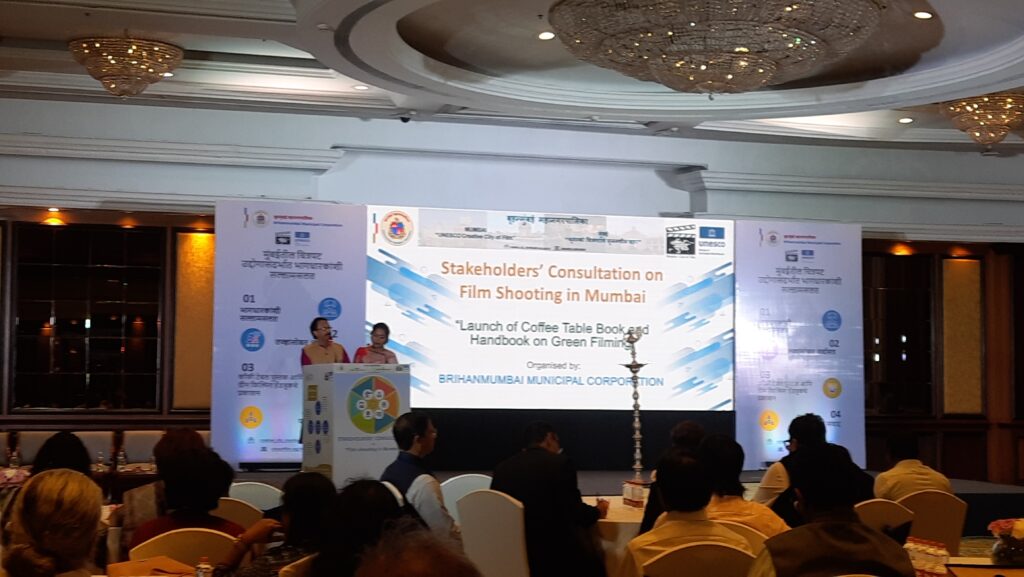
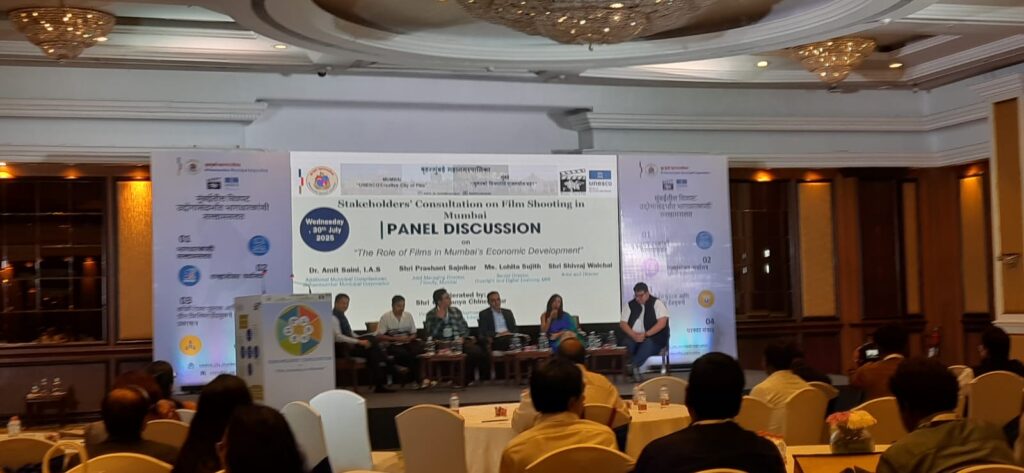
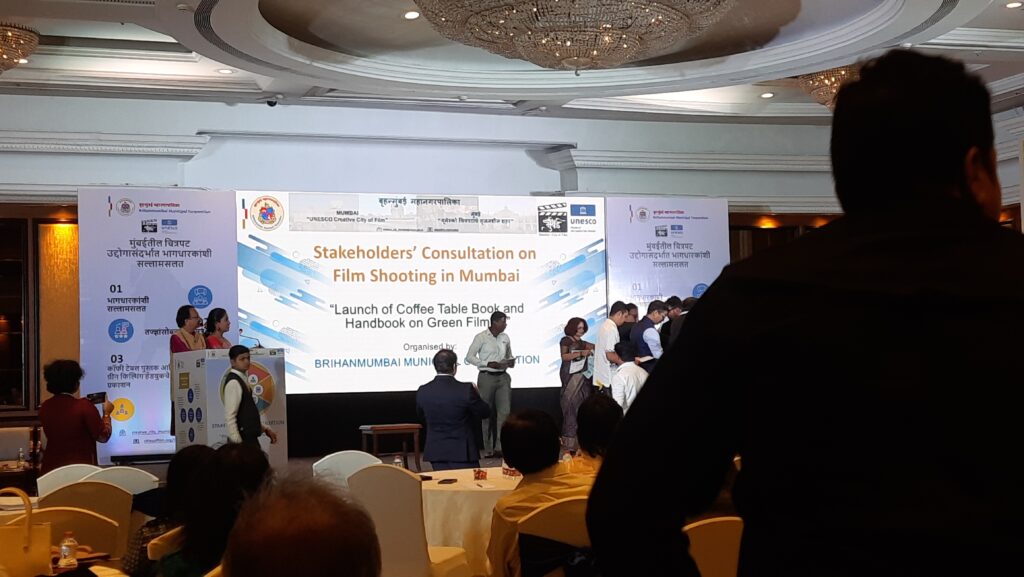
On July 30, 2025, a landmark event at the Taj Lands End, orchestrated by Ernst & Young, unveiled a transformative vision for Mumbai’s Film City and its economic development. This initiative, built upon years of meticulous data compilation regarding filming activities in Mumbai, aims to streamline processes, enhance infrastructure, and boost tourism, marking a new chapter for filmmakers and the city’s burgeoning entertainment sector.
A Collaborative Beginning: The Inaugural Event
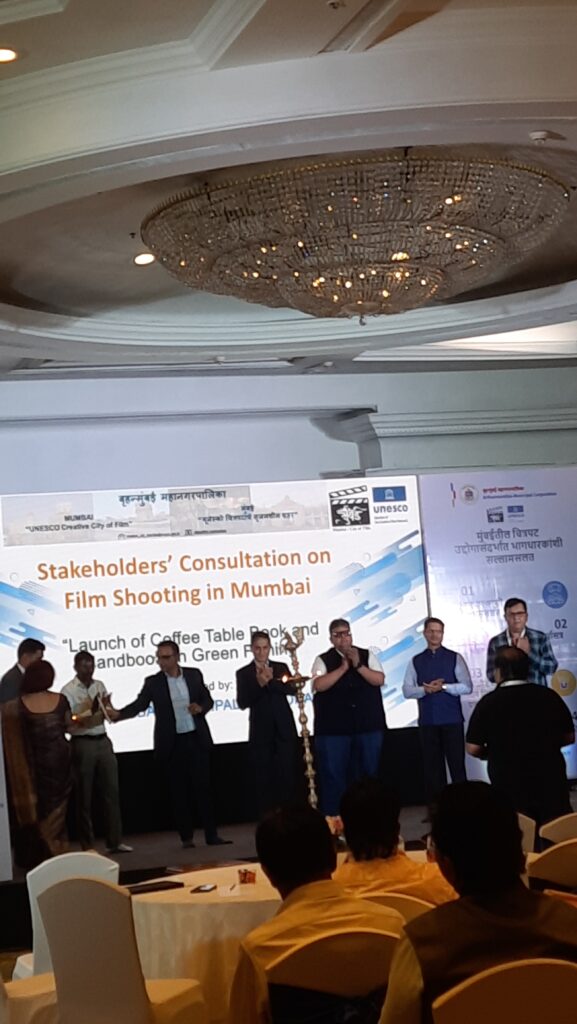
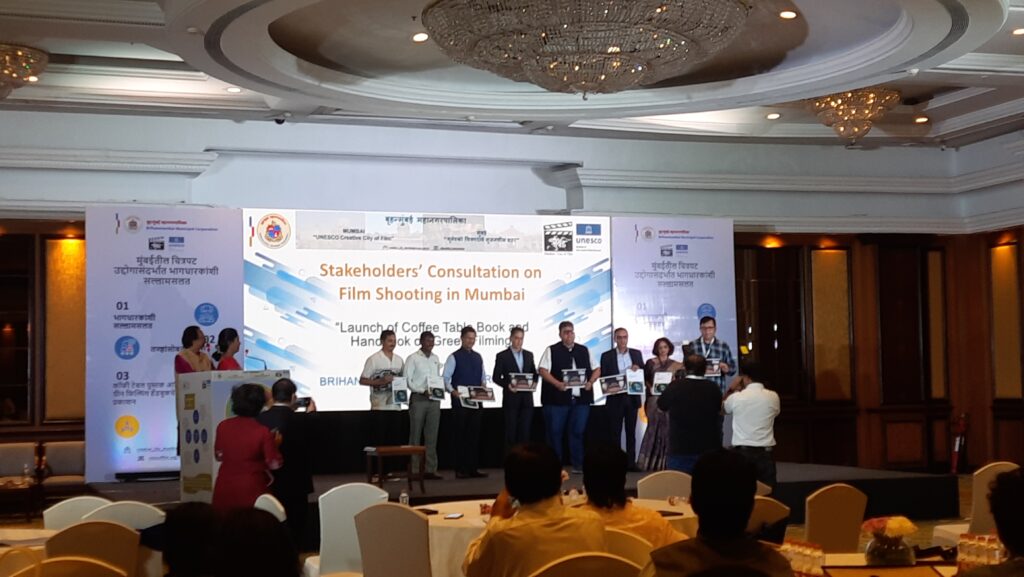
The event commenced with a traditional lighting ceremony, symbolizing prosperity and new beginnings, followed by the presentation of exclusive coffee table books and handbook on Green Filming to chief guests and VIPs. These books chronicled Mumbai’s rich cinematic history and the ambitious future plans. Engaging audio-visual presentations underscored the critical role of the Brihanmumbai Municipal Corporation (BMC) in this developmental journey, tracing the history of Film City’s growth and highlighting its immense potential to invigorate tourism. A central tenet of the proposed reforms is the creation of a seamless process for film producers, significantly simplifying the complex web of permissions and navigating local legal intricacies that often impede production timelines.
Strategic Engagements and Industry Insights
BMC has actively fostered an environment of open dialogue, engaging extensively with key stakeholders from the Mumbai Film City and Economic Development sectors. A distinguished panel, comprising prominent industry veterans and a dedicated think tank, has meticulously devised a comprehensive plan. This plan focuses on several critical areas: enhancing the existing infrastructure of Film City, redeveloping outdated facilities, and establishing robust, transparent policies designed to streamline filmmaking processes. Particular emphasis has been placed on simplifying BMC permissions required for utilizing public spaces and government infrastructure, which are vital for location-based shoots.
Seamless Permissions
Simplifying bureaucratic hurdles for filmmakers to secure necessary approvals for shoots.
Infrastructure Boost
Investing in state-of-the-art facilities and upgrading existing structures within Film City.
Tourism Enhancement
Leveraging Film City’s global appeal to attract more tourists and generate revenue.
Policy Reform
Developing clear, consistent guidelines for all aspects of film production and related activities.
Key Concerns and Future Directives
During the discussions, stakeholders representing a diverse spectrum of the media industry—including filmmakers, documentary producers, OTT platforms, large production houses, and advertising film producers—raised pertinent points for collective consideration. The dialogue extensively covered the pivotal roles of police and location managers, as well as local coordinators, who are instrumental in managing shoot requirements, vendor coordination, and crowd control through their local connections and expertise in securing permissions.
A significant point of discussion revolved around the urgent need for clear guidelines concerning temporary structures, such as studio setups or prefabricated auditoriums used for film displays. A notable and innovative suggestion proposed the establishment of a dedicated liaison between the government and film producers at actual shoot locations. This initiative could potentially create daily wage job opportunities for trained liaison officers in specific shooting areas, further bolstering local employment. Furthermore, architectural firms voiced critical concerns regarding structural modifications to buildings for film shoots, emphasizing that such alterations are often not temporary and entail significant, lasting changes, necessitating a more rigorous regulatory framework. This collaborative approach aims to position Mumbai as an even more attractive and efficient hub for global filmmaking.