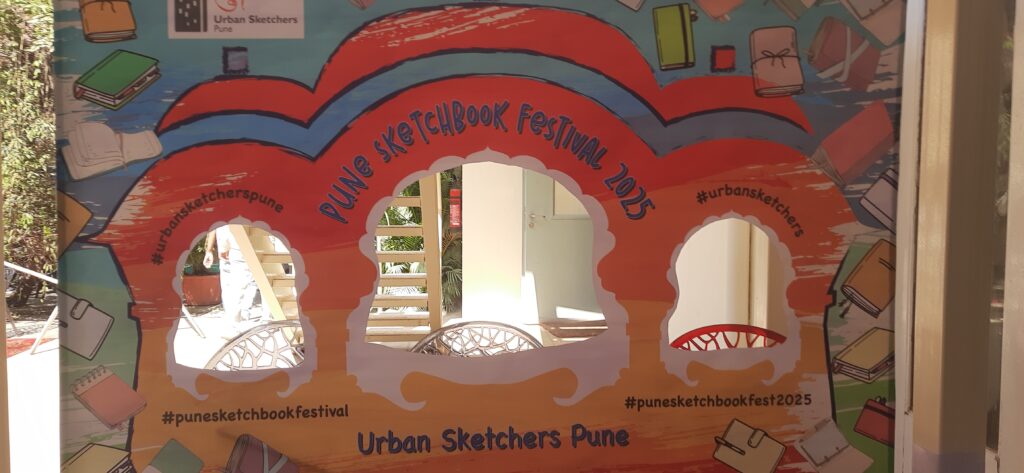
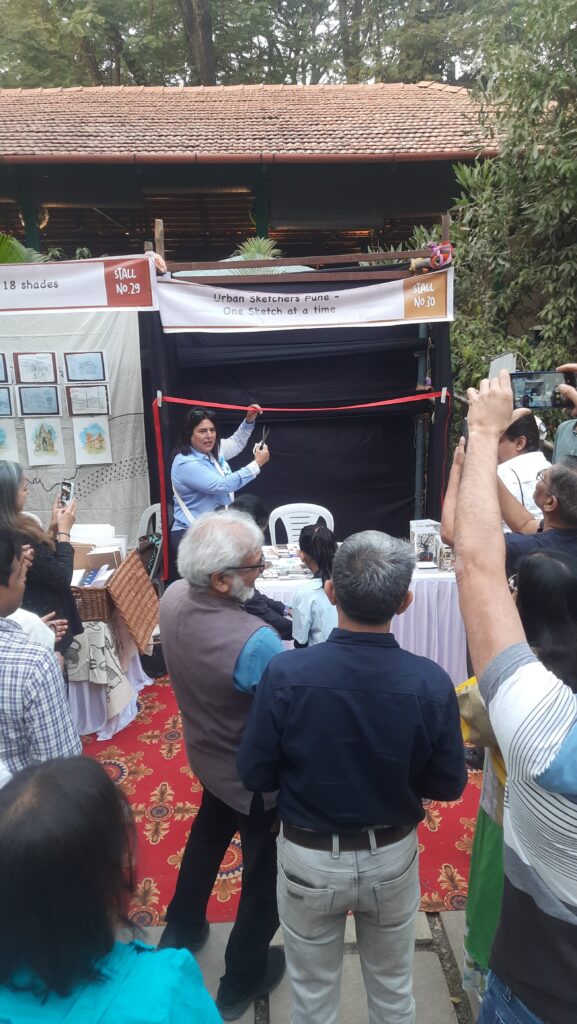
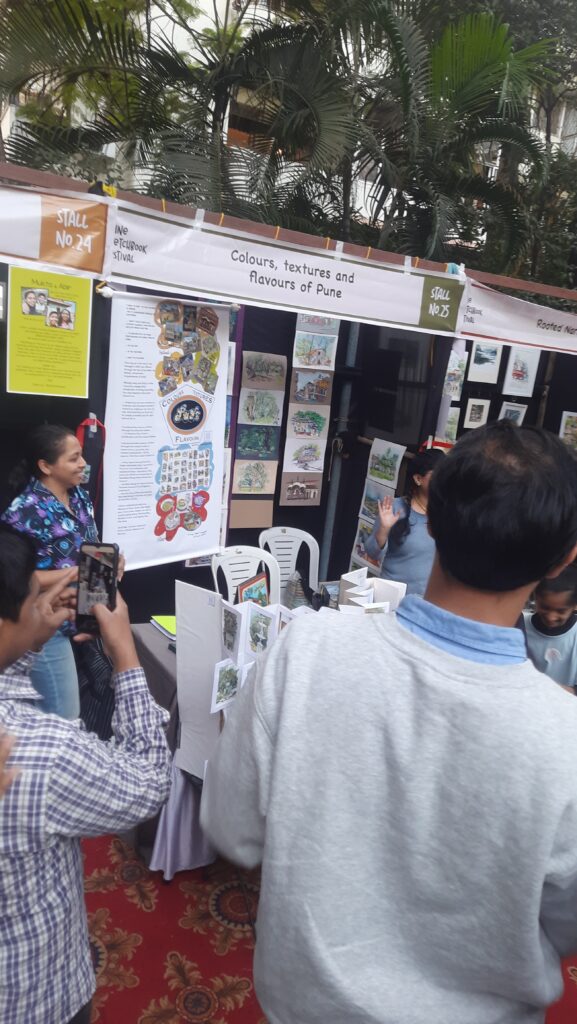
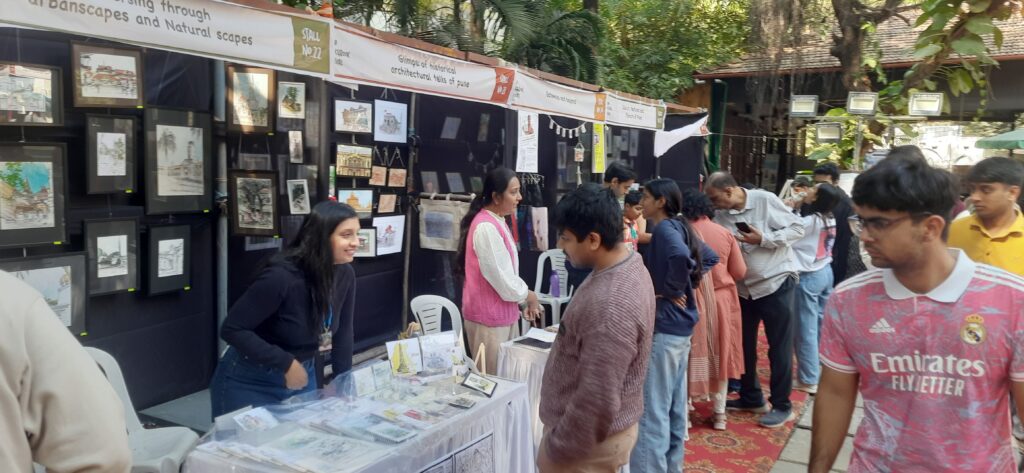
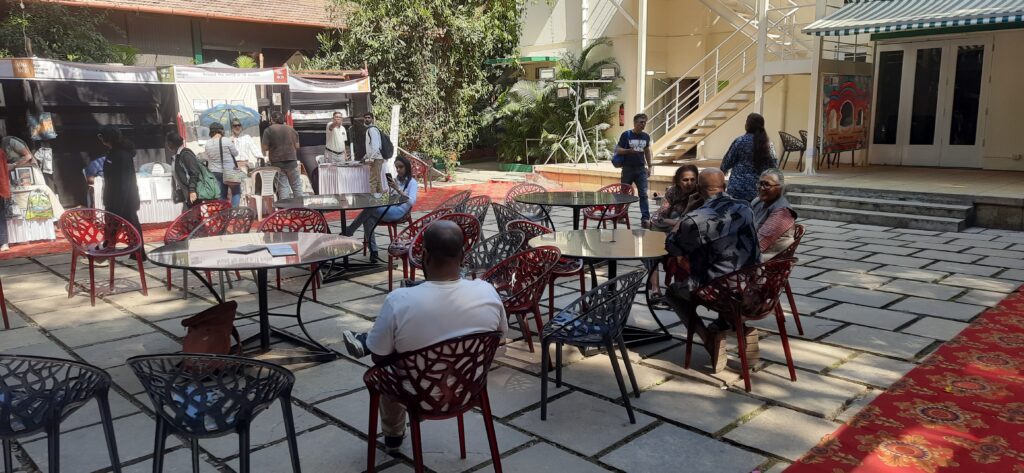
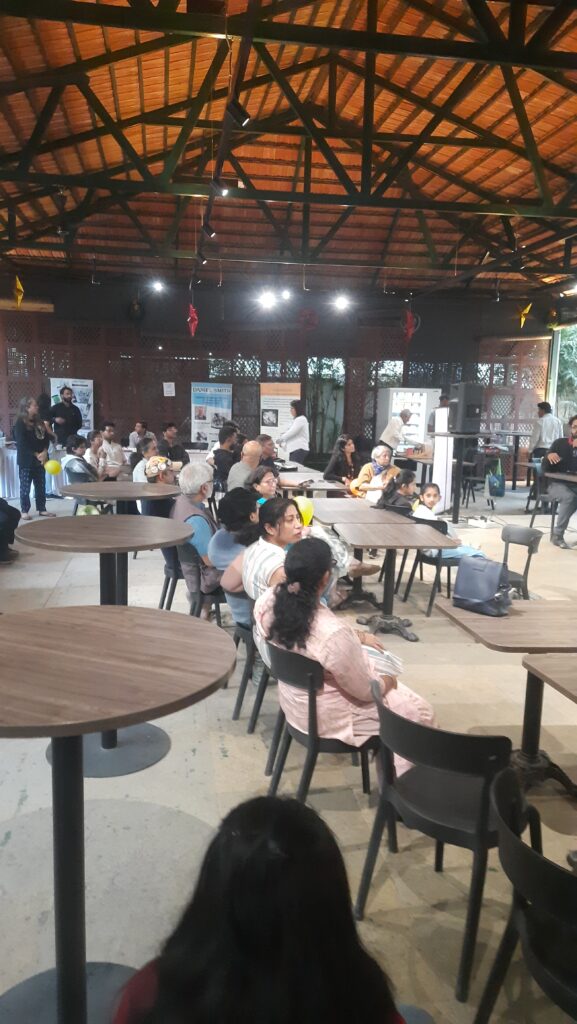
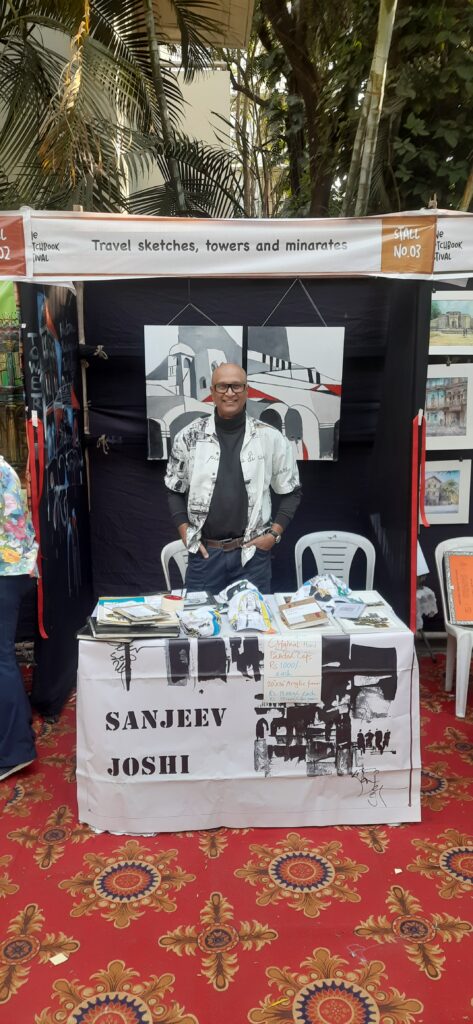
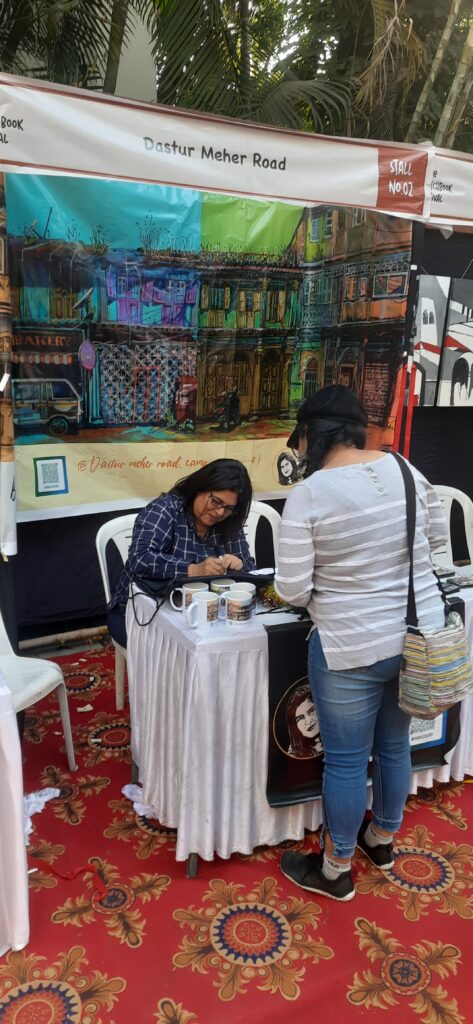
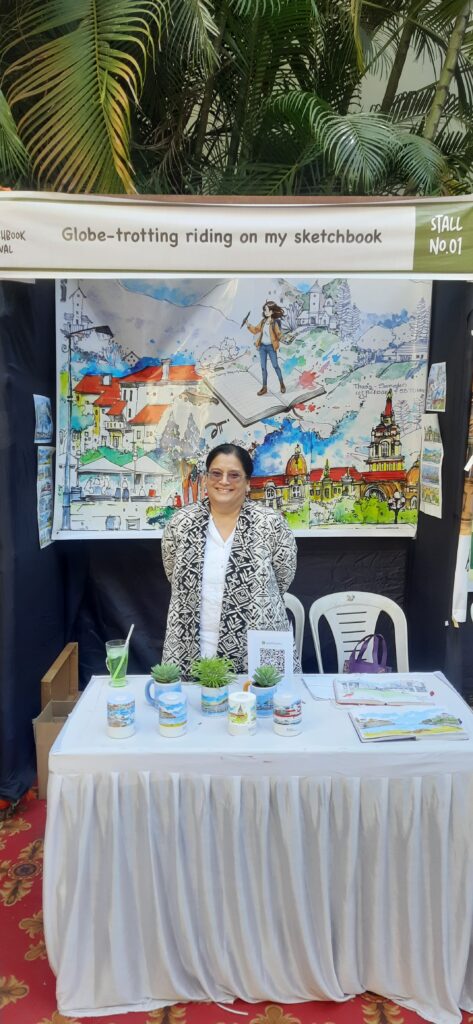
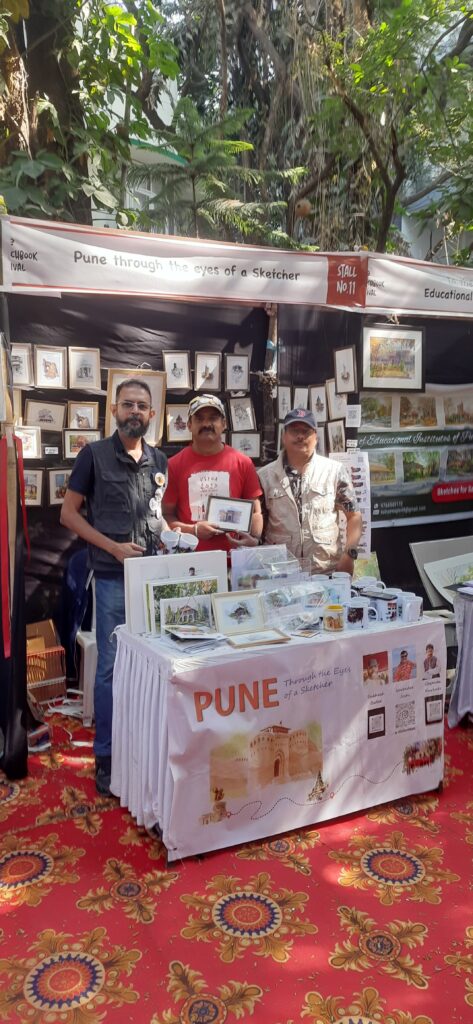
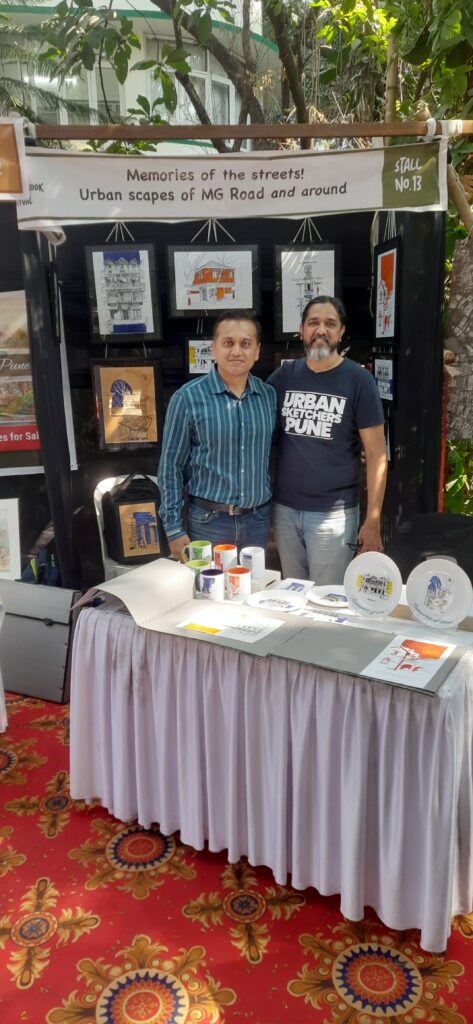
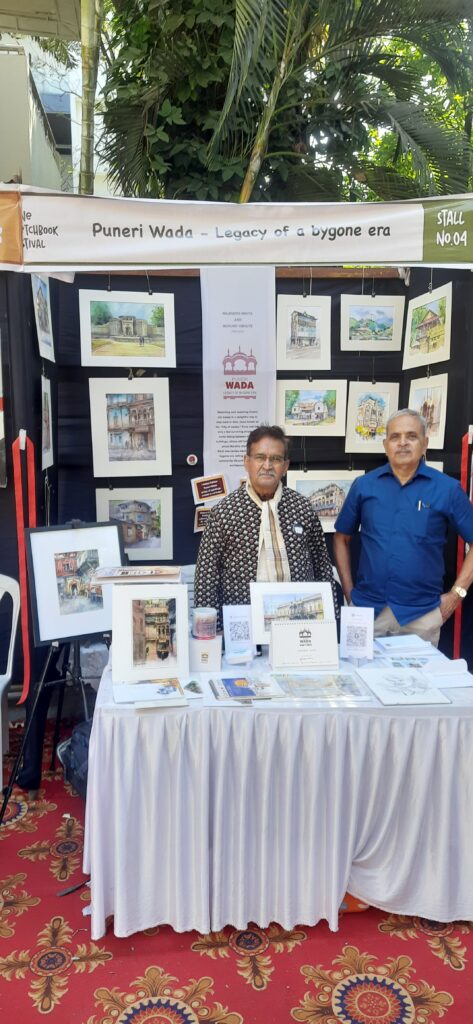
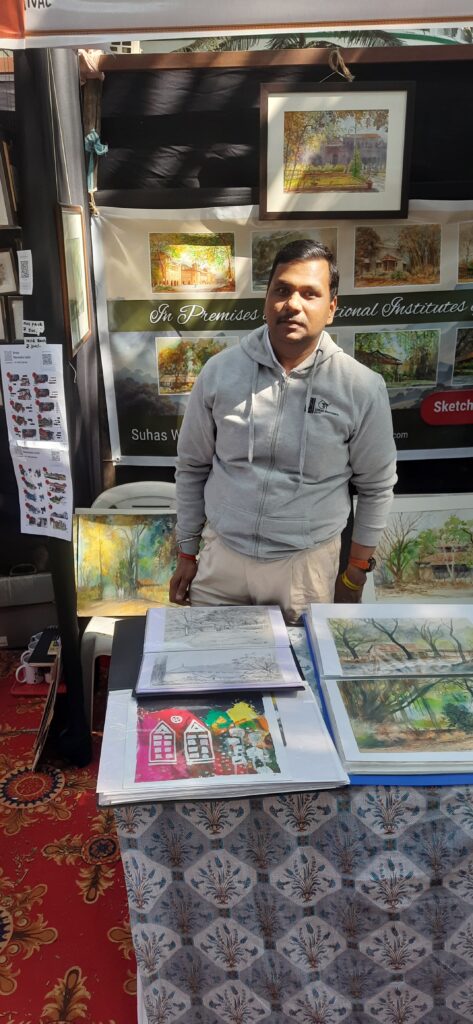
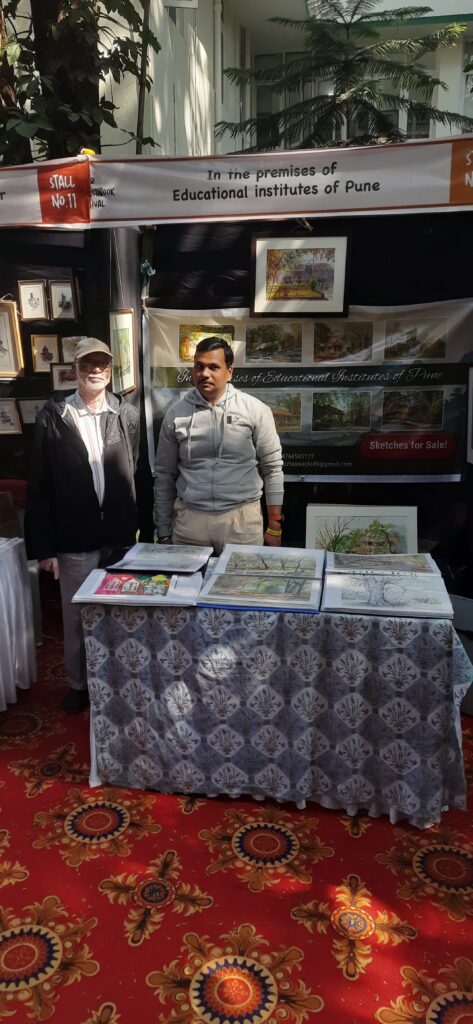
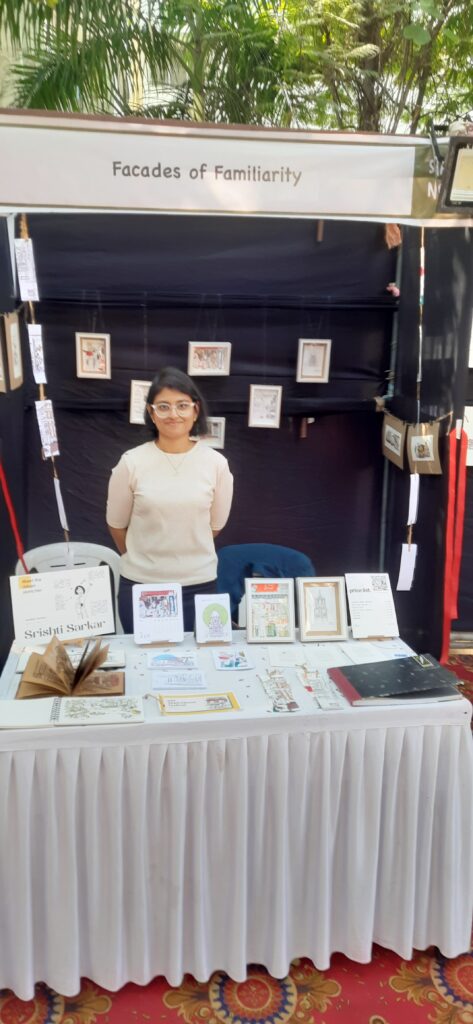
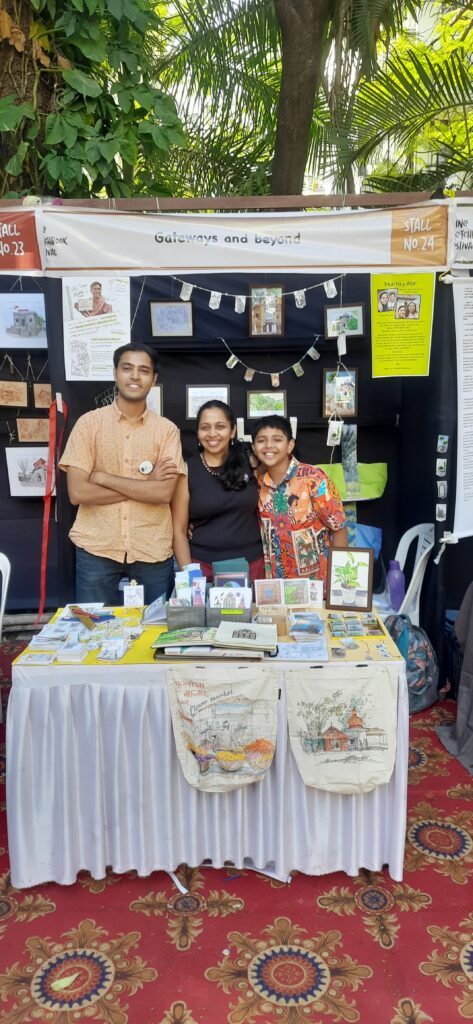
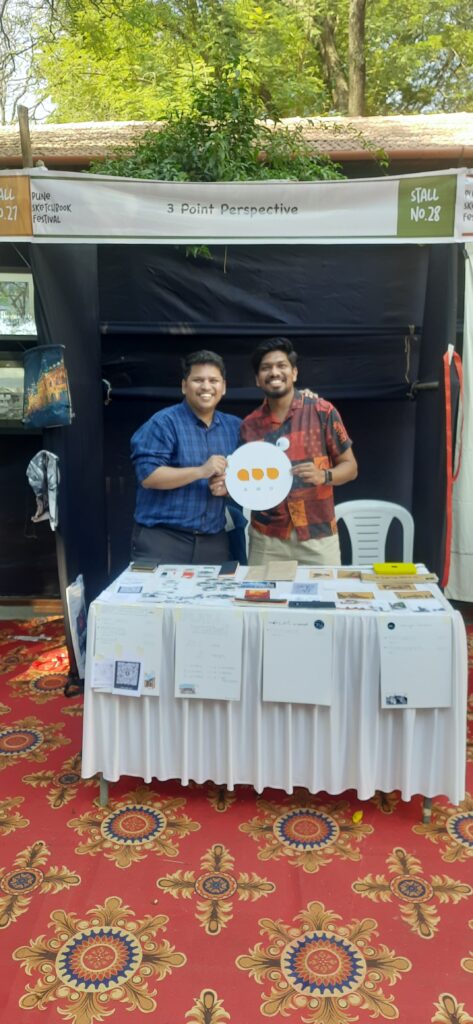
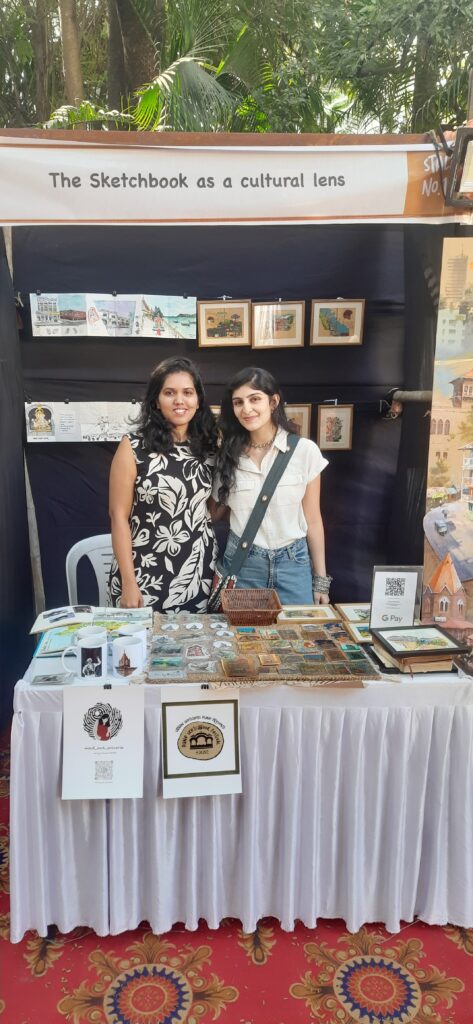
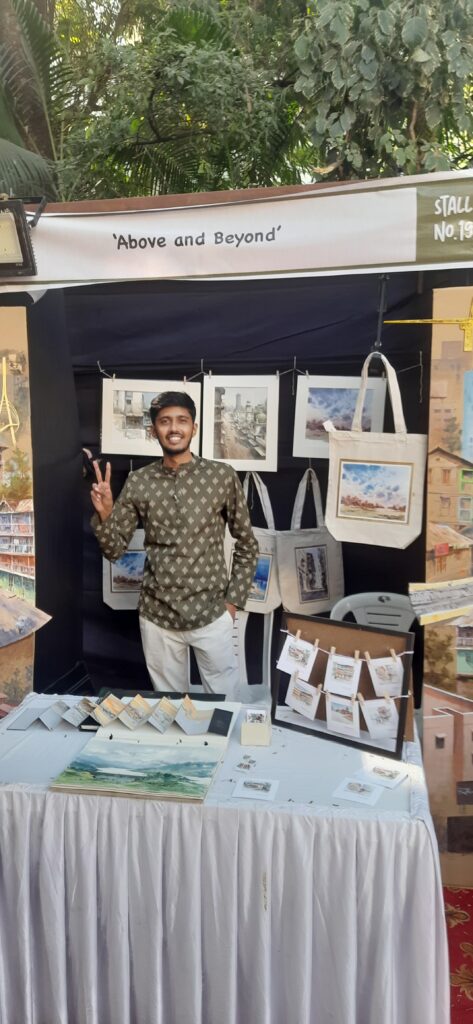
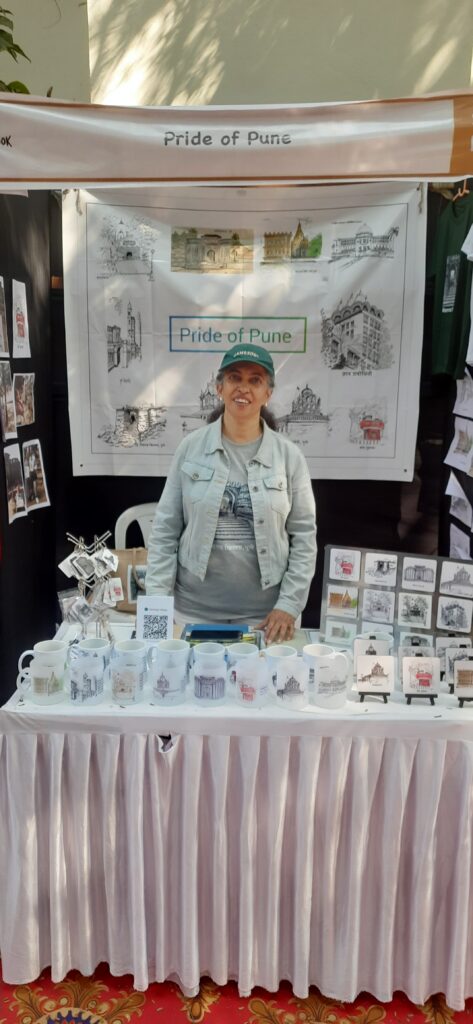
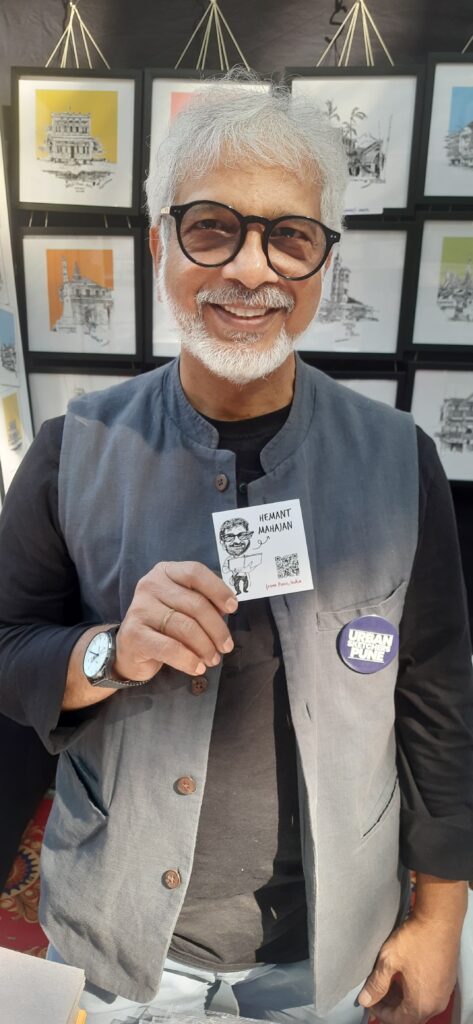
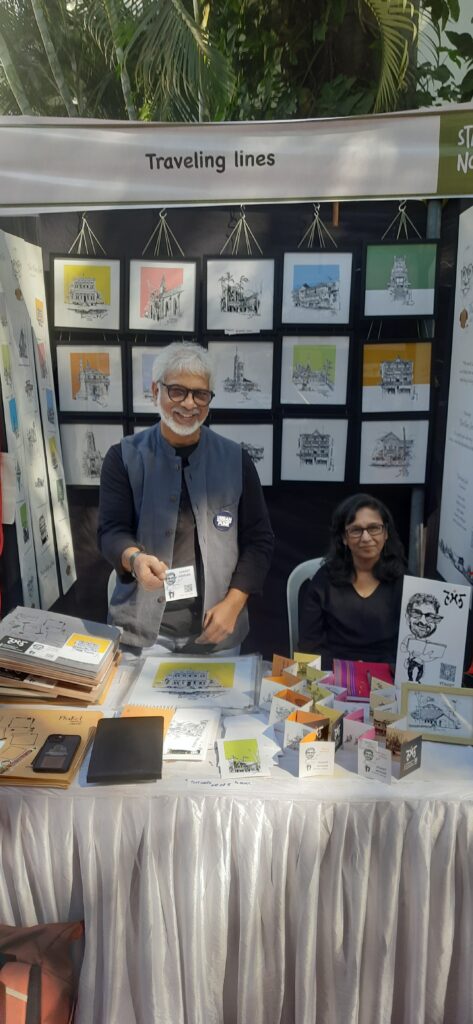
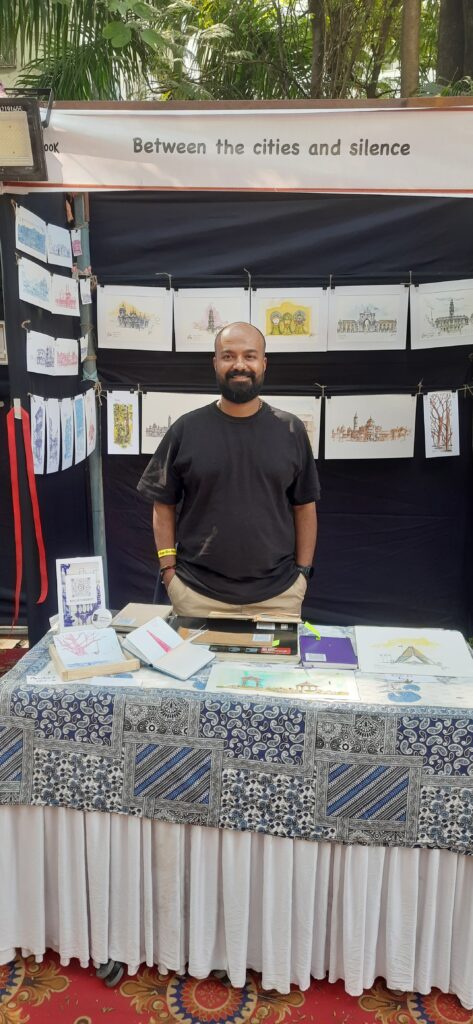
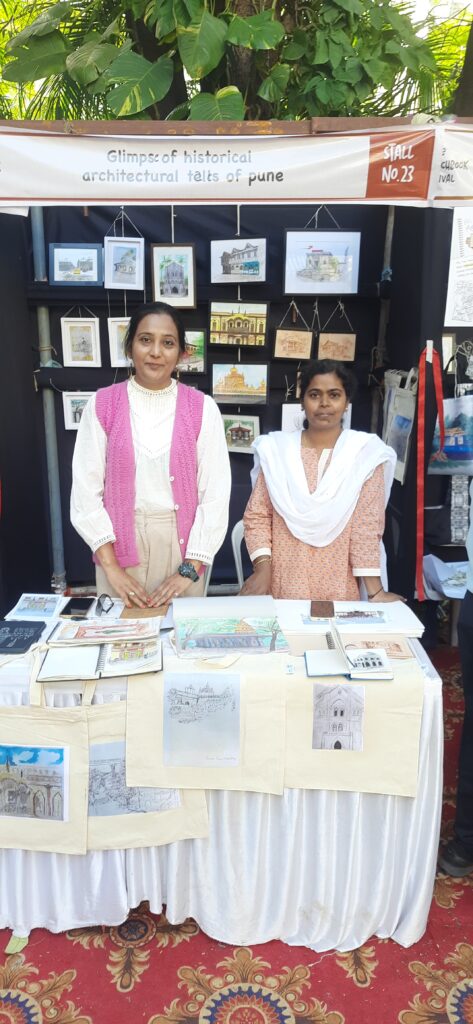
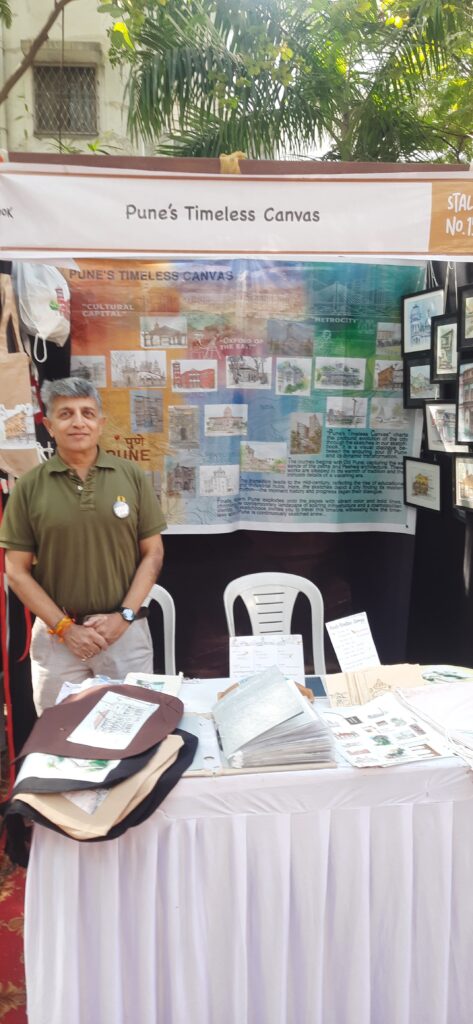
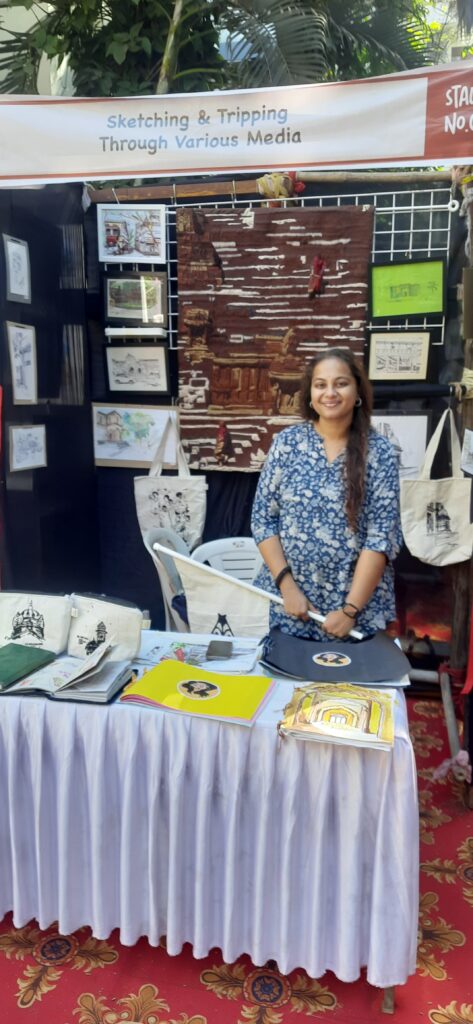
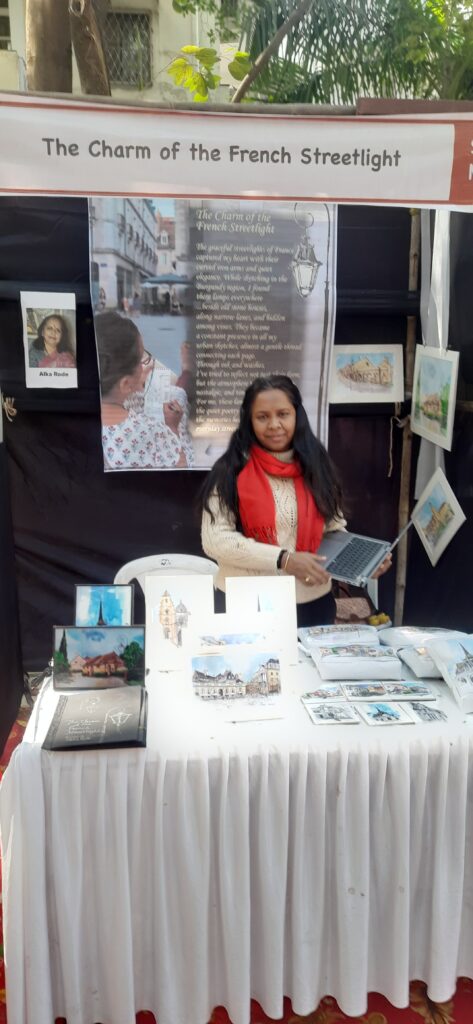
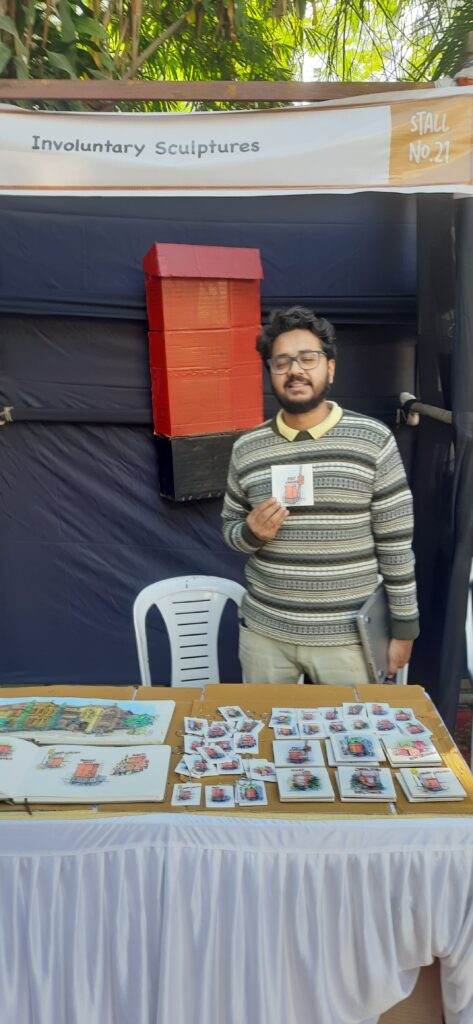
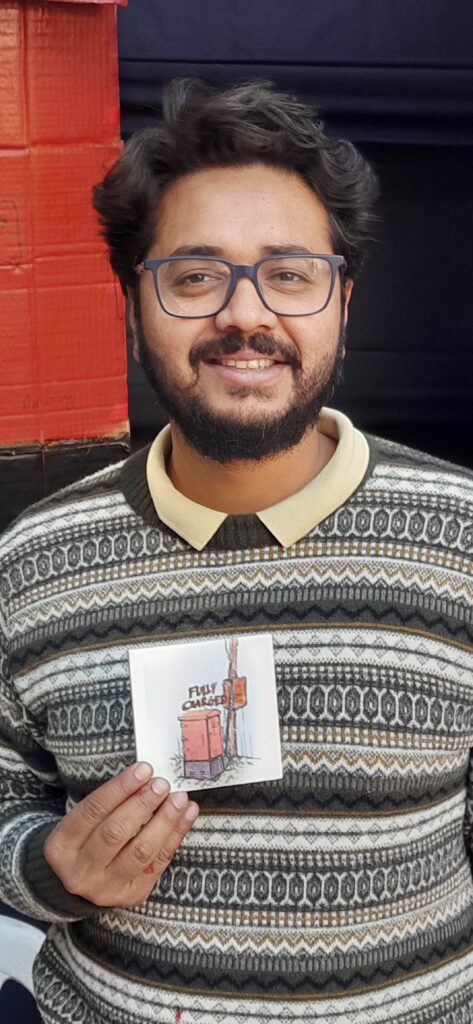
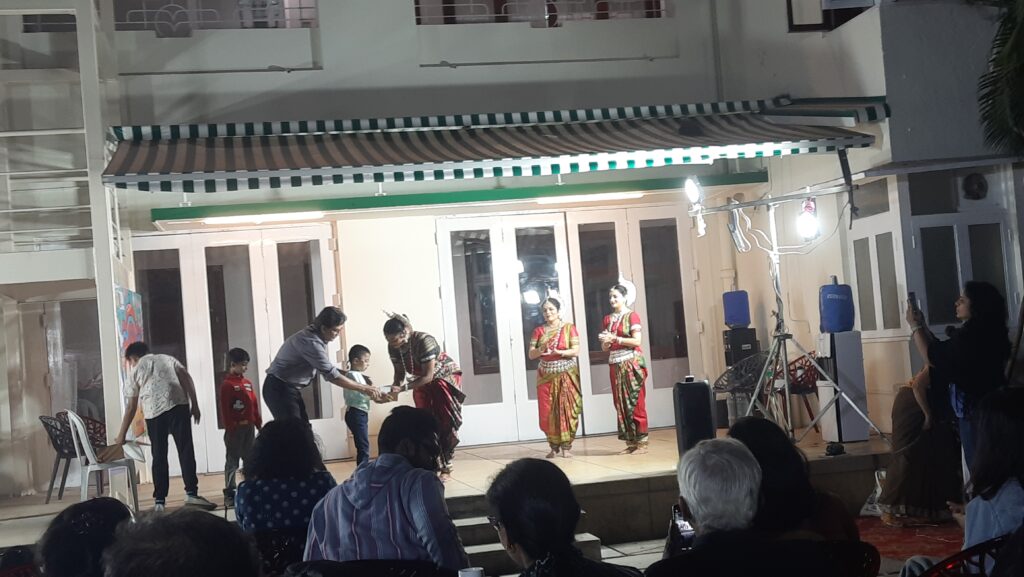
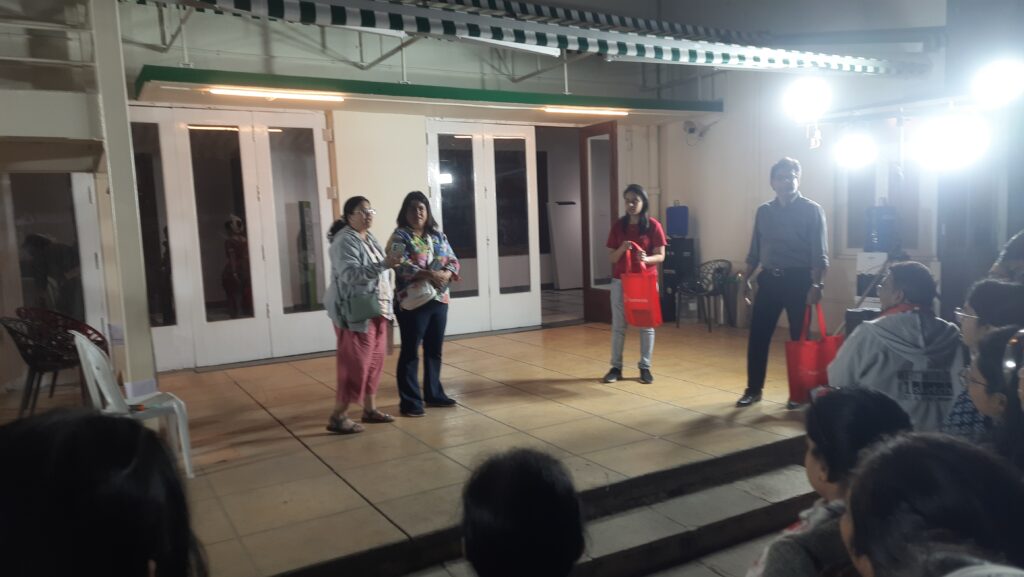
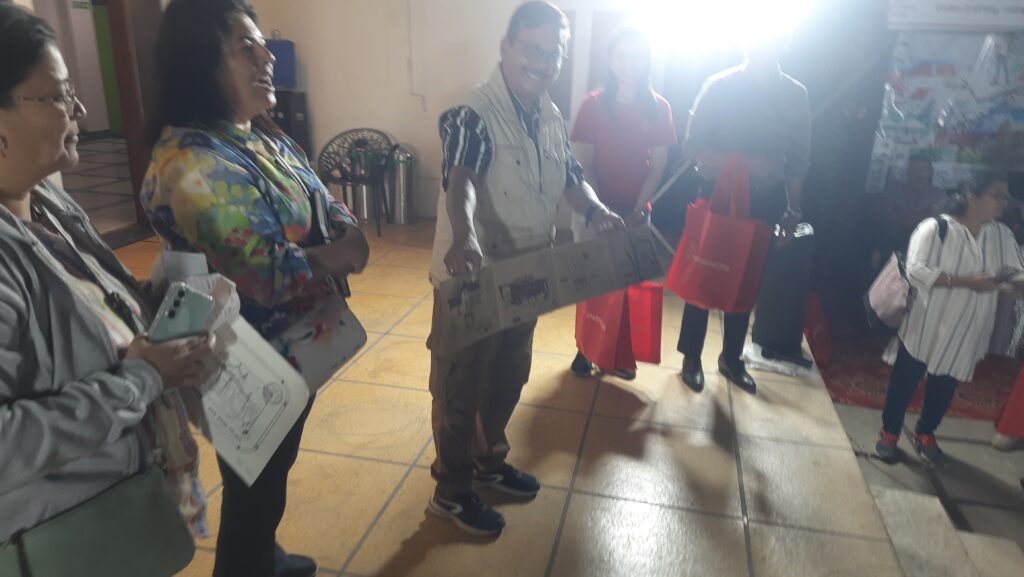
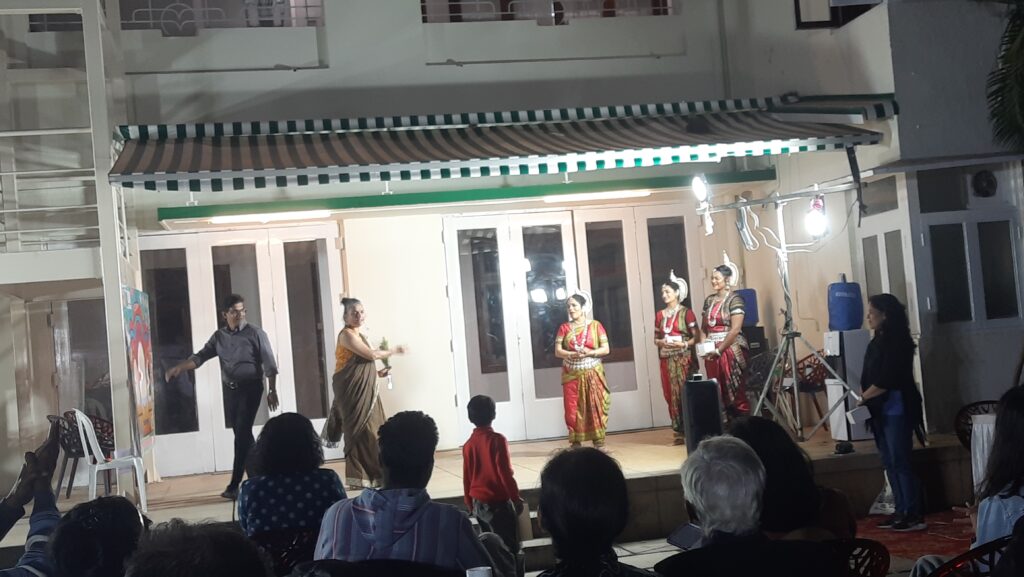
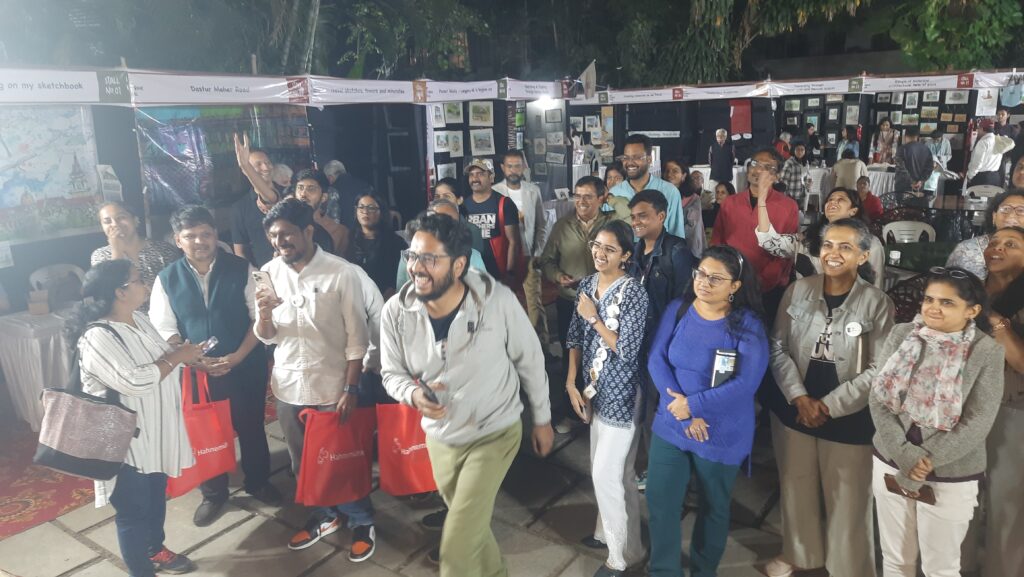
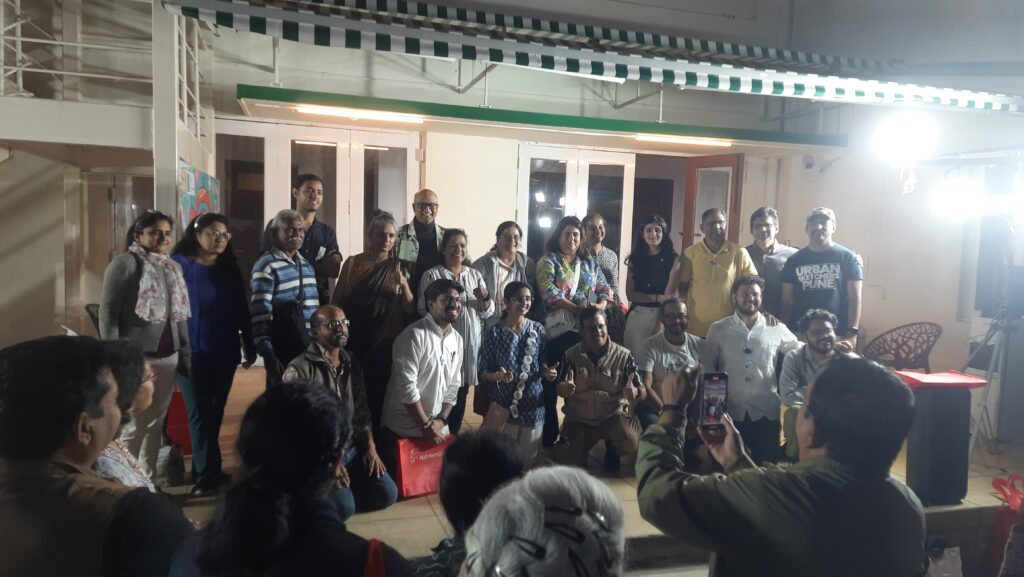
Pune Sketchbook Festival took place at the German Goethe Institute, Pune. The inaugural ceremony has a very interesting way to cut ribbons of neighbouring stall, passing a message to love their neighbour after which the festival began. USK Akash Rode started with a presentation about the festival, events each day.
Urban Sketchers have a weekly meet on Sunday at 8:00 am for sketching various places in the city. These sketches have now become a souvenir as they take shape into merchandise such as mugs, postcards, calendars, coasters, bags, stamp-size stickers, bookmarks, T-shirts, quilts, caps, canvas paintings, and lamps. Urban Sketchers has a monthly magazine that shares a few thoughts on one sketch and a few techniques on how to sketch. Sketchbooks, colour palettes, and stalls to buy artist essentials like brushes, sketchbooks, colours, etc.
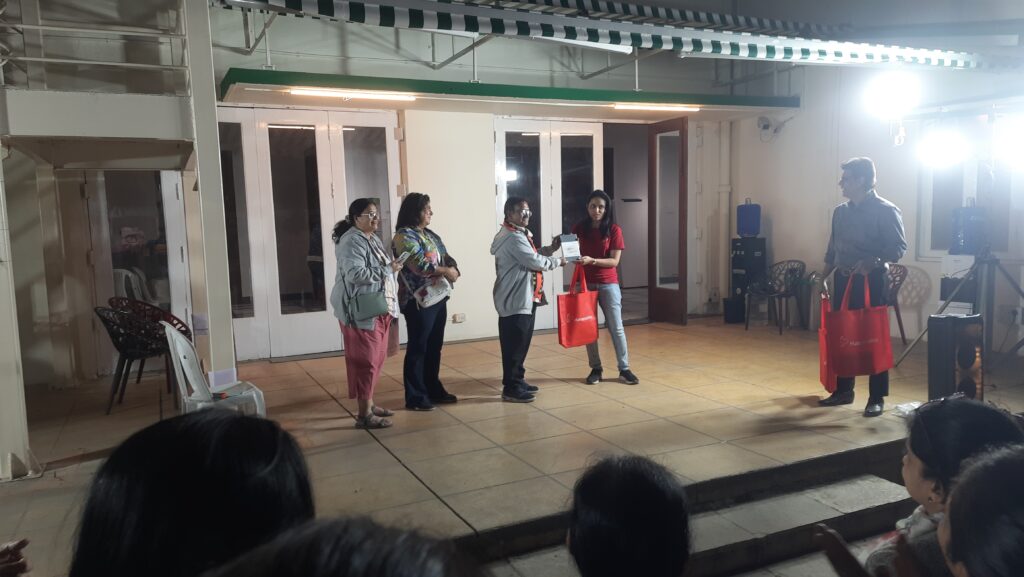
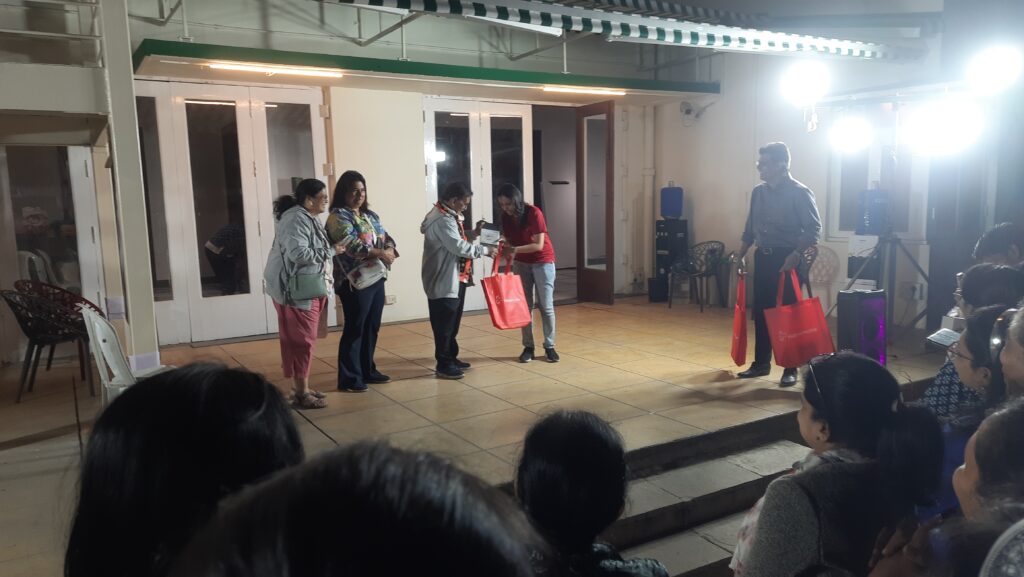
Lucky Draw coupon prizesPrize for Demos and Sketchbooks Treasure Hunt Clue SketchSketch a Story
Akash Rode was the ideator of the sketch hunt and had written the clues. The clues were fascinating and really nice to sketch these places. He is one of the main pillars of the organising team, and his contribution to the Sketchbook Festival was immense, earning him a big round of applause from all.
With an exciting note, a few pictures of all the volunteers that had been supportive towards making the festival a success.
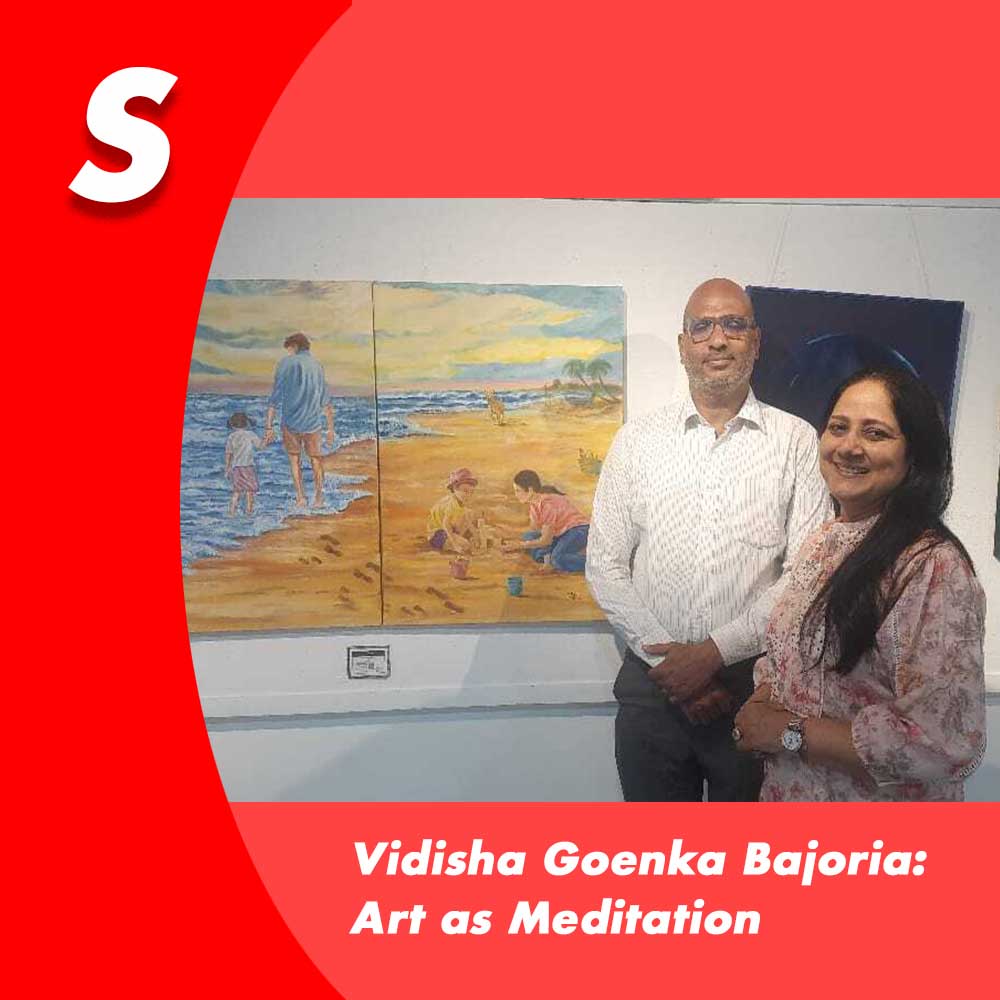
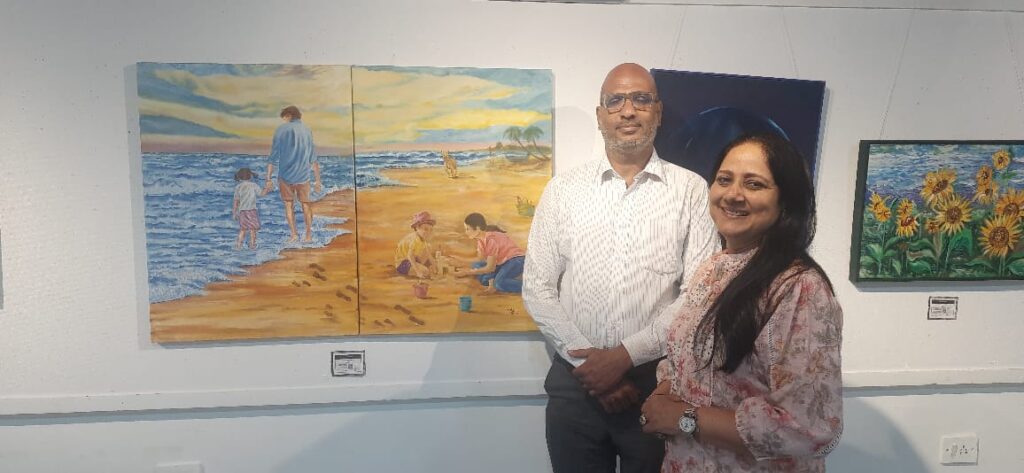
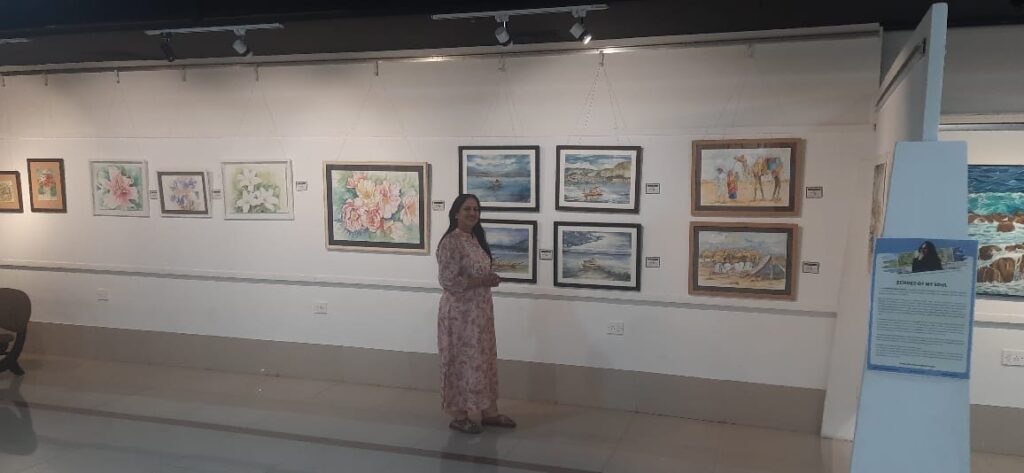
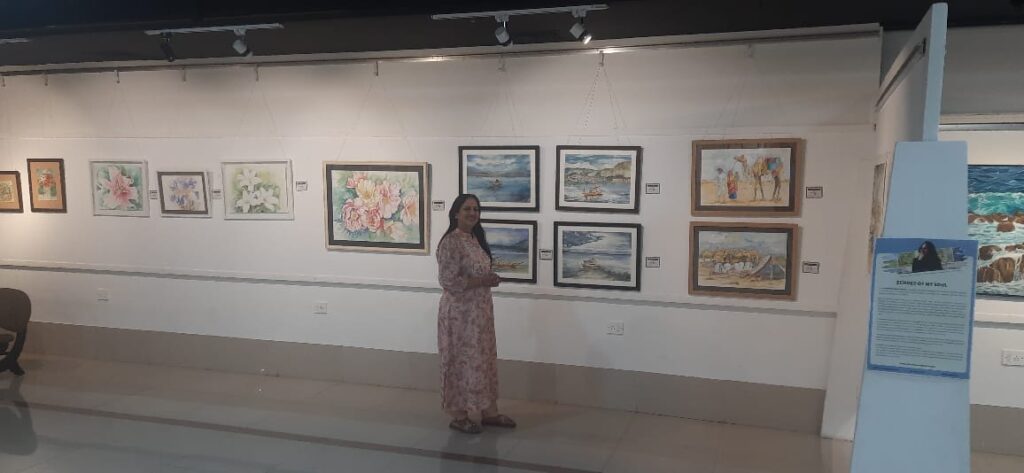
Artist and Reiki healer Vidisha Goenka Bajoria transforms painting into a meditative practice. Her work invites viewers to pause and reconnect with nature—admiring flowers, leaves, butterflies—moments often lost in life’s rush.
From Kolkata roots to Rajasthan influences, her art spans self-portraits, wildlife, and cultural landscapes. Each piece explores inner healing and self-consciousness, expressing how thoughts shape our reality.
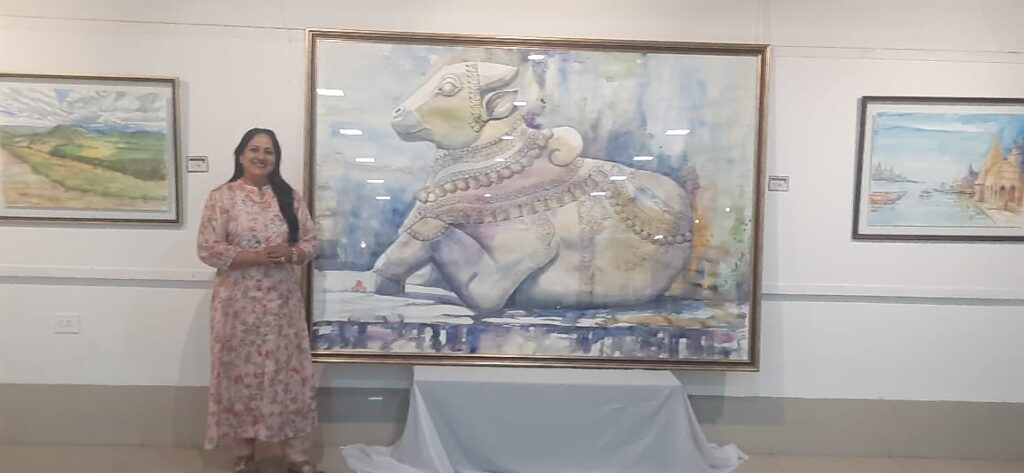
Sacred Symbolism
Large-scale Nandi watercolor painted on her bed—a challenging feat showcasing devotion and patience.
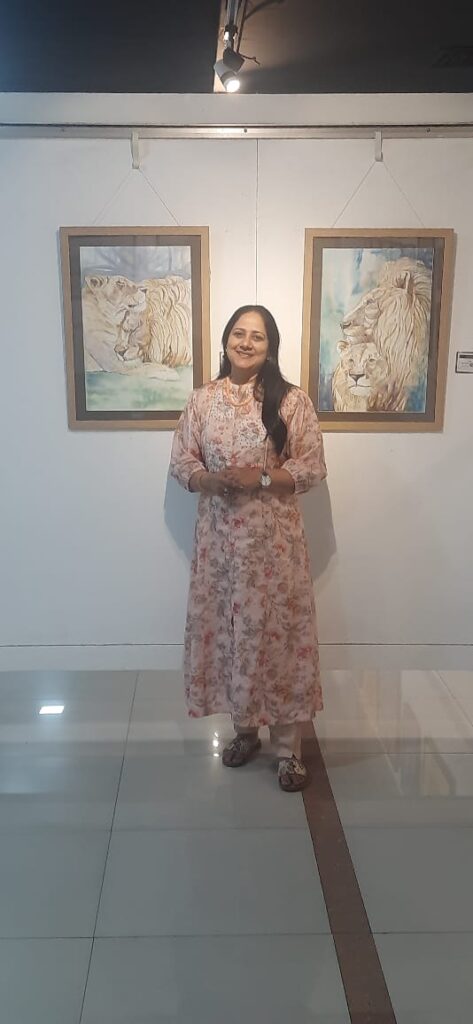
Protective Bonds
Lion couples watching over each other, symbolizing partnership and mutual care in relationships.
Spiritual Journey
Varanasi painting capturing an artist’s life span in one delightful, soul-stirring composition.
Cultural Roots
Rajasthan’s vibrant essence flows through her work, honoring heritage and identity through art.
Her book complements the exhibition, guiding readers toward healing and balance through inner soul energy. Launched at Raja Ravi Verma Art Gallery, Pune on Tuesday, 7 Oct 2025. Priced at 300 rupees.
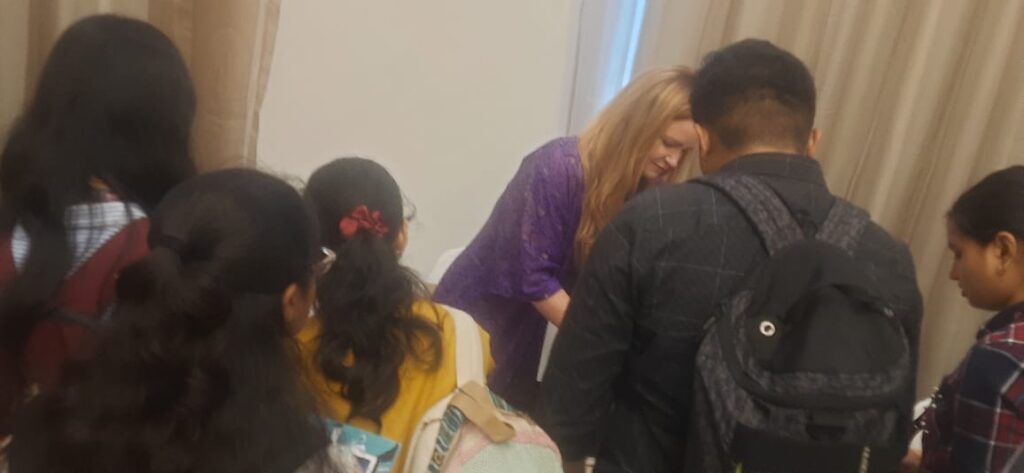
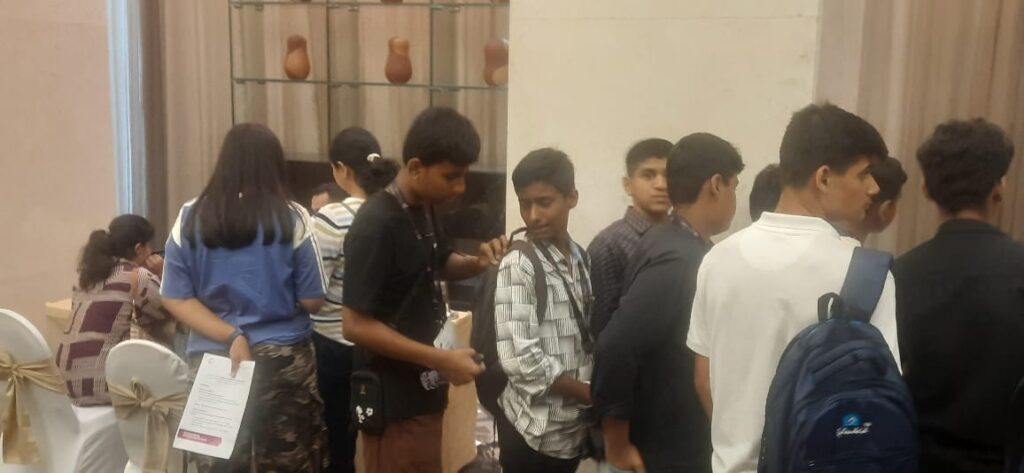
Zista Events recently hosted a groundbreaking seminar at ‘The O Hotel’ in Pune, setting new benchmarks for students aspiring to pursue higher education abroad, particularly in the cutting-edge fields of AI and Robotics. The event brought together leading academics and industry experts to shed light on the transformative impact of these technologies and the global opportunities they present.
Robotics: Redefining Human Potential
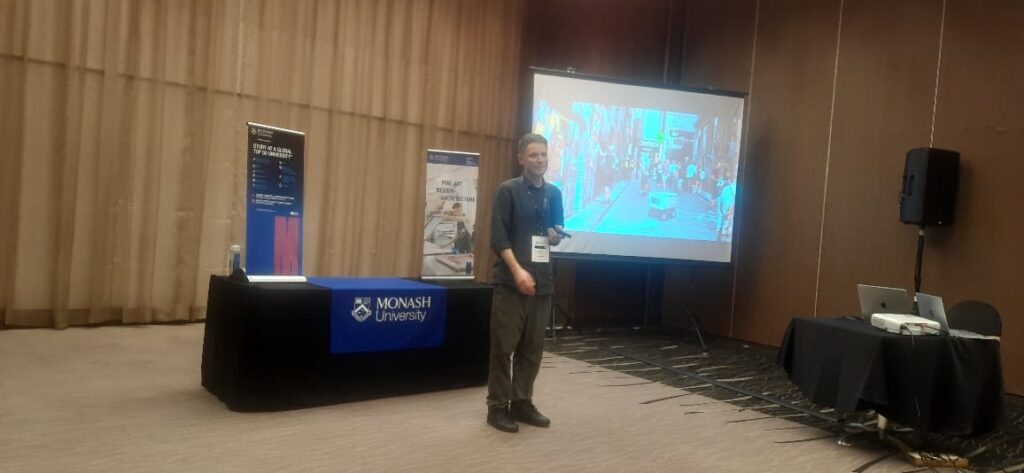
The session on robotics was spearheaded by Dr. Ilya Fridman, a distinguished professor and Head of the Department for Art and Design at Monash University. Dr. Fridman, renowned for his work on the ‘Robotic Library’—an innovative online resource cataloging robots for everyday life applications—captivated the audience with his vision of a future where robots seamlessly integrate into our lives, freeing humans from mundane and high-risk tasks.
Beyond the Minutiae: Robots for Dignified Living
Dr. Fridman elaborated on the process of conceptualizing and building robots, emphasizing the identification of tasks that can be automated to elevate human dignity. He highlighted how robots could take over labor-intensive, hazardous, or repetitive jobs such as mining, cleaning, and waste management. This allows humans to focus on higher-order thinking, creativity, and innovation, thereby reducing costs and improving efficiency across various sectors. The discussion also touched upon advanced robotic forms, including holographic robots, and the potential for artistic applications, such as motorizing or robotizing statues to enhance city aesthetics, drawing inspiration from local attractions like Tikuji-Ni-Wadi’s dinosaur robots.
AI’s Impact on Design & Communication
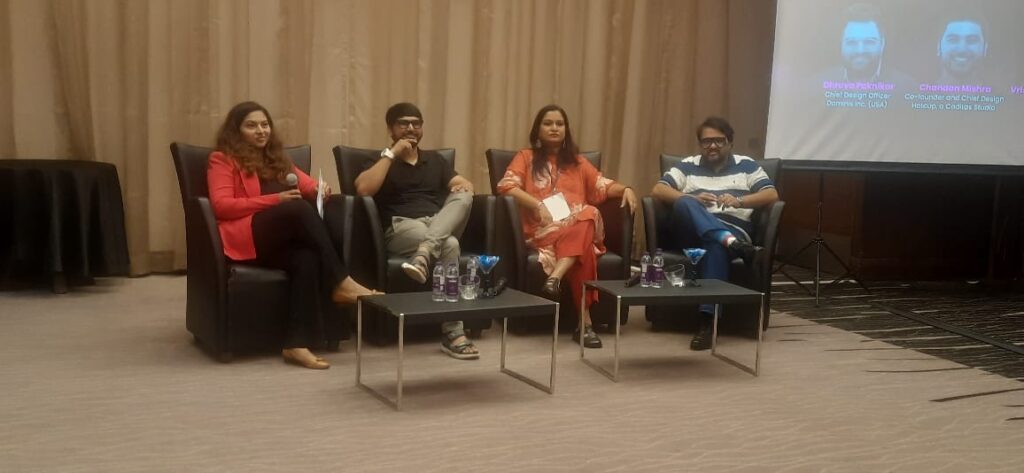
A subsequent session delved into the profound impact of Artificial Intelligence on the future of design and communication. Moderated by Mrs. Mitali, the panel featured prominent speakers Mr. Chandan, Mrs. Kulkarni, and Mr. Paknikar. The discussion underscored how AI is reshaping design from its aesthetic roots into a more deeply meaningful and functionally artistic representation. From advertising promotions to intricate packaging designs, AI is poised to streamline processes and perform tasks with unprecedented efficiency.
AI and the Evolving Job Market
The event saw significant audience engagement, with many questions revolving around AI’s influence on the job market. The consensus was that AI will increasingly digitize every facet of our lives, minimizing human intervention in routine tasks and liberating individuals from “minuscule jobs.” This shift is expected to free up human labor for more complex and creative endeavors, potentially leading to reduced costs for products and technologies. Historical examples, such as the old railway station weighing scales—an early form of automation—were cited to illustrate the long-standing progression of robotic integration into daily life.
The transformation is evident in industries like automotive manufacturing, where robotic arms have revolutionised assembly lines, and in stone cutting, showcasing AI’s capability in precision tasks.
Furthermore, the potential for robots to undertake high-risk roles like traffic management and firefighting was explored, painting a vivid picture of a safer and more efficient future powered by advanced technology. One logistic or warehousing example is Future Groups Warehouse, which is completely robotic located at Chakan Road, Pune, which was inaugurated by Shree Nitin Gadkari.
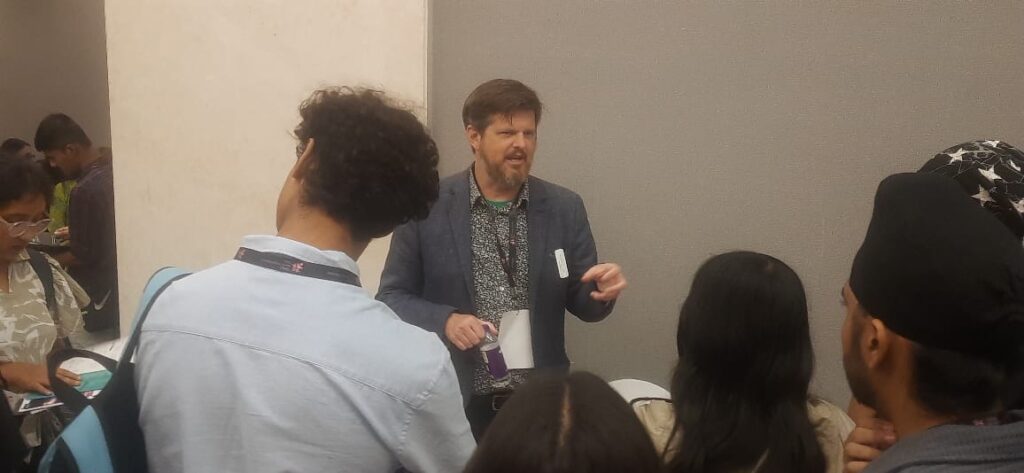
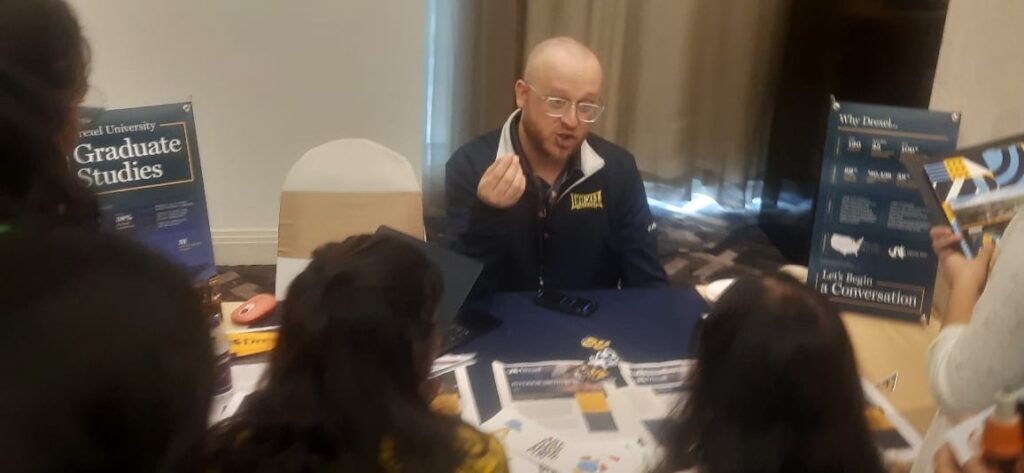
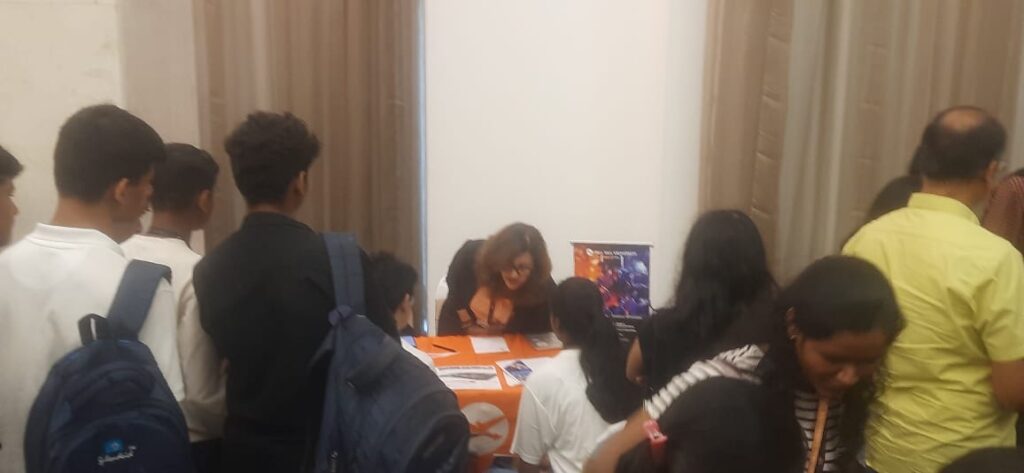
The event concluded with a networking tea, allowing attendees the invaluable opportunity for one-on-one interactions with representatives from various universities, further facilitating their study abroad aspirations.
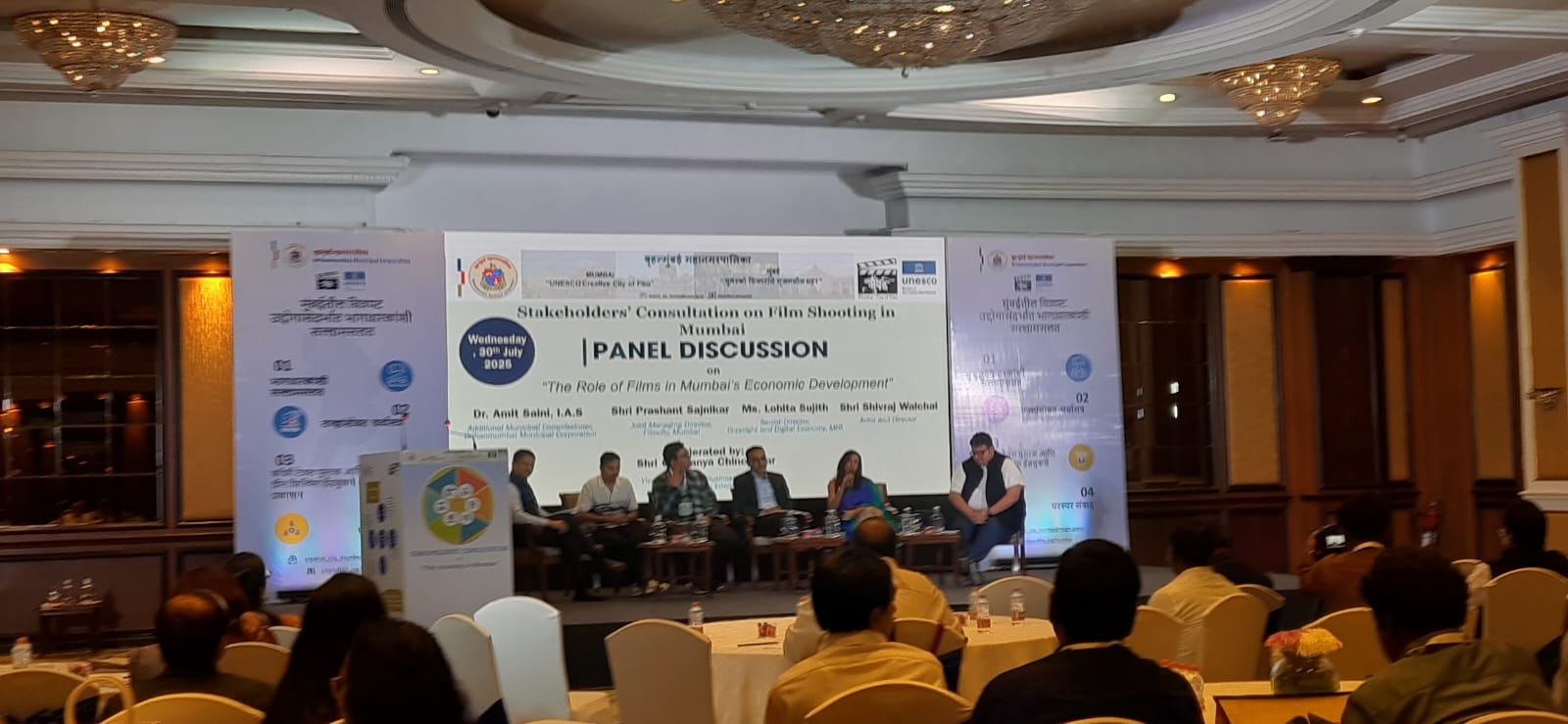
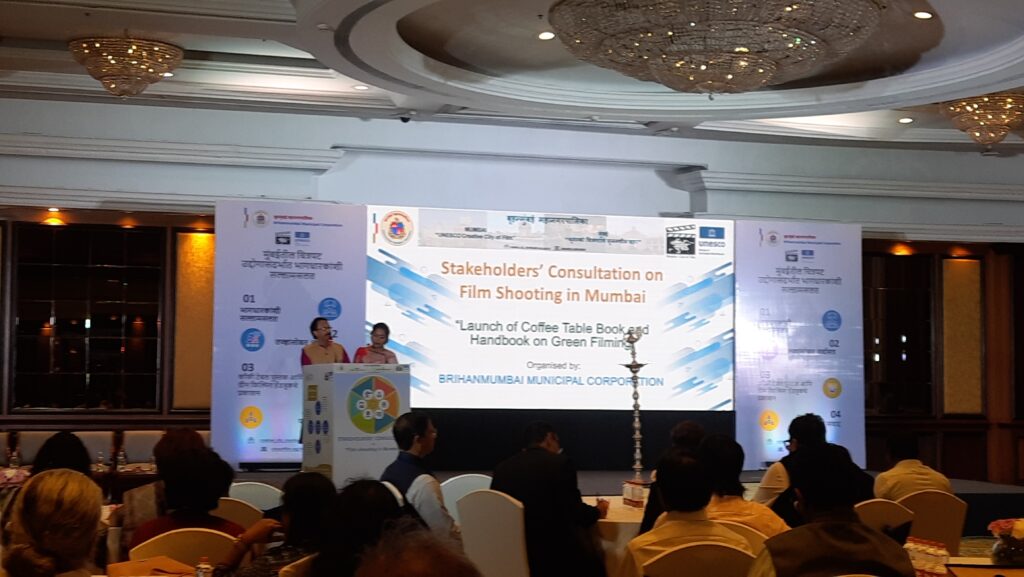
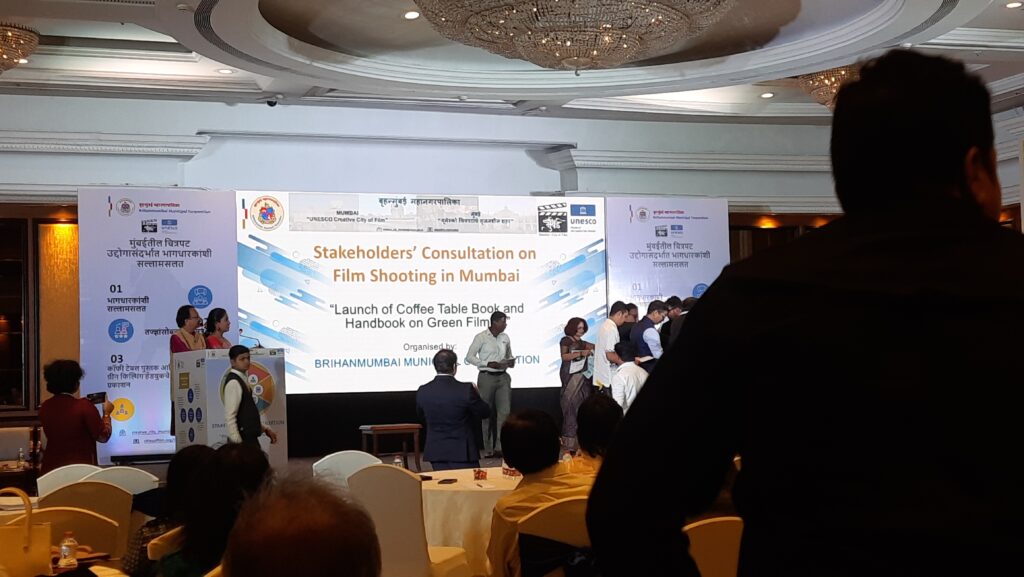
On July 30, 2025, a landmark event at the Taj Lands End, orchestrated by Ernst & Young, unveiled a transformative vision for Mumbai’s Film City and its economic development. This initiative, built upon years of meticulous data compilation regarding filming activities in Mumbai, aims to streamline processes, enhance infrastructure, and boost tourism, marking a new chapter for filmmakers and the city’s burgeoning entertainment sector.
A Collaborative Beginning: The Inaugural Event
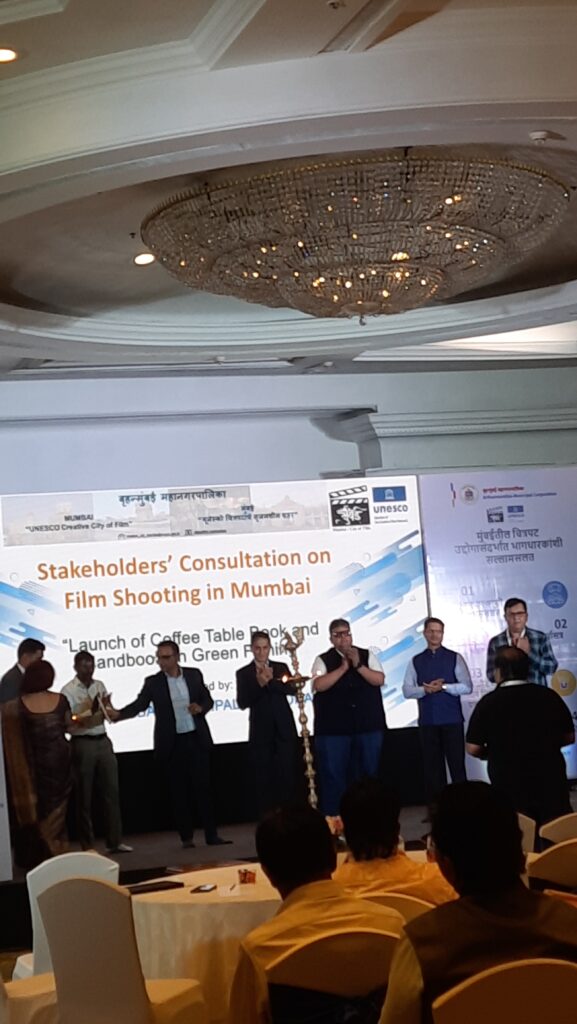
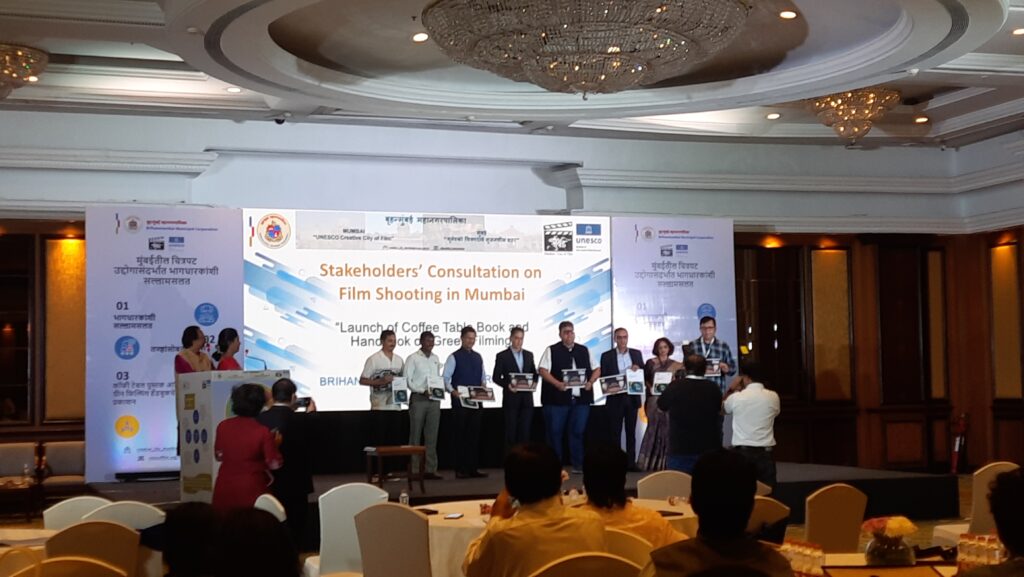
The event commenced with a traditional lighting ceremony, symbolizing prosperity and new beginnings, followed by the presentation of exclusive coffee table books and handbook on Green Filming to chief guests and VIPs. These books chronicled Mumbai’s rich cinematic history and the ambitious future plans. Engaging audio-visual presentations underscored the critical role of the Brihanmumbai Municipal Corporation (BMC) in this developmental journey, tracing the history of Film City’s growth and highlighting its immense potential to invigorate tourism. A central tenet of the proposed reforms is the creation of a seamless process for film producers, significantly simplifying the complex web of permissions and navigating local legal intricacies that often impede production timelines.
Strategic Engagements and Industry Insights
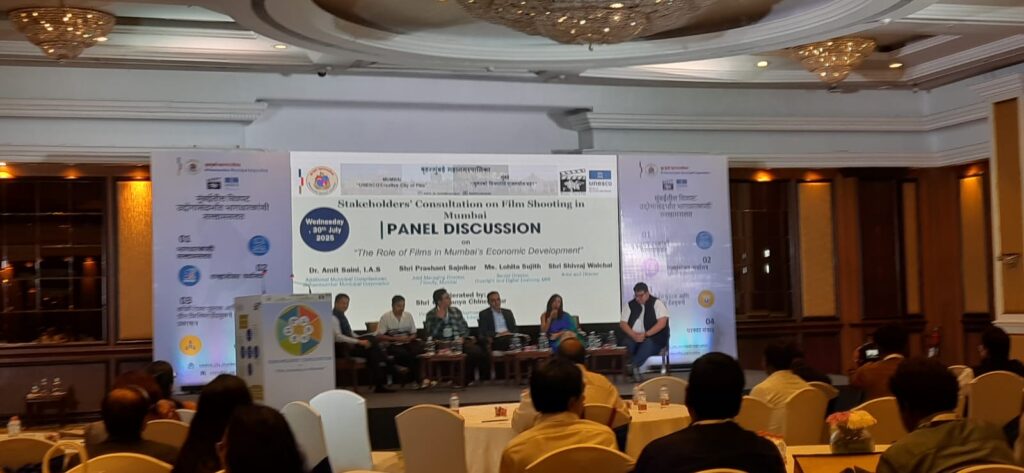
BMC has actively fostered an environment of open dialogue, engaging extensively with key stakeholders from the Mumbai Film City and Economic Development sectors. A distinguished panel, comprising prominent industry veterans and a dedicated think tank, has meticulously devised a comprehensive plan. This plan focuses on several critical areas: enhancing the existing infrastructure of Film City, redeveloping outdated facilities, and establishing robust, transparent policies designed to streamline filmmaking processes. Particular emphasis has been placed on simplifying BMC permissions required for utilizing public spaces and government infrastructure, which are vital for location-based shoots.
Seamless Permissions
Simplifying bureaucratic hurdles for filmmakers to secure necessary approvals for shoots.
Infrastructure Boost
Investing in state-of-the-art facilities and upgrading existing structures within Film City.
Tourism Enhancement
Leveraging Film City’s global appeal to attract more tourists and generate revenue.
Policy Reform
Developing clear, consistent guidelines for all aspects of film production and related activities.
Key Concerns and Future Directives
During the discussions, stakeholders representing a diverse spectrum of the media industry—including filmmakers, documentary producers, OTT platforms, large production houses, and advertising film producers—raised pertinent points for collective consideration. The dialogue extensively covered the pivotal roles of police and location managers, as well as local coordinators, who are instrumental in managing shoot requirements, vendor coordination, and crowd control through their local connections and expertise in securing permissions.
A significant point of discussion revolved around the urgent need for clear guidelines concerning temporary structures, such as studio setups or prefabricated auditoriums used for film displays. A notable and innovative suggestion proposed the establishment of a dedicated liaison between the government and film producers at actual shoot locations. This initiative could potentially create daily wage job opportunities for trained liaison officers in specific shooting areas, further bolstering local employment. Furthermore, architectural firms voiced critical concerns regarding structural modifications to buildings for film shoots, emphasizing that such alterations are often not temporary and entail significant, lasting changes, necessitating a more rigorous regulatory framework. This collaborative approach aims to position Mumbai as an even more attractive and efficient hub for global filmmaking.
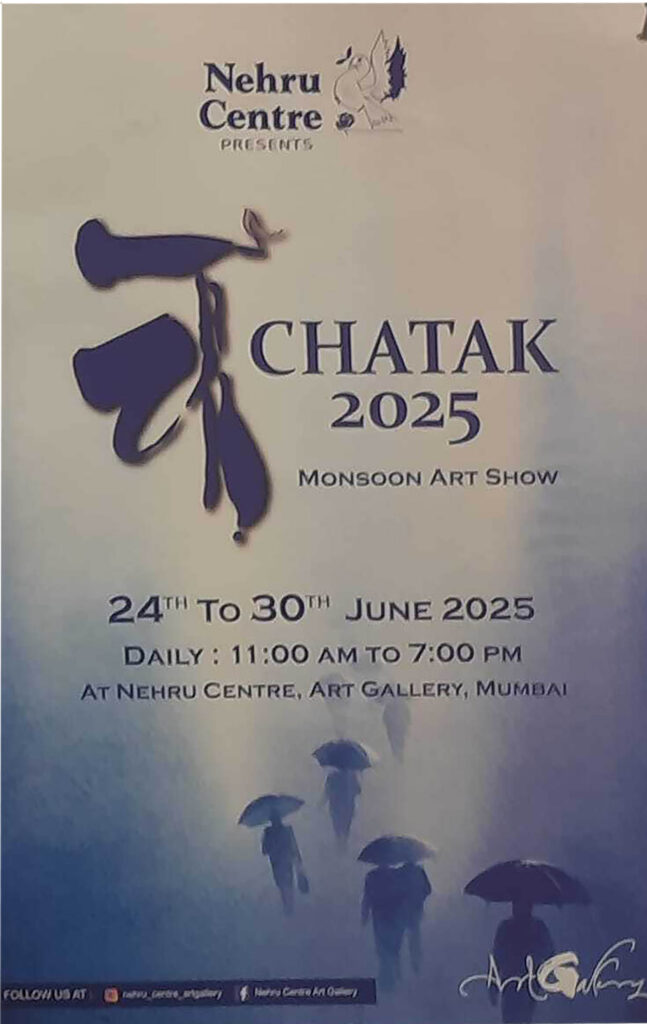
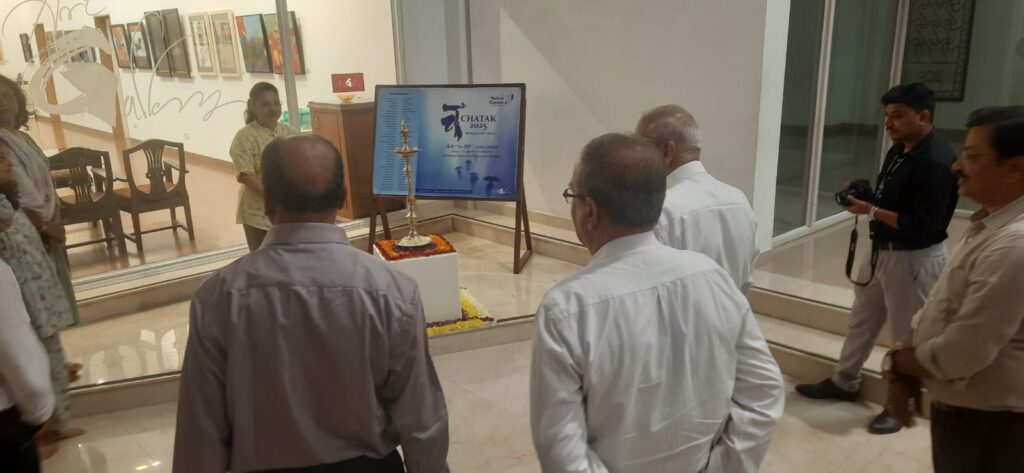
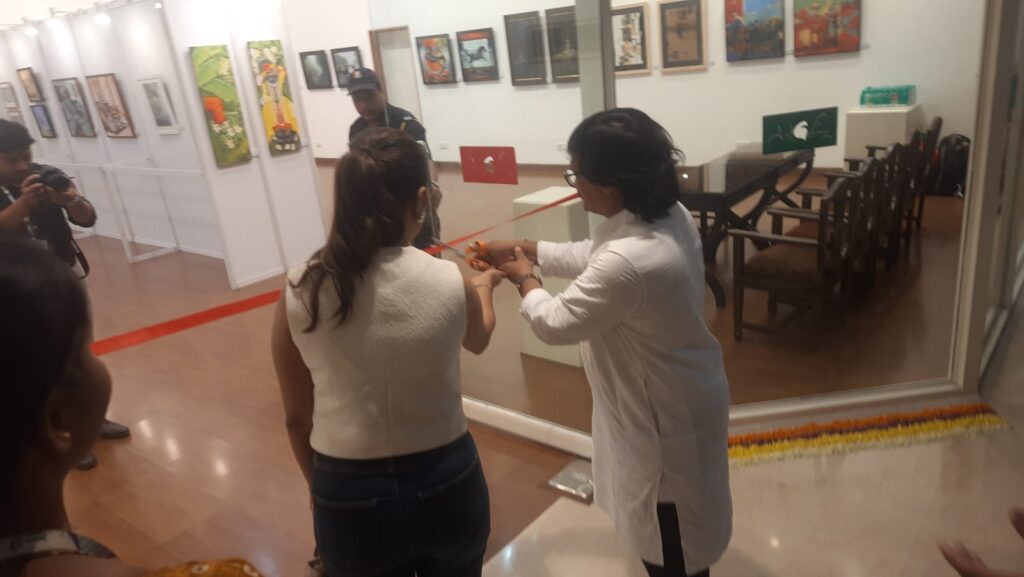
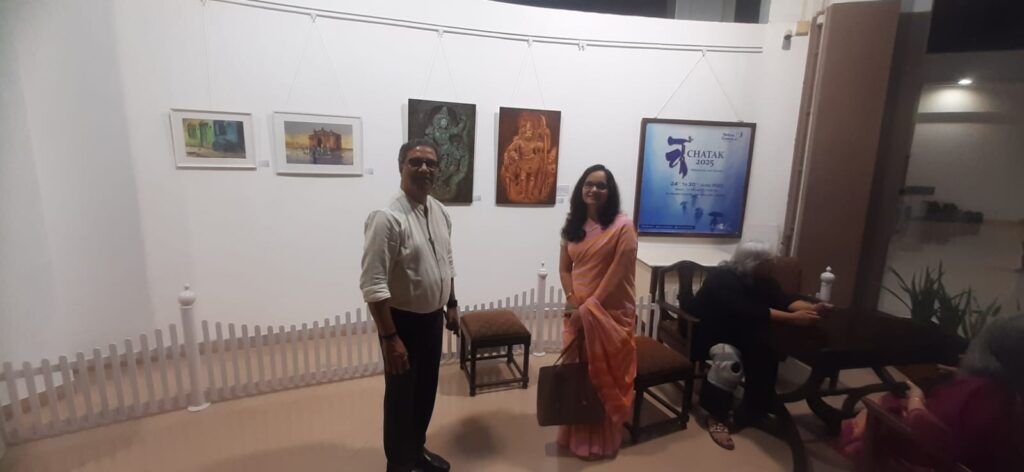
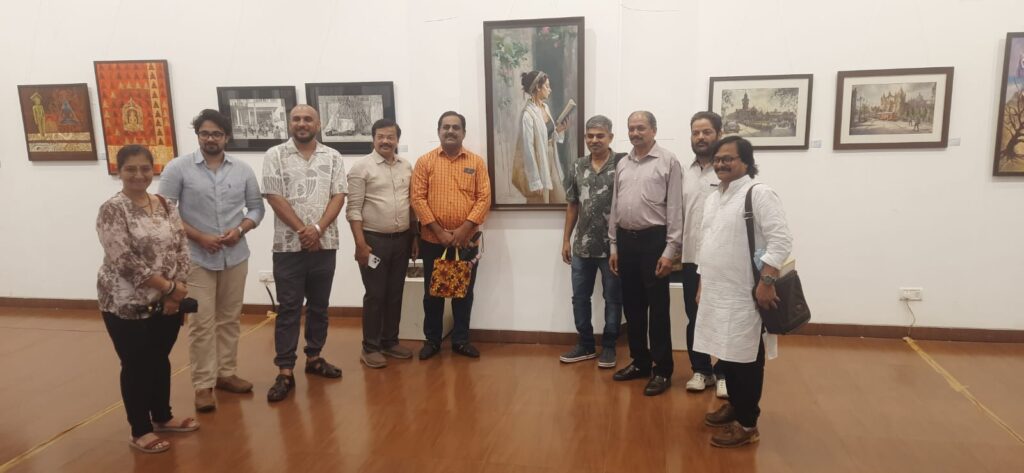
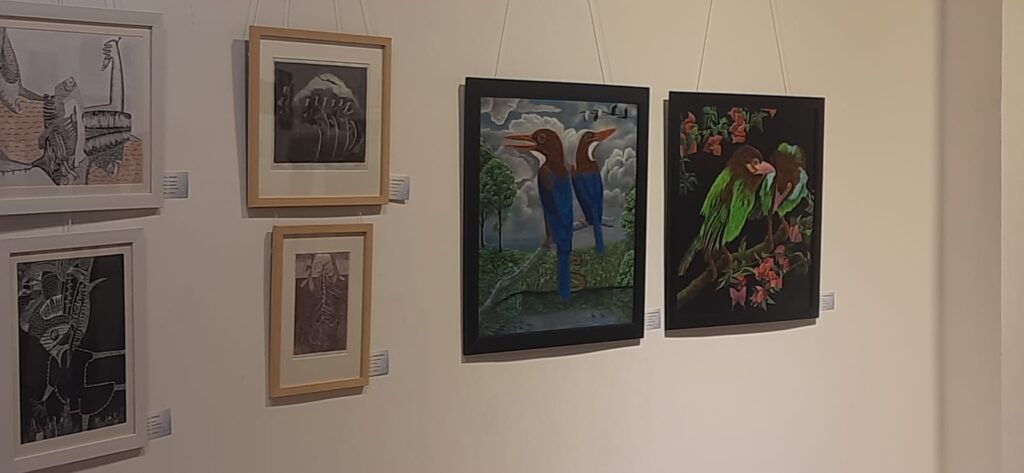
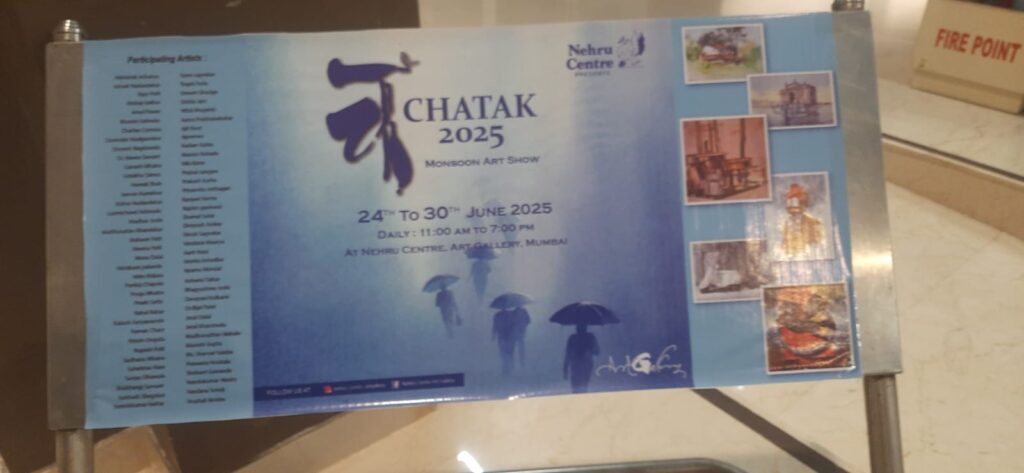
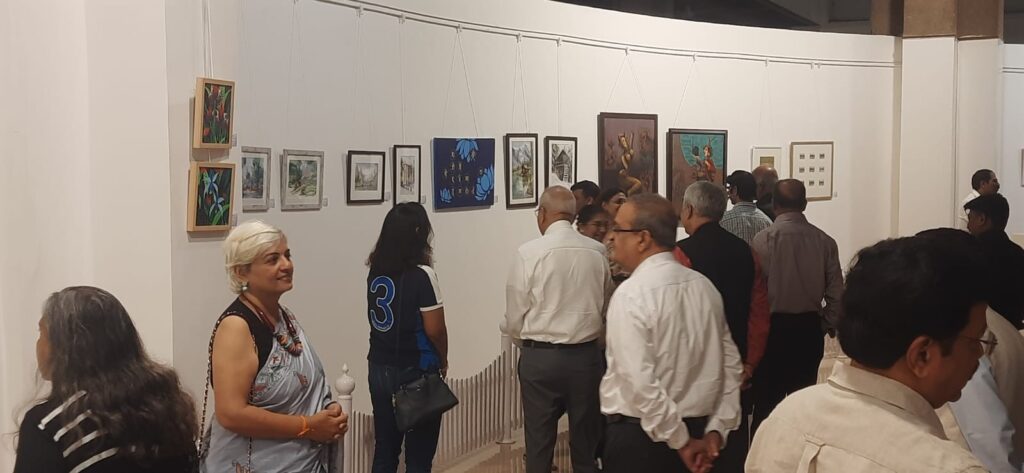
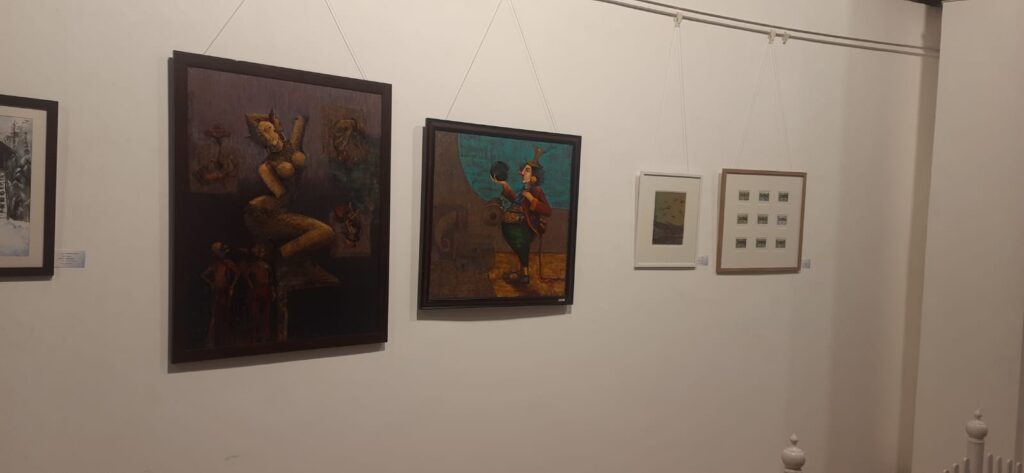
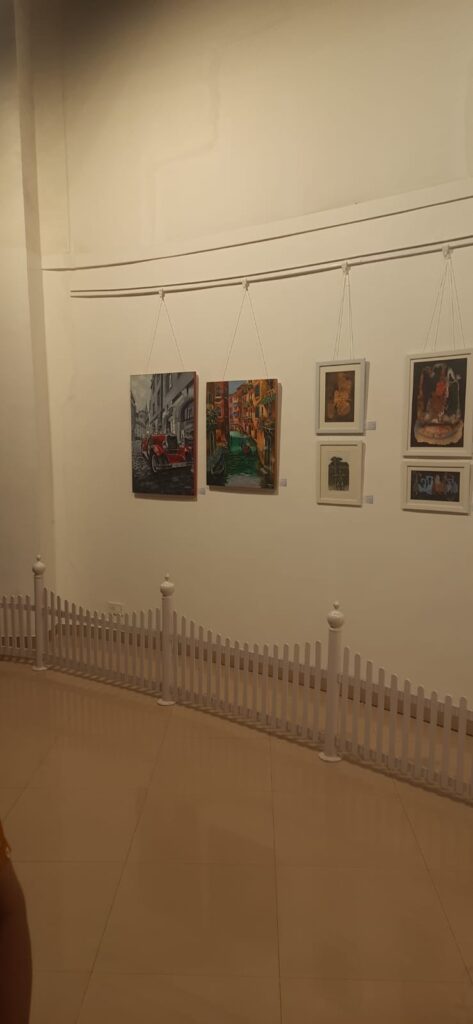
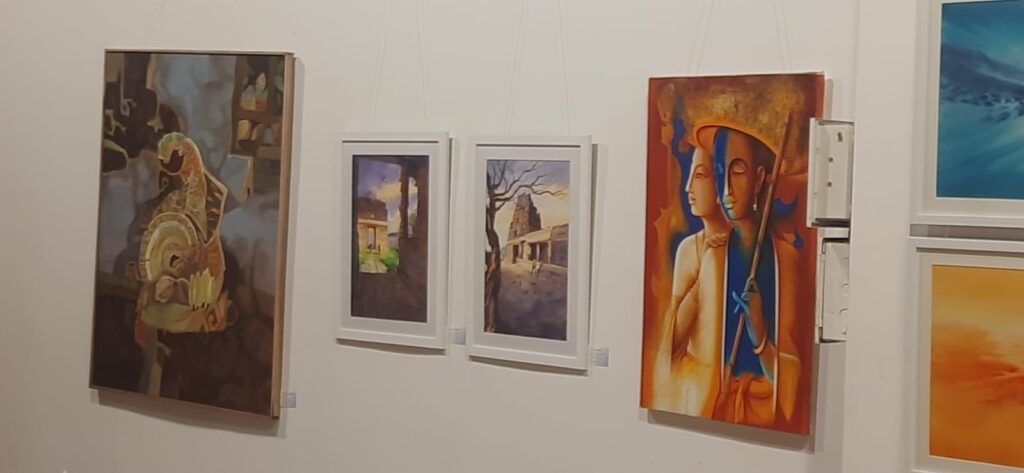
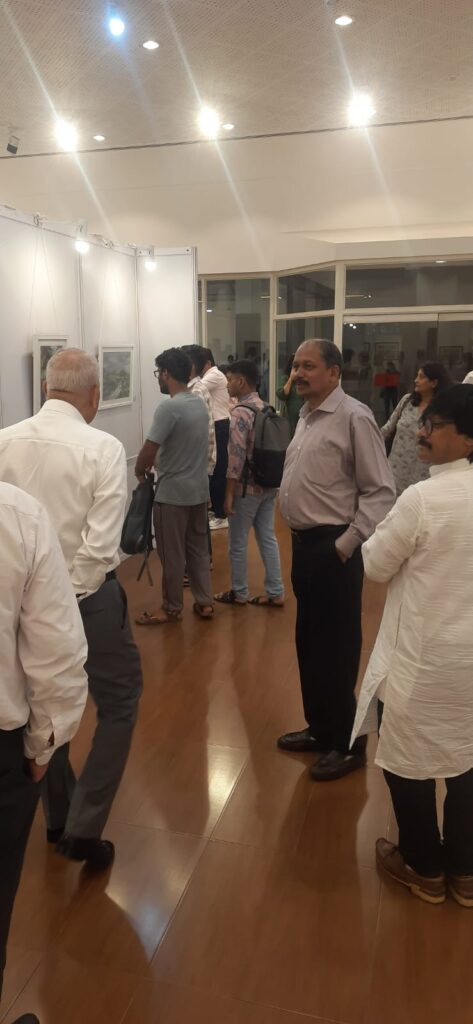
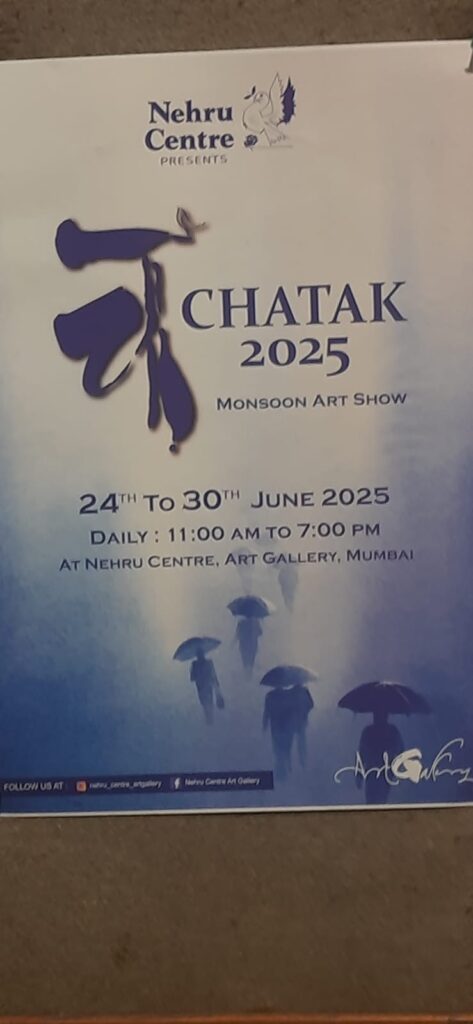
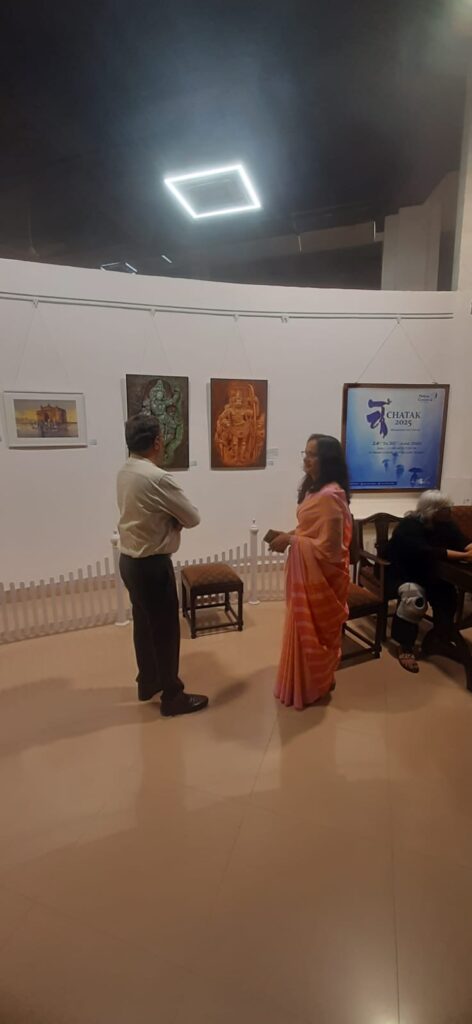
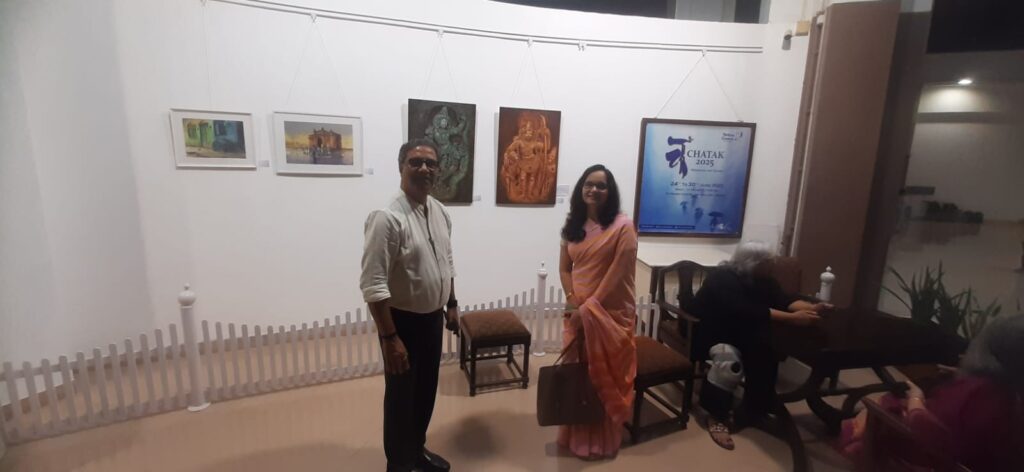
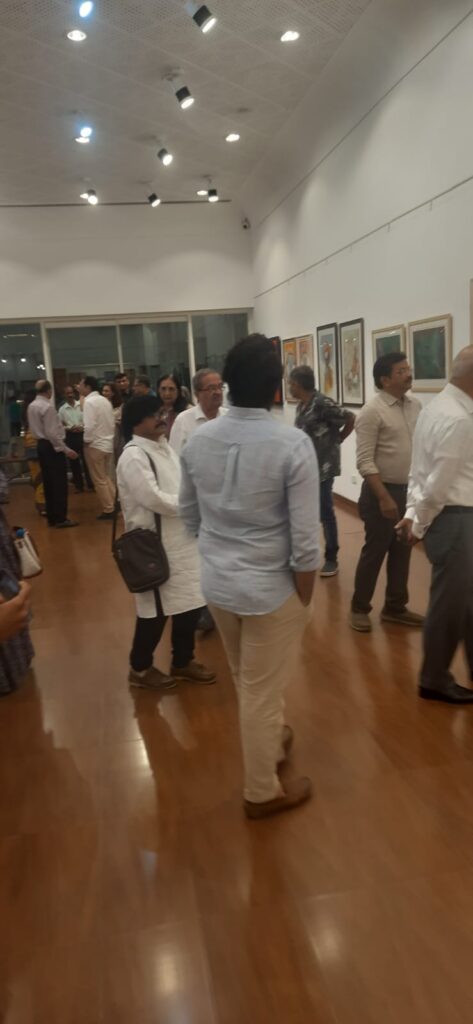
The Chatak Monsoon Art Show 2025, inaugurated by senior artist Vittal Muppiddy, showcased a diverse collection of artworks from both established and emerging artists. This year’s event featured unique promotional strategies, including individual artist spotlights on Instagram one day before the show. The exhibition, held under the aegis of Shri Santosh Pednekar, presented a wide array of artistic expressions, ranging from portraits and mythological themes to sculptures, landscapes, cityscapes, wildlife, and abstract art. Senior officials and management from the Nehru Centre were also in attendance, highlighting the significance of this annual event in the art calendar.
The Chatak Monsoon Art Show 2025 commenced with an official inauguration led by senior artist Vittal Muppiddy from Hyderabad. The event was further graced by the presence of a distinguished group of senior officials from the Nehru Centre, who collectively lit the Samay, symbolizing the official opening of the exhibition.
Promoting New Talent and Art Visibility
A significant aspect of the Chatak Monsoon Art Show 2025 was its commitment to promoting new artists and enhancing the visibility of their work. This year, the organizers implemented a unique and effective strategy: each participating artist was individually promoted on Instagram just one day before the show’s opening.
This innovative pre-show promotion generated considerable buzz and anticipation, drawing a larger audience to discover the fresh perspectives and diverse talents on display. By actively showcasing emerging artists, the Chatak Monsoon Art Show continues to foster a dynamic and inclusive environment for artistic expression.
The Chatak Monsoon Art Show 2025 was a vibrant tapestry of artistic expressions, curated to offer something for every art enthusiast. The exhibition successfully brought together a wide variety of genres and styles, reflecting the rich diversity of contemporary Indian art.
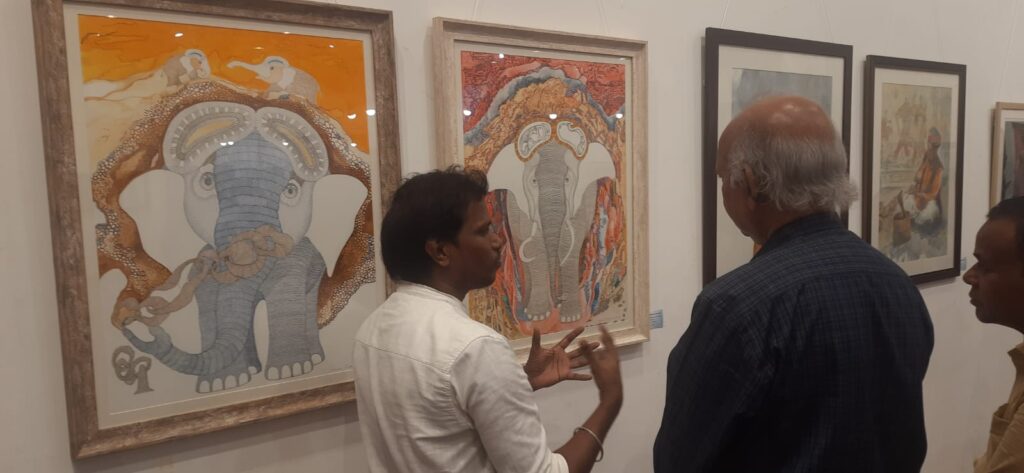
Damodar Manohar Madgaonkar: The Elephant’s Barrier
Artist Damodar Manohar Madgaonkar explores the psychological barriers faced by elephants, drawing a parallel to their childhood experience of being tied with chains. He illustrates how this early conditioning can mentally restrict them even as adults, creating a perceived physical limitation. Ink and paper have modestly expressed the mindset of slavery.
Preeti Sethi: Mahabharata’s Epic Memories
Preeti Sethi uniquely represents moments and epic memories from the Mahabharata. With a background in various art institutes and current studies in metal sculptures, she boasts a valuable collection of 138 artifacts depicting key Mahabharata scenes. Her creative flow is nurtured by living in a serene environment in Lonavala with her family.
Nookala: Reviving Ancient Temples
Praveena Nookala presented two sculpture paintings inspired by ancient temples. Her work reflects her vision of reviving these historical sites. She engaged in discussions with Shri Milind Tawde, the in-charge of Nehru exhibitions and events, regarding her artistic endeavors.
Senior artist Vittal Muppiddy, who inaugurated the Chatak Monsoon Art Show, shared a personal anecdote about gifting a special painting to Shri Narendra Modi. This particular artwork was a seed collage, a unique medium through which Muppiddy expresses his profound love for farming and landscapes.
His passion for agriculture is evident in his artistic choice of using small seeds and grains to create intricate landscapes. This distinctive approach not only highlights his artistic skill but also his deep connection to nature and the agricultural world.
Adwait Kishore Nadavedkar: Art of Leisure
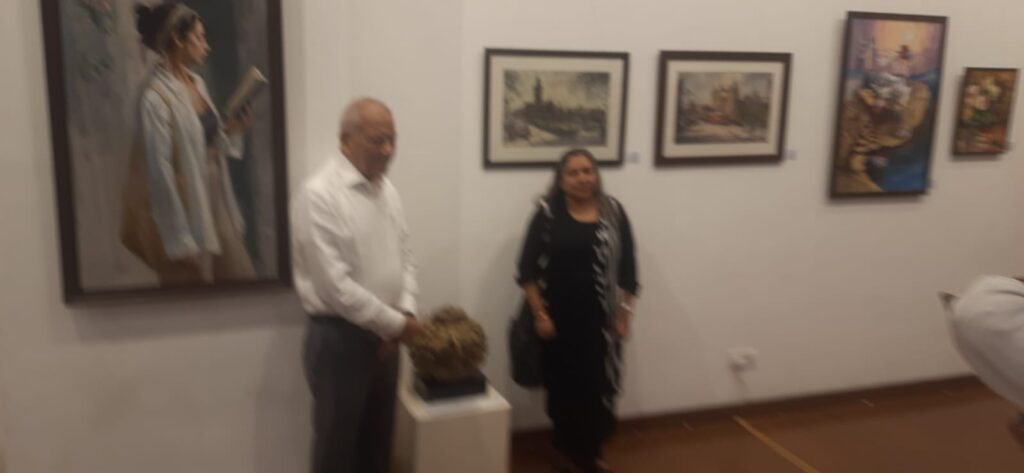
Artist Adwait Kishore Nadavedkar emphasizes the importance of leisure amidst a busy life, a theme beautifully captured in his artworks.
Nadavedkar showcased several cityscapes of Russia, illustrating urban environments with a sense of calm and introspection. One of his notable pieces features a girl engrossed in reading a book, symbolizing the quiet moments of leisure that can be found even in bustling settings.
Since 2017, Adwait Kishore Nadavedkar has been actively creating art, primarily focusing on portraits and still life. His works often invite viewers to reflect on the balance between daily routines and the essential need for personal time and relaxation.
This year’s show was meticulously planned under the guidance of Shri Santosh Pednekar, ensuring a diverse and engaging experience for all attendees. The presence of Nehru Centre’s senior management and officials underscored the institutional support and prominence of the annual art show, contributing to its success and visibility.
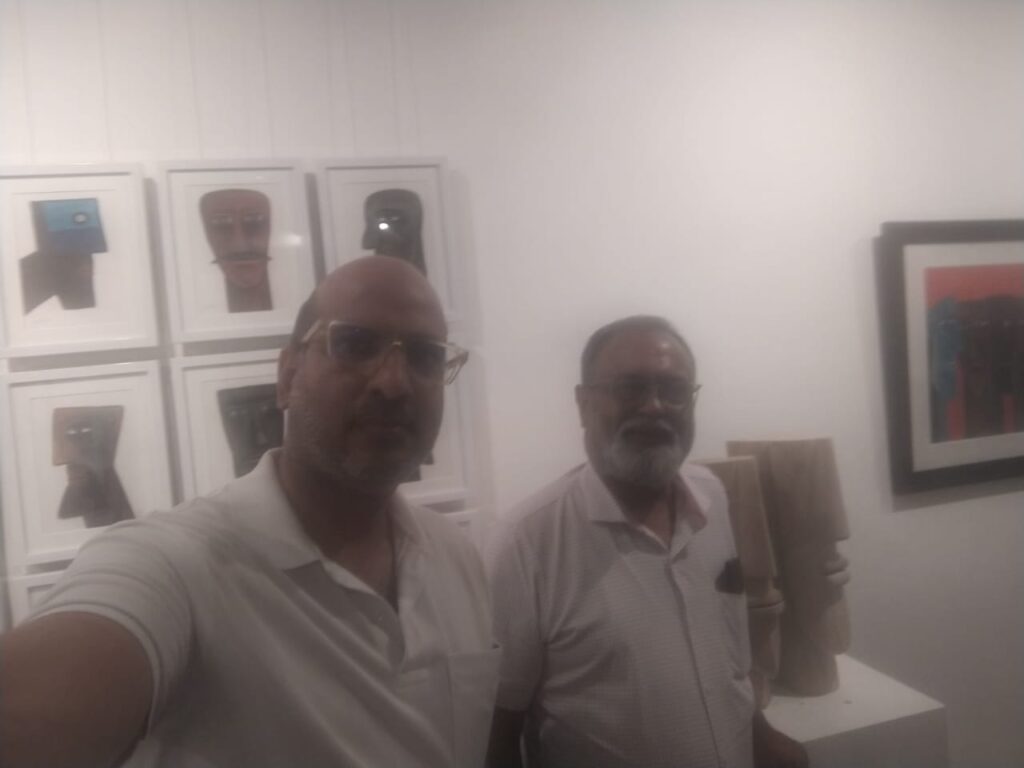
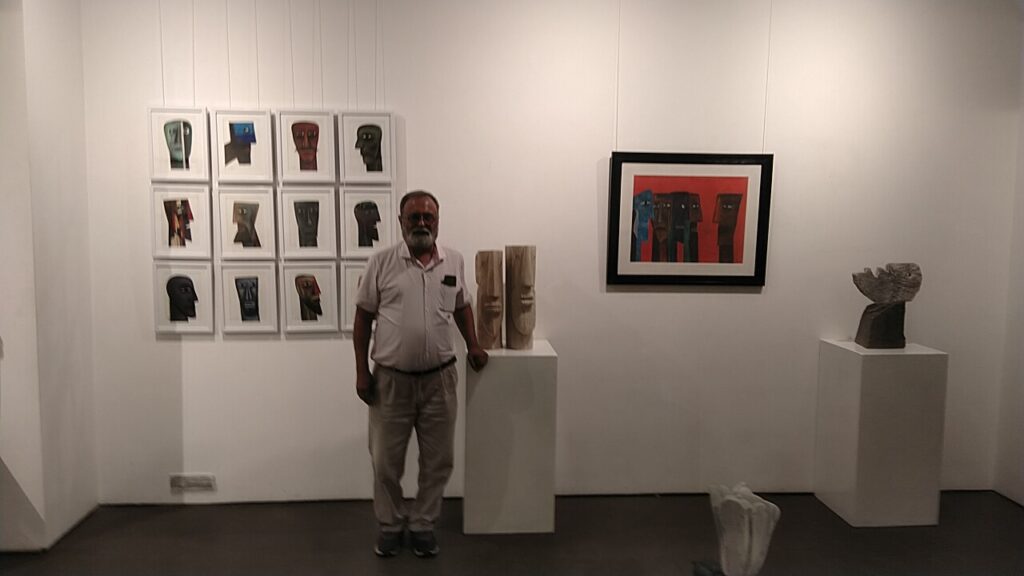
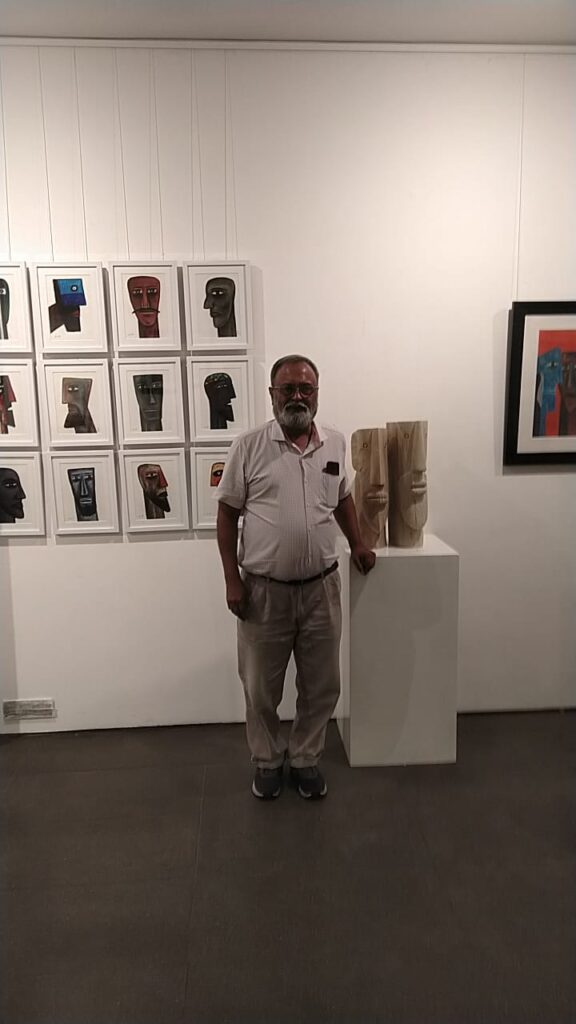
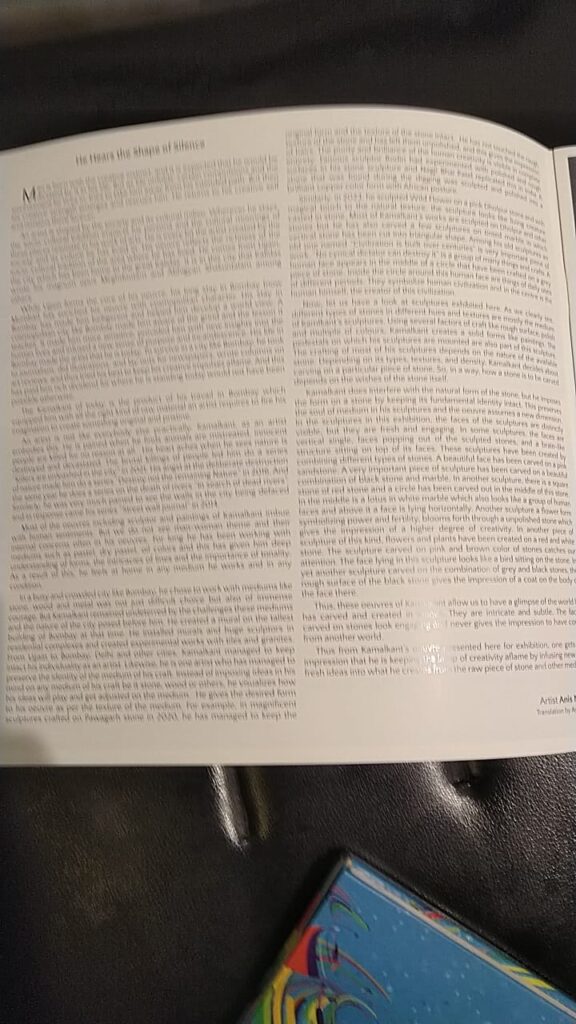
Bajaj Art Gallery, opens with a well-known artist, Shri Kamalkant, from Ujjain showcasing medieval sculptures and paintings that complement them. The artist says, “Stones helped him sculpt the stories or faces and shapes, rather making it by research or by inspiration.” They are very Jewish and some of these style face sculpture are also found in the Jewish Museum, similar to Italian Modigiliani long-face sculptures. Some of his friends who are architects and art critics have summarized his work.
Further, he has participated in many painting contests and has exhibited all across India. Experimenting with this kind of sculpture art has made Kamalkant find his niche and has gained notable testimonials from friends and patrons. If you are keen to know more about the Artist please visit the Bajaj Art Gallery.
Some of the summaries from Artist Kamalkant’s friend and patrons.
At the Bohra Expo 3 days of business and networking event for all who want to buy, sell or setup a business, an exhibition put up by Bohra Community. You can see all kinds of real estate and hardware, interior, confectionary and jewelery stalls.
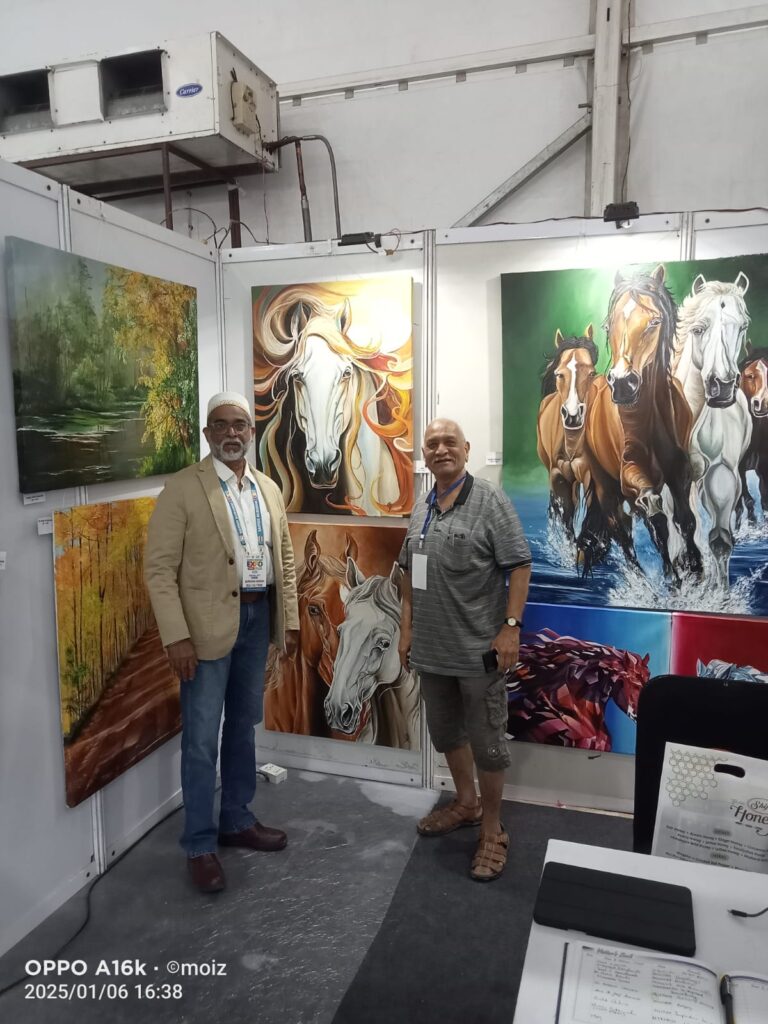
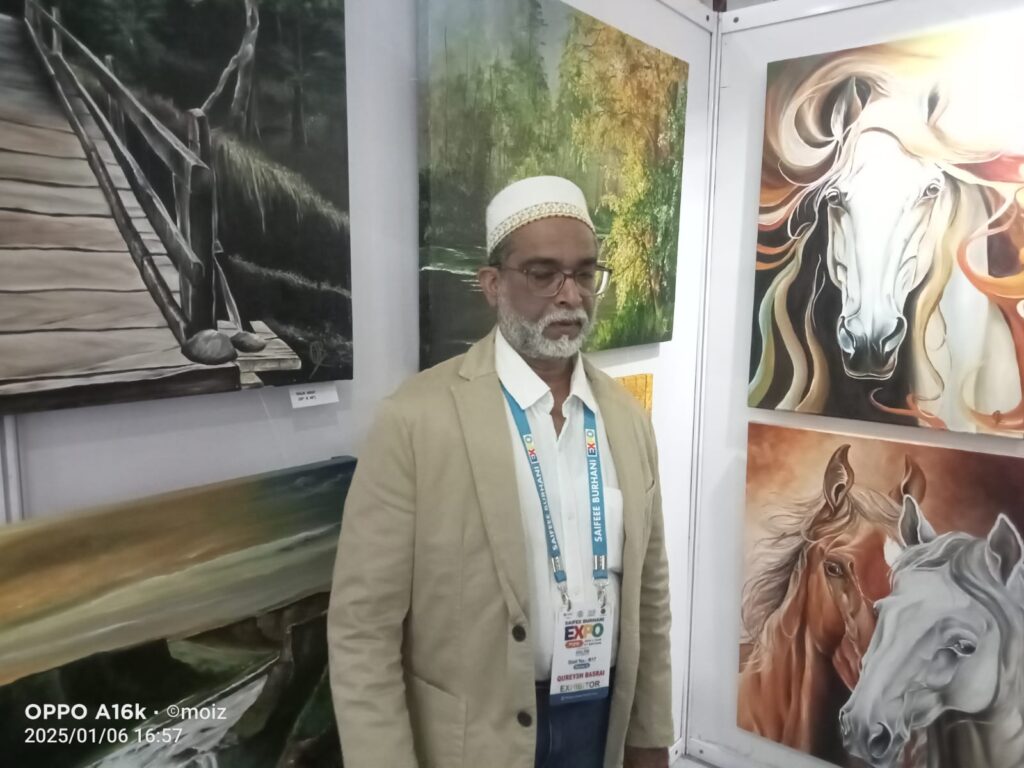
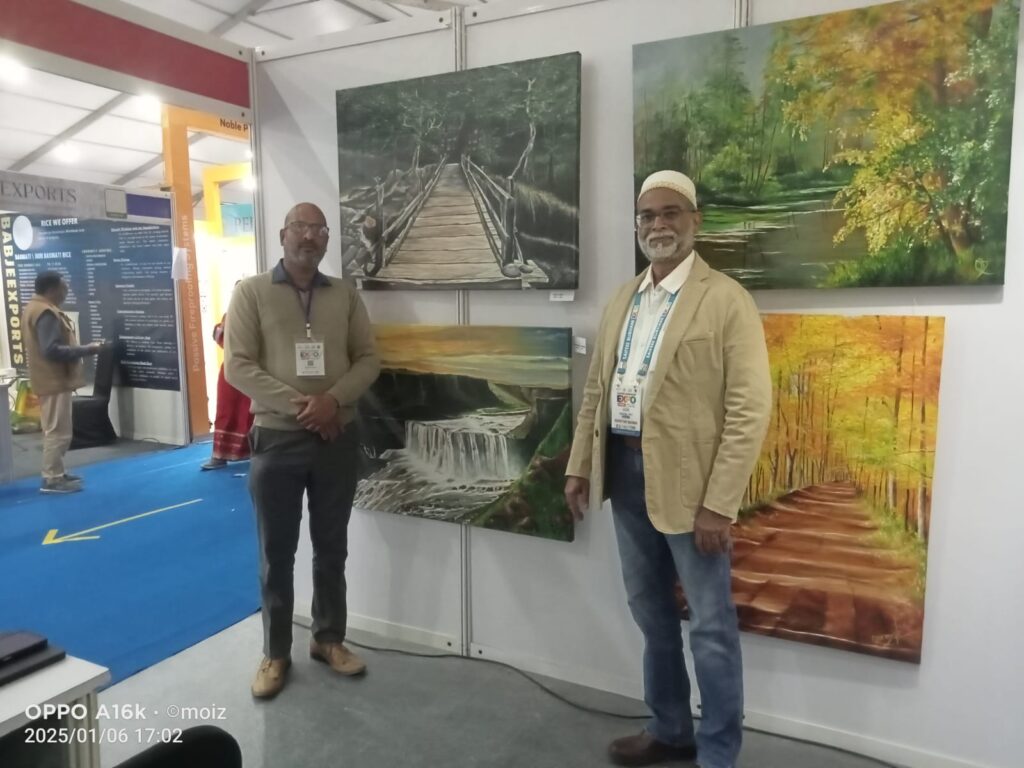
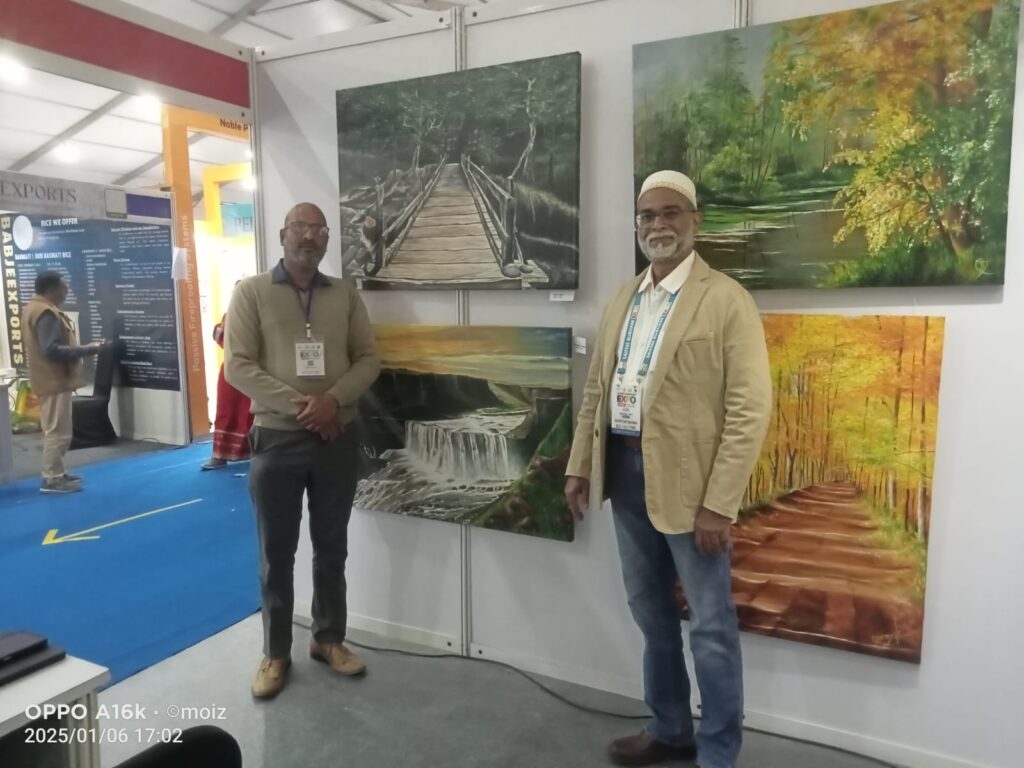
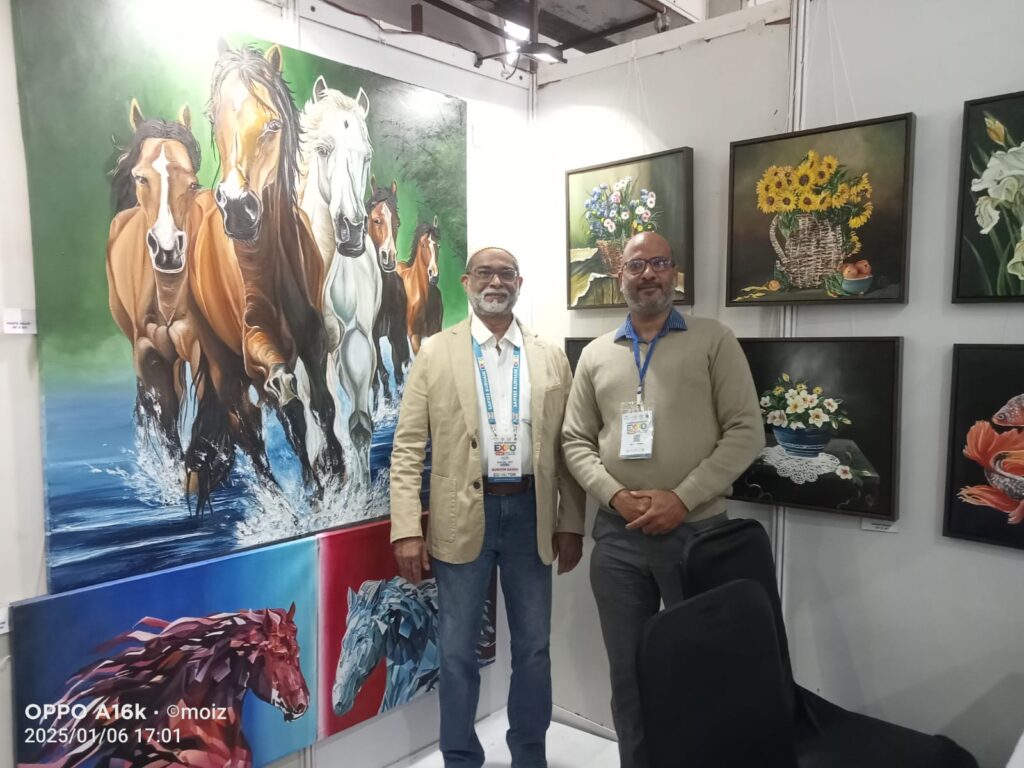
Quresh Basrai is an artist known for horses and landscapes; he has won more than 20 awards. Started when he was child a 4-year-old boy who was inspired by his mother. His mother used to make greeting cards and this made him have a creative interest in life and his career. Studied at Burhani College (Commerce), Christ Church School and later pursued his electrical engineering and studied interior design at College of Architecture in Mumbai.
He mentions that he had a long gap of 34 years of painting and during Covid he used the downtime to review his artists skills and made lots of paintings. He only does oil on canvas, and mentions that his works have been appreciated by many among prominent artists and celebrities.
He has held group and solo shows in Poona, Mumbai, Bengaluru, Delhi, Dubai and London. His artworks depict more of nature and landscape since he loves nature and horses since they are noble of all animals and considered of high value or to bring good fortune. He has also added flowers and fish in his display or exhibition and considers horses as sellable art. His logo also represents his mother and a horse.
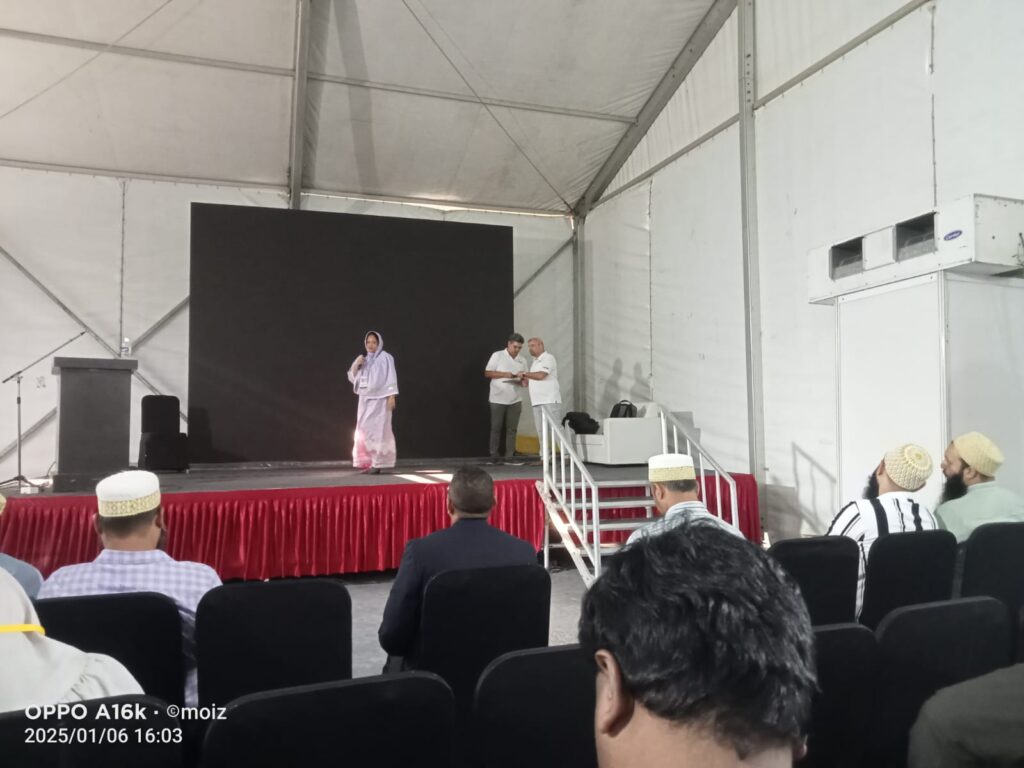
Apart from art, there were many interesting stalls mention some Karcher machines for cleaning, Wifi electric switches by Kapa, Dubai properties by Damac, Danube and many others. Galvanizing by Hilite, Cattle feed Taheri Enterprises, Hatimi Hills, Hatimi Jewelers, Monginis, Amazon and also had a few lectures to boost your business identity, values, networking and business strategy.
One can find everything under the sun at this Expo and there will many more of such in different cities.