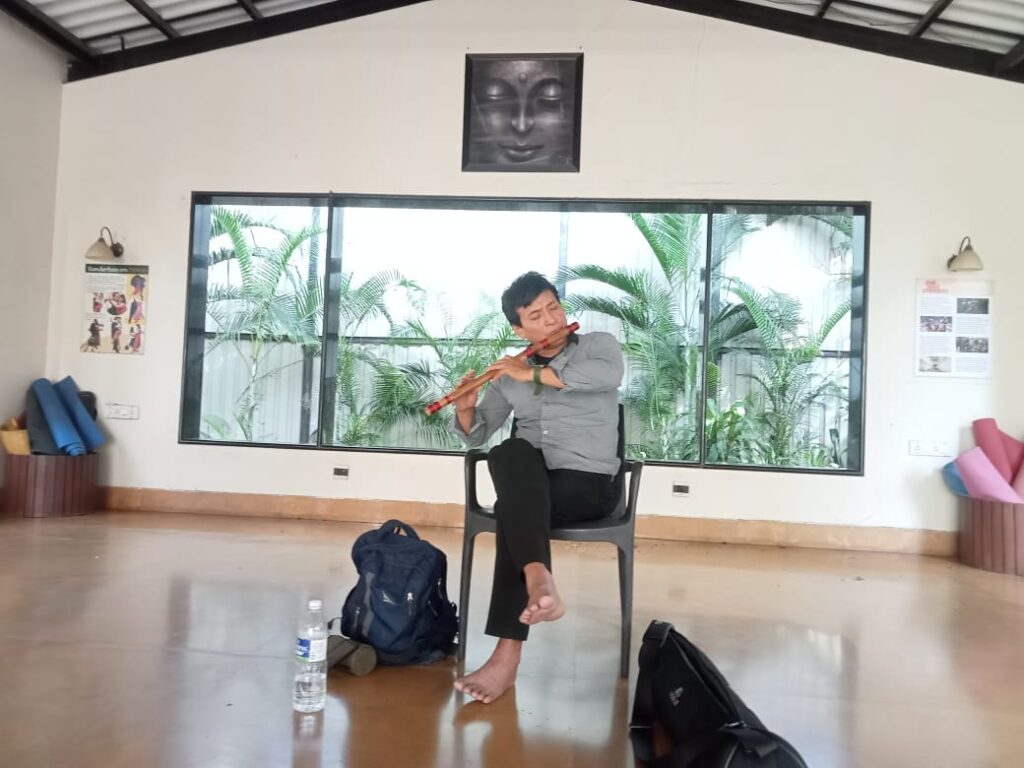
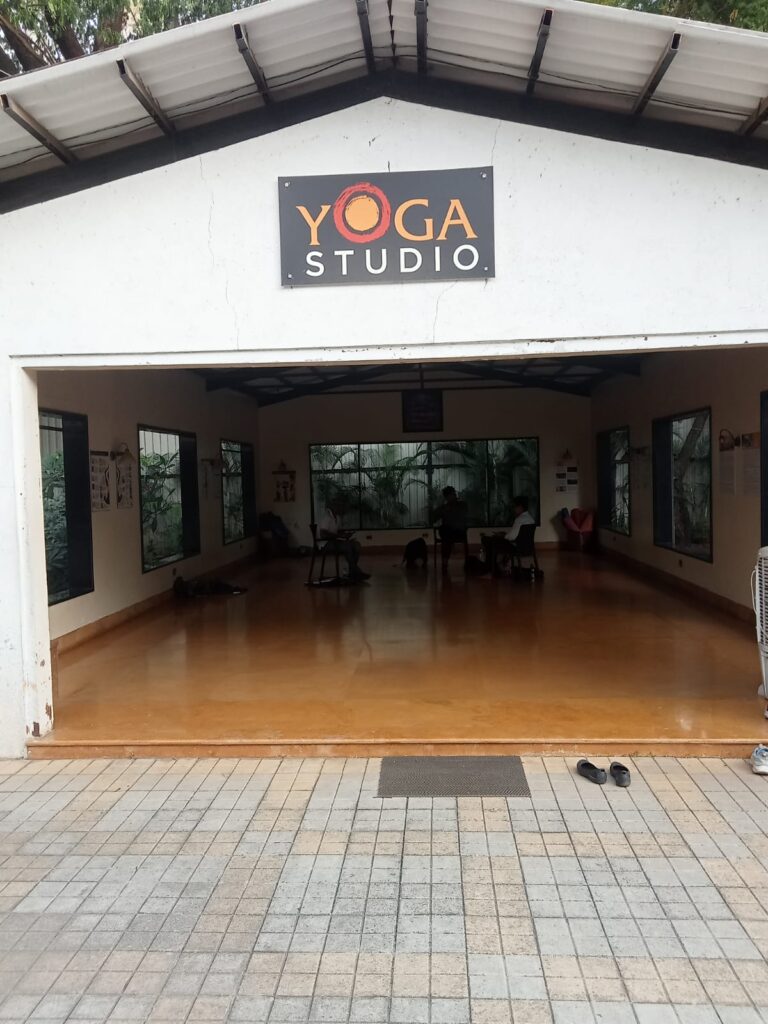
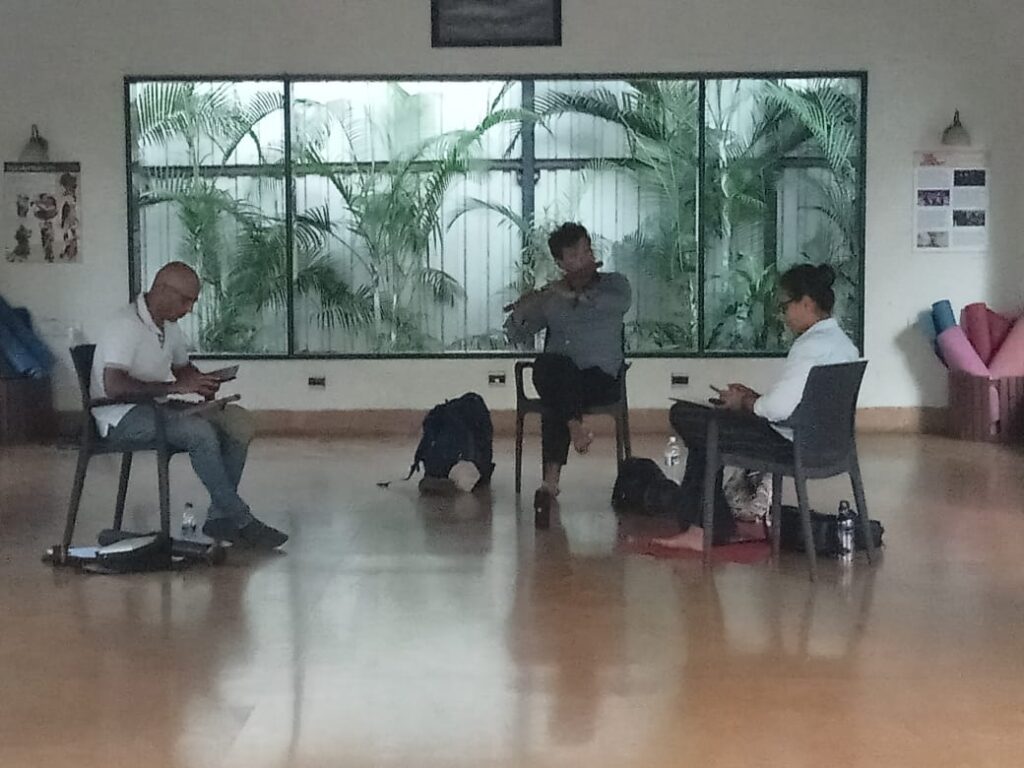
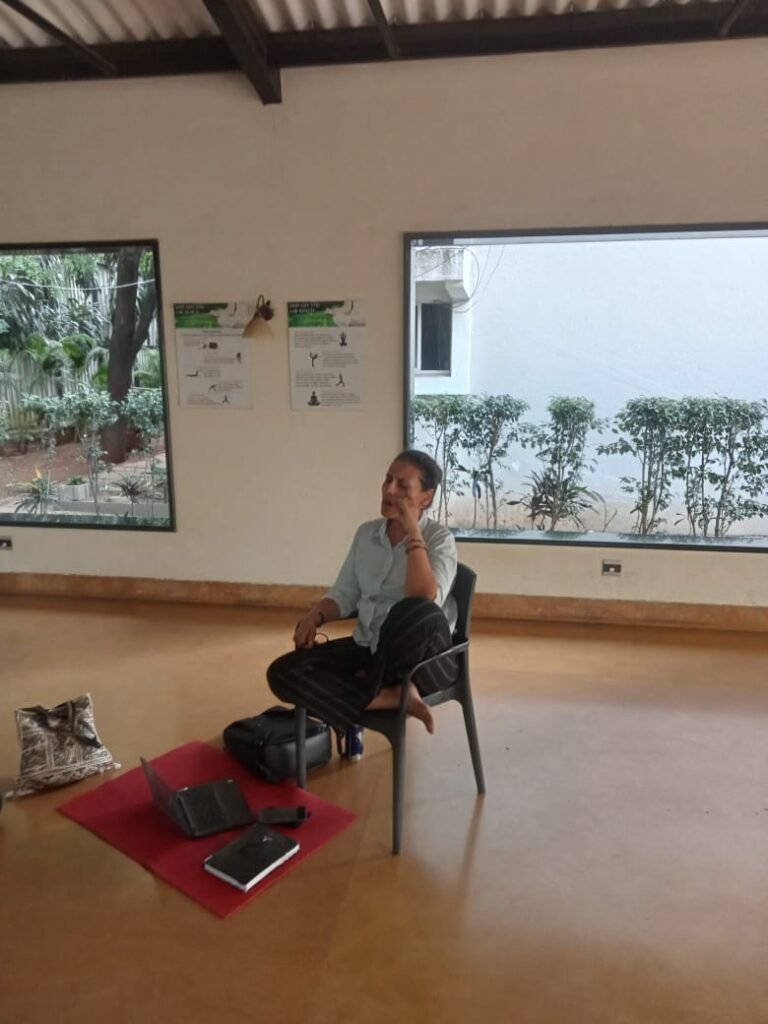
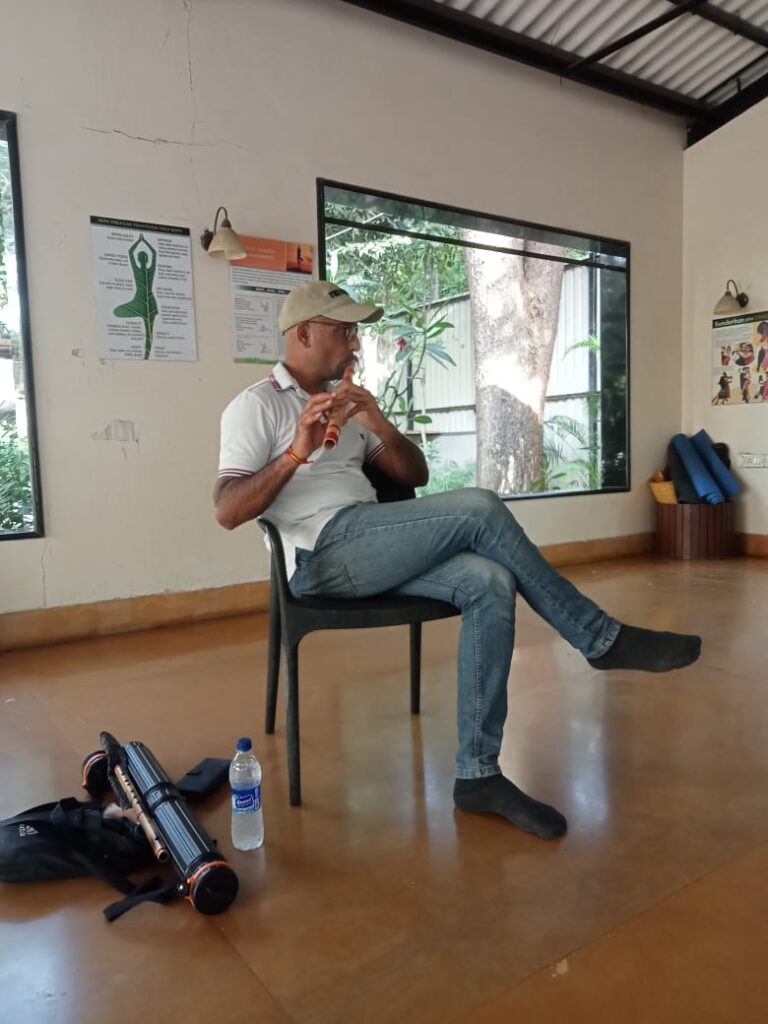
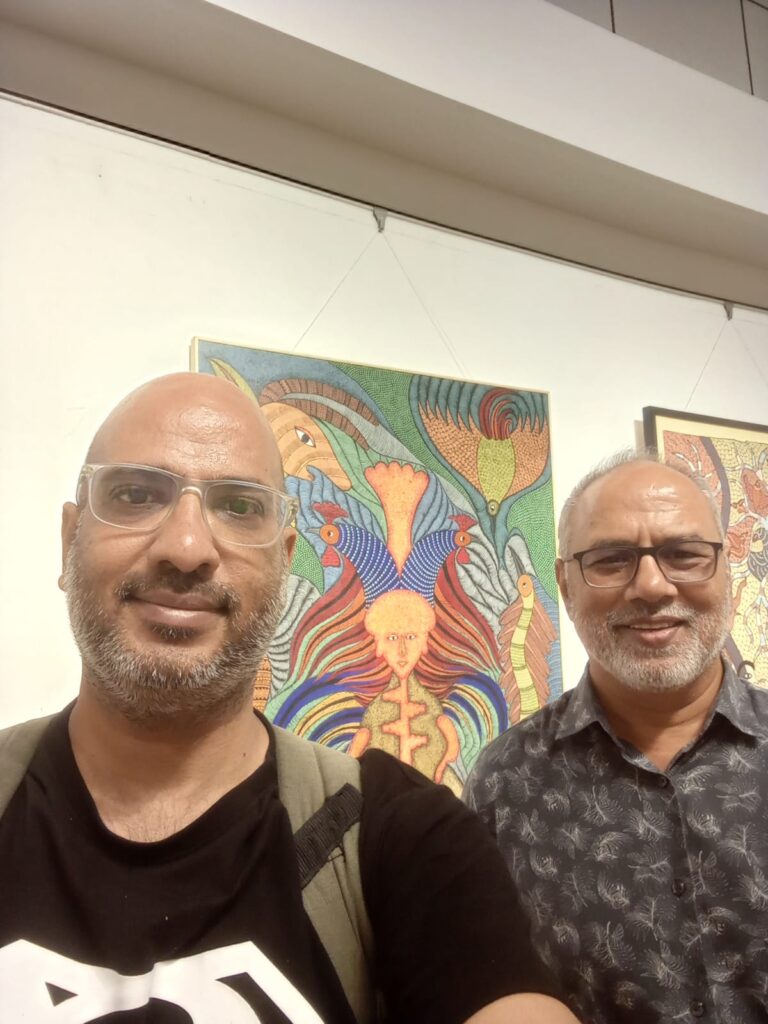
Meeting Mr. Dilip Goradia, a music enthusiasts at Koregaon Park. He is a kind person who has led to his circle of musicians at the Flute Meditation at the Koregaon Park. It is on every Wednesday and Saturday, RK Bikramjit Singh flute master trains and practices with Mr. Dilip Goradia and Arunima.
A long story now unfolds of the star musician RK Bikramjit Singh, he hails for Manipur a land of sports. He was fond of football and played for several years, unfortunately having an injury in this leg which led how to learn music. He was always fond of tabla and drums but destiny bought him to play the flute. His fame has reached to many of the theatre and film producers. Bikramjit explains how he had a stardom of 15 years and now he is at the yoga studio and has started the flute meditation which helps learn flute.
Mr. Dilip Goradia, a true fan and a pure disciple of Bikramjit, he met him in 2009 at a music concert and all the guests were given a CD and a wooden flute. He listened to those CD’s for many years until he finally met Bikramjit again and started to learn the flute. He has now joined the flute meditation and is also playing the flute along Bikramjit. This is a miracle and makes us believe in our goals.
Arunima is a vocalist from west Bengal, she has a great voice and is living the dream of being a musician at the flute meditations. Bikramjit also has a degree in environment research and studies from Savitri Bai Phule University.
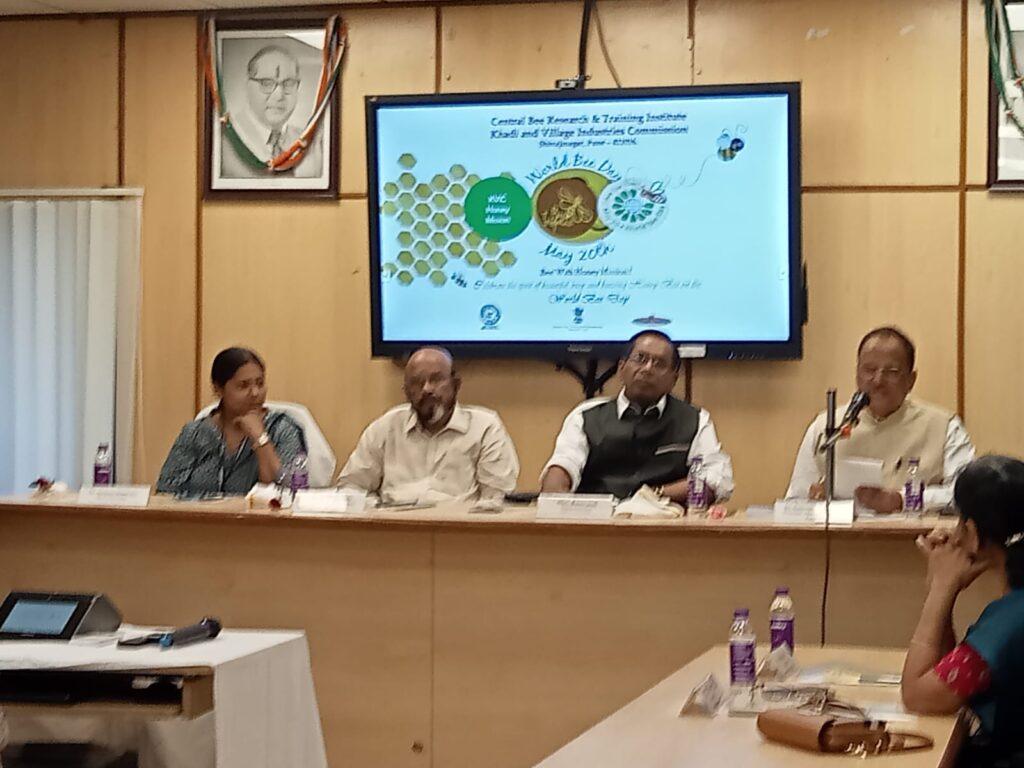
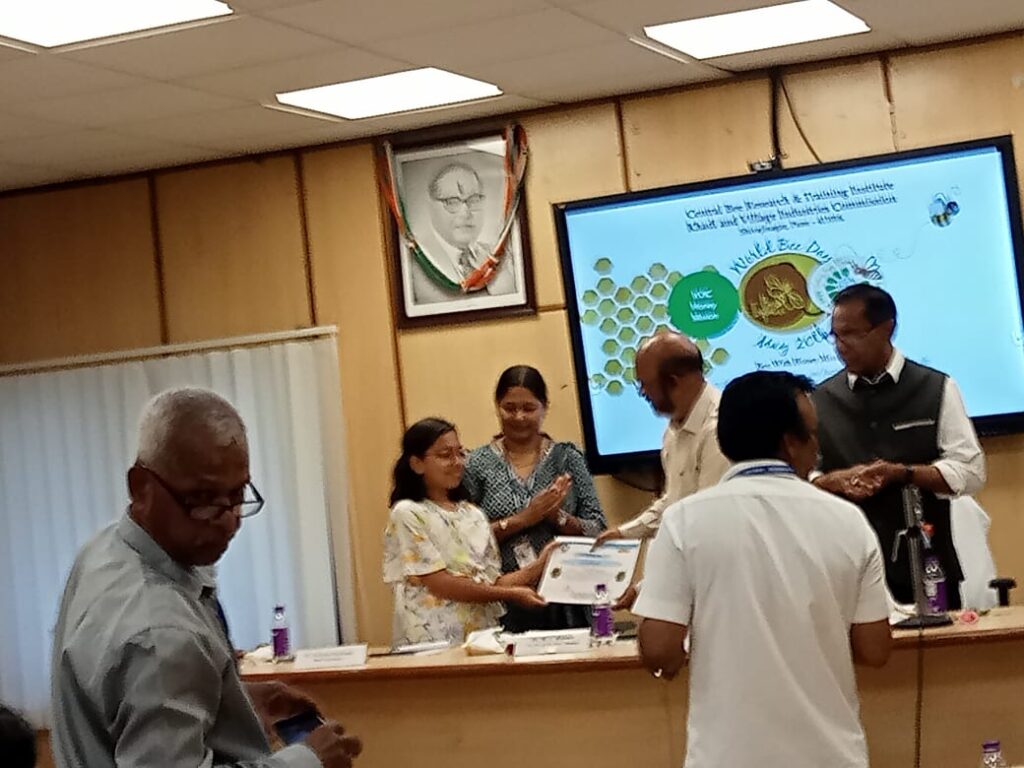
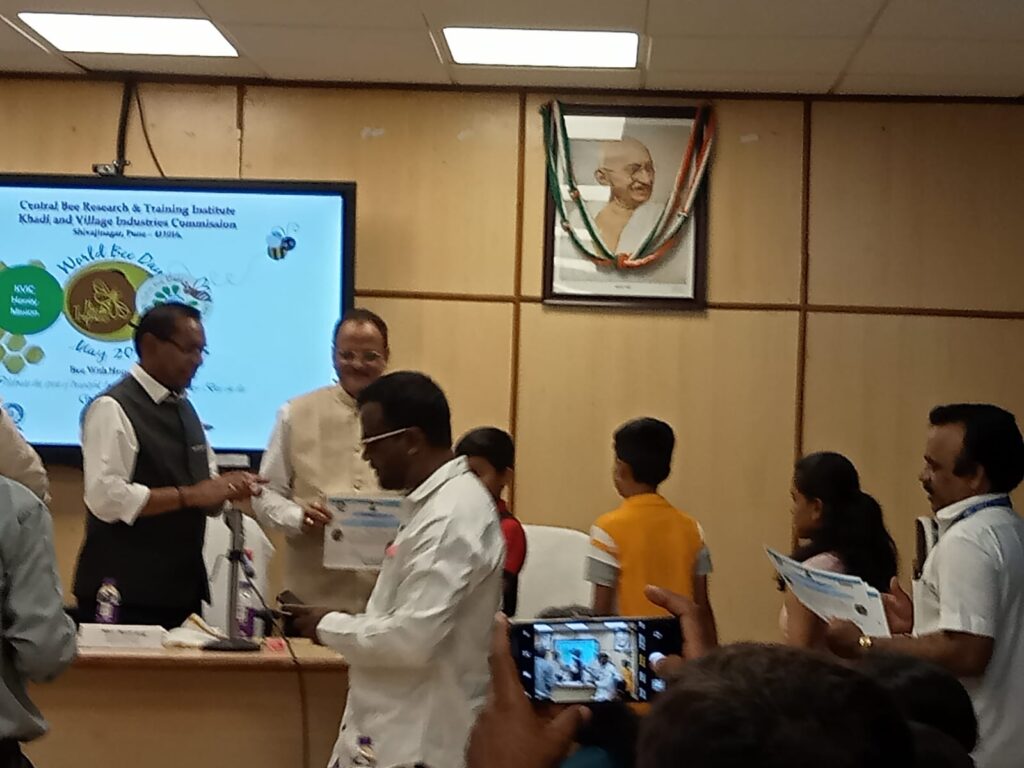
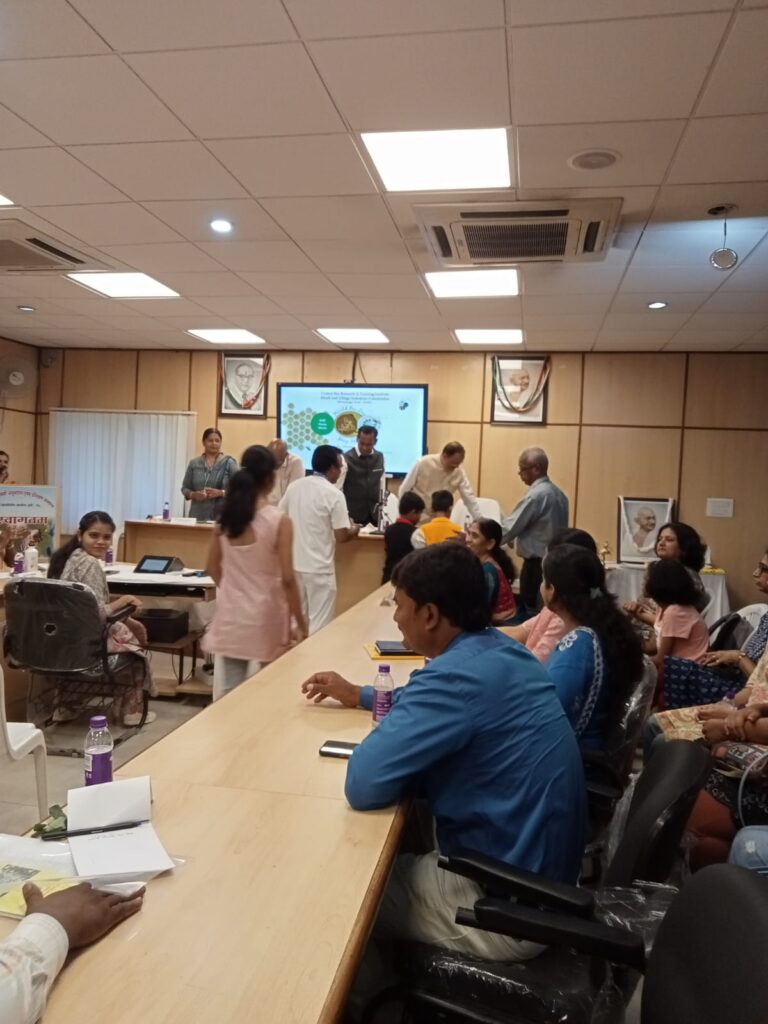
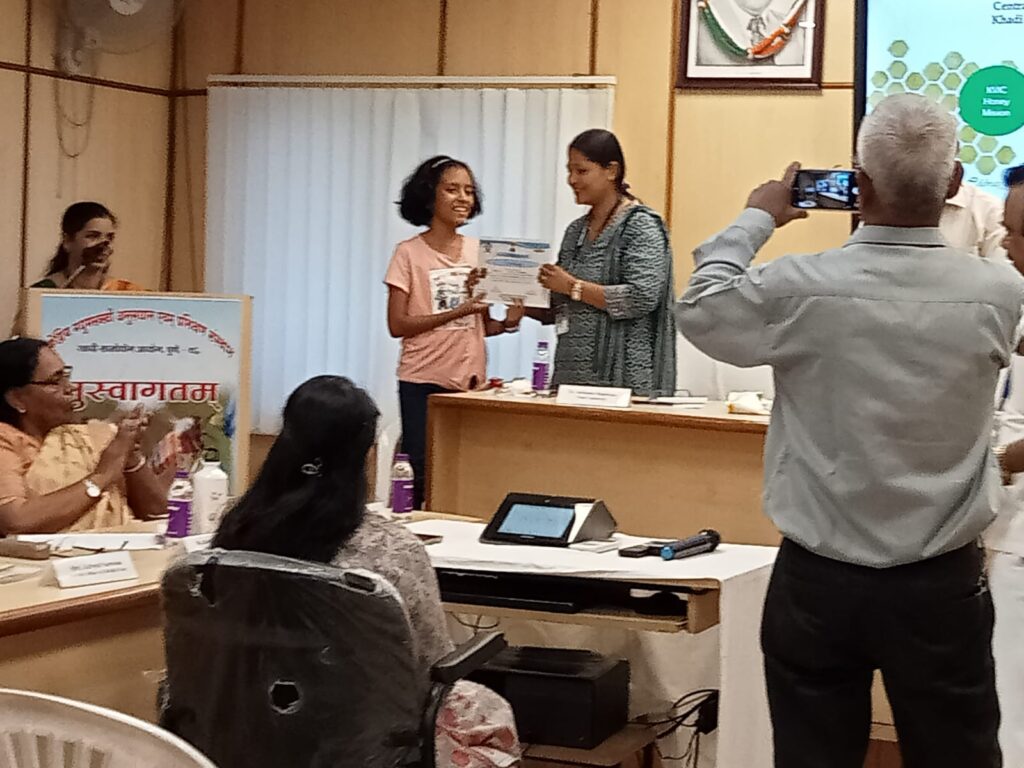
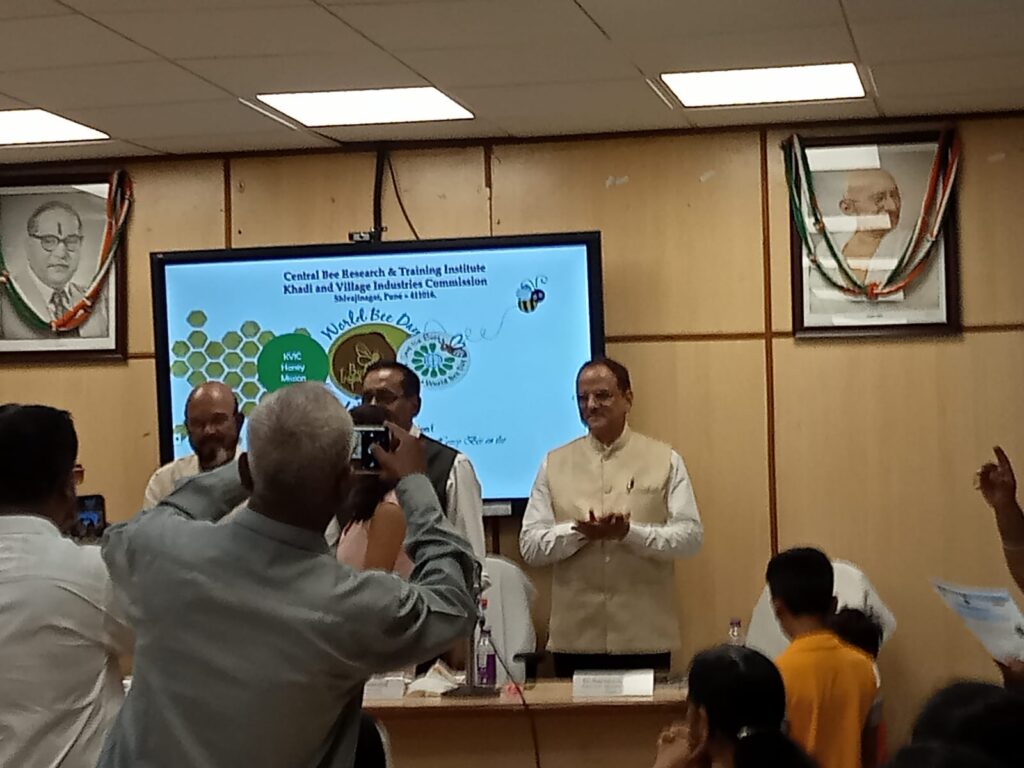
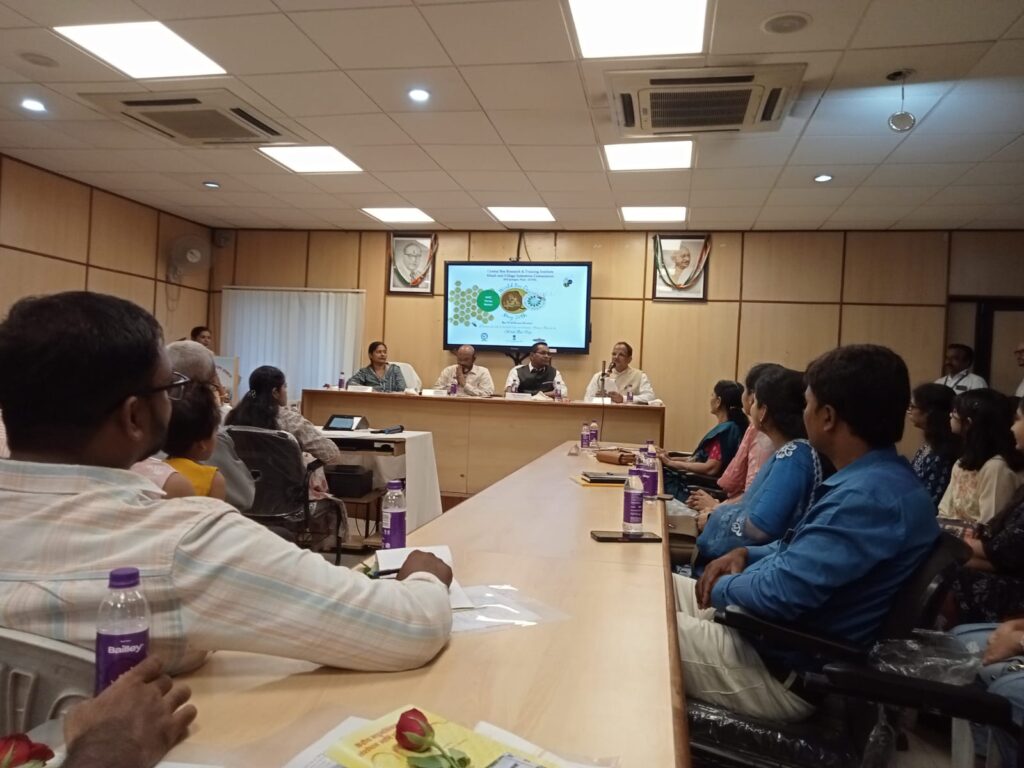
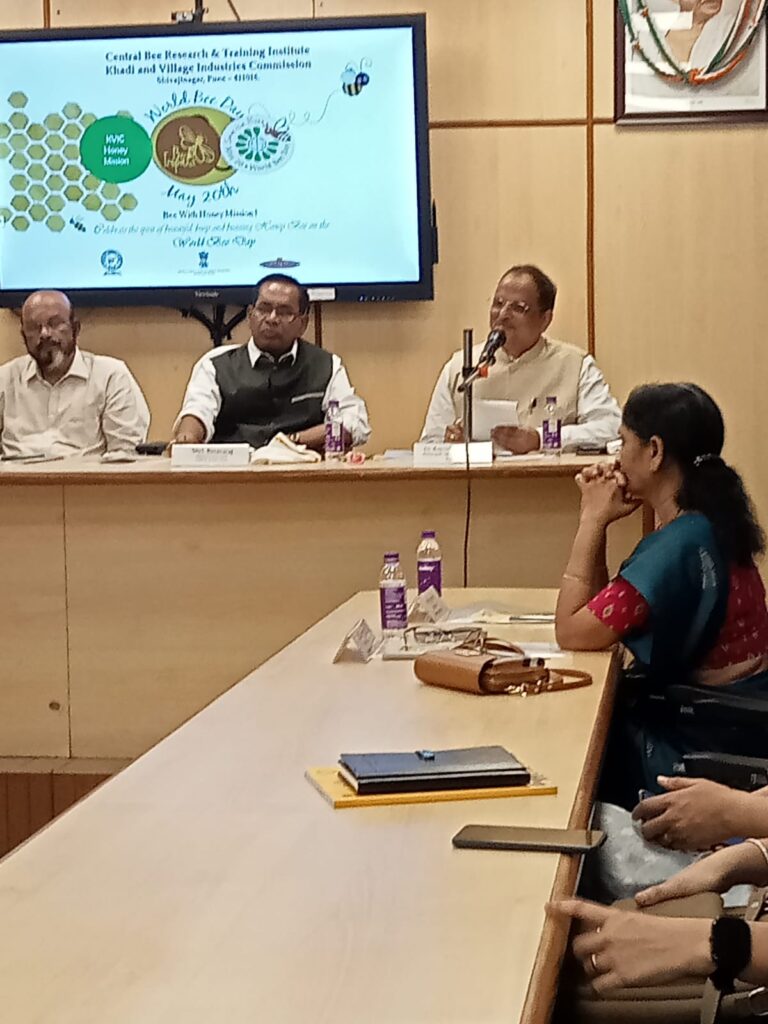
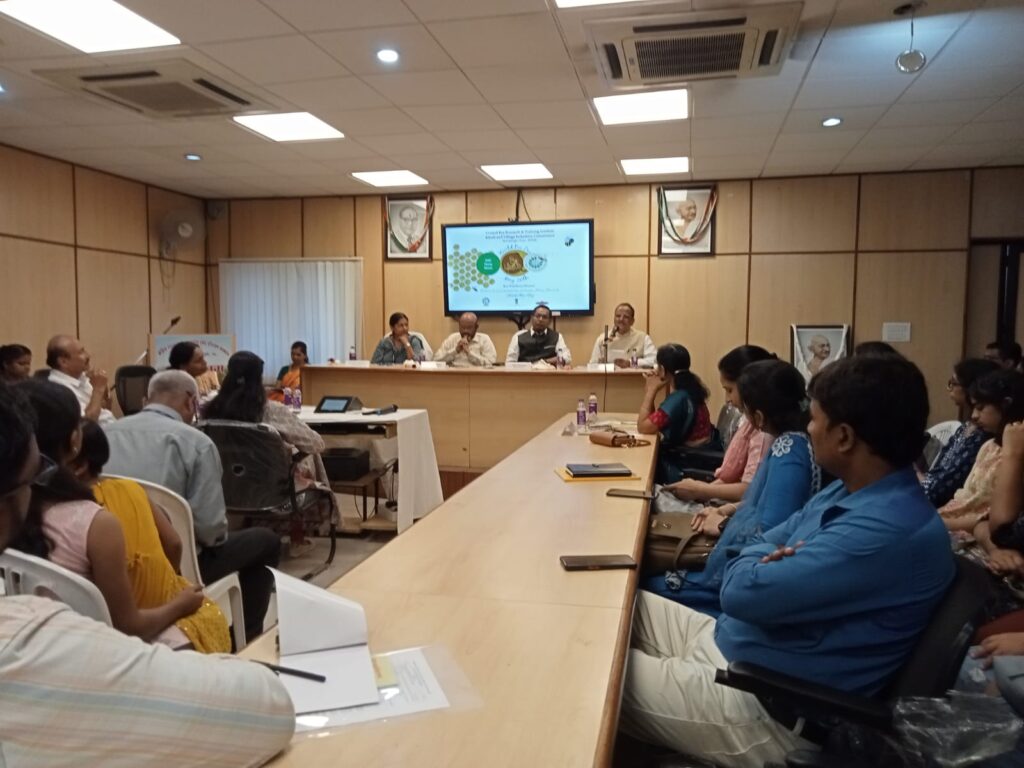
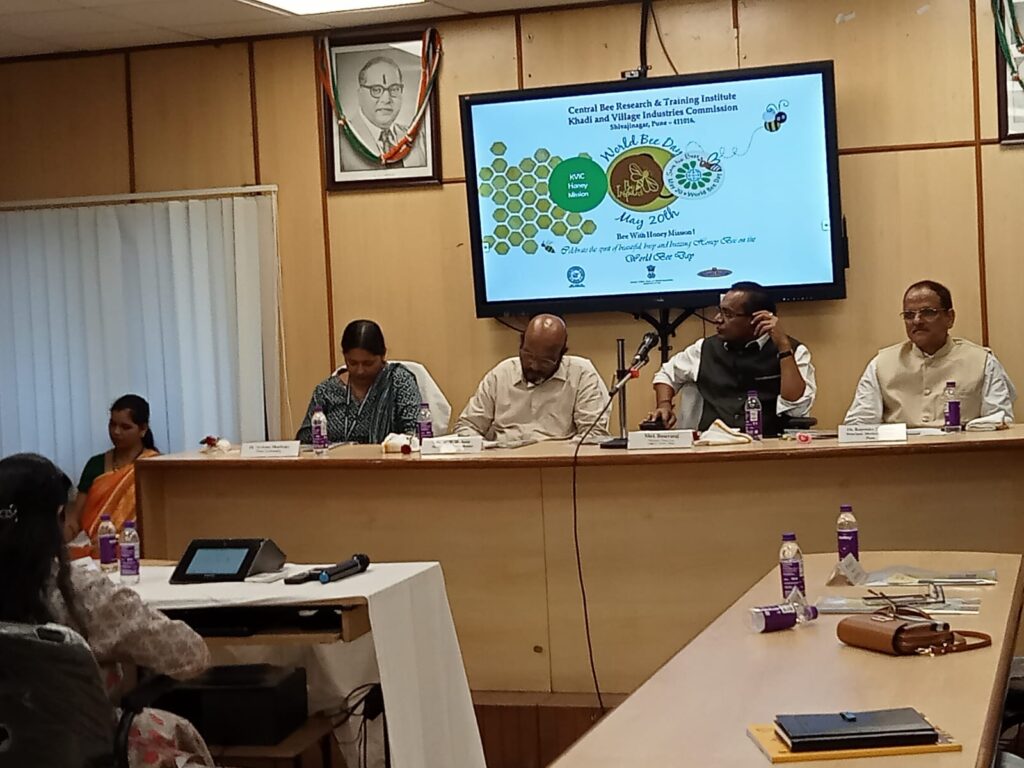
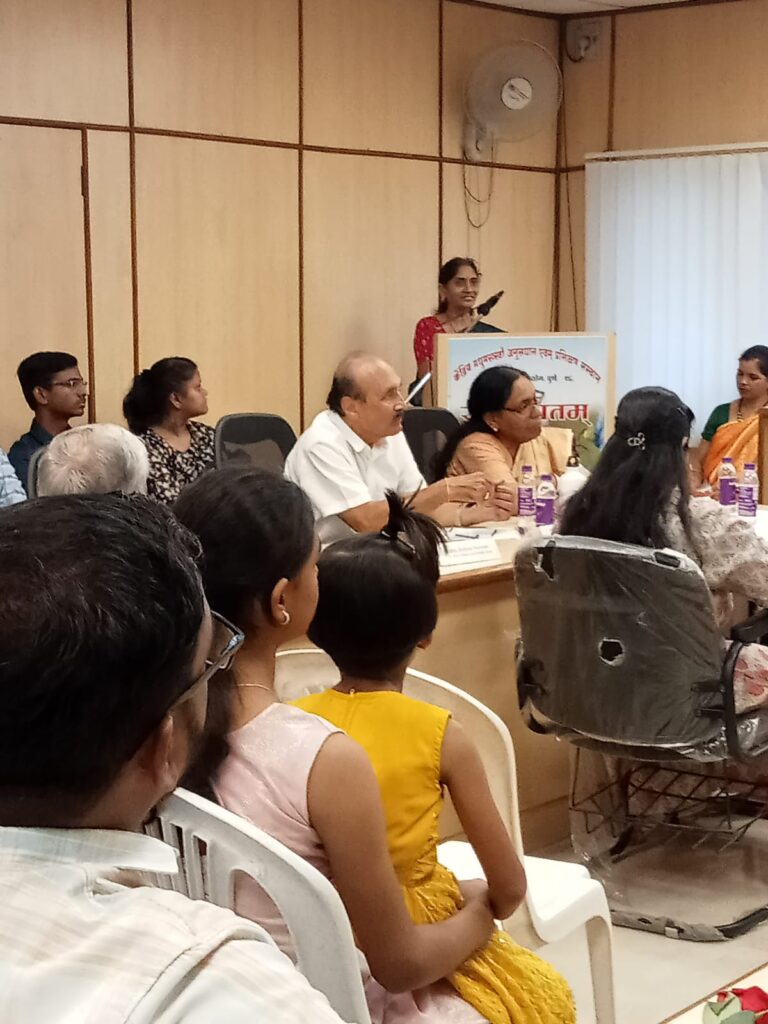
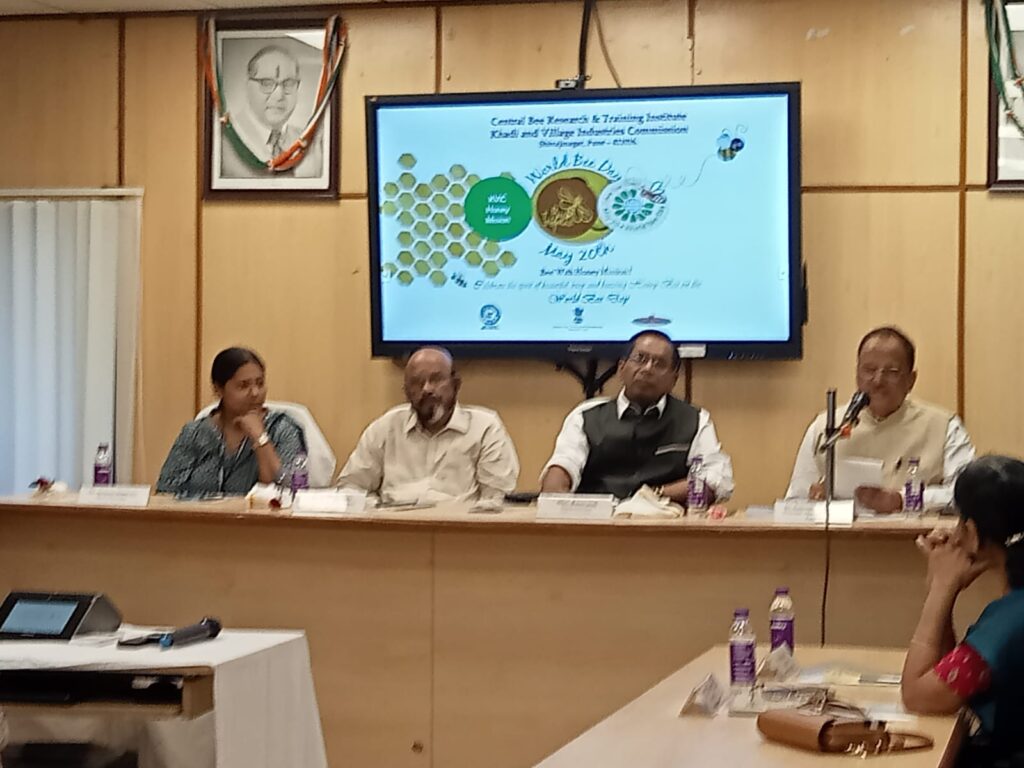
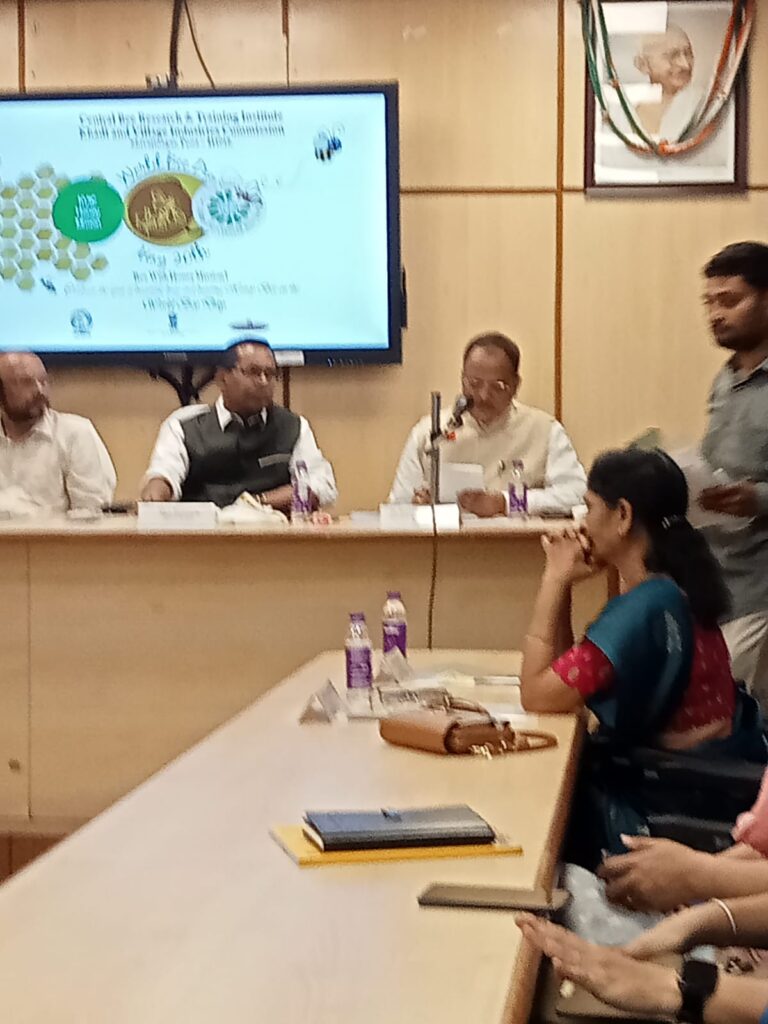
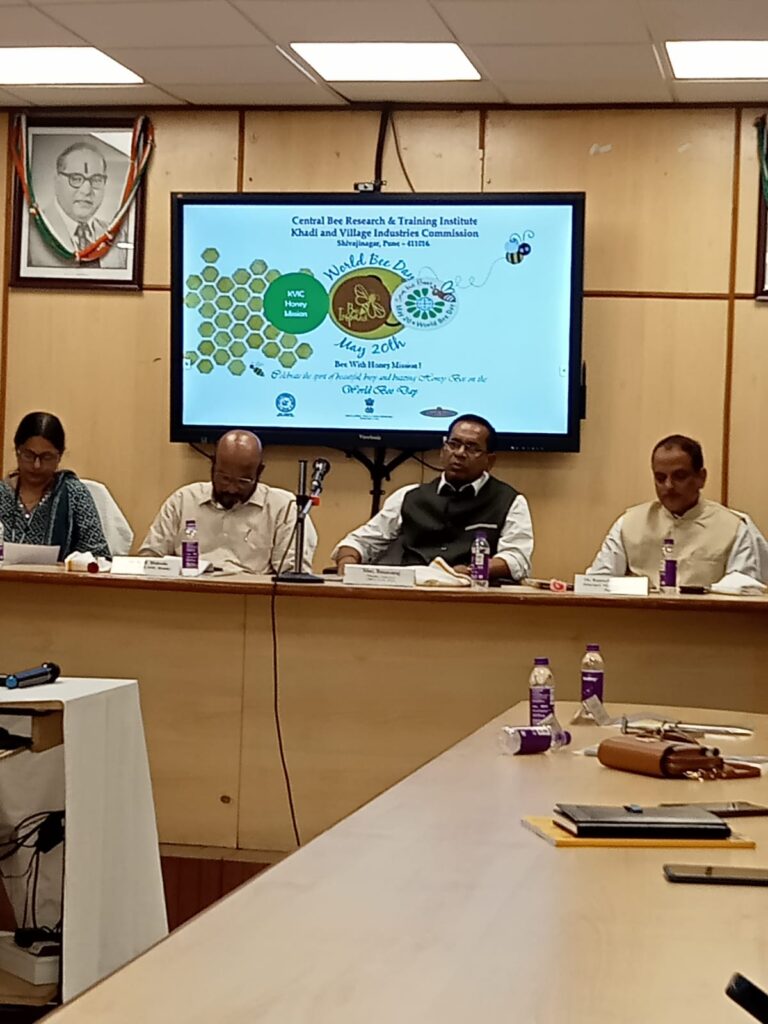
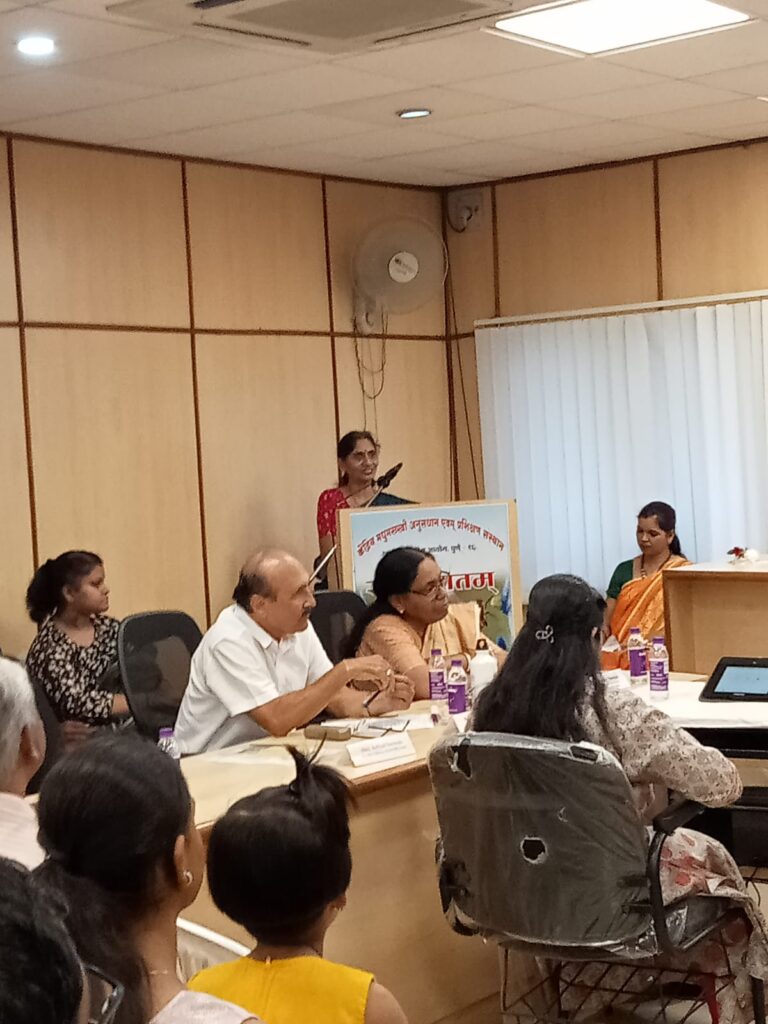
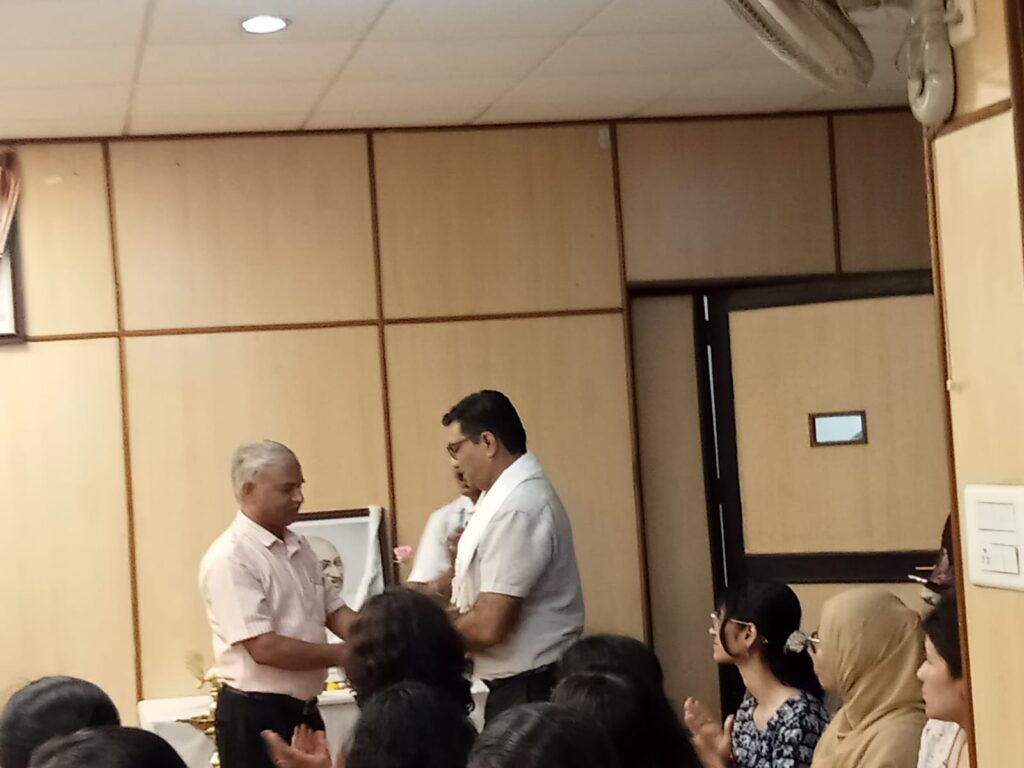
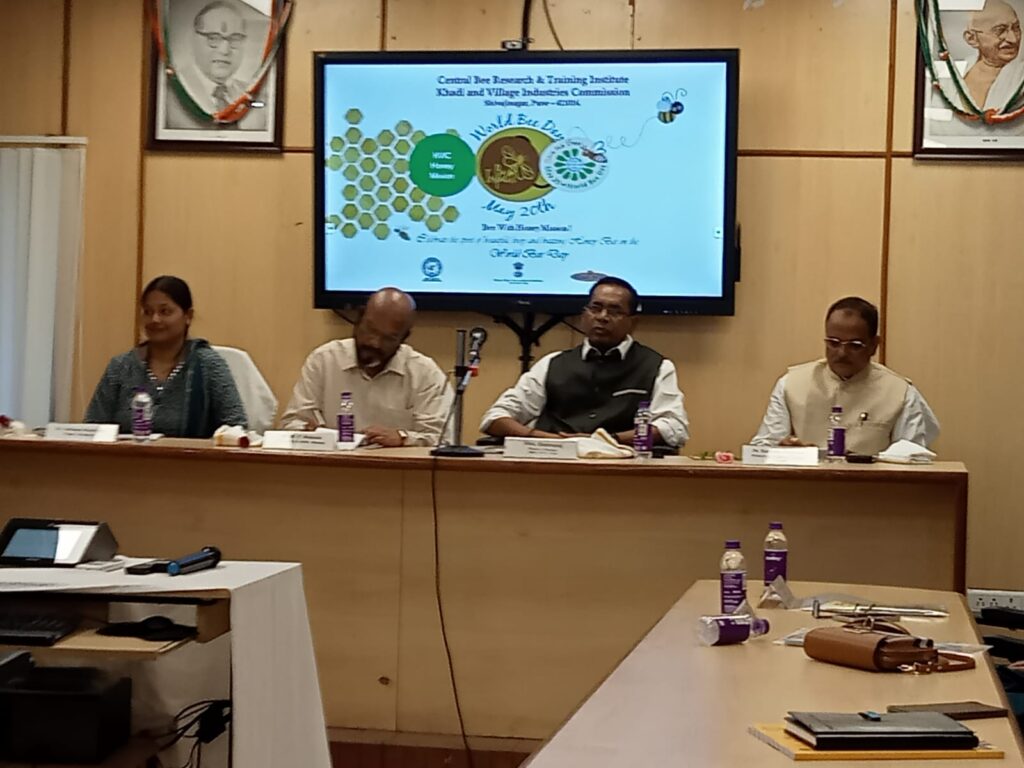
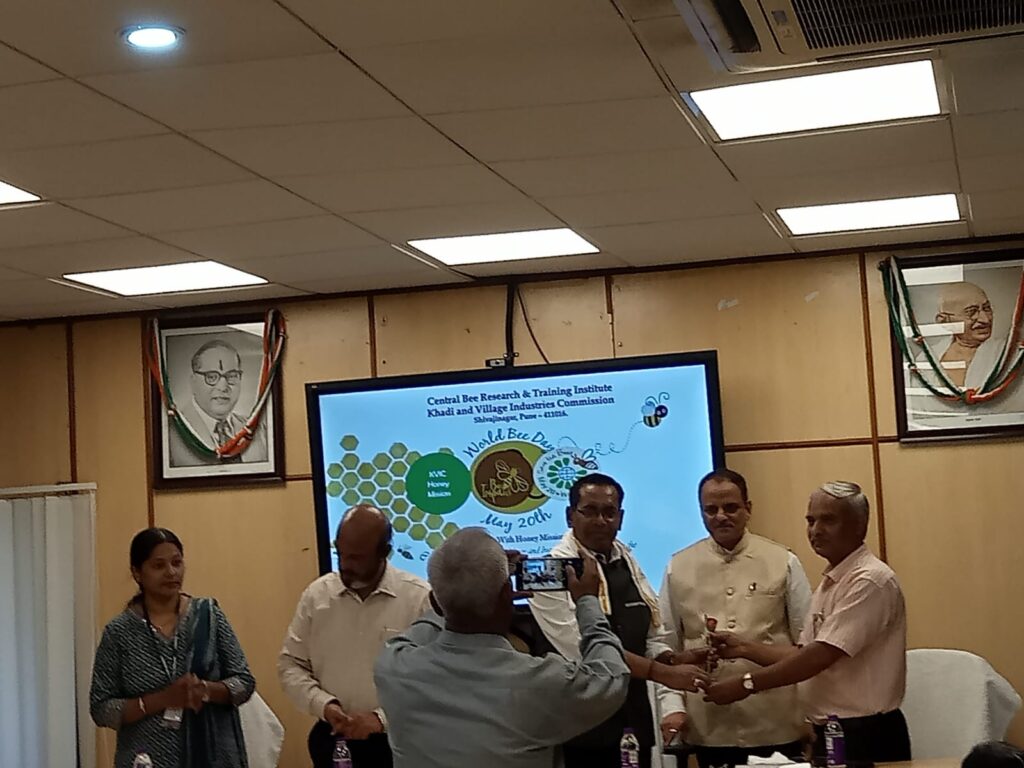
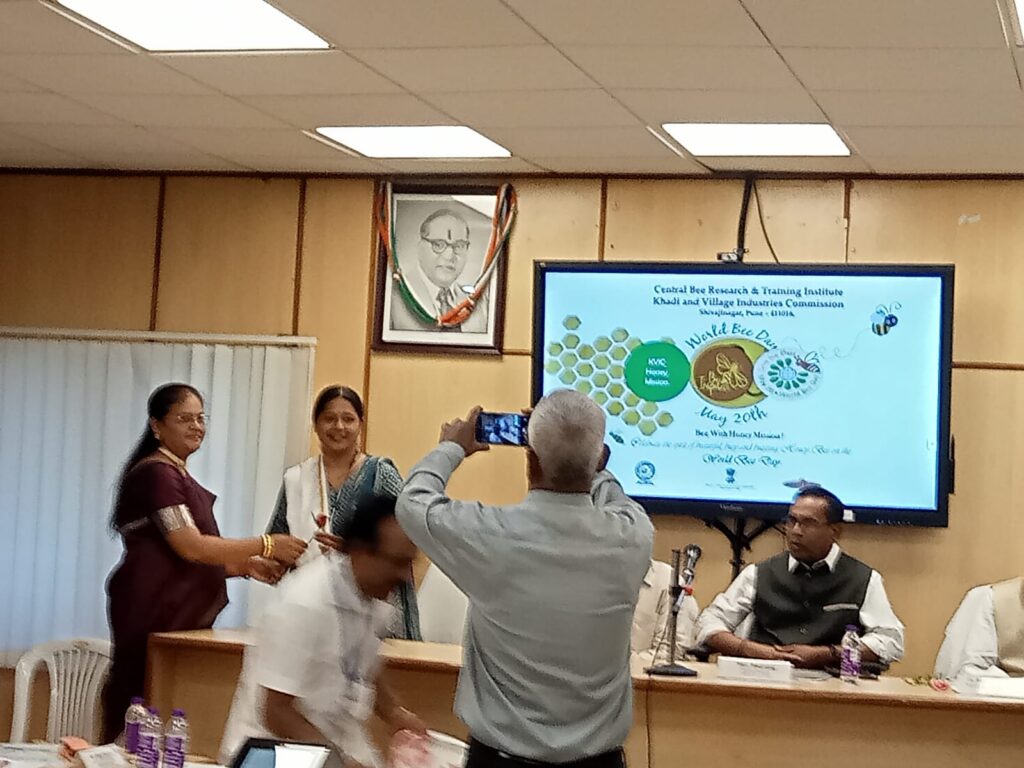
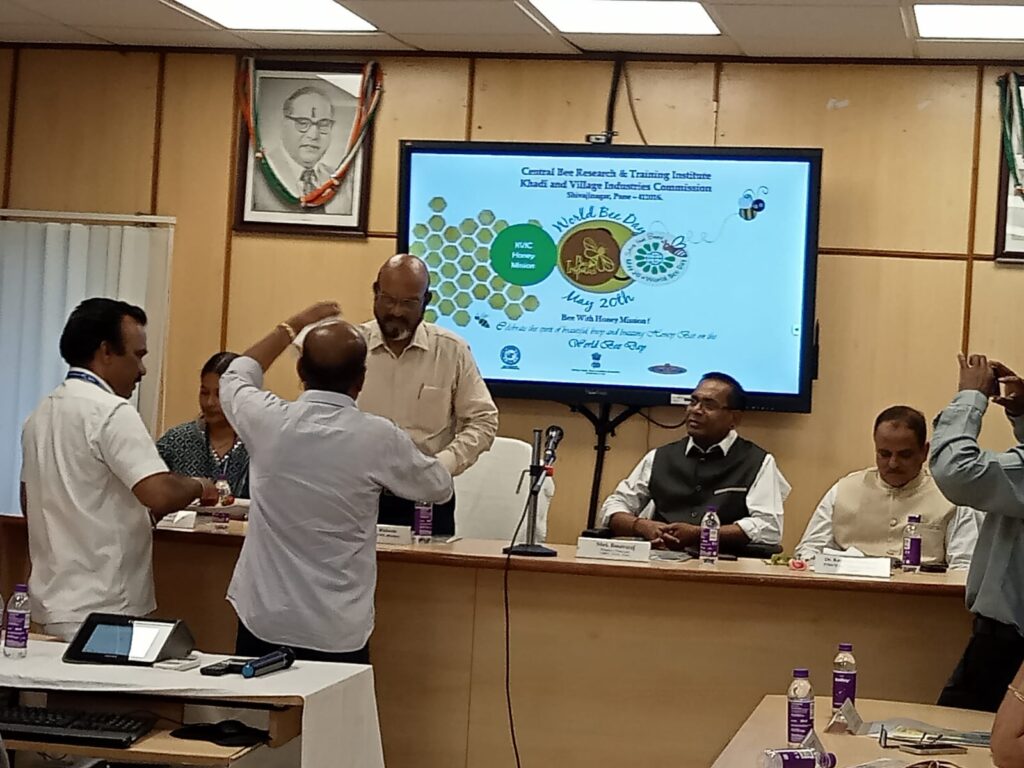
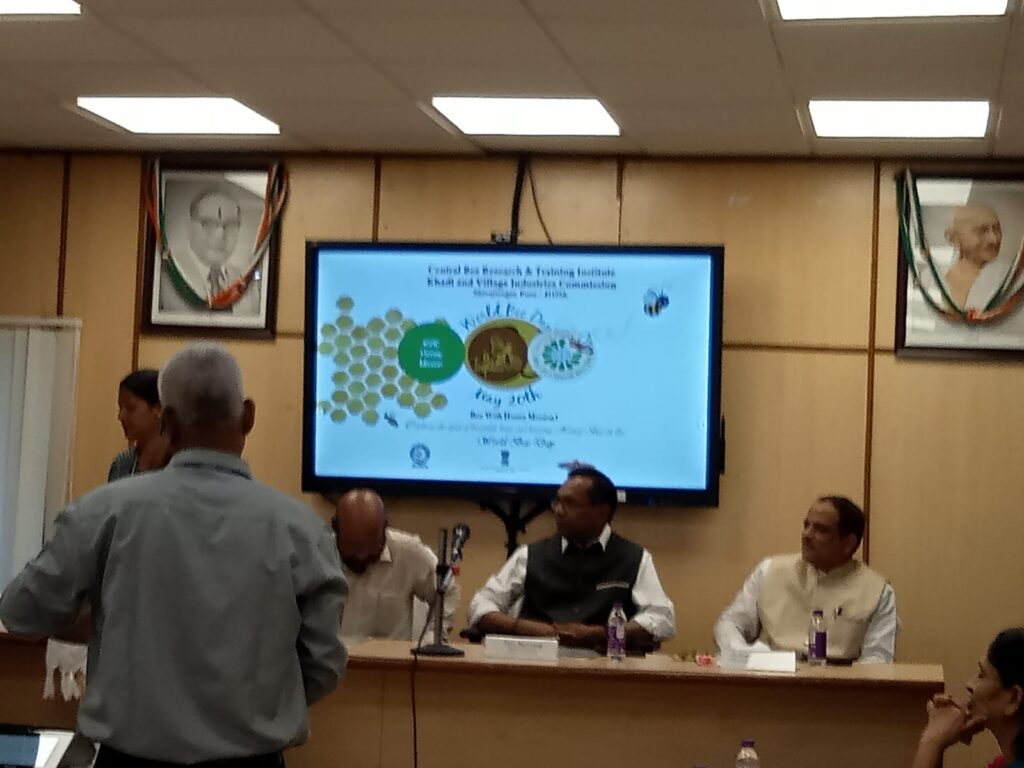
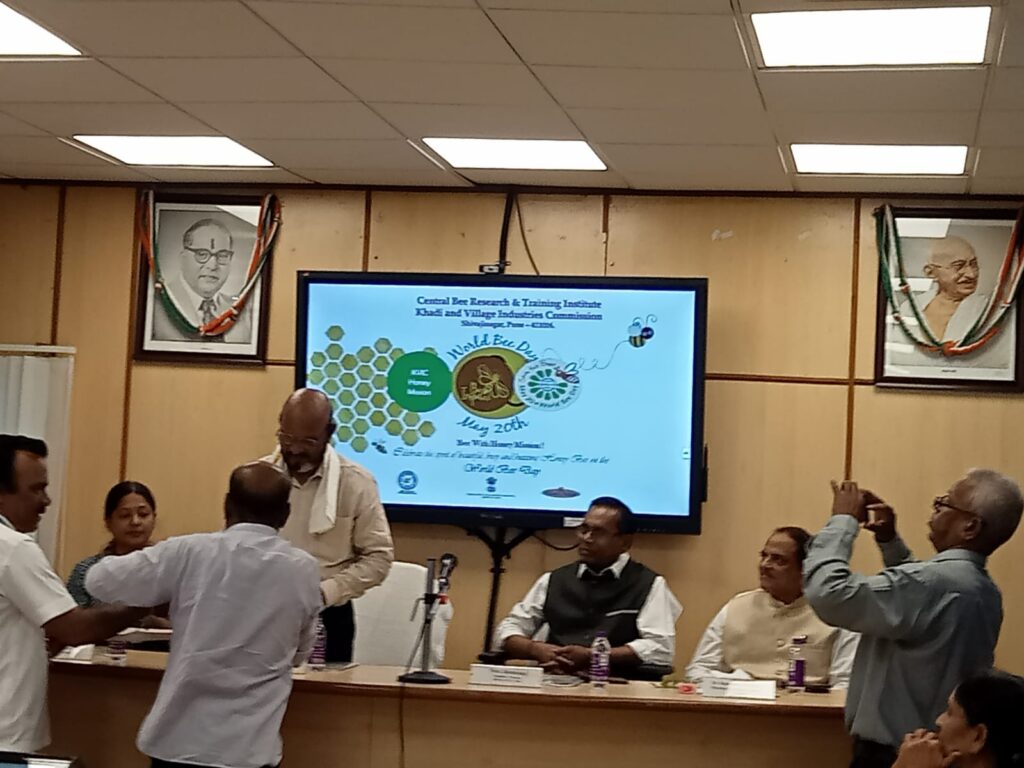
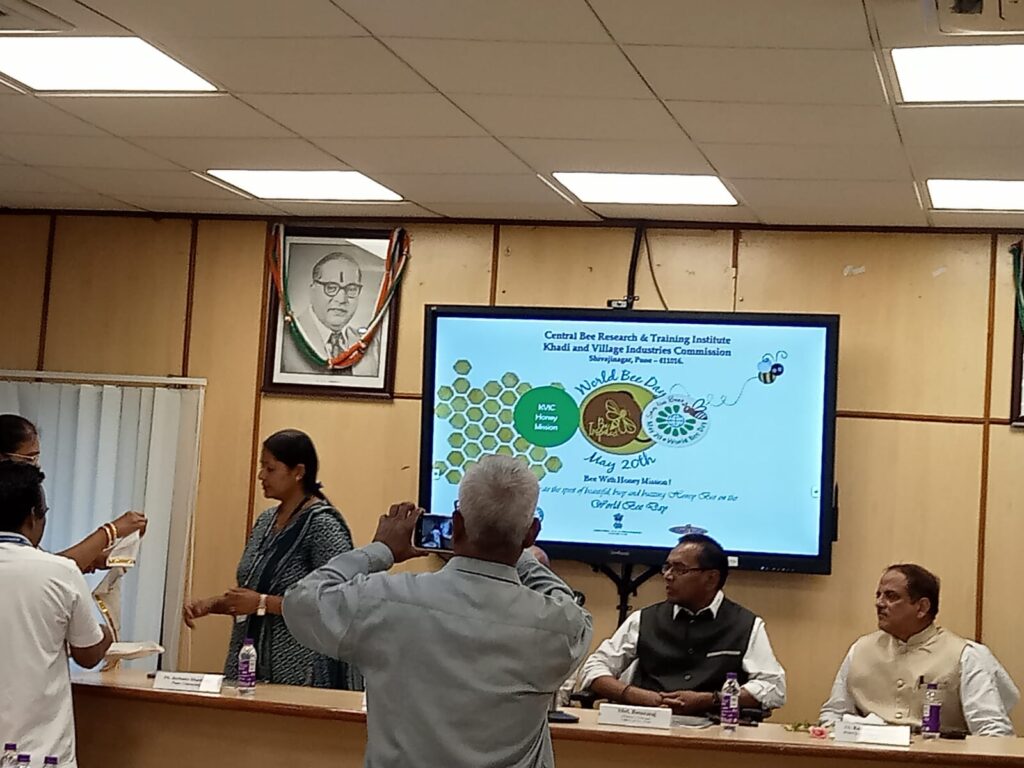
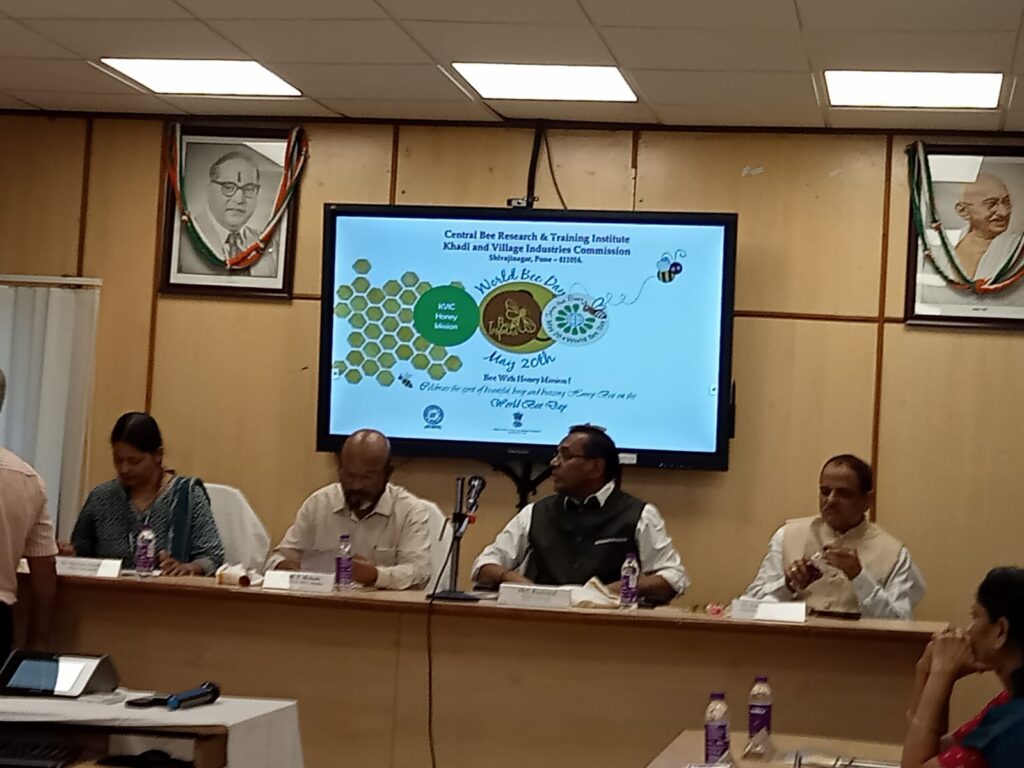
The world has seen a new horizon on this world honey bee day. I am here at the Central Bee Research Institute at Pune. The day has begun with registrations and everyone has been handed a rose, schedule, notepad, gunmcha (handkerchief), and a pen. All have gathered at the conference hall of the Central Bee Institute; the Gandhi photo has been flowered and lite.
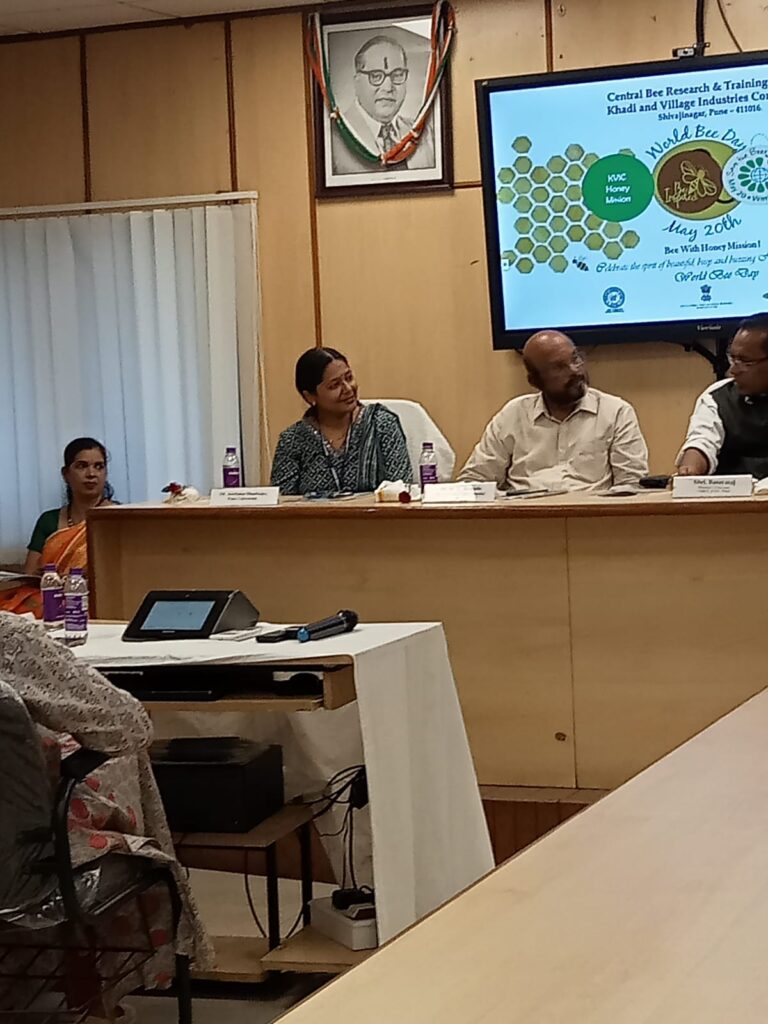
The program has been enlightened with an introduction of our esteemed guests who are Principal Modern College of Commerce, Arts and Science, Shri Dr. Sanjay Kharat, Director CBRTI, Shri Basavaraj, Pune University, Shri Archana Sharbidre.
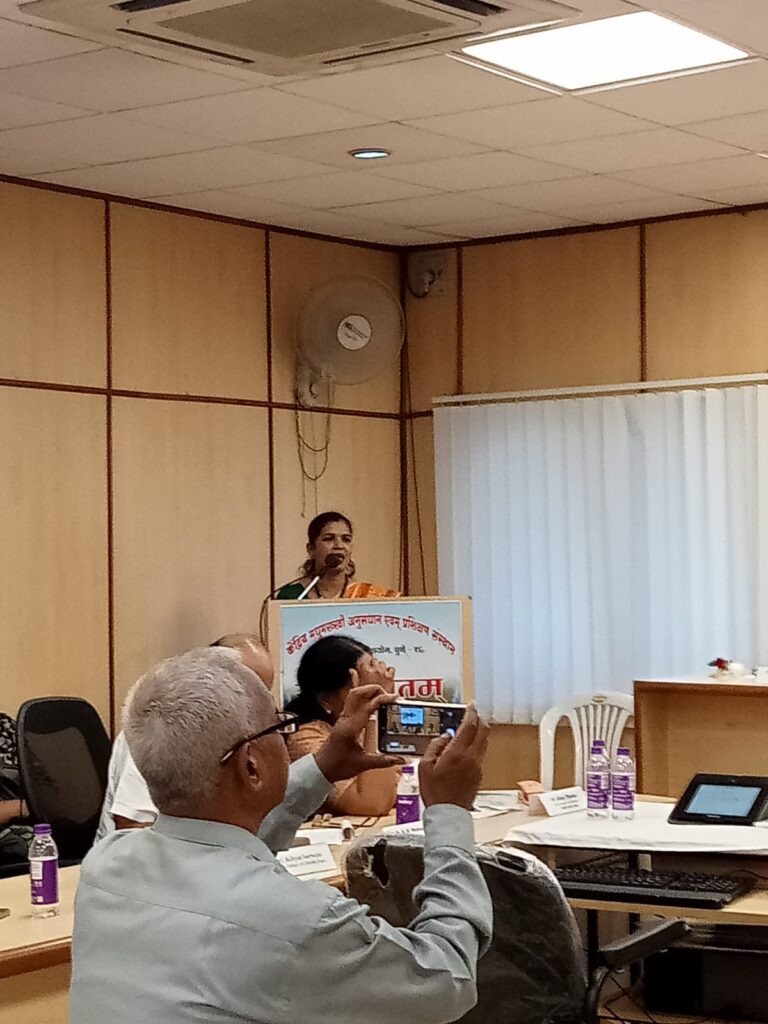
The day began with a note on Bee Keepers and why this day has been celebrated by Dr. Laxmi Rao. She gave a synopsis of the why UN has given a special day for bee keeping to bring awareness among the globe on the birthday of Shri Anton Jonsa a bee keeper who had setup bee apiary and apiculture at Slovakia. Then making a point of making an awareness of how one can keep bees safe without cultivating or keeping bees, is by planting the trees, using bee friendly pesticides, buy honey and keep environment clean. She also clears up our minds for modern urban planners and rural developers to have bees as pets just like the other pets (stingless bees), Apis Trigona is such species which is stingless and has a supreme quality of honey.
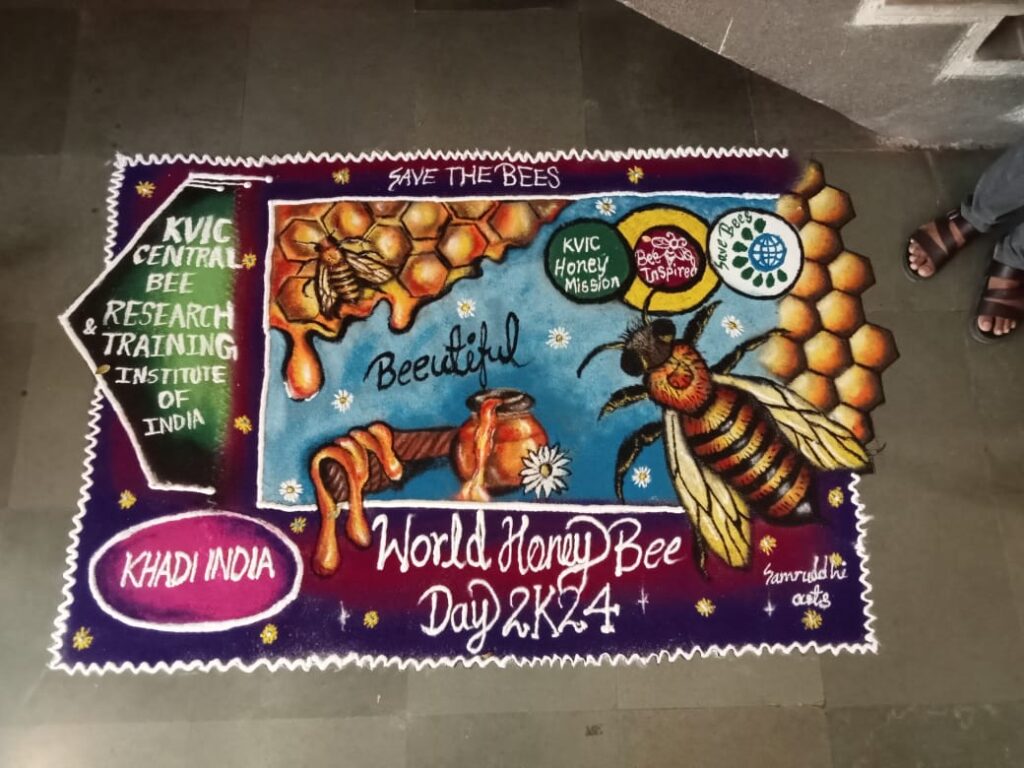
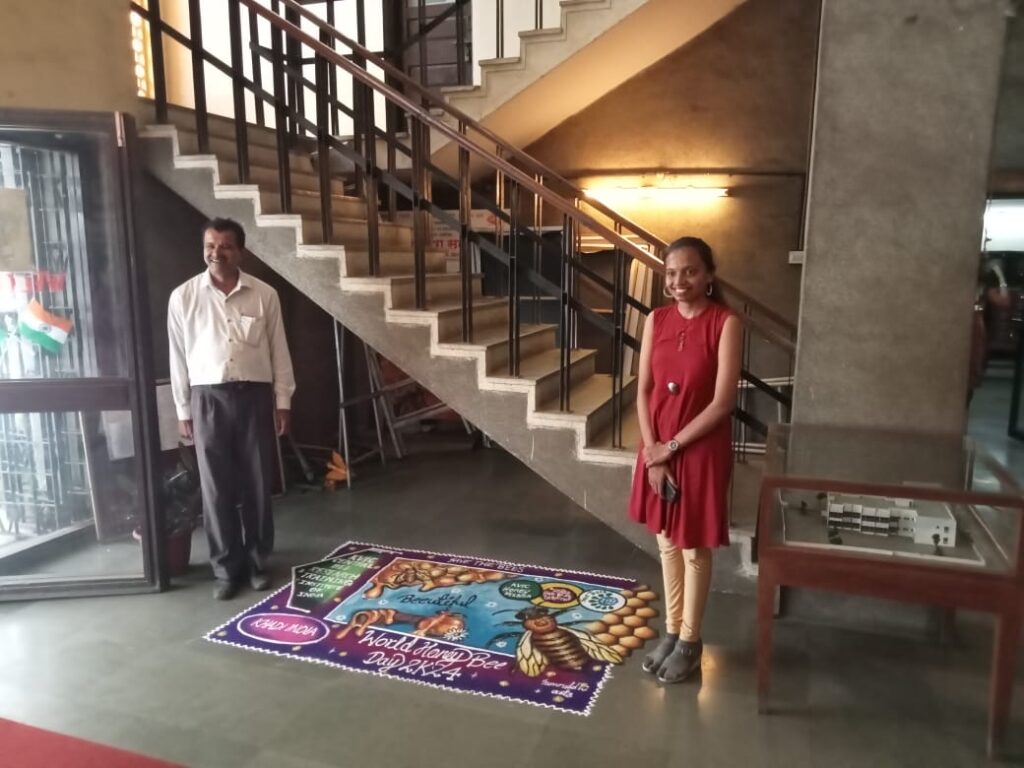
Dr. Sanjay Kharat, proves to be bee friendly and wants a bee healthy nation and environment. He explains his passion for education and how he wants his students to learn about the bee apiculture which can help setup at his institute of Agriculture and Biotechnology at Paud, further announcing a collaboration for promotion for fashion designing with khadi produce. He also expresses his proud moment about his student Samrudhi who had made a rangoli art on the World Honey Bee Day. He also explains how he wants to make this bee keeping a larger preposition in the education of agriculture and zoology.
This gives us urban and rural planners, a new landscaping idea with bee gardens and bee friendly planning. Now new startups will spring in the architectural and art world of making bee hives within our habitat regardless of profit, which can be planned at a later stage in collaboration with CBRTI and bee keepers.
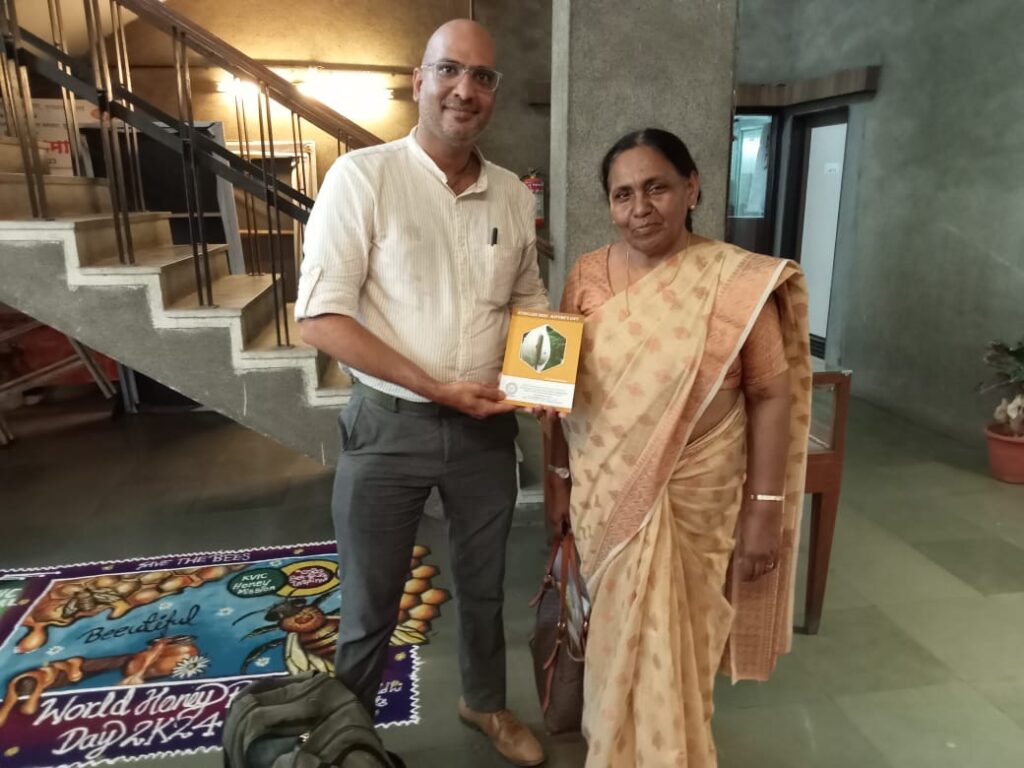
Dr. Daisy Thomas, deputy director, CBRTI has been researching on stingless bees and how they have differently been the good bees among all the species. She presents the different characteristics of these bees, the flora and fauna, how the bee boxes are different from the other bees (Apis Cerana), She mentions travelling to various locations in India and making these bees prominent with her research. The stingless bees are Tetraloguna, Eight named species of stingless bees are known from the Indian subcontinent: Lepidotrigona arcifera (Cockerell), Lisotrigona cacciae (Nurse), Lisotrigona mohandasi Jobiraj & Narendran, Tetragonula aff are found in the Indian Subcontinent. Meliponicultura, as the production of this honey is called, began over three thousand years ago.
The honey was used extensively by Mayan healers to treat eye, ear, respiratory, digestive, and postpartum conditions, and still is in many communities today. Its color varies depending on the native flowers visited by these bees, ranging from nearly transparent to dark amber, and it features more nutritional and curative properties than honey from the common honey bee.
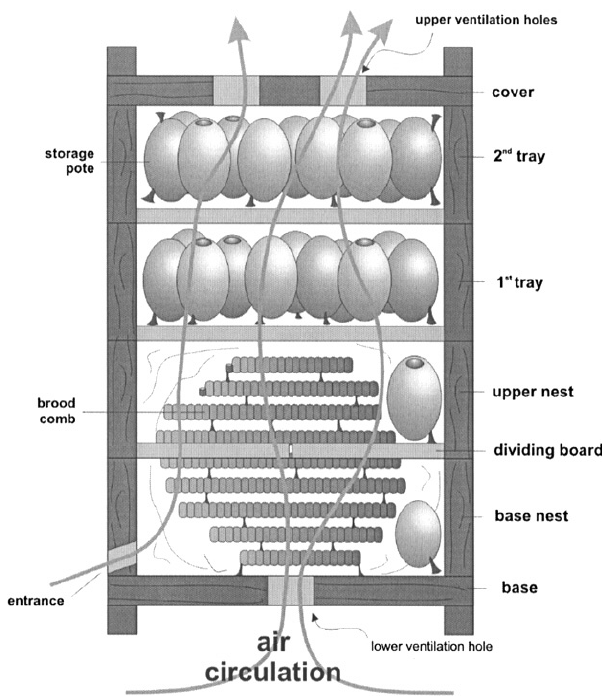
Interestingly stingless bees do their nesting in broken trees of coconut, pipes, majority of stingless bees favor nesting in pre-existing cavities within tree trunks or branches. Further launching her book on this day, about stingless bees available at the library of CBRTI.
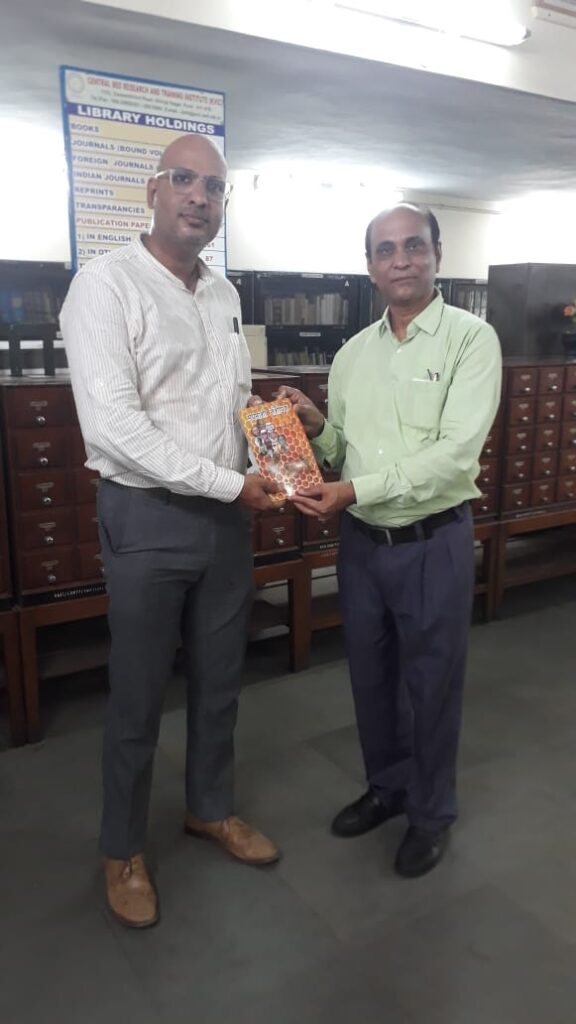
Dr. Sunil Pokare, former director of CBRTI, attends the afternoon session to help us understand more deeply about the celebration of world bee day. He shares about his attendance at the post office for launch of post cards by the Indian Postal Service marking this day of bees, apart form that he also shared his collection of stamps, letters of the bees from his collection. He also shared a few moments of his experiences at CBRTI and his early days as a bee scientist. He has published a book on bee keeping with autobiography of prominent bee keepers in Marathi and has a few Bee enthusiast who want to translate it in different languages.
After which many prominent personalities were invited to explain the stingless bees and their nature. Mr. Umesh Patil who has 250 colonies of bees has explained about the features of stingless bees and how they are arranged on a single wall with a pipe. The entrance pipe is used for bees and there are nine security bees who refrain entrance. He explains the process of the stingless bees honey collection.
To ease the process there are flow hives which has no need to dismantle the hives and remove the frames for extraction. No smokers, no centrifugal extractors, no back-breaking work of pulling honey supers. Instead, you just turn a lever which opens the channel within the honeycomb and the honey drains to a pipe at the back of the hive directly into your container of choice. Meanwhile, back in the hive, the bees are virtually undisturbed as the honey drains from under their feet. When you’re finished draining you just turn the lever back and the cells are reset and ready to be refilled. The bees then uncap the combs and start again without being disturbed.
Our very own Mr. Kamble a bee keeper explains his journey of transformation for a farmer to a bee keeper and how he has been praised and better his life. Kamble was assigned a bee box to be installed in a sugar factory at Atgaon near Latur, this factory is in a dilapidated condition and was an impossible task to reach or develop any bee colonies. But Kamble showed his grit and made it happen. Dr. Basavraj, further explains his recent visit to Kamble’s village or forest to inspect the bee colonies.
A master trainer Mr. Hemant Kumar Dumbre, who recently joined the institute in January 2024, explains his challenges of teaching good bee management practices to bee keepers and how that has helped them achieve increased honey produce. He began b y writing to different institute in England to send books on bee keeping.
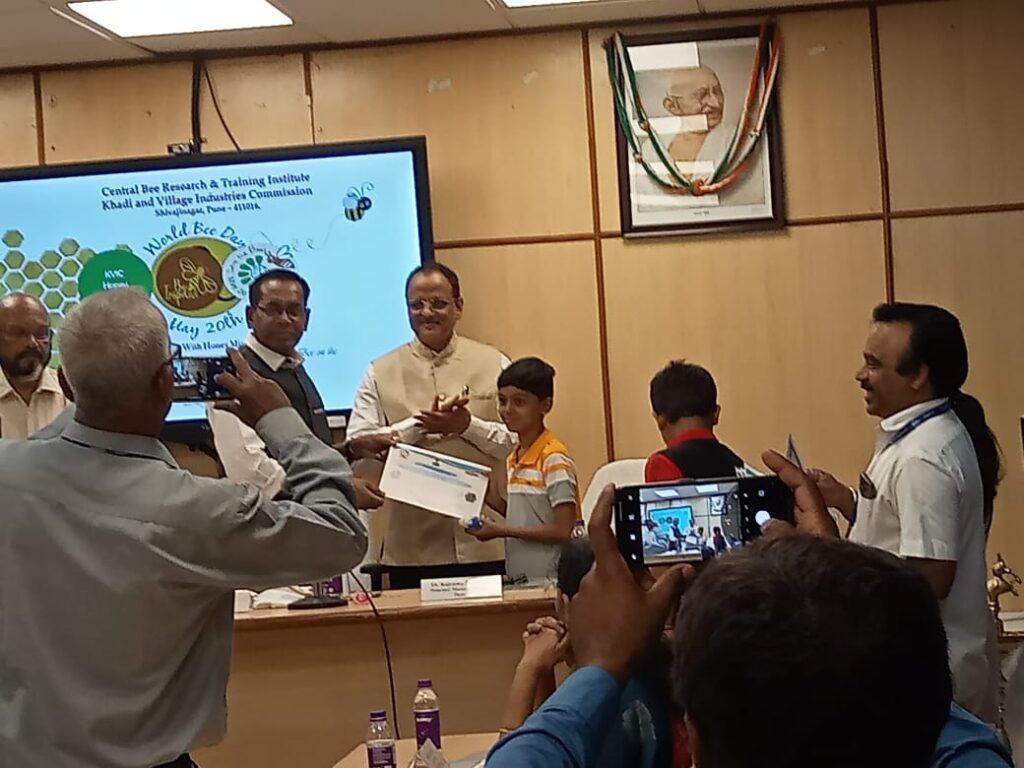
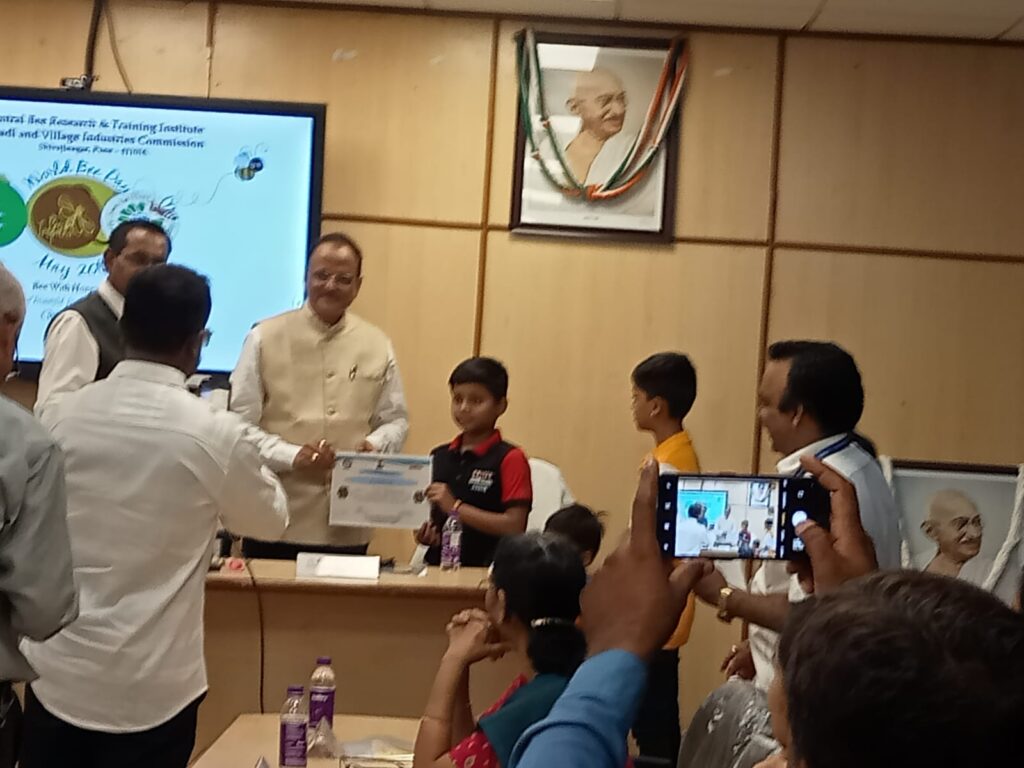
For a lighter moment Samrudhi recites a poetry on bees which explains why bees are important, their roles and all of us should own a bee box. A few kids were felicitated and all interns were given a honey bottle.
A national anthem to end this lovely session, this day will be a memorable one for all of us. Hoping to see many such occasions.
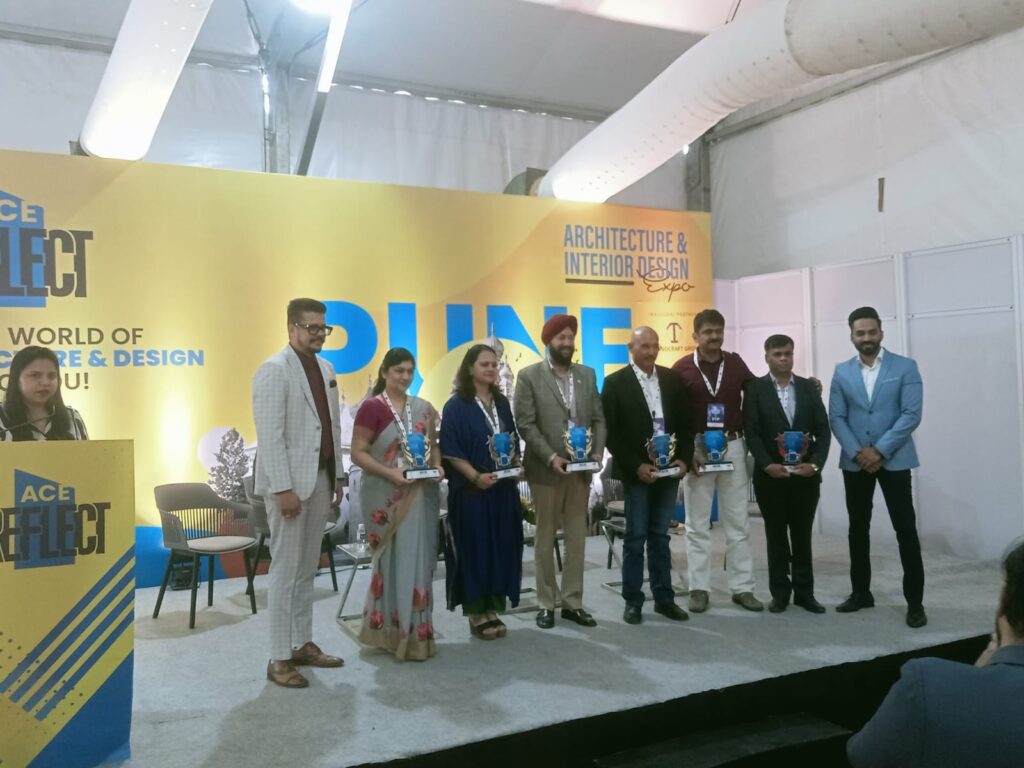
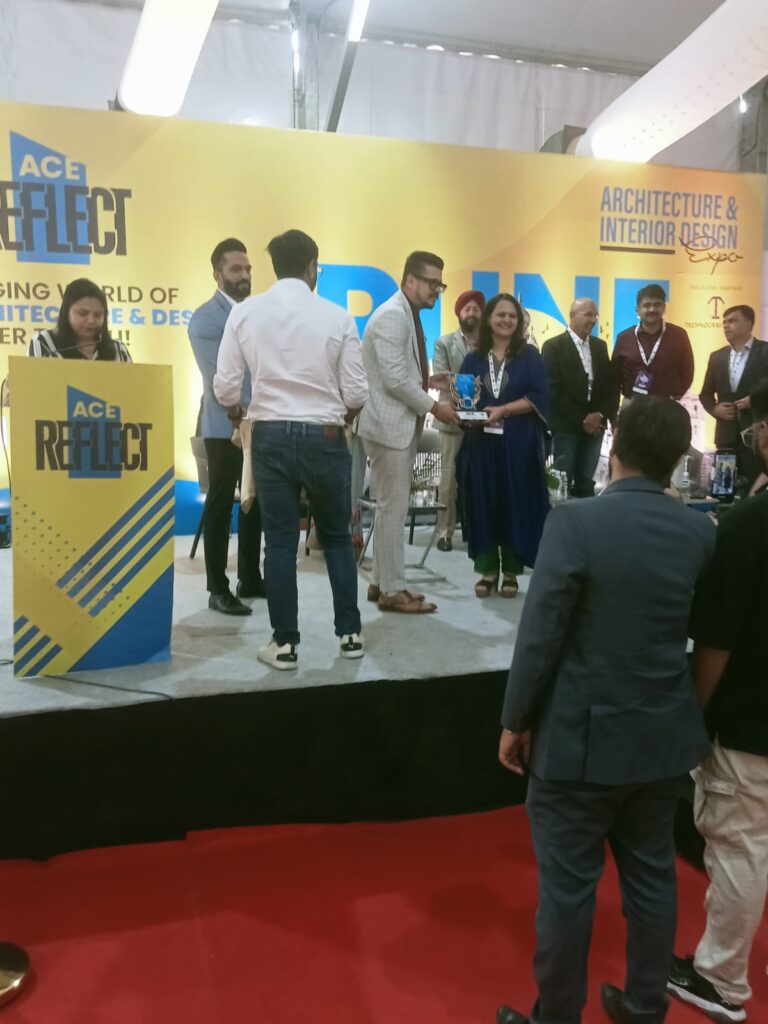
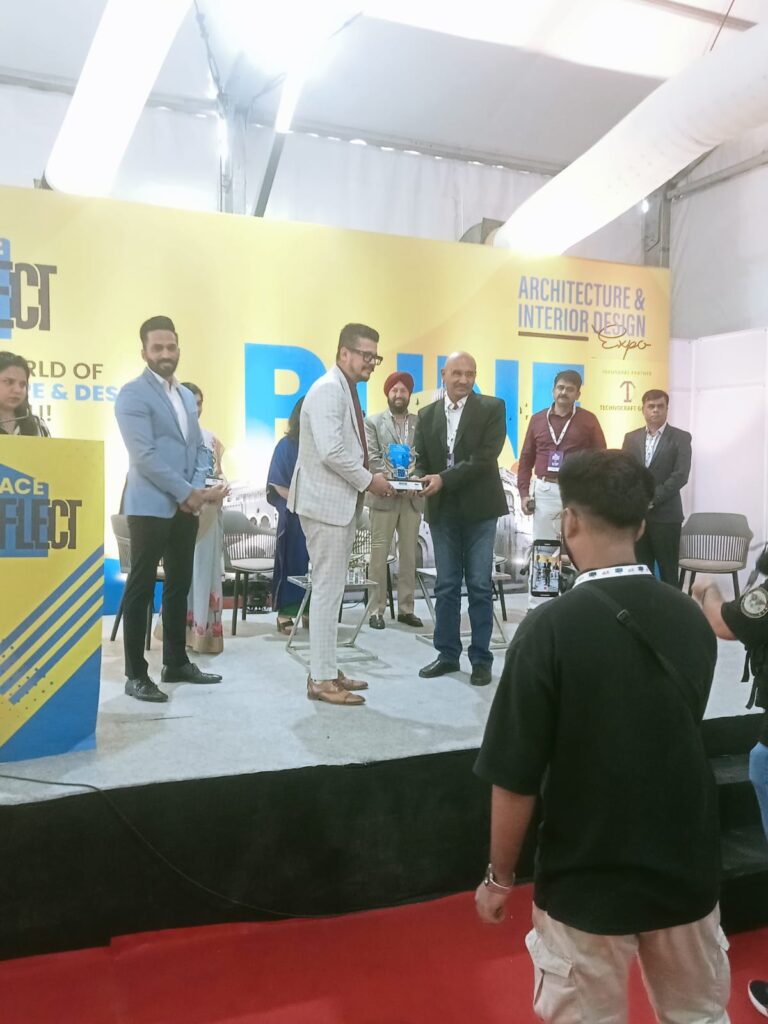
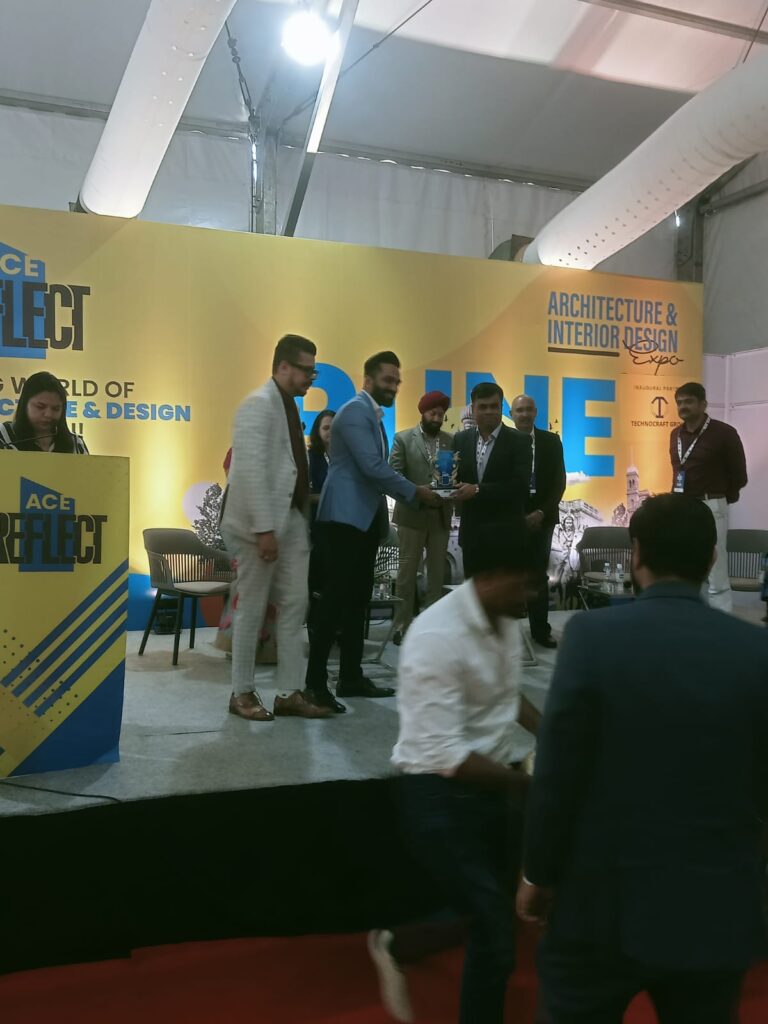
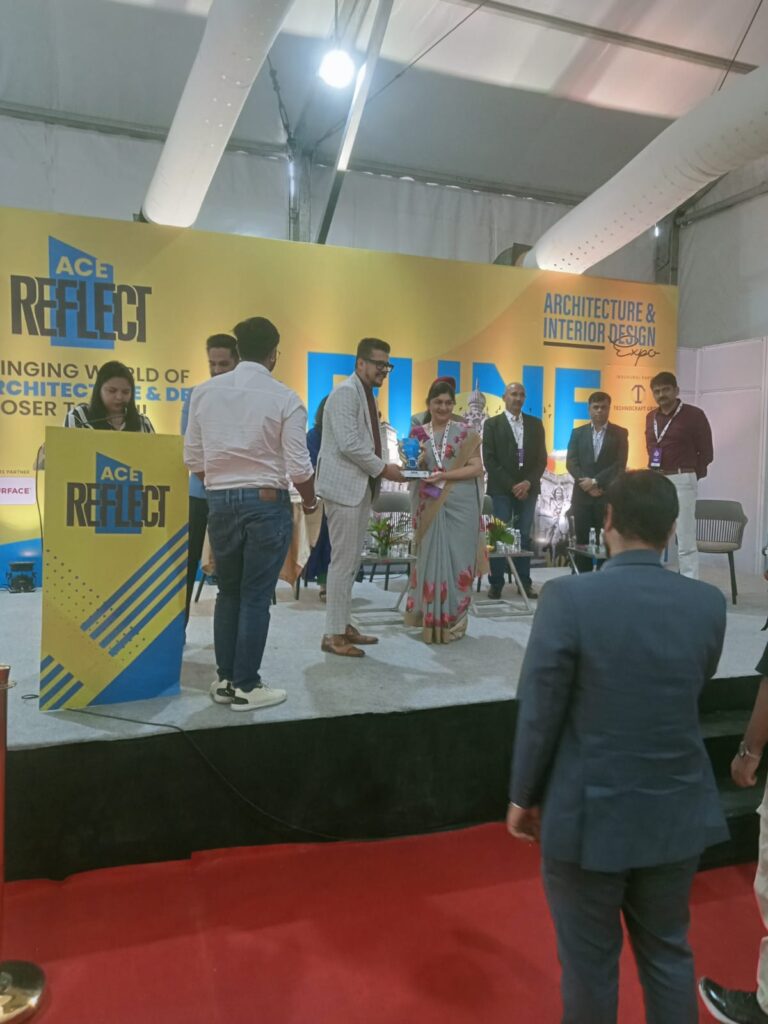
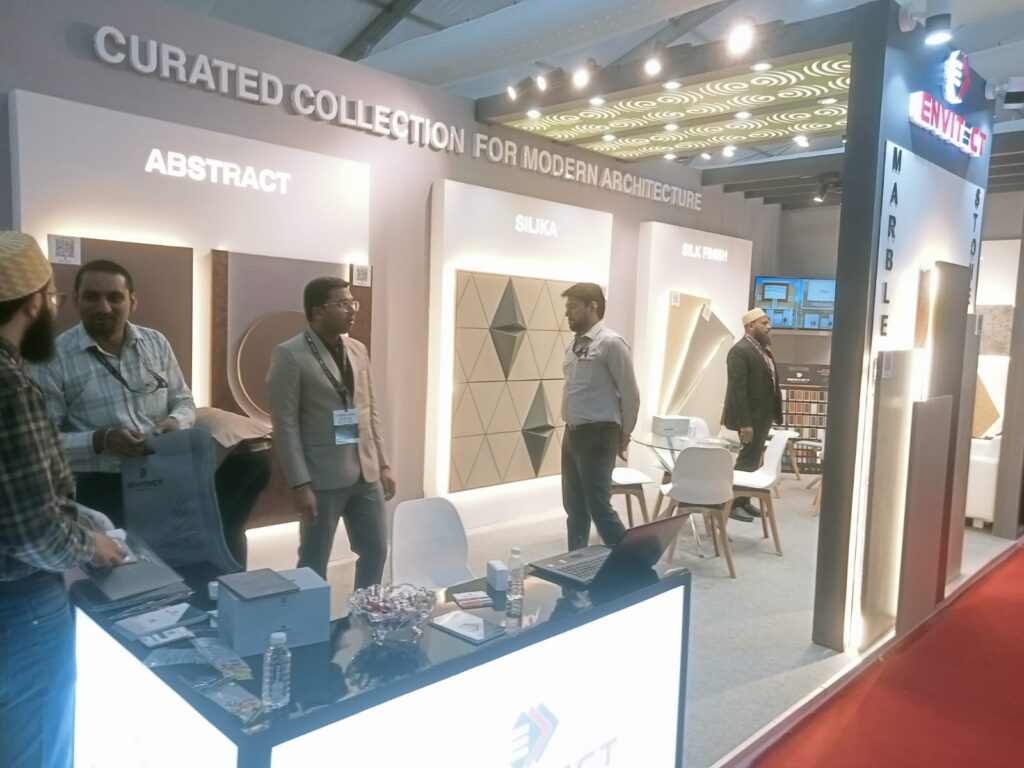
The ACE Reflect has made its way to Pune, finally there is some architecture appreciation in town. This time none other than Agriculture College Ground has hosted this event at their ground at Sachin Nagar. You will find the best of materials here and will make your project more robust and attractive with adding these materials and new age technology.
A panel discussion which helped to know the new ideas and construction needs for a city like Pune to discover these there were prominent speakers from the industry. Making a big point to encourage international collaboration for technology and professionals. This will give a cutting edge or sharp building strength to train internal as well as external consumer about new nuances. Among a few points discussed were keeping in mind space constrains in urban areas one has to tackle difficulties of installation and operation of large sized equipment’s.
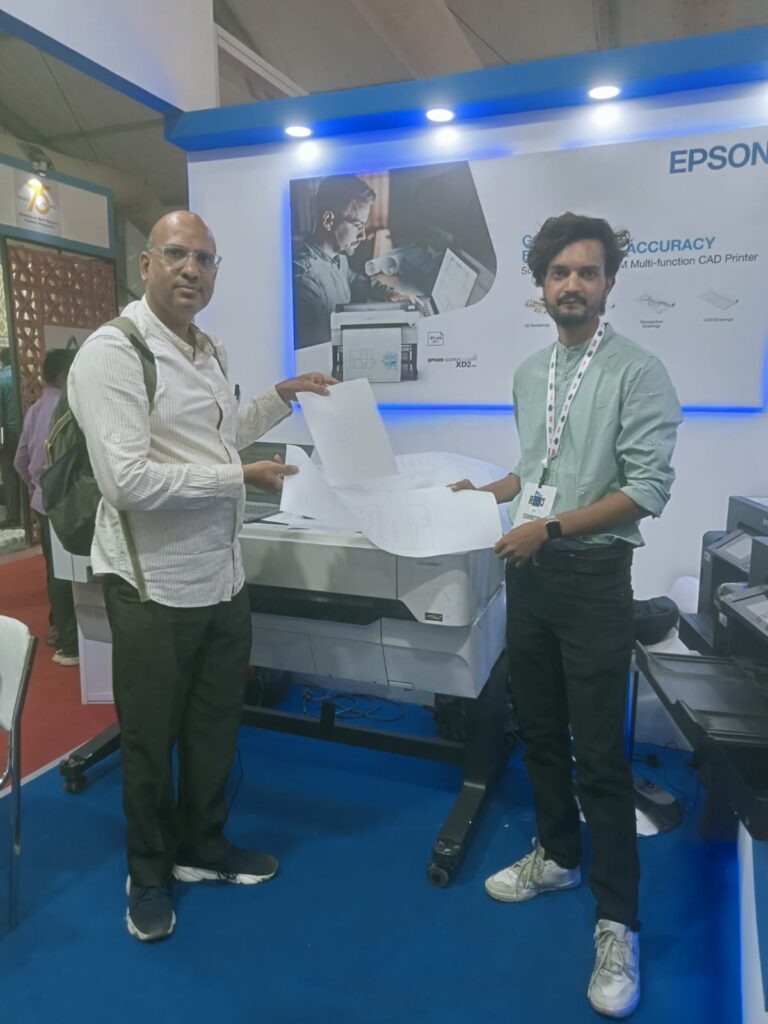
There were many stalls which offered unique products one among them was an Epson Plotter and printer service provider. They gave free sample prints to Govt. departments, visitors, architects, interior designer, which are of good quality but I could not print my drawing of bus depot, since it was made fit to size and it was printed so small that we could not read the text printed on paper.
A new form of Aluminium Composite Panel that is used to face lift interiors or exterior walls, these are fire resistant and water proof. Aesthetically used on doors, windows, partitions, wardrobes, tables, wall murals or even an exterior board or signage.
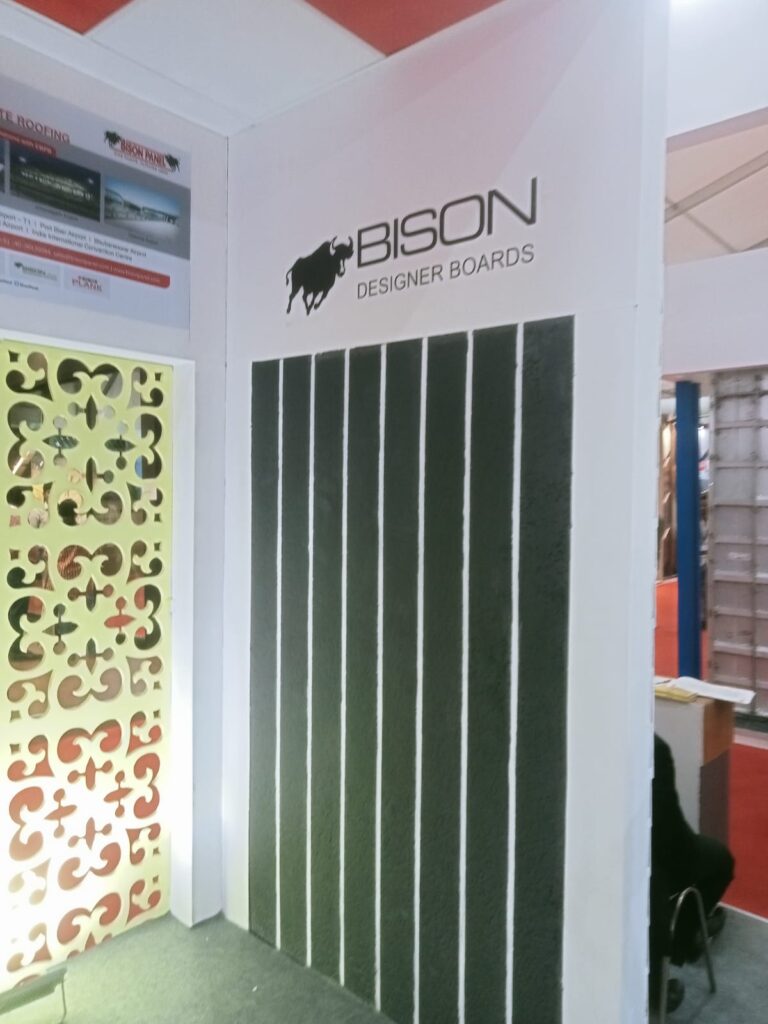
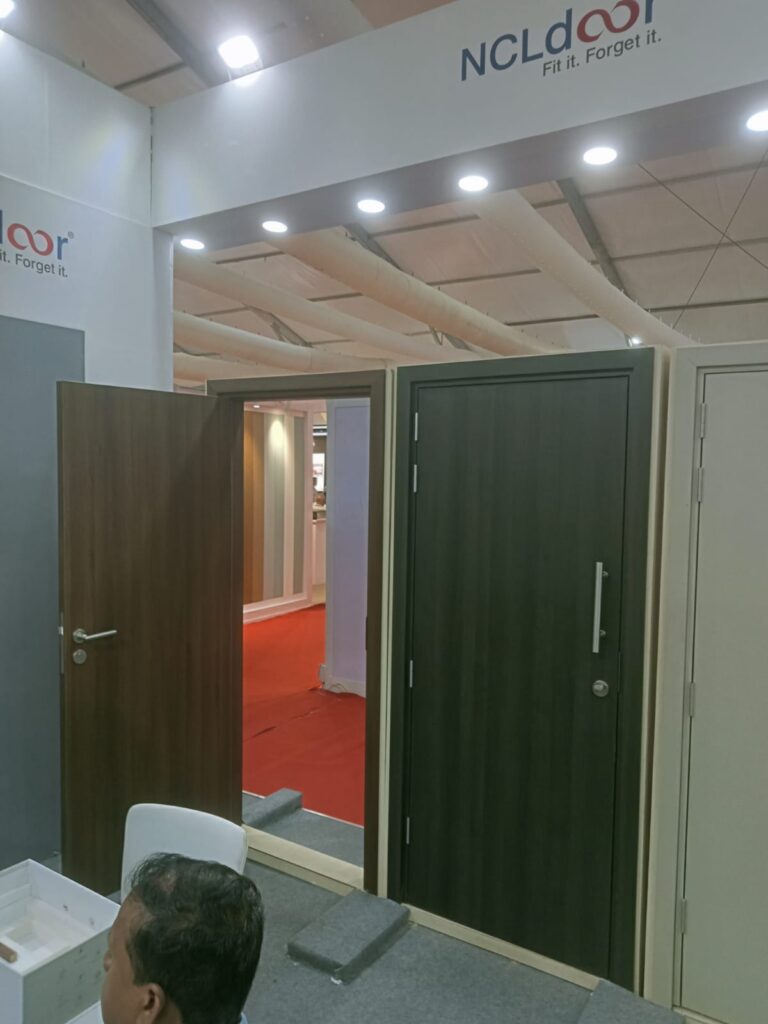
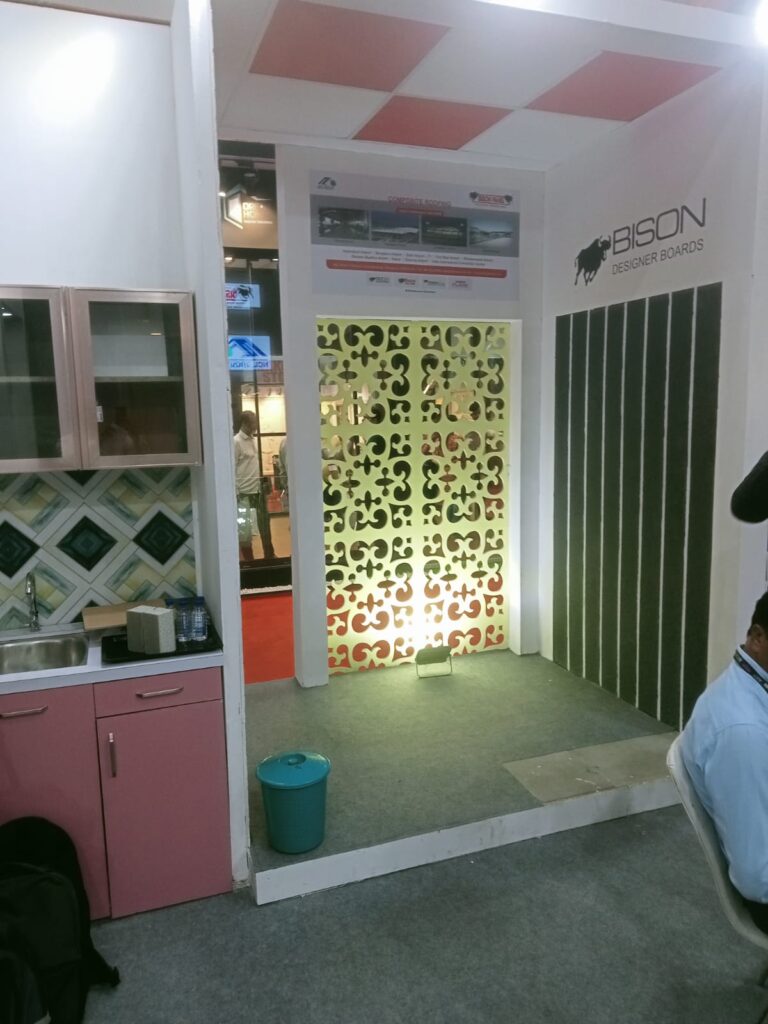
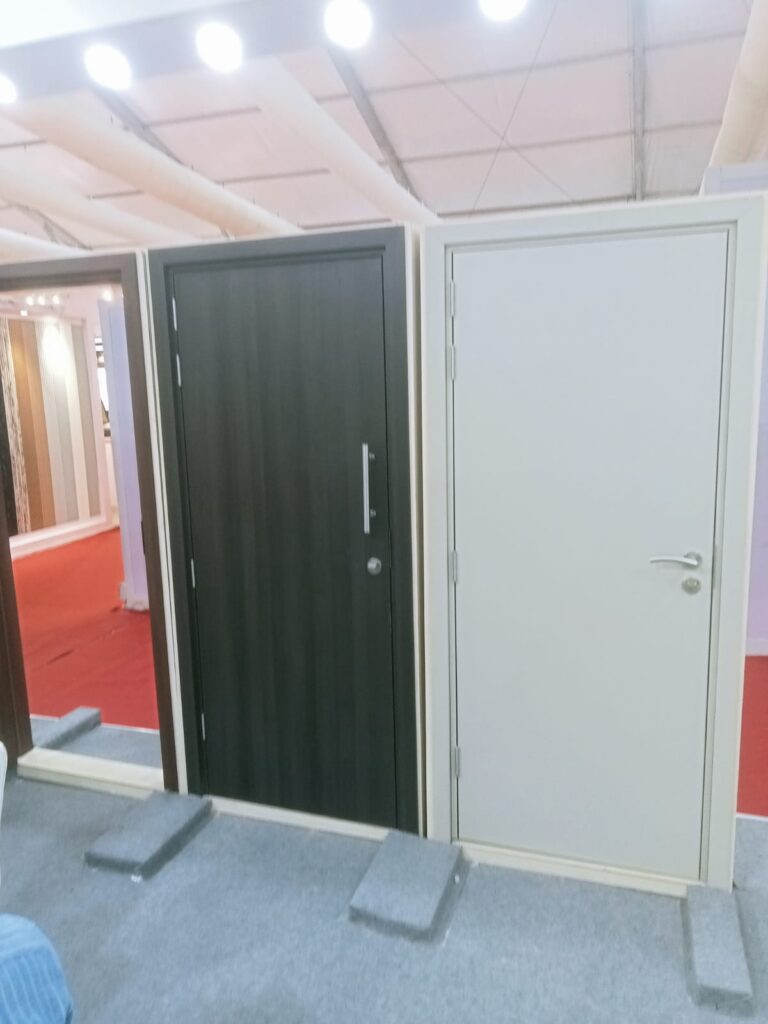
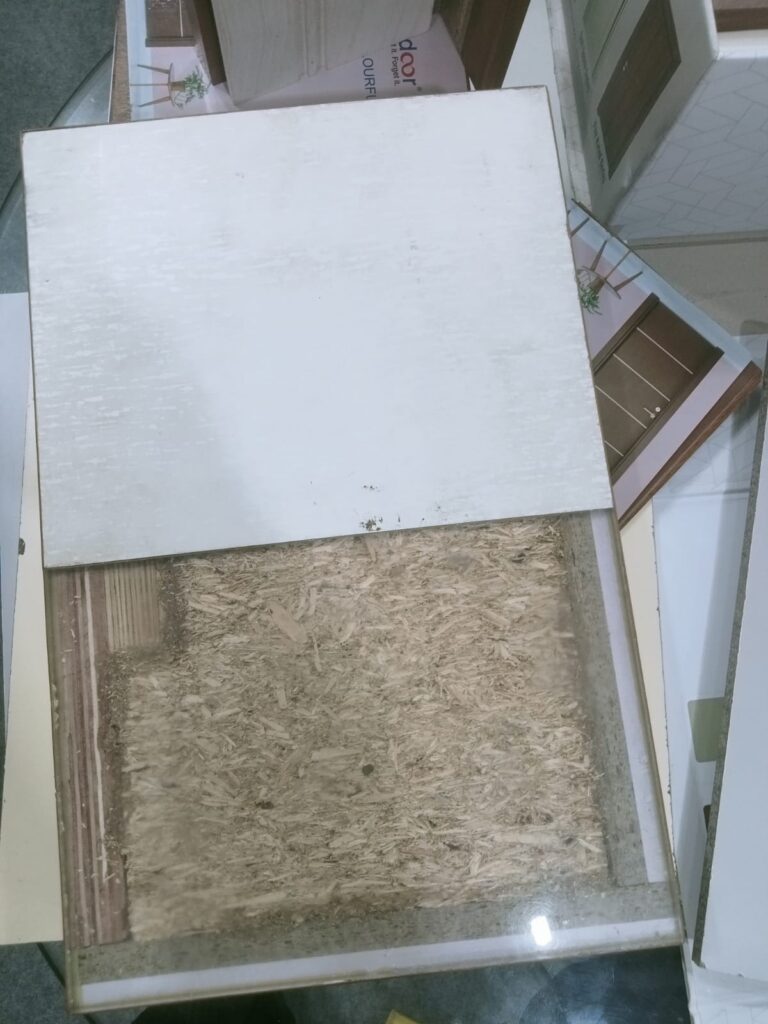
NCL Doors, Bison Panels and Concrete blocks were an interesting product to view these can be used as ceiling, floor, wall partitions and roofing solutions. Door panel and doors have a unique feature of hollow with bee mesh and solid with wood dust, these doors can be of various colours and sizes.
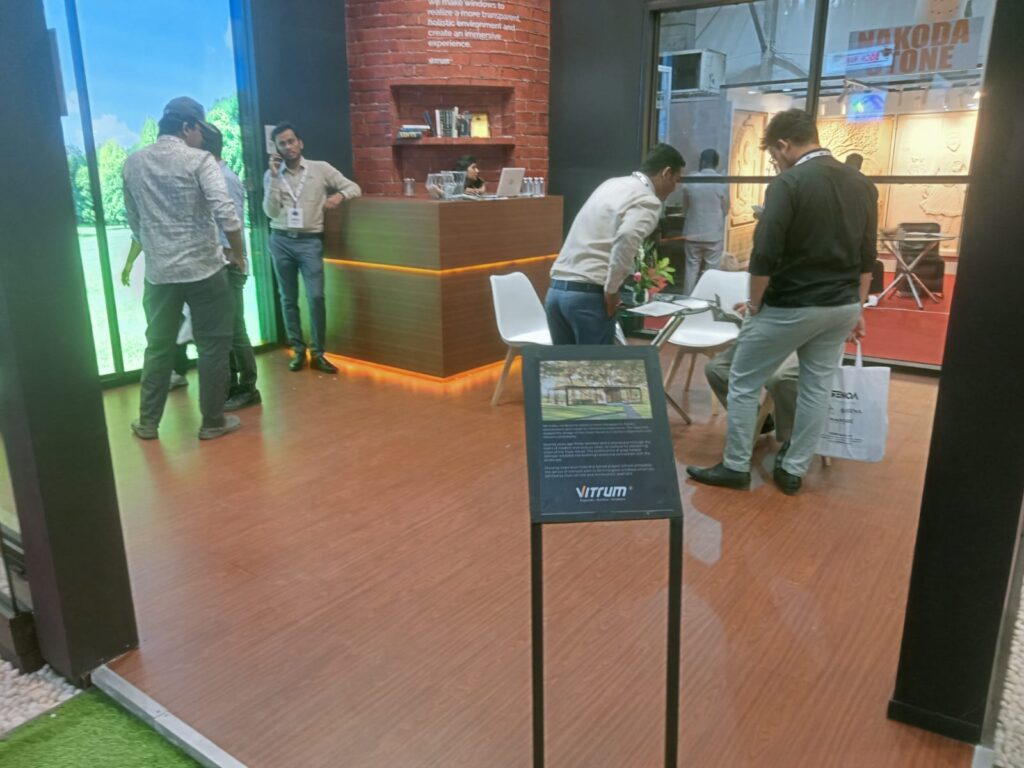
Vitrum a new age sliding door and window solution they have a feature of door lock only on pulling the lever. This guarantees the residents don’t lock themselves out in the balcony since most of Pune residences have sliding doors in the balcony with locking only on one side. The sliding can be made hydraulic and may add new feature of remote controlled or automatic setup.
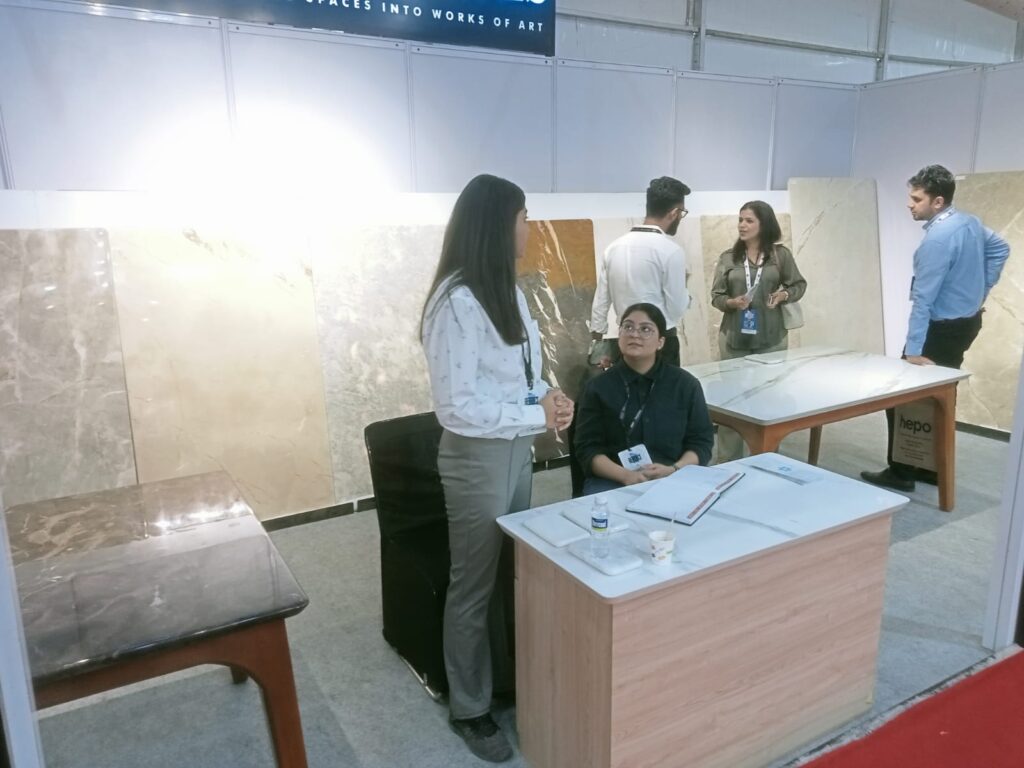
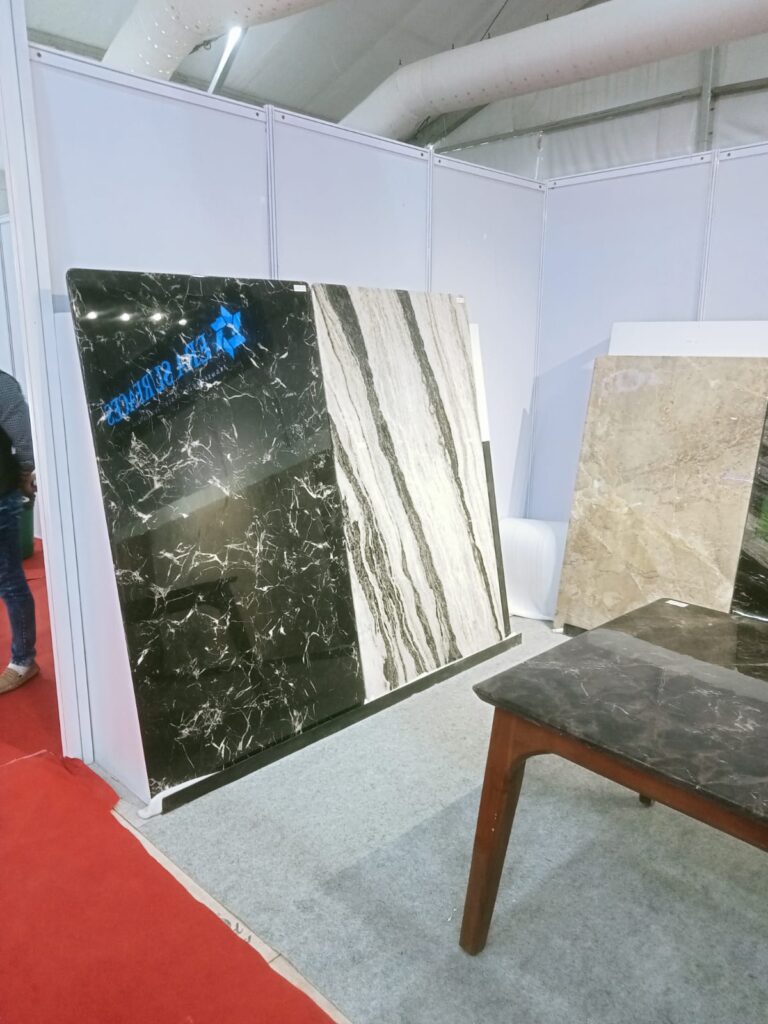
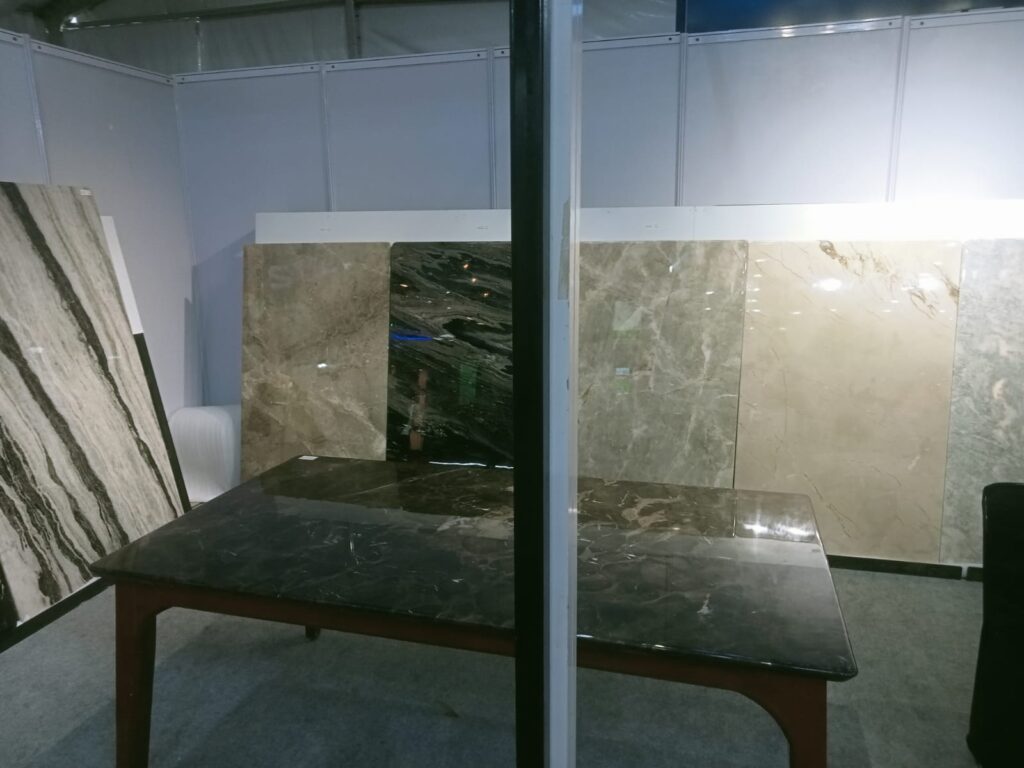
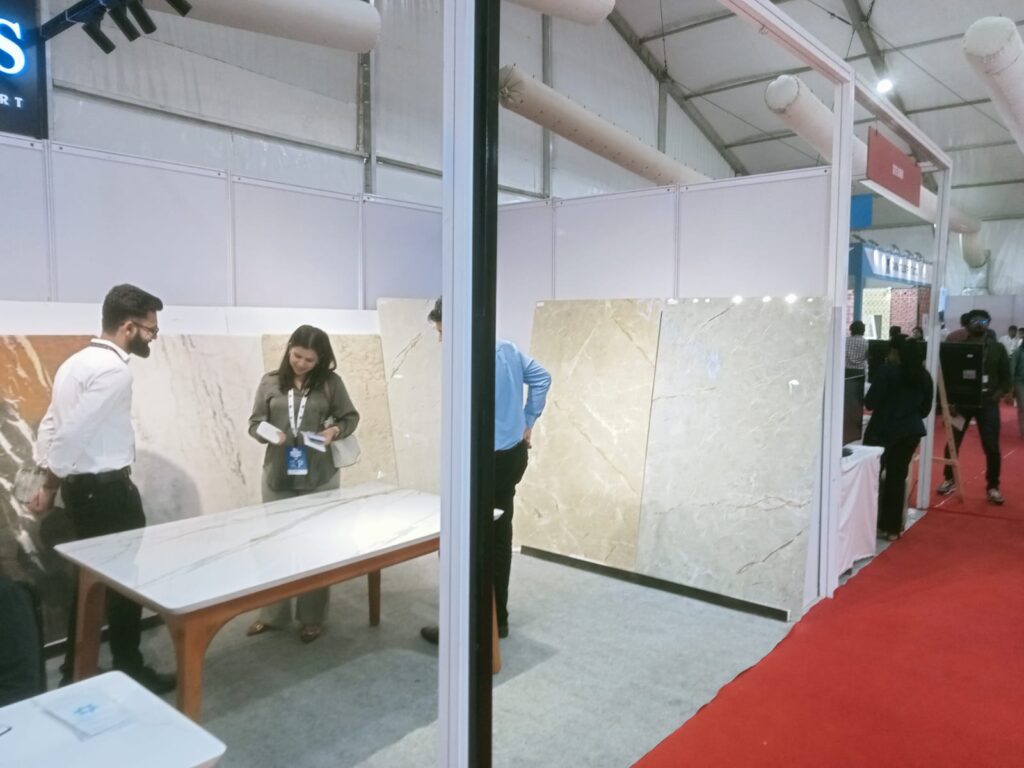
A new range of table tops have sprung at most lucrative prices, these are available in marble and ceramic. With more than 10 – 12 shades and can be customized as per ones needs, these are ready made table tops which have been carefully polished, coated for restaurant or dinning or conference use. They can also be used in labs of large biotech parks or even food testing labs.
If you have a big garden or a bathroom and want to add a pool or a jacuzzi, Aqua Shark provides wide range of imported and Indian solutions. Located at Banner they are giving these services to best of builders and are very lucratively priced. Make your homes and surroundings more interesting.
A few Alu-form work brands have come to Pune to make way towards new-age construction techniques. These form works help in fast-track your construction without brick laying and less curing time.
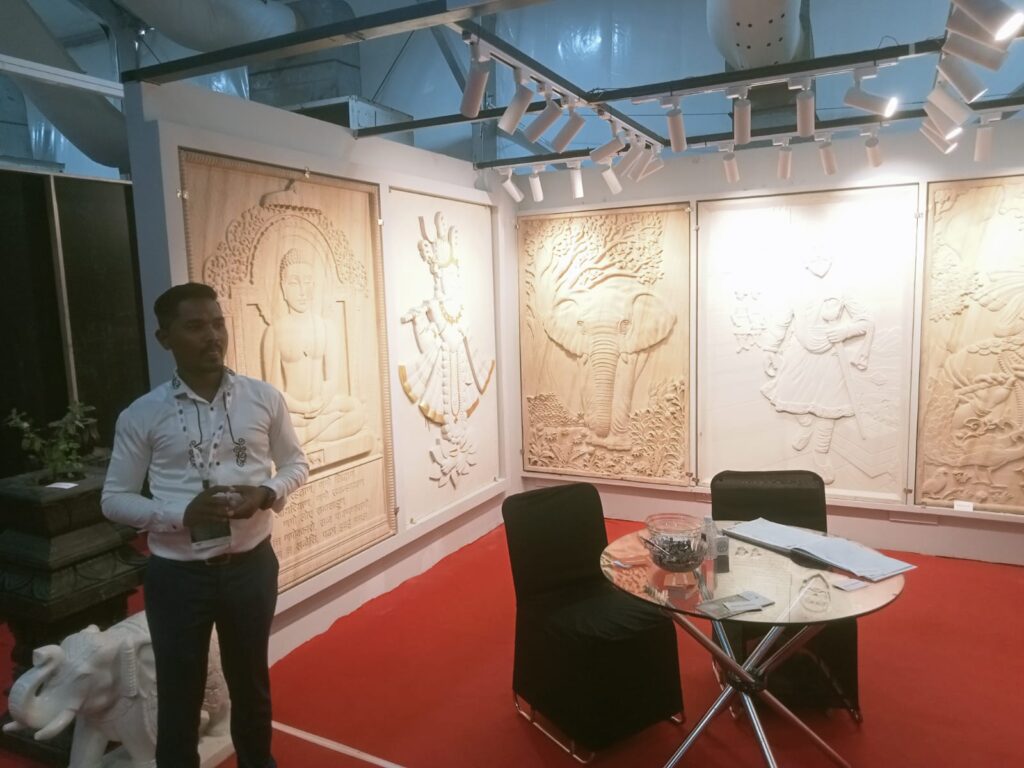
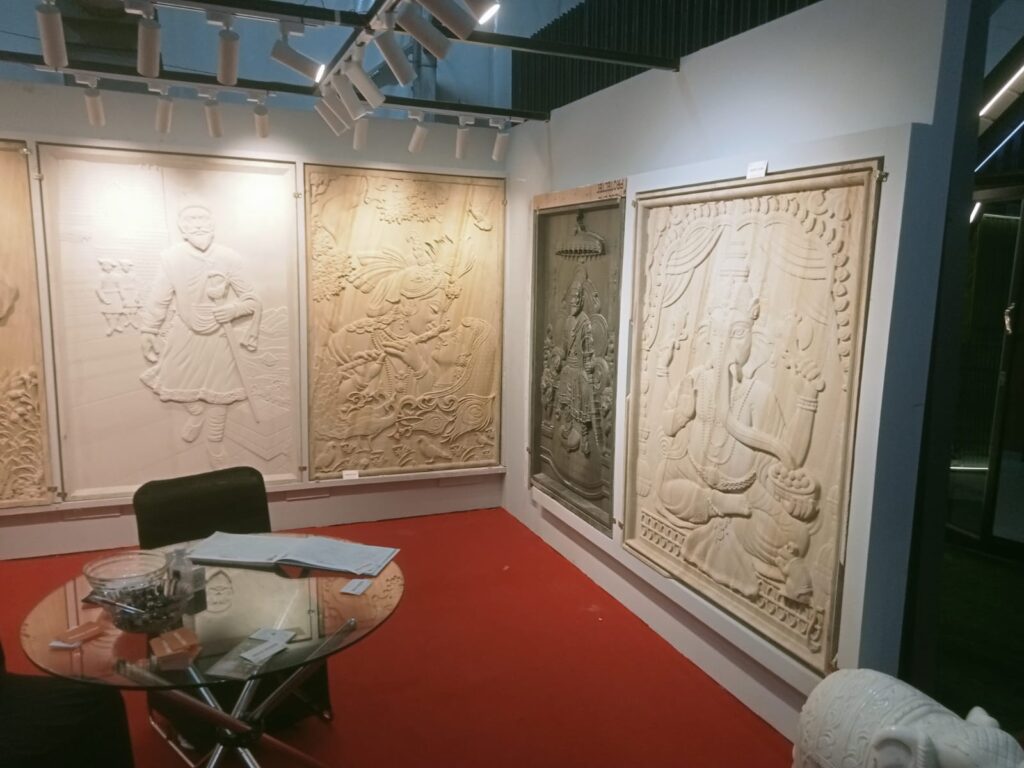
Stone decorative have become a part of our culture and have a new dimension with CNC cutting of 3D effects. Nakoda Stones has marble, sand stone material and can do CNC on any surface or any design.
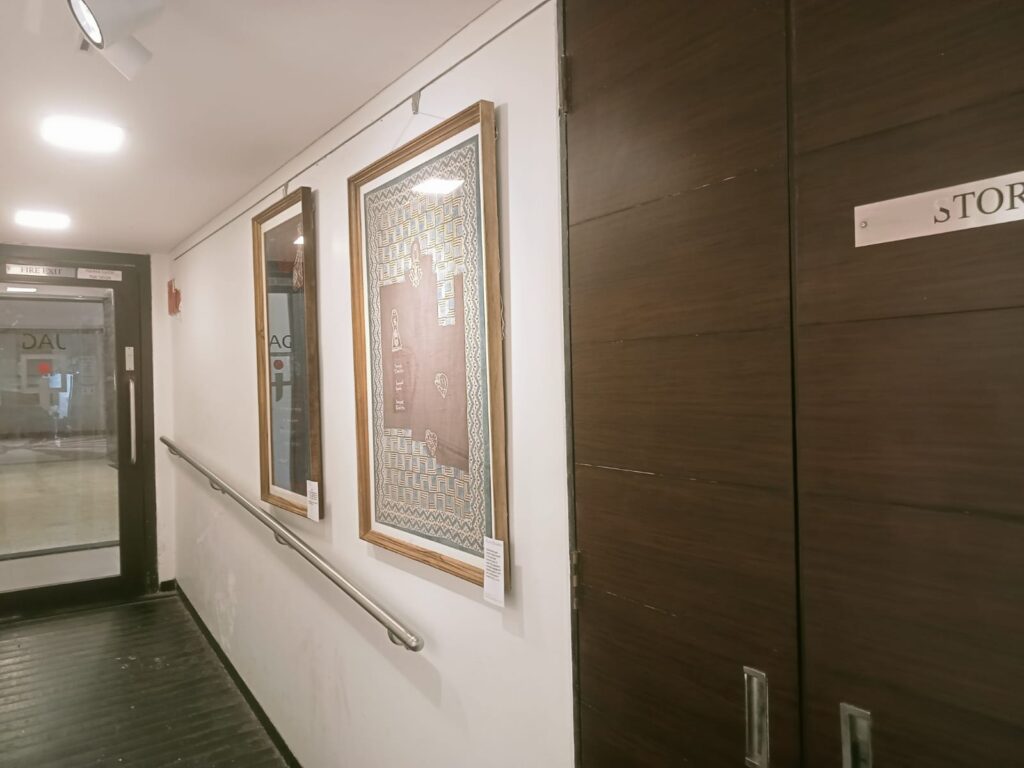
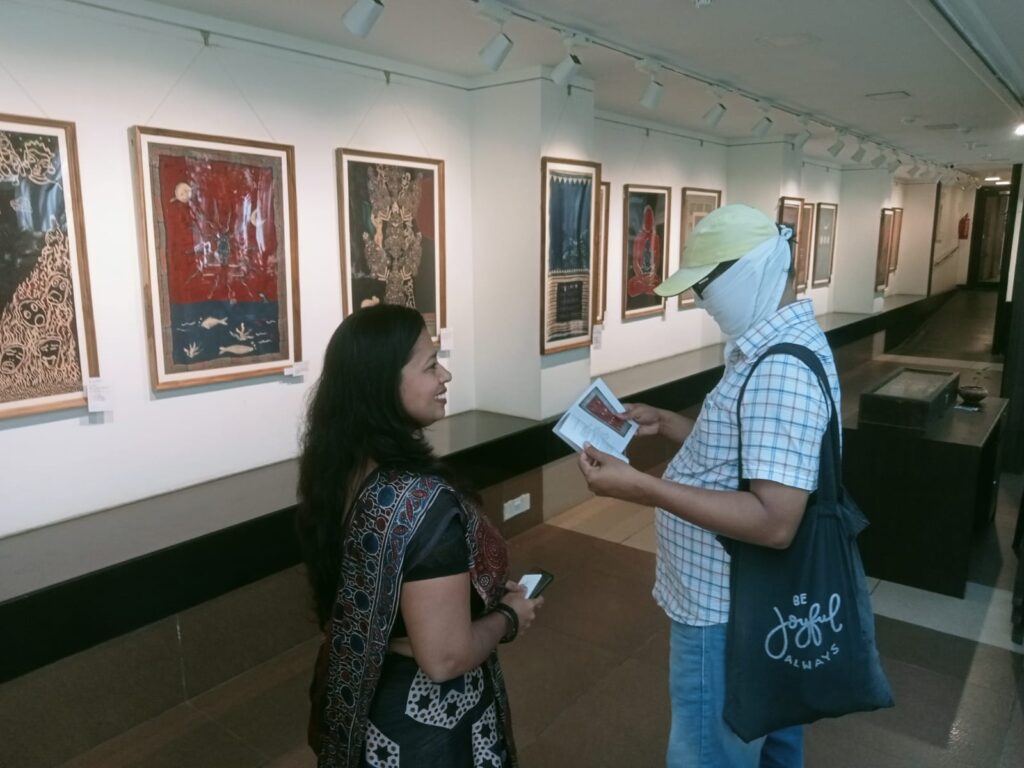
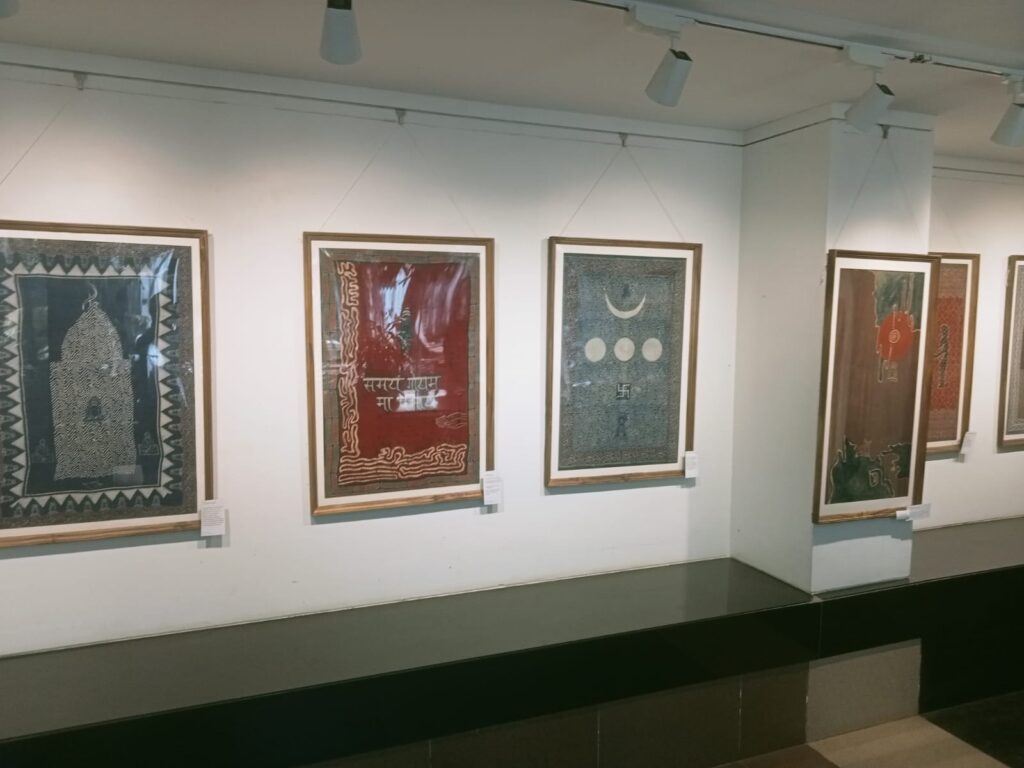
Boski Ashish Kubadia brings out natural colors on silk and this time it is on Jainism. She has a life full of experiments and most of it possible because of a lovely husband. She started her career after an early marriage, she enrolled in an interior design course at a Ghakopar College. She then pursued her portfolio and was selected for textile design at the Sir J. J. School of Art. She made several design on textile for sarees and other textile paintings. She got admission after 7 attempts since she was from the open category.
Then enrolled in a course on Jainism, where she learned about tirthankara and the birth of (Rishabdeo) Adheera Bhagwan at Ayodhya. Boski means divine and purity, hence the purest silk was named Boski. She stated that since the Boski is one of the few fabrics that has a long and rich history due to which it is one of the most expensive fabrics in the world. It is said to have originated from China and discovered by a royal empress when a silk cocoon fell in her tea one afternoon. She has created a series of Jainism paintings which are made from wooden blocks, natural colors on silk. Jainism believes in ahimsa hence have used modal silk. These paintings have given a dimension to art and medium making the nuances in textile explore this new form of art. She is keen on doing a few more exhibitions and is also open to give a demo of the painting.
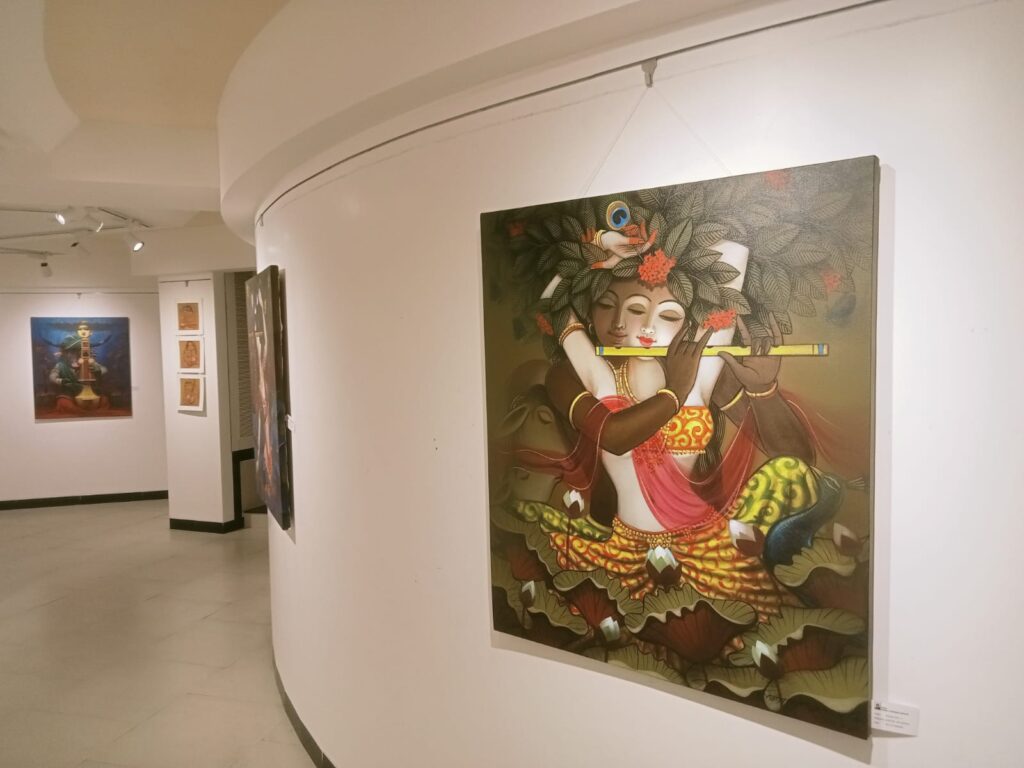
It’s a pleasure to view paintings from Gopal Ch. Naskar, he has added music to the love of Radha – Krishna and created this art pieces. Each of these paintings have been made in a series of musical and animal characters depicting a group of musicians and one as a divine love of Radha and Krishna. Gopal has incorporated these paintings with musical instruments and have spent time with musicians who have helped him in creating these unique paintings. Expressing this form of love which has known no boundaries and a devotion to music and art giving a rich history of mythology.
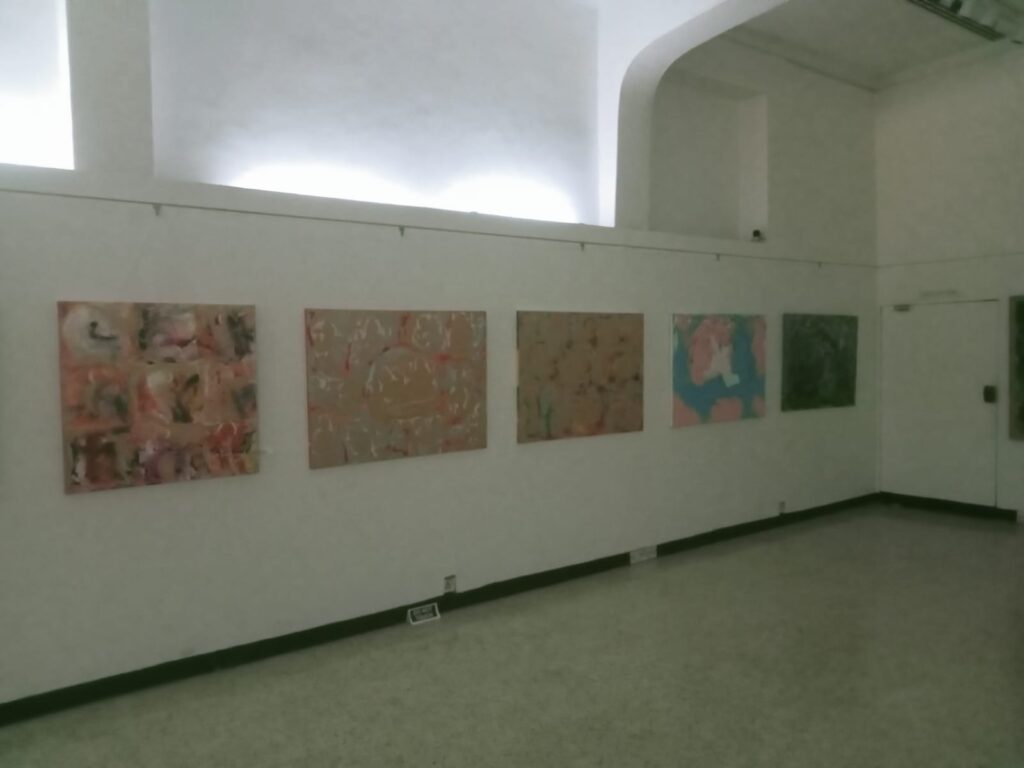
Shivlal Saroha a painter from Delhi, who spent his early days in dire straits. He recalls keeping a sketch book handy while his struggle and keeping his head high to fulfil his dream to become an artist. Shiv has a unique style of abstract with animal and figurative art to showcase new age ideas through oil, acrylic, charcoal and mixed materials. He has been all over India and has done many solo exhibitions, a group exhibition and this is the second exhibition at Jehangir Art Gallery.
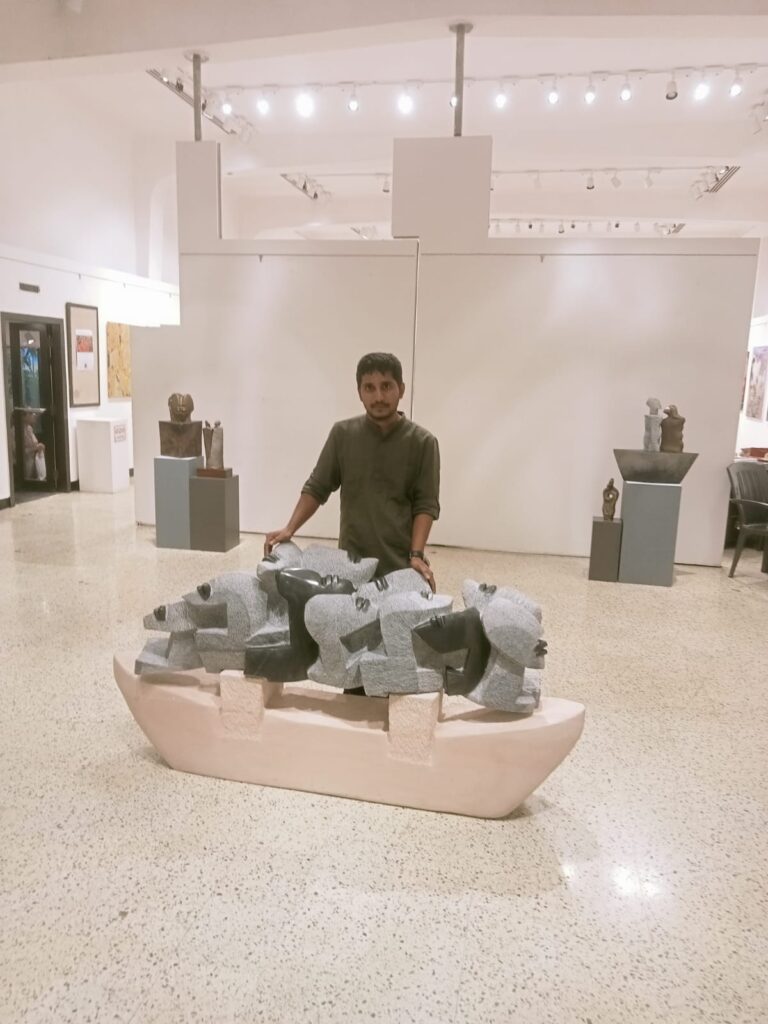
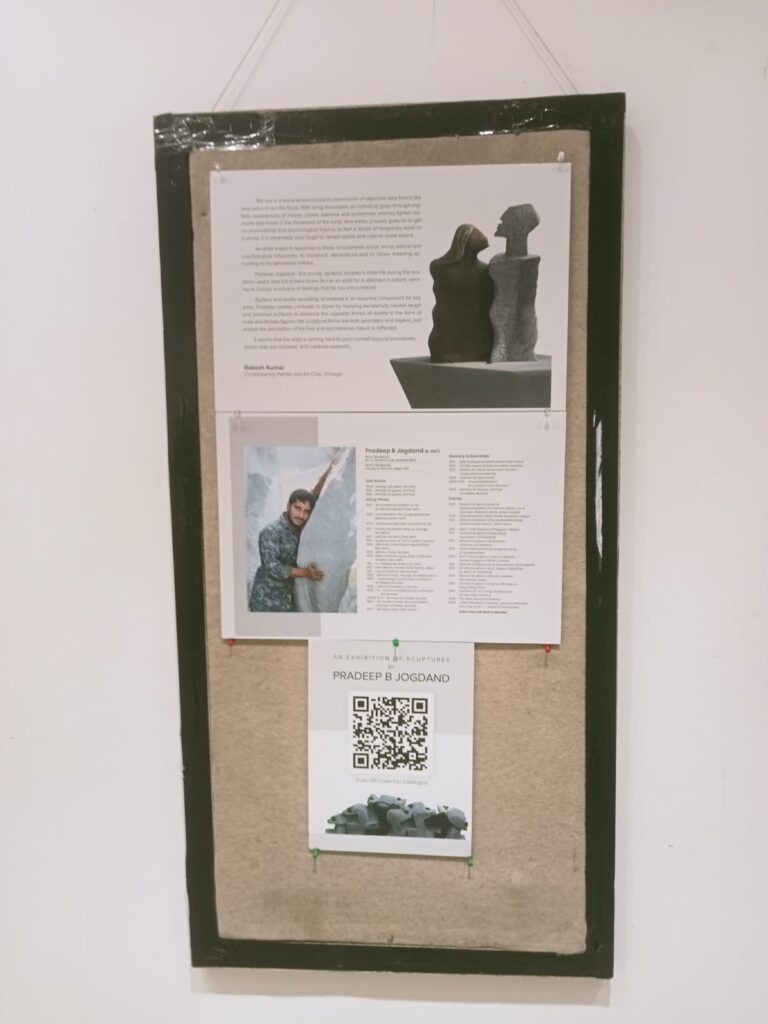
Pradeep Jogdand, is from Mumbai and has qualified from J J School of Art, sculptures represented as figurative pieces made from bronze, brass and marble or black stone. He has expressed his sculptures through male, female duality. He explains his style as a expression of relief from our day to day life struggles.
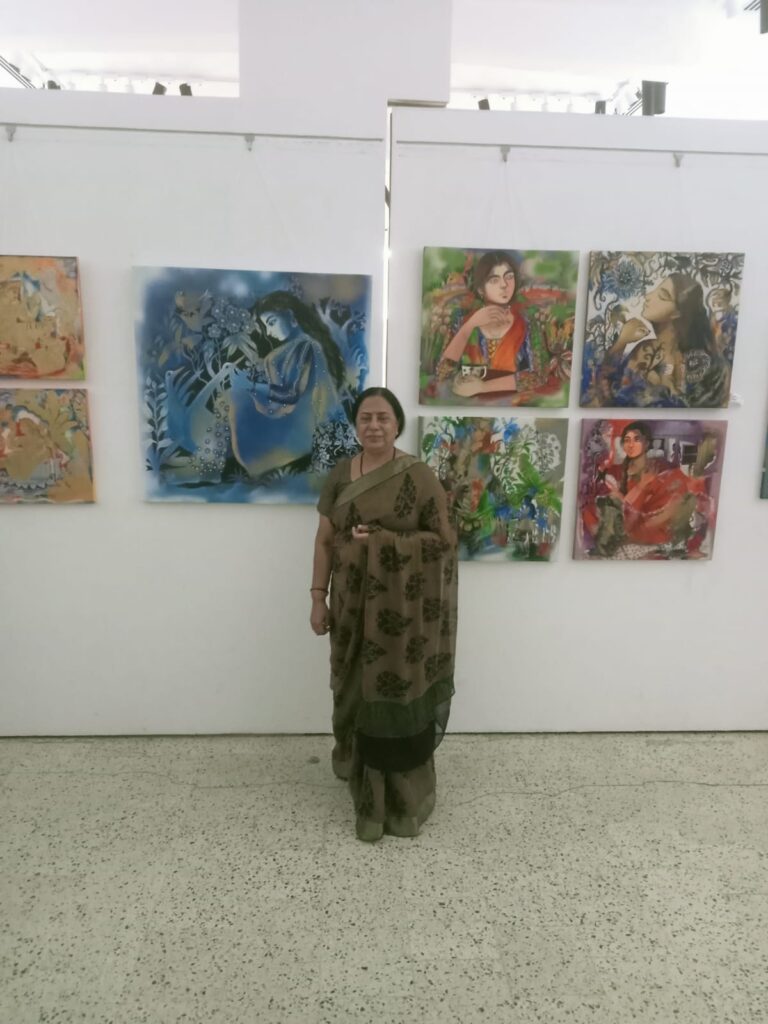
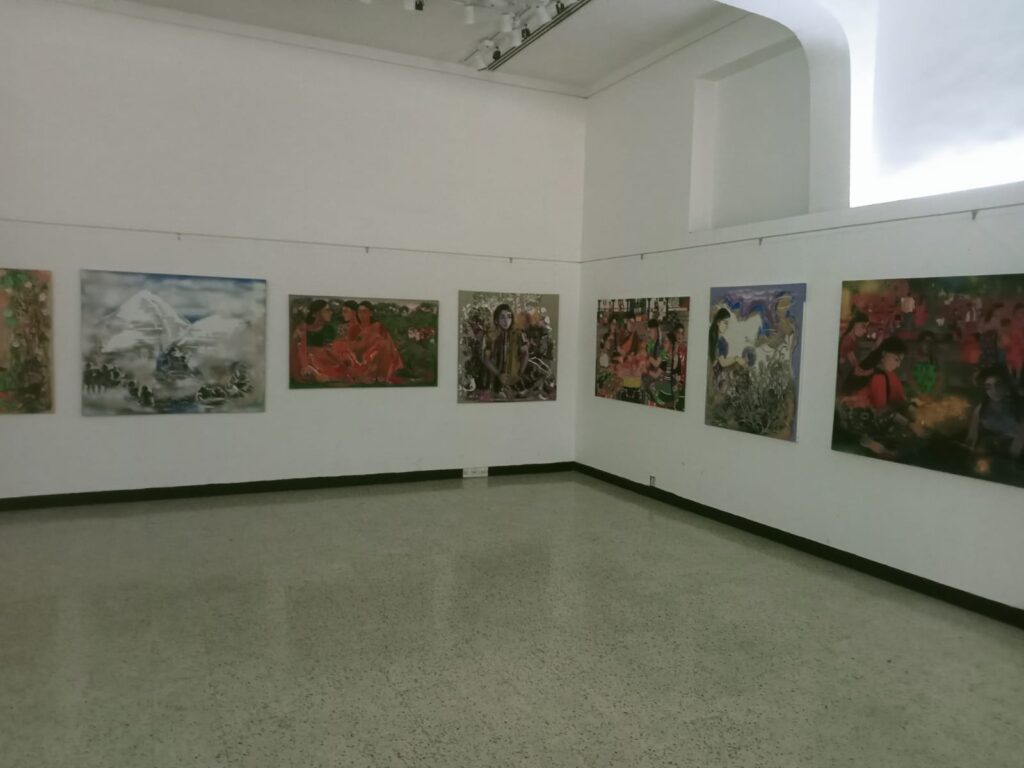
Anjani Reddy a born artist from Hyderabad has been painting or had the vision of painting or becoming an artist since the age of 9 yrs. She remembers people asking what she would like to pursue as a career and she confidently said artist. Being a Reddy and as per the tradition of the community children are given education at all cost even if it’s by selling a farm land. She had an interview at Delhi competing P V Narsimha Rao’s daughter and she was selected to give that interview which was a big achievement. She started teaching at university and held many important positions in the university for art education. Having 29 yrs of experience as a teacher, she has described her passion for art same as her passion for food, she states she is fasting till she is satisfied with her art and colours. She has exhibited various works some a gold with knife painting technique showing the story of Ganesha, Krishna and a few moments she experienced while she was travelling or just events or moment she remembers in their life. Sitting with a few friends Mithu Basu has an artist movement which now building awareness of self-discovery of becoming artists.
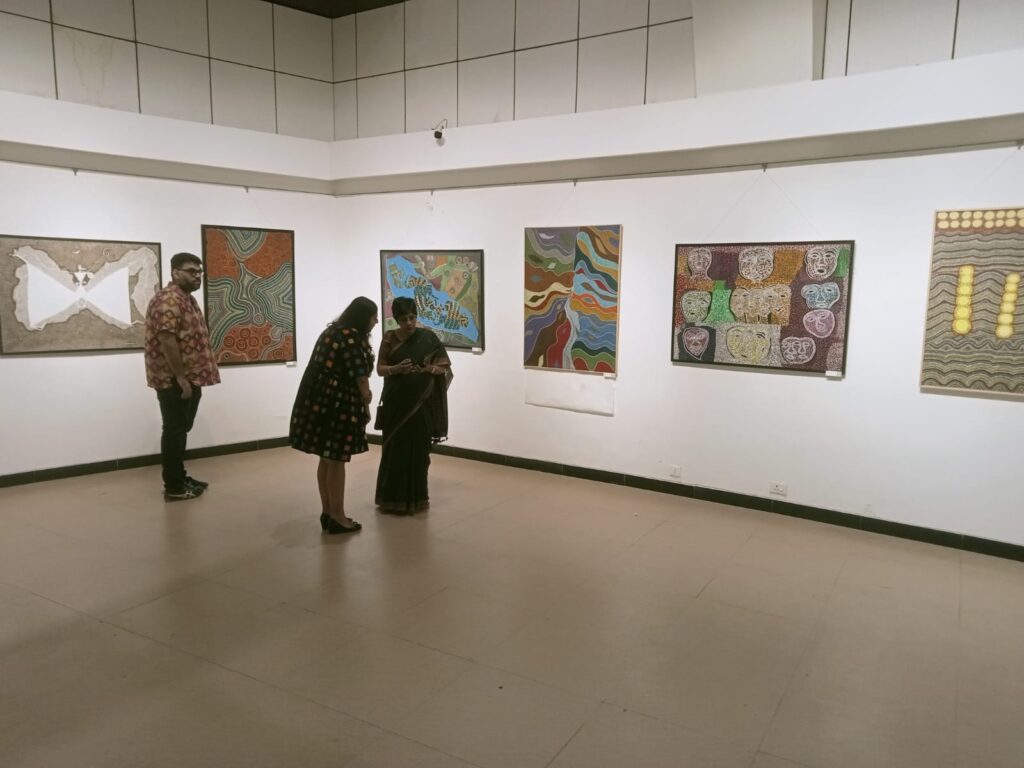
Gondwana Art Project, modern tribal painters group show by this Non-Profit has curated very rare pieces of art from different regions of the nation. Helping artist from the rural India to create a larger space or an art movement towards creativity and creating non bias for Indian folk-art vs the International folk art. Exploring animal and figurative these artists from the rural have found a new expression of art through geometrical or abstract form, regardless the meaning or the sense it gives an aesthetic appeal to the viewer or the creator and looking at being valued and not priced.
Mr. Sandeep Bhandari, founded this initiative since 2008 and now has become a large movement with 35 artist and many looking to collaborate. The foundation curate’s artistic works from Madhya Pradesh, Maharashtra and northern Indian region. Gondwana has many paintings from the curator’s collection and will have more ideological movement towards international accreditation or recognition.
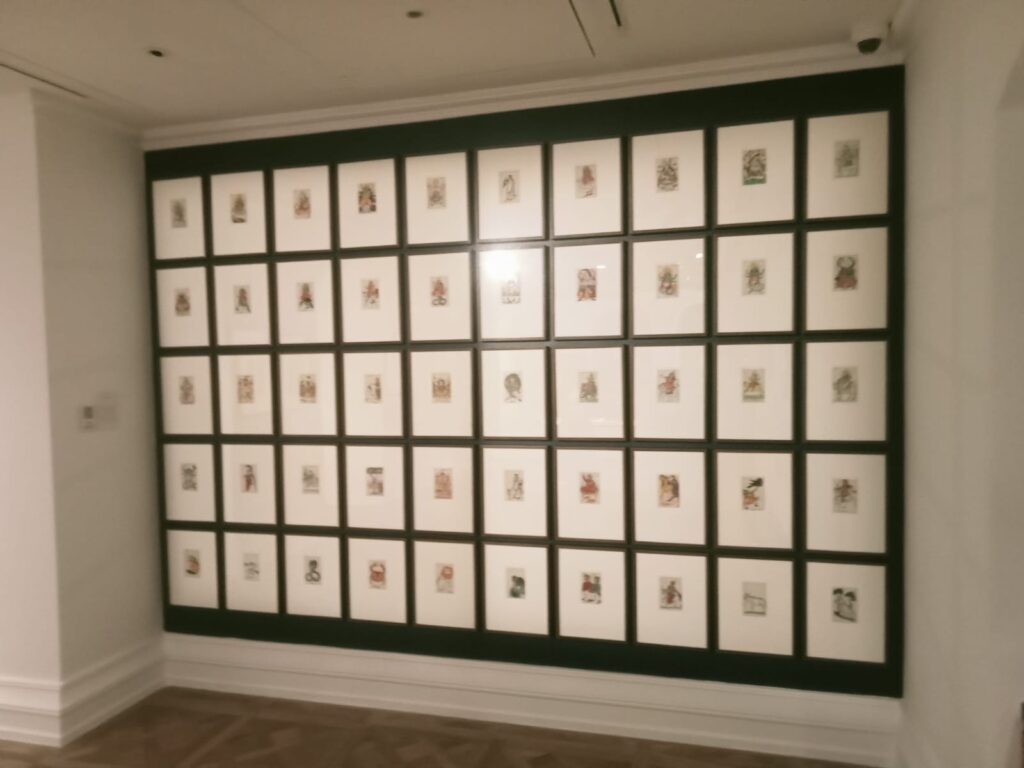
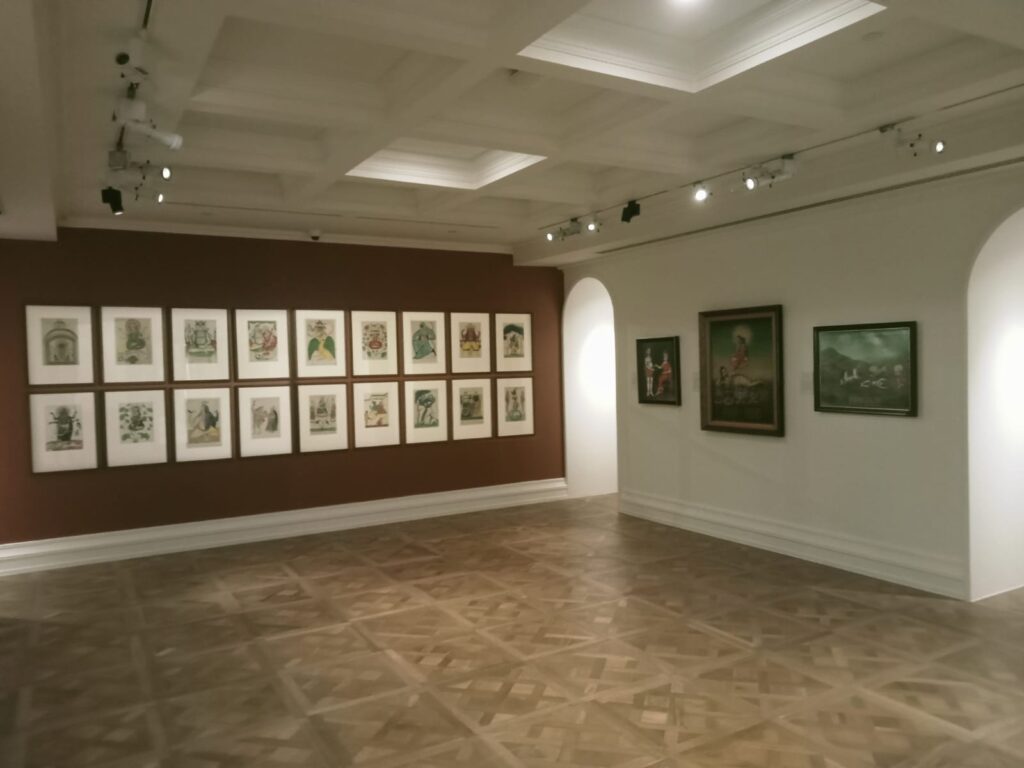
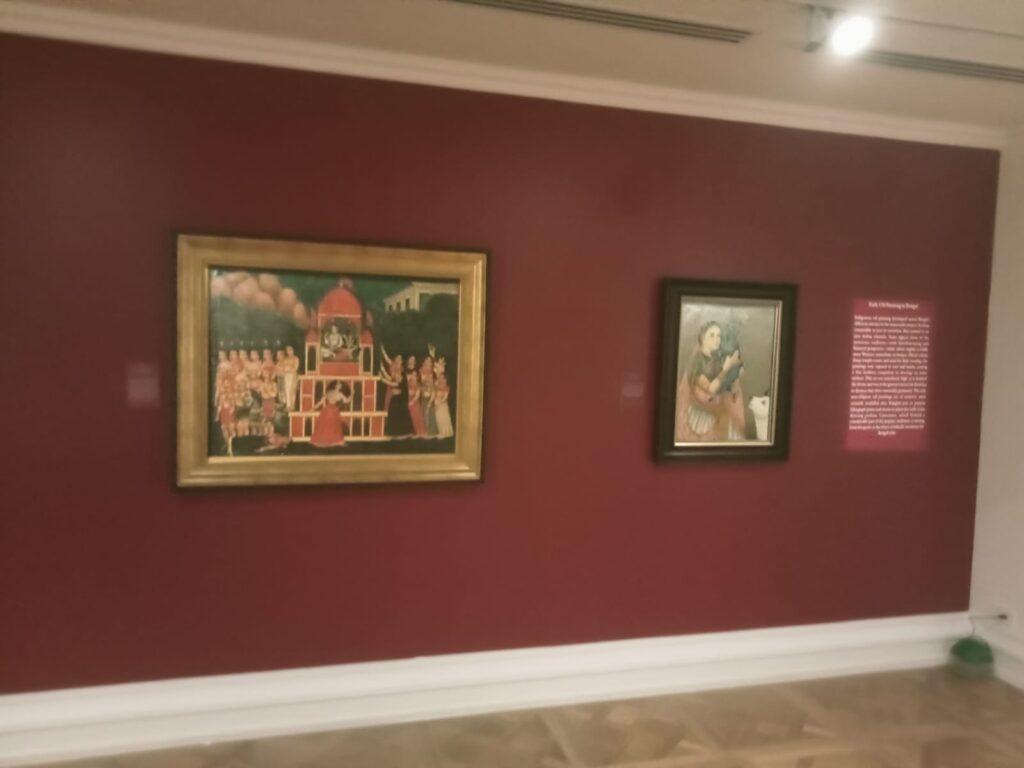
The DAG art gallery has displayed a show of Bengal Kalighat paintings which are of historic and mythological epitome. Avni explains that these paintings were made from artist at Calcutta and were sold as souvenirs to Britishers. The canvas and paint brushes were imported from Great Britain. As a ritual followed by Sati, that a widow was burned in the same fire of the husband’s cremation. Once this practice was opposed by the Indian legal system, the widows were sometimes forced to prostitution. These paintings were by Kalighat painters in a cheeky A4 size these are called the Babu and Bazaar paintings. These were made on the streets by painters on a daily routine that could earn a per painting made quickly like a sketch.
These are pre-independence painters who have painted some fine moments in Hindu Mythology, Krishna meeting Pandavas, Kurukshetra War, Shiva Avatars and many more. You can also find some oriental style painting on glass which can be lit with a light on the back. Some of these paintings are made with gold and are rare to find, even though the artists are unknown but these have been curated by DAG some them have been collected from european artists who had created these at that era during their journey to India.
There is a display of small bazaar paintings 50 arranged in a row and column to make this a wall full of such paintings. Is a collage of bazaar and babu paintings as referred by the Bengal Artist Groups.