World Bee Day, sees an architectural interest, new pets are stingless bees.
The world has seen a new horizon on this world honey bee day. I am here at the Central Bee Research Institute at Pune. The day has begun with registrations and everyone has been handed a rose, schedule, notepad, gunmcha (handkerchief), and a pen. All have gathered at the conference hall of the Central Bee Institute; the Gandhi photo has been flowered and lite.
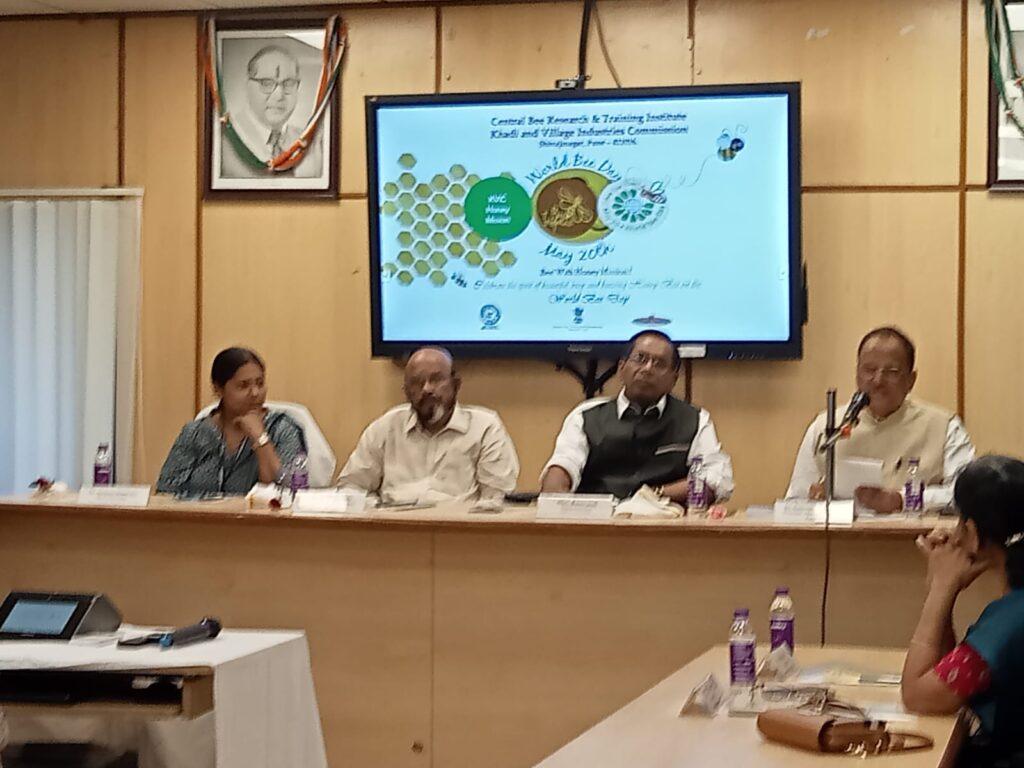
The program has been enlightened with an introduction of our esteemed guests who are Principal Modern College of Commerce, Arts and Science, Shri Dr. Sanjay Kharat, Director CBRTI, Shri Basavaraj, Pune University, Shri Archana Sharbidre.
The day began with a note on Bee Keepers and why this day has been celebrated by Dr. Laxmi Rao. She gave a synopsis of the why UN has given a special day for bee keeping to bring awareness among the globe on the birthday of Shri Anton Jonsa a bee keeper who had setup bee apiary and apiculture at Slovakia. Then making a point of making an awareness of how one can keep bees safe without cultivating or keeping bees, is by planting the trees, using bee friendly pesticides, buy honey and keep environment clean. She also clears up our minds for modern urban planners and rural developers to have bees as pets just like the other pets (stingless bees), Apis Trigona is such species which is stingless and has a supreme quality of honey.
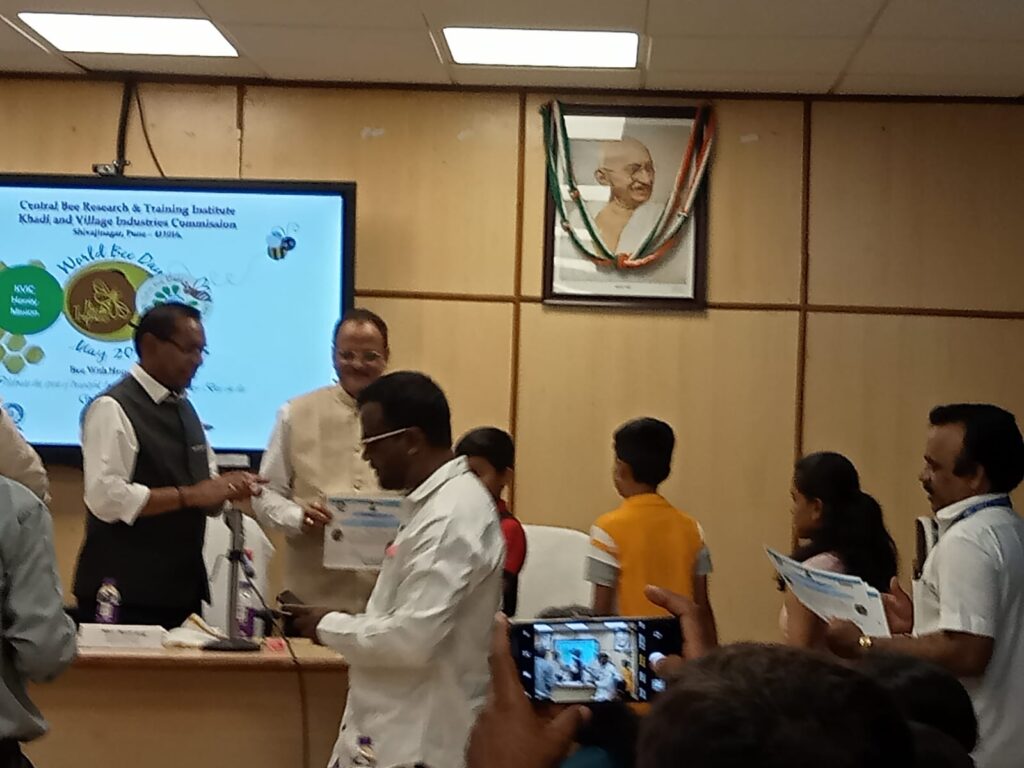
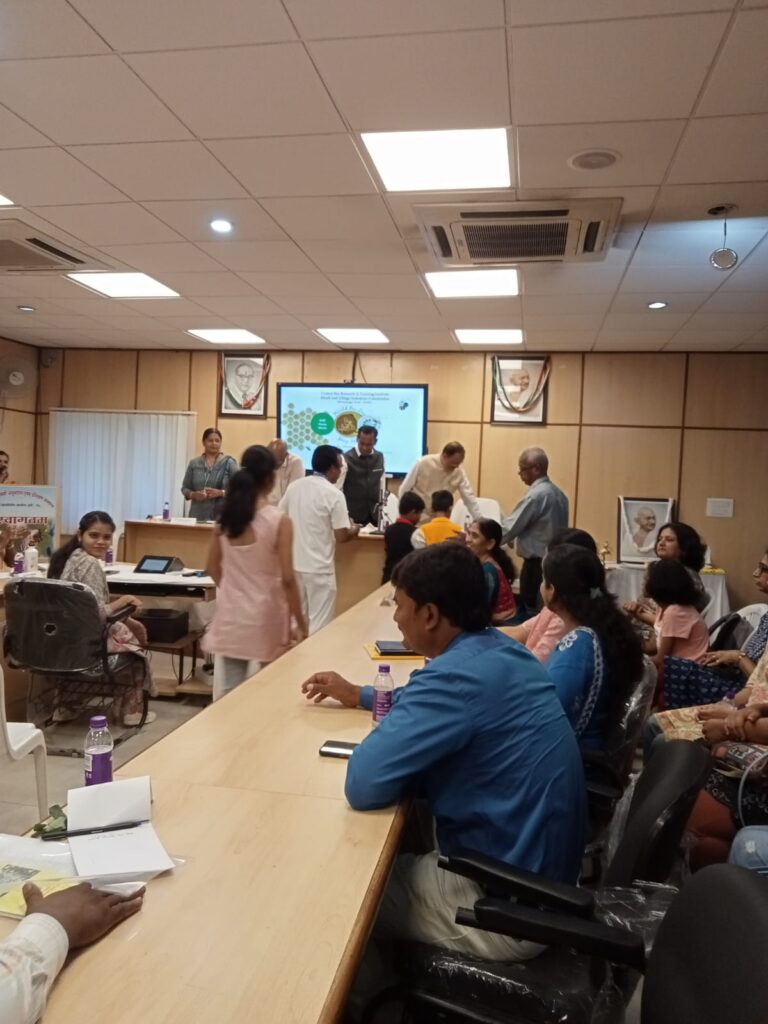
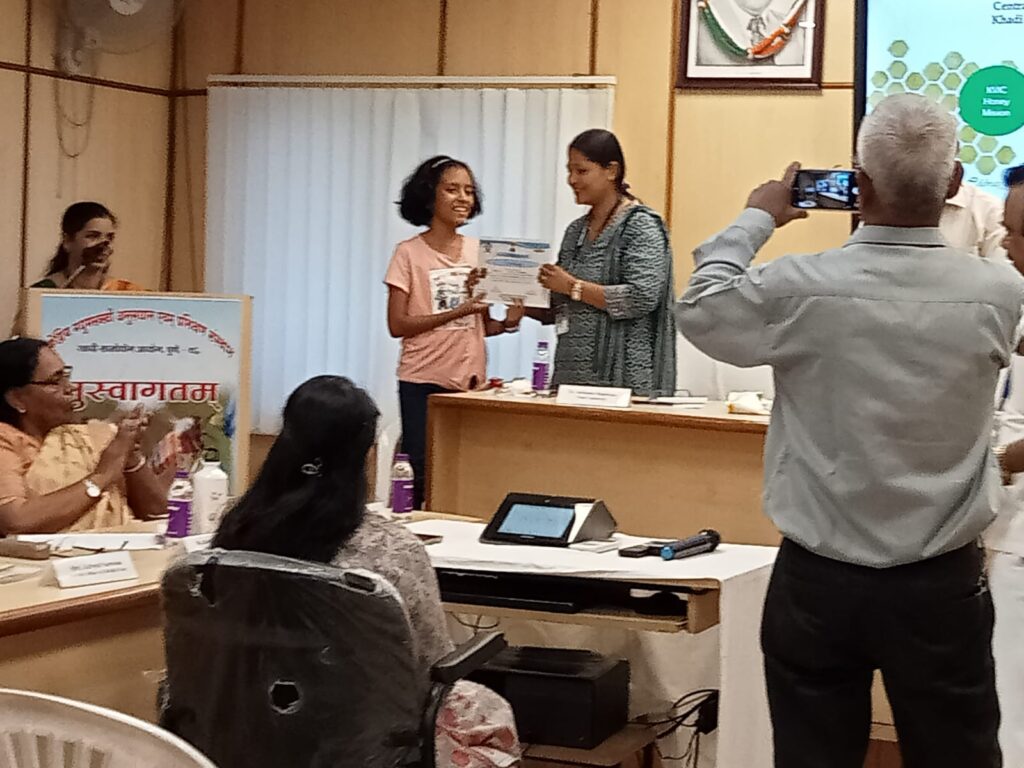
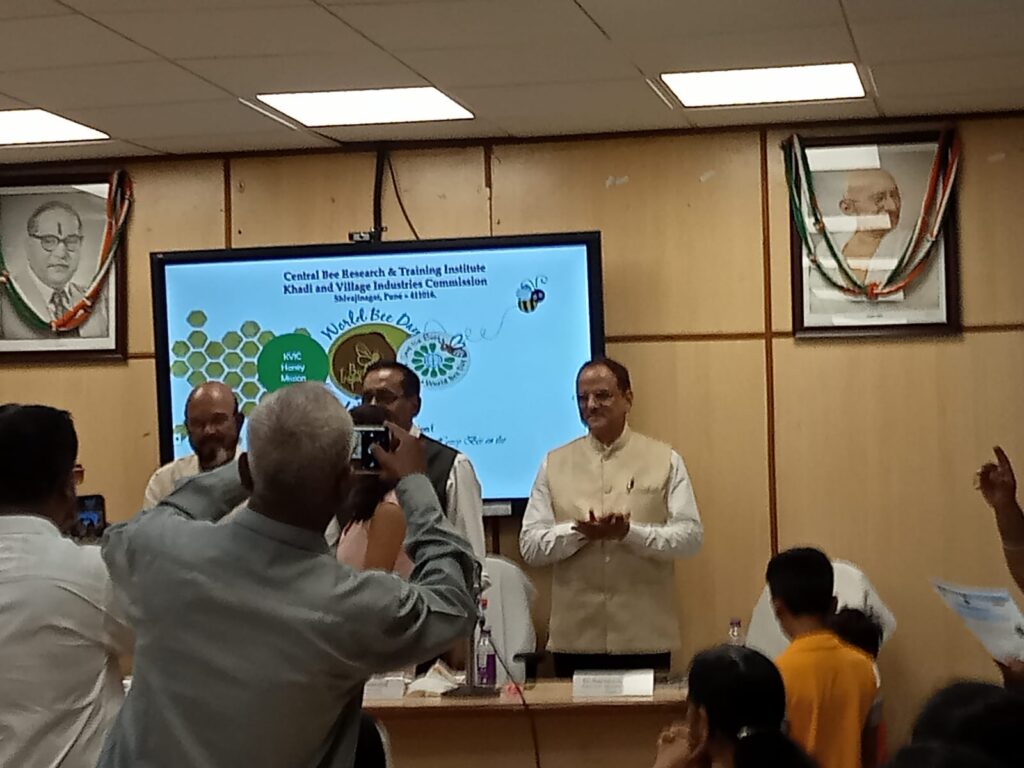
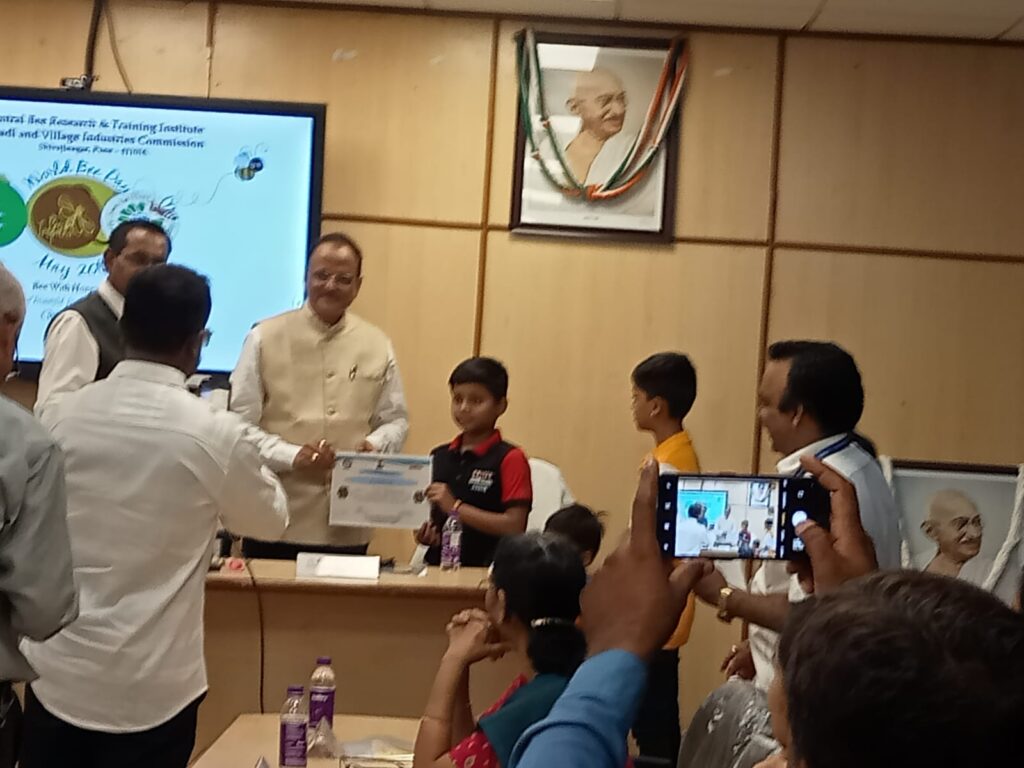
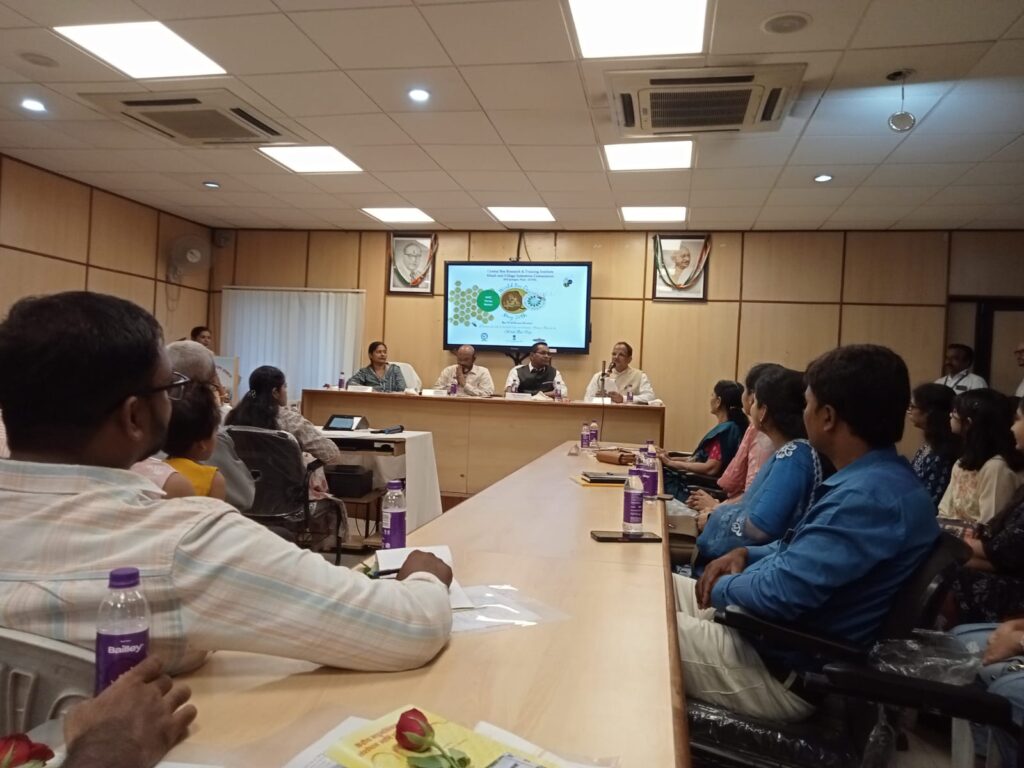
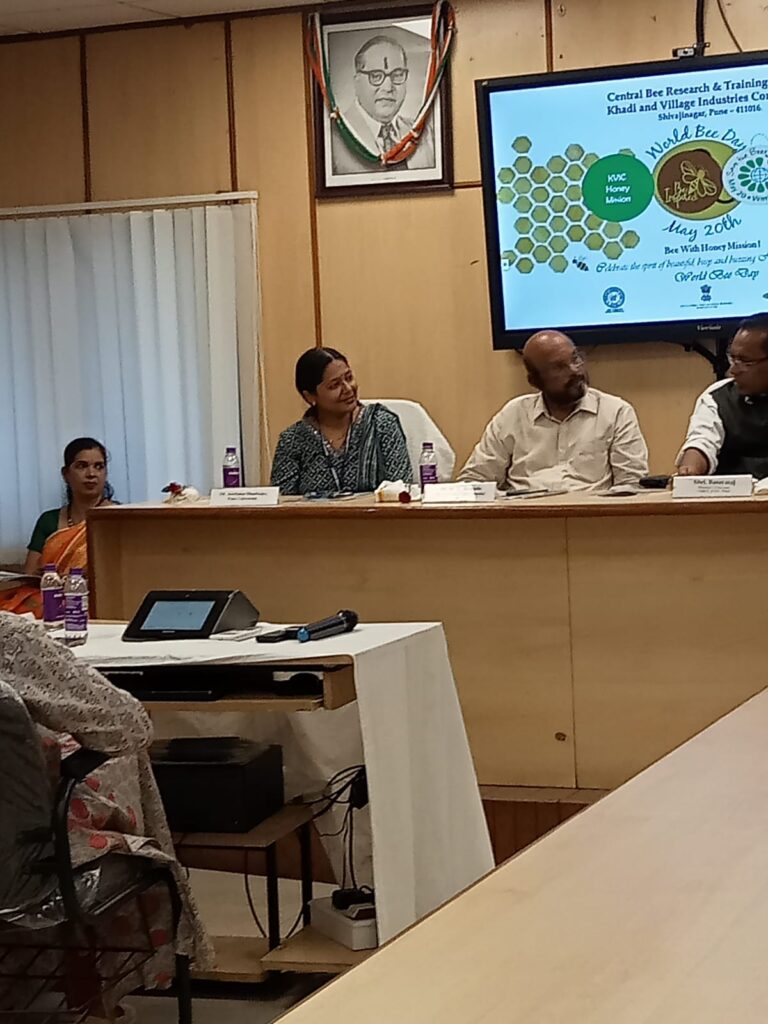
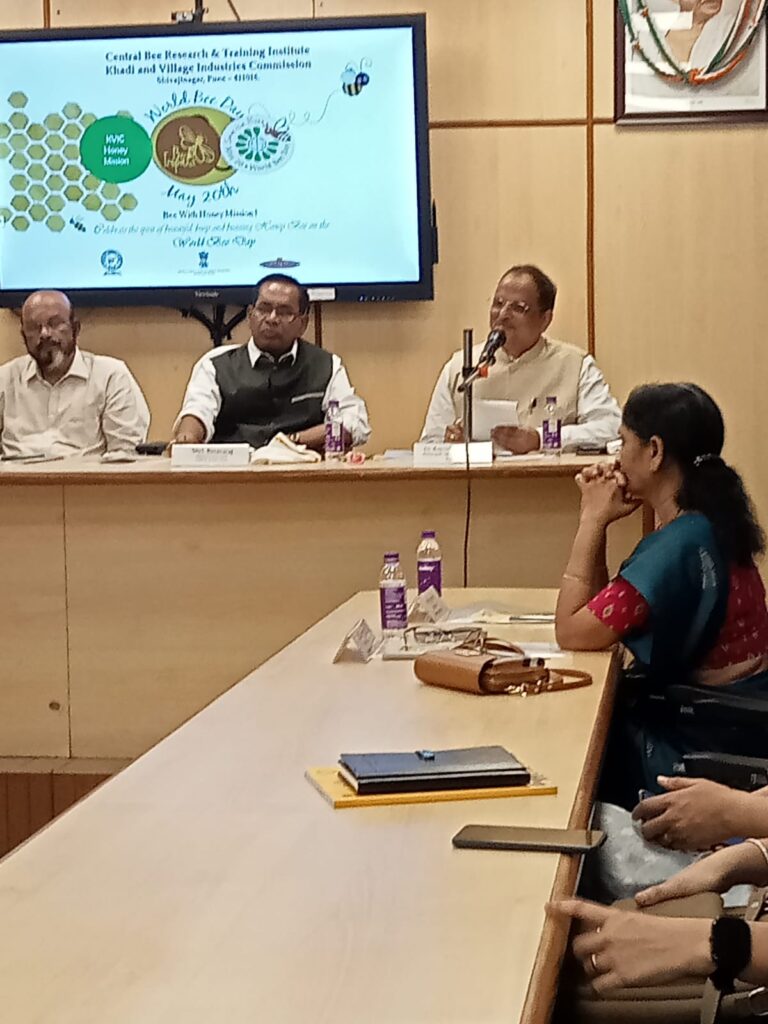
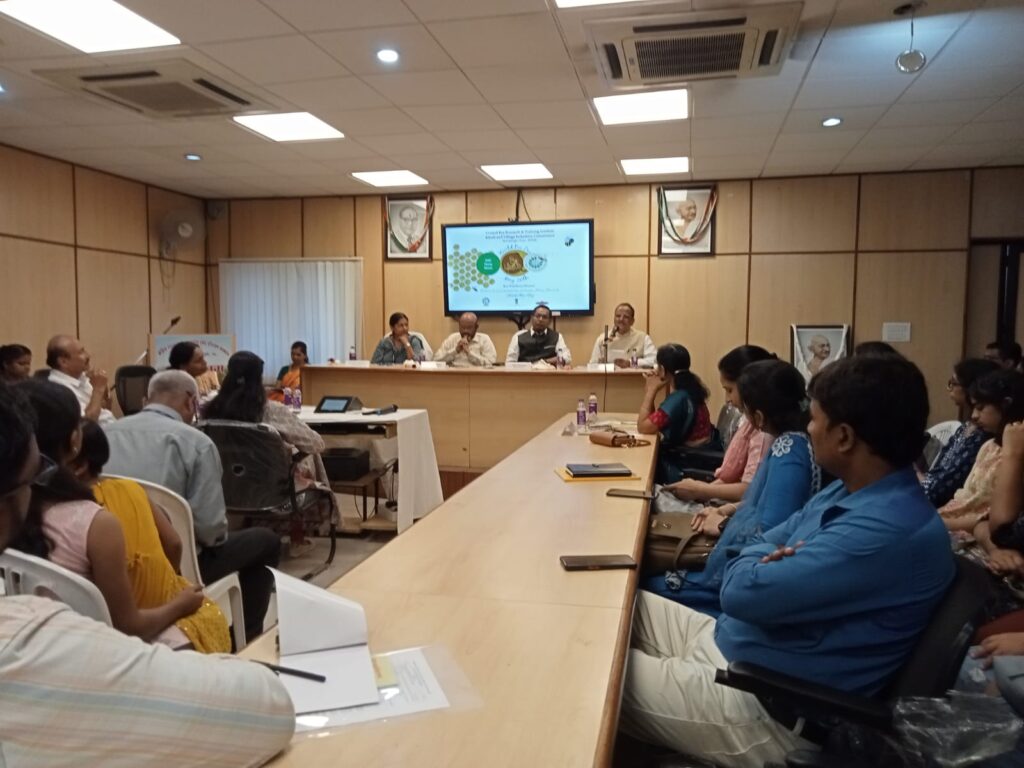
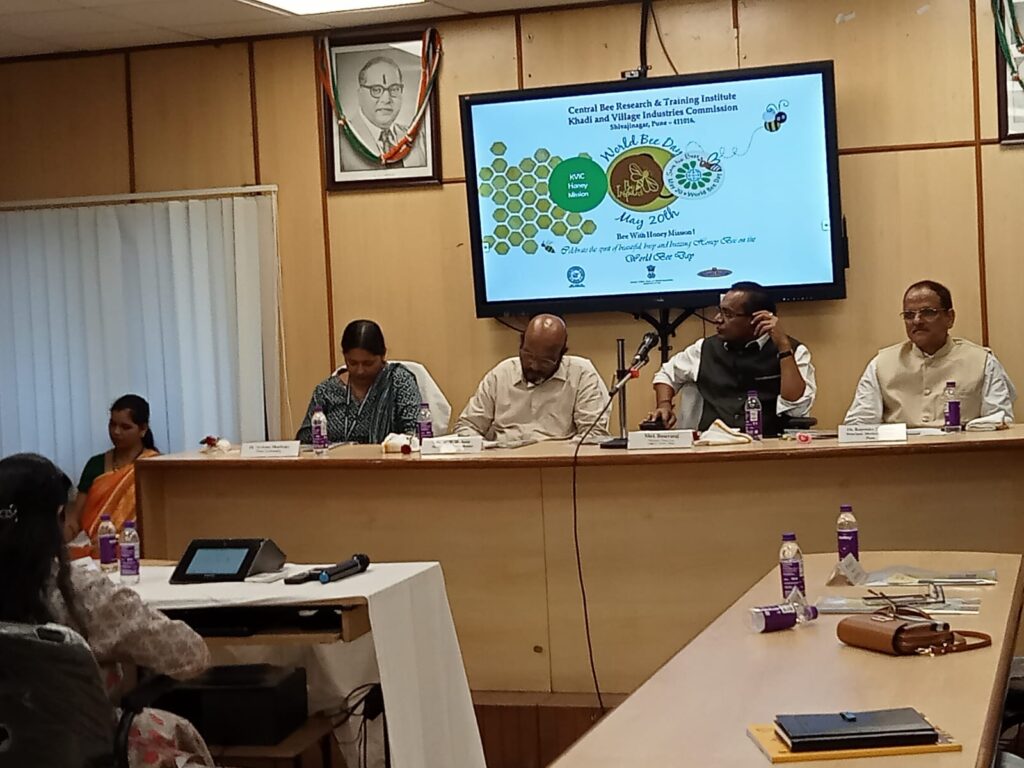
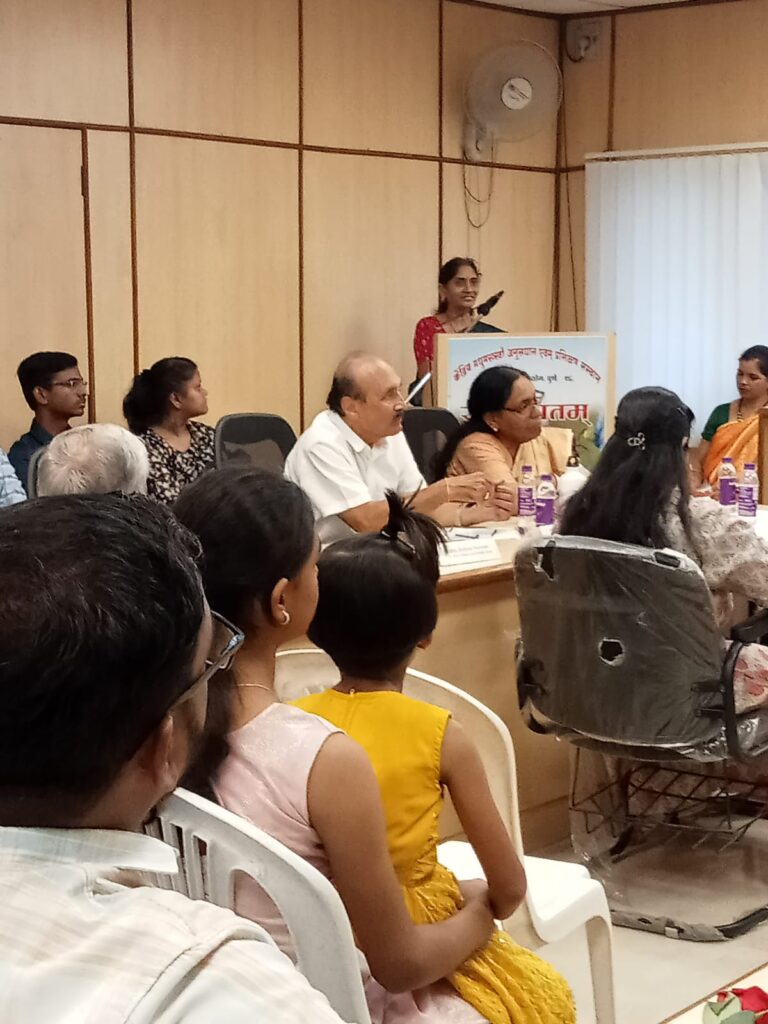
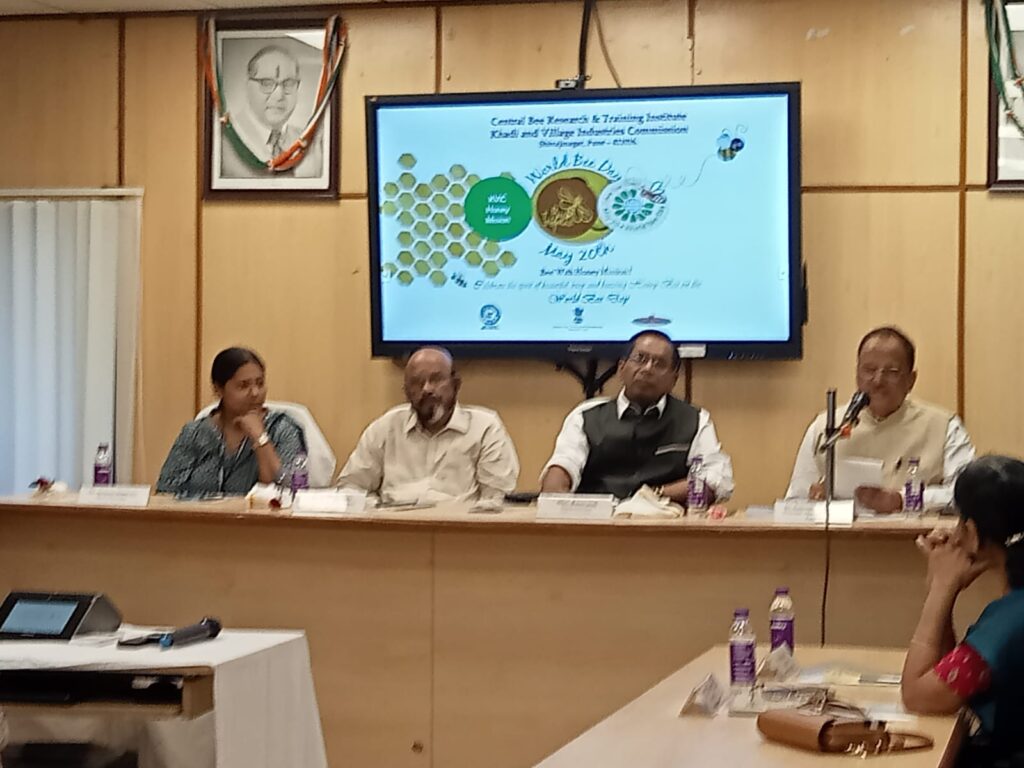
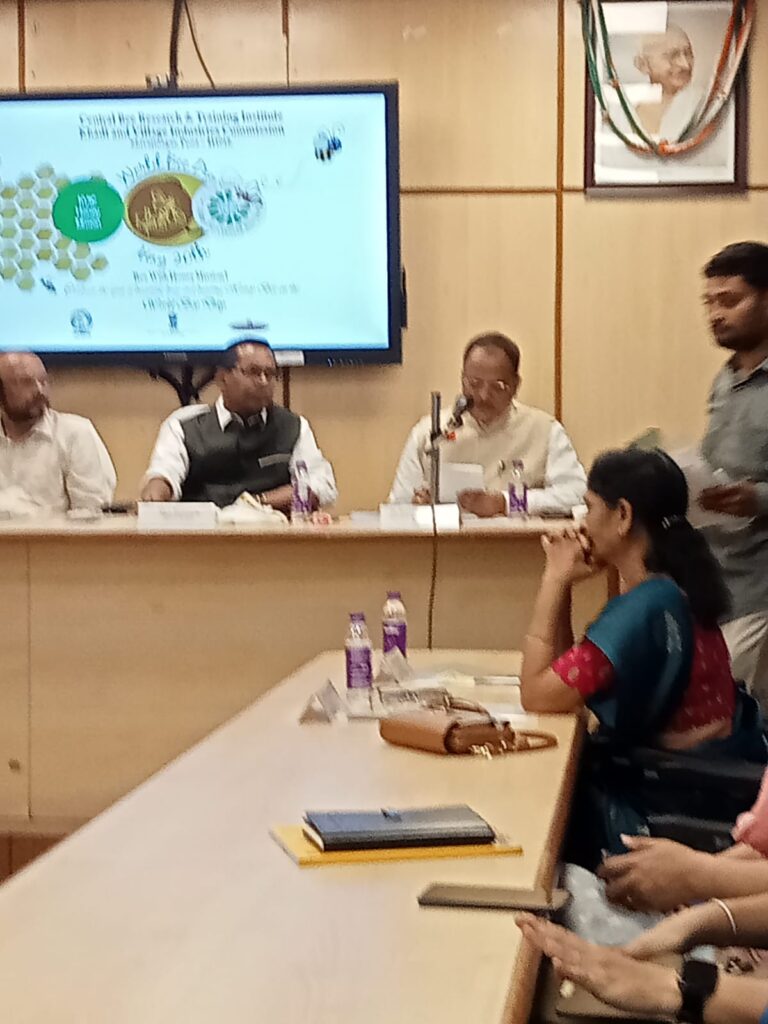
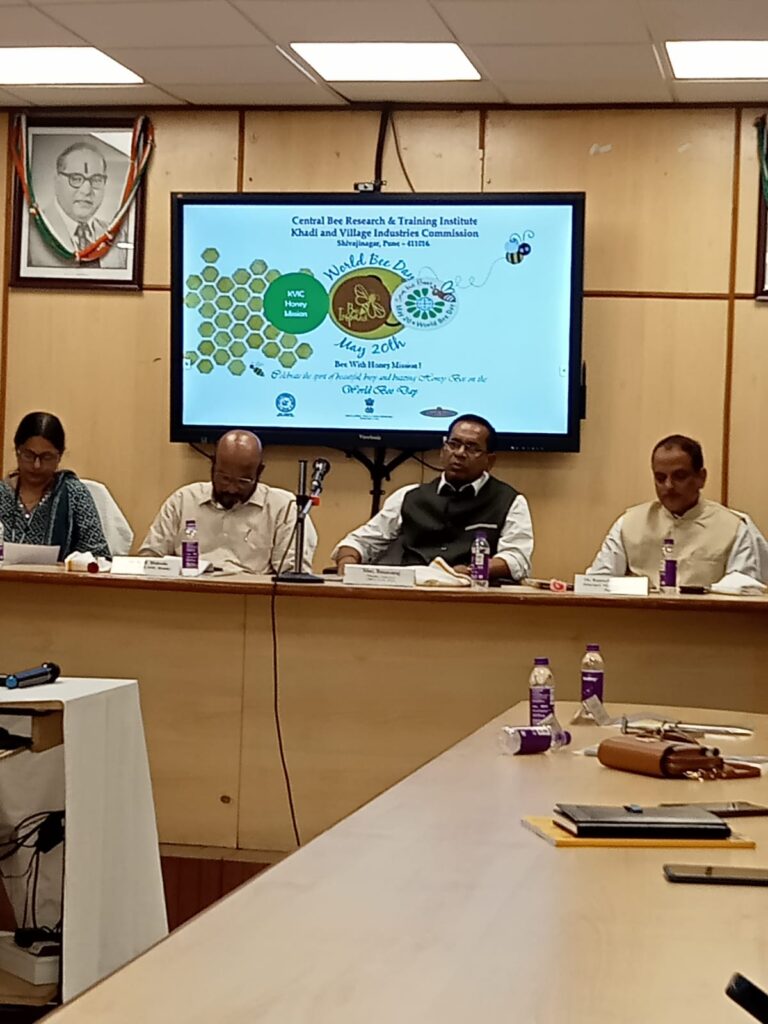
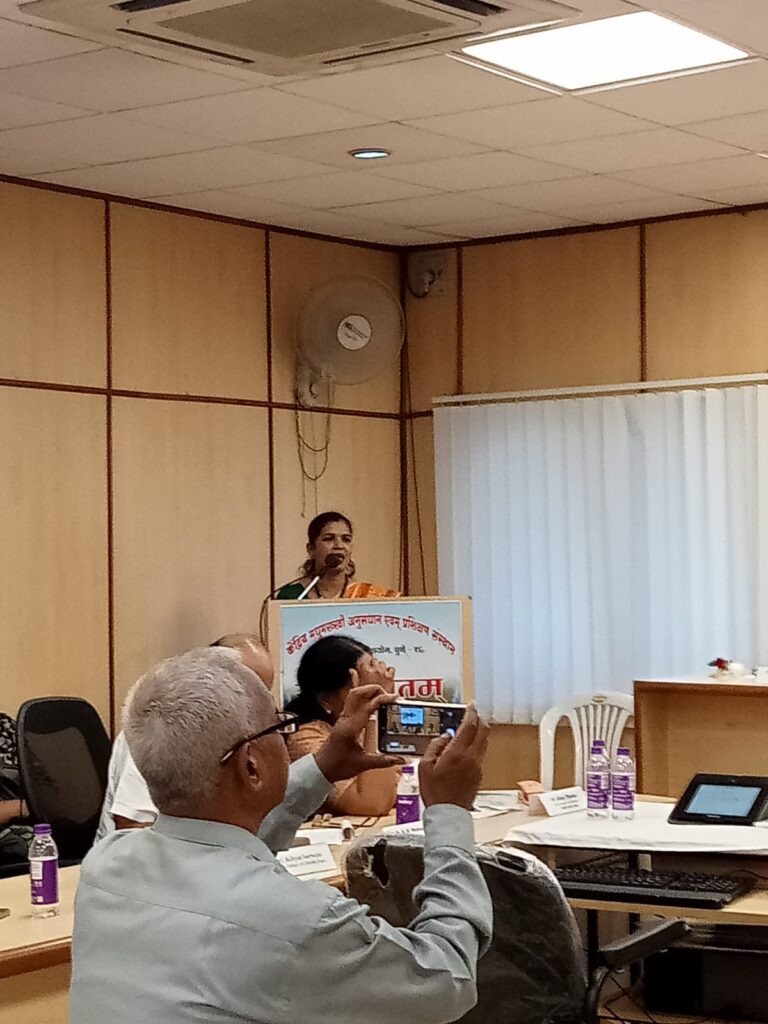
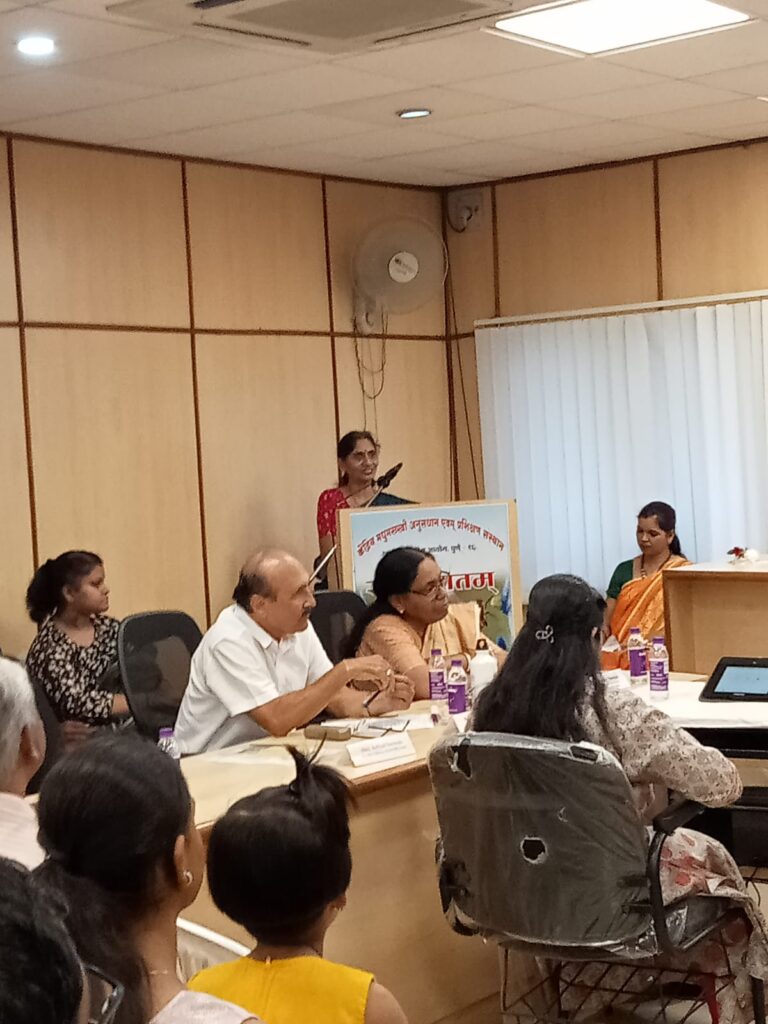
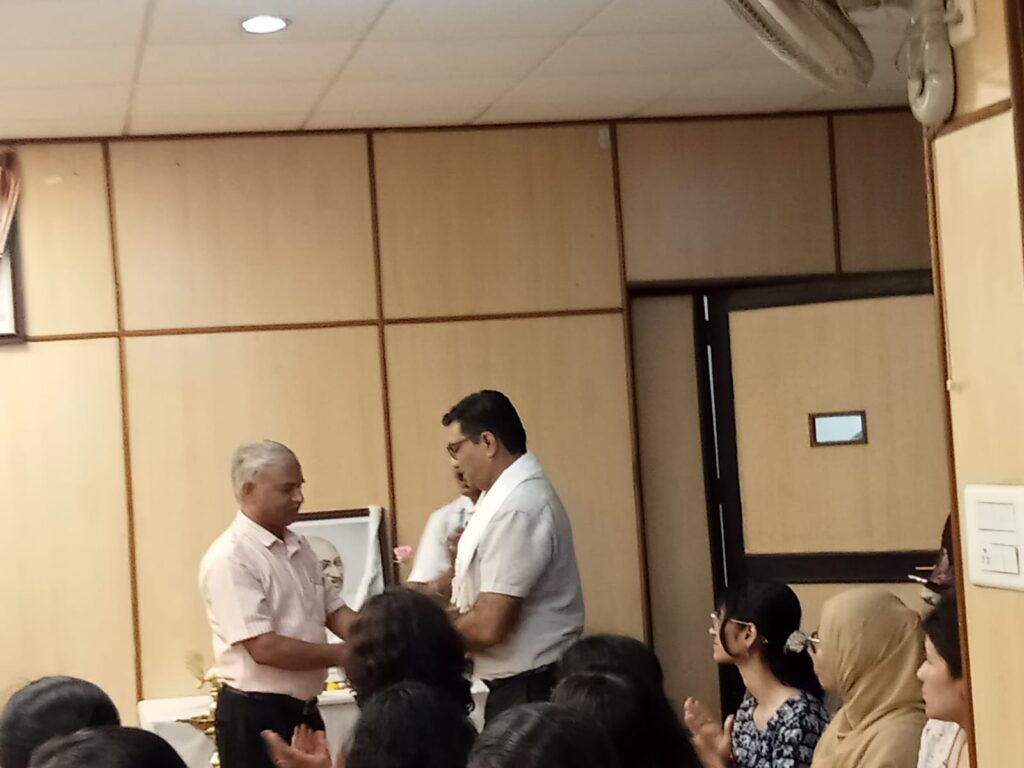
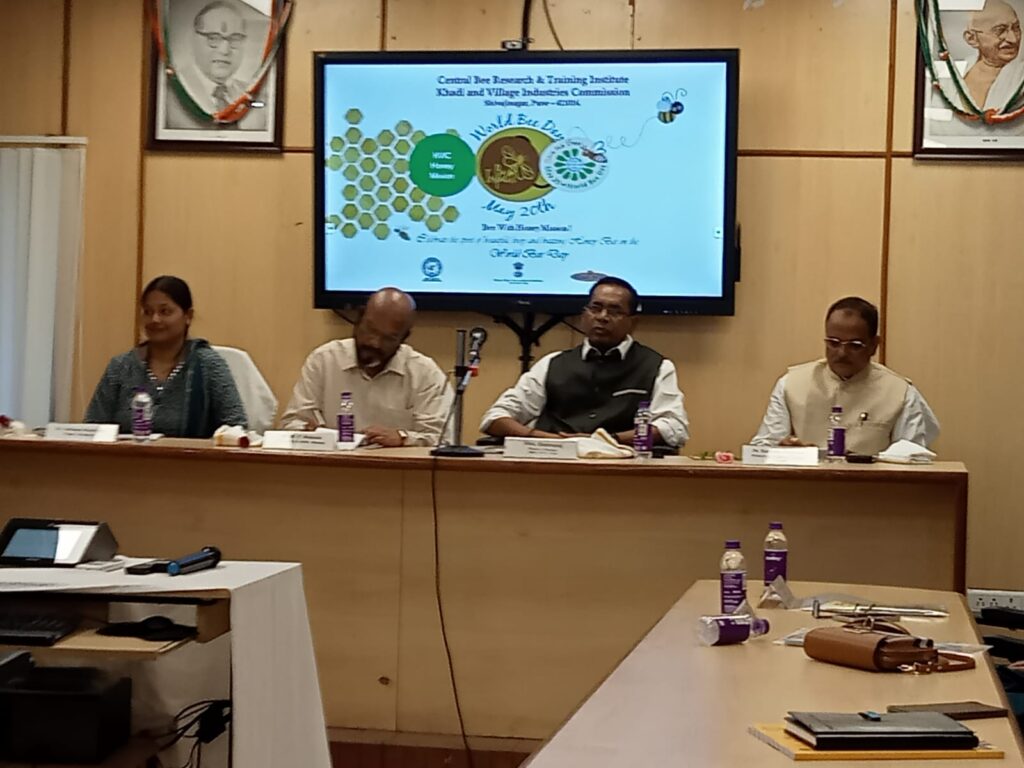
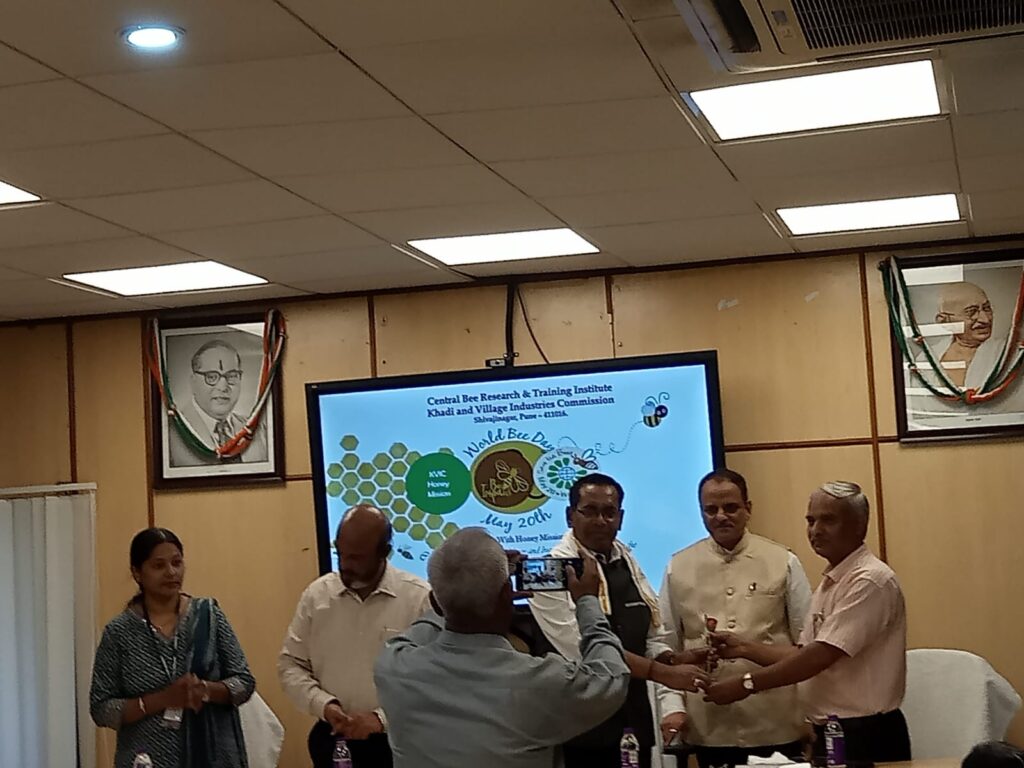
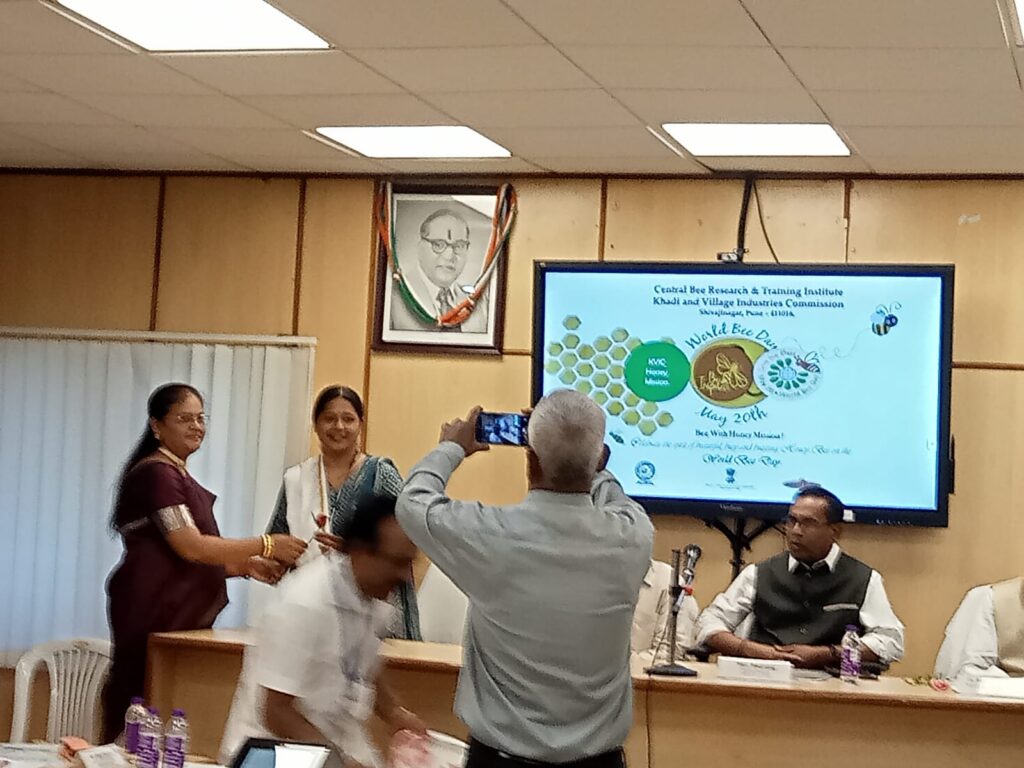
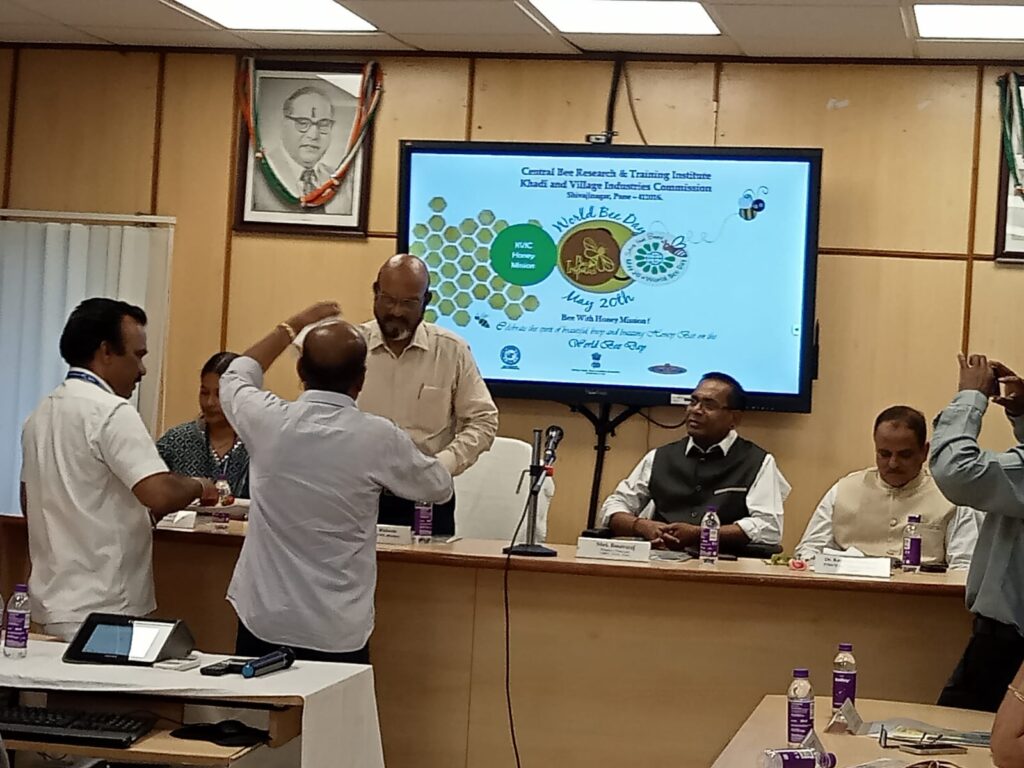
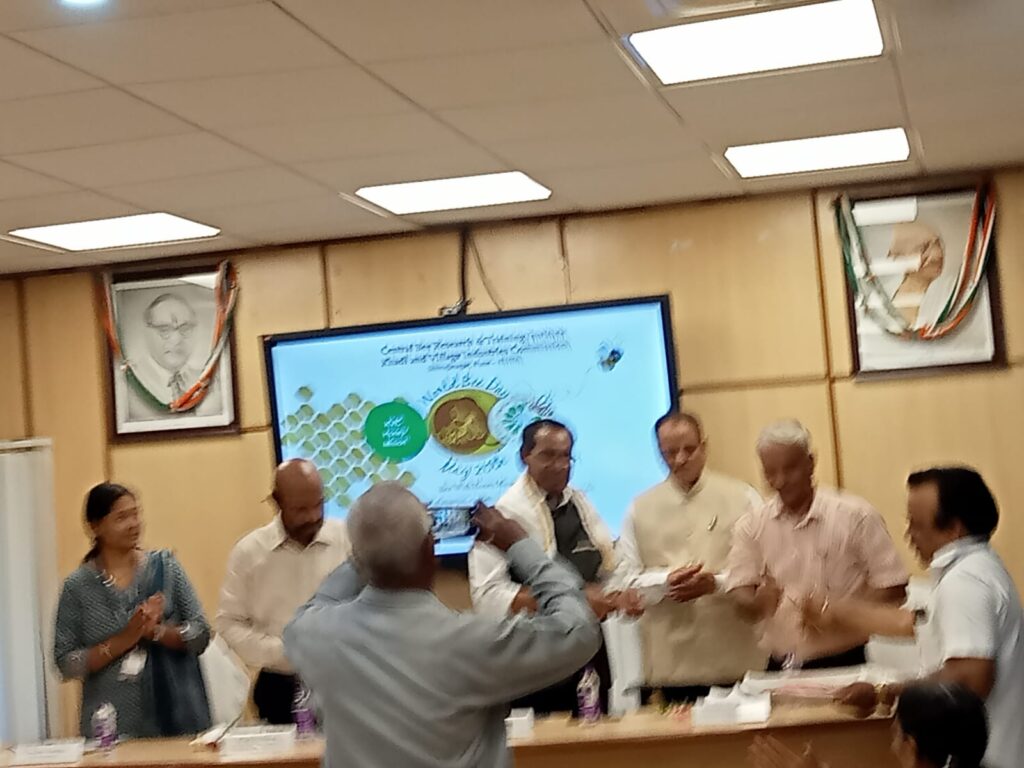
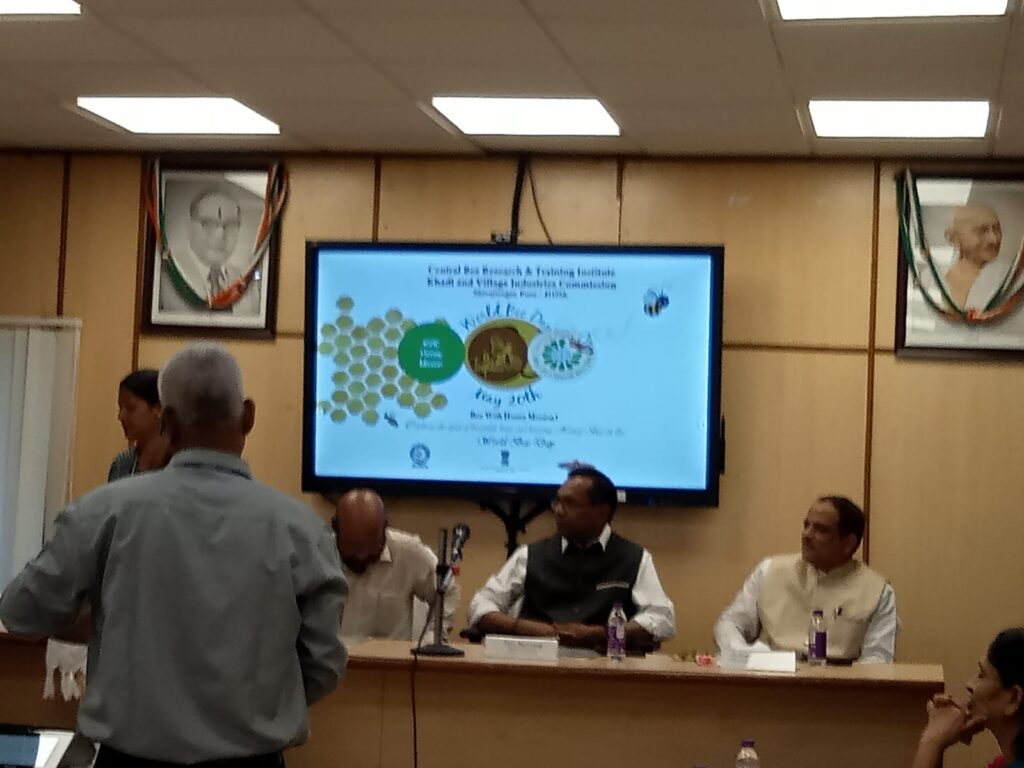
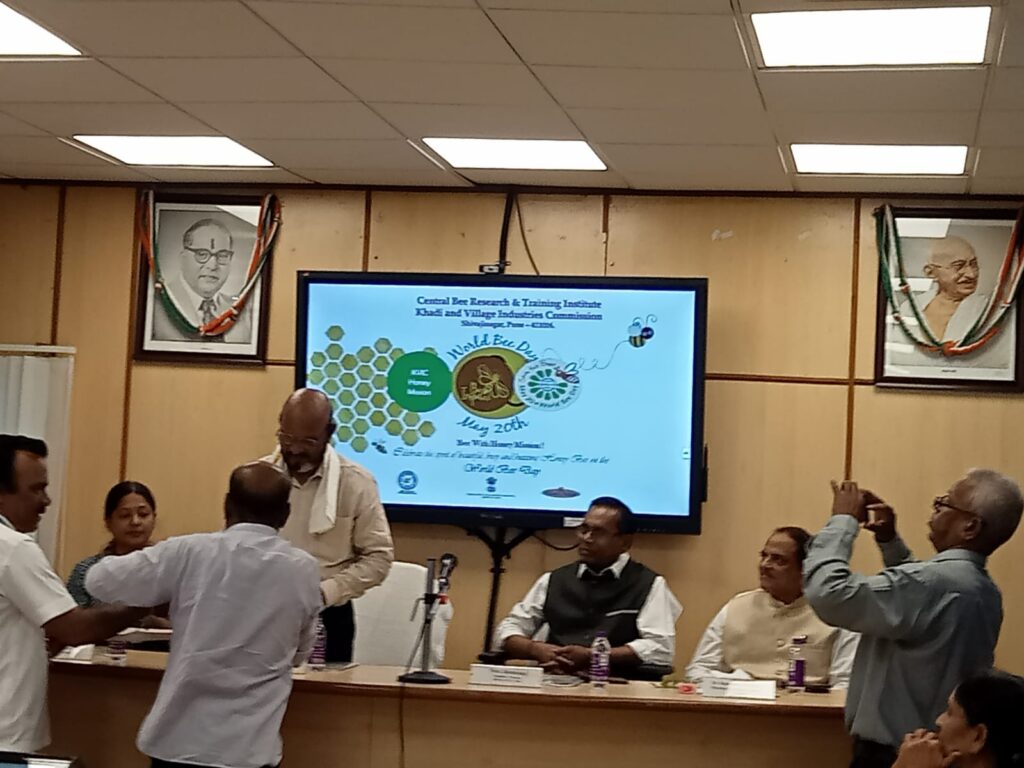
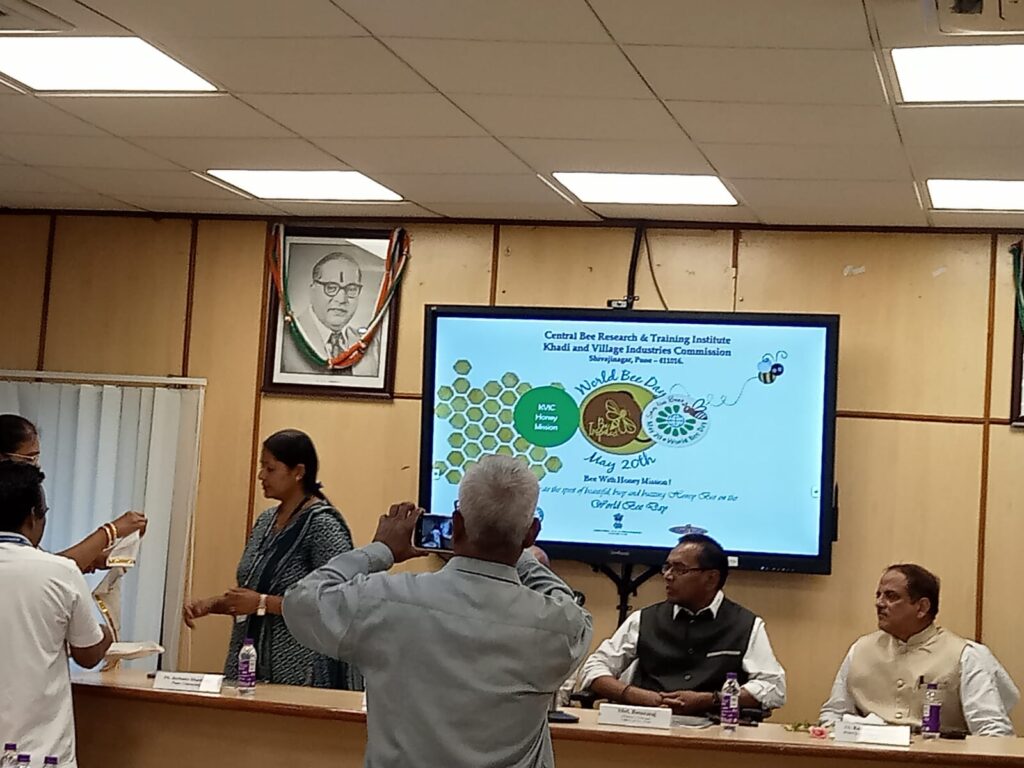
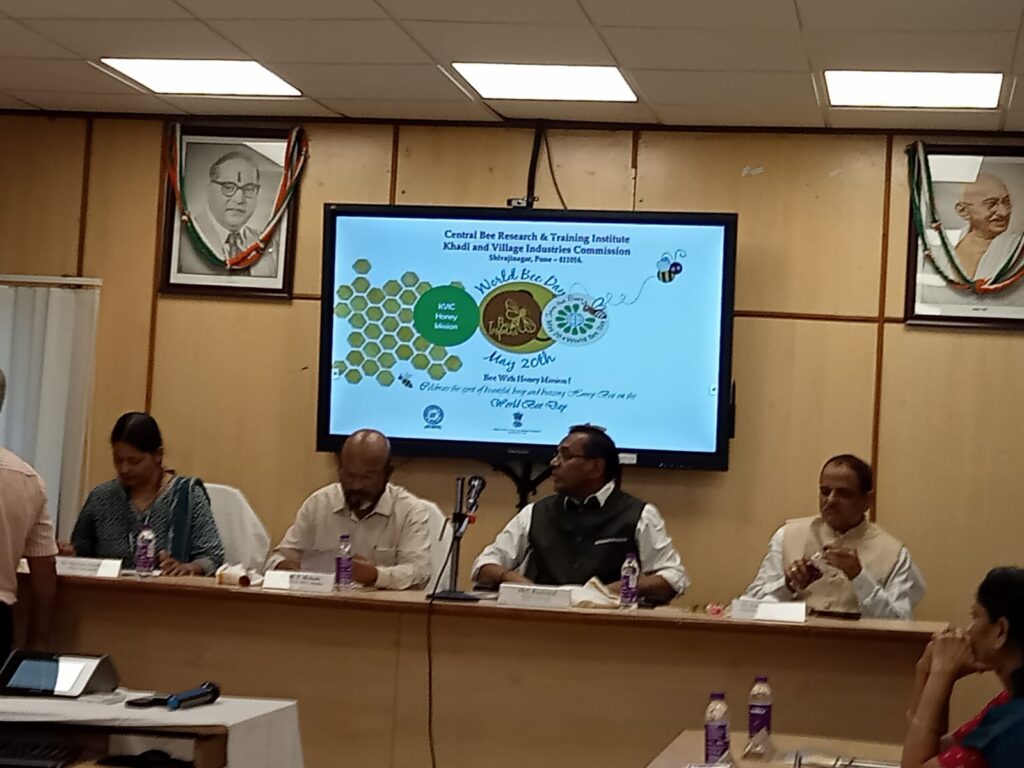
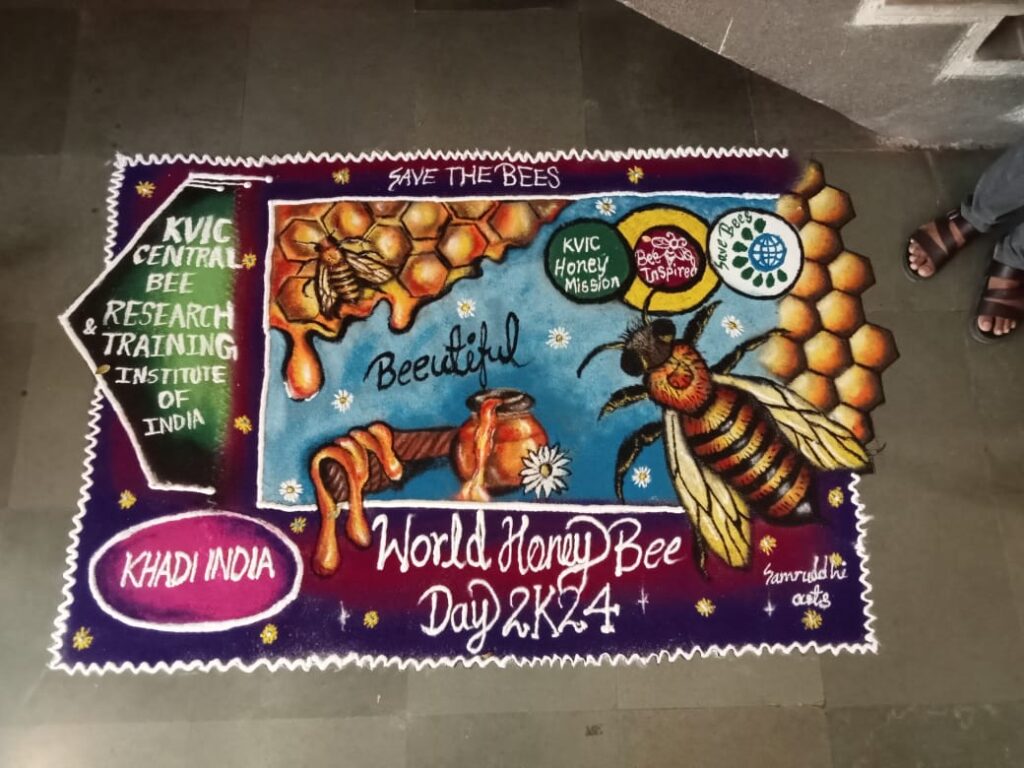
Dr. Sanjay Kharat, proves to be bee friendly and wants a bee healthy nation and environment. He explains his passion for education and how he wants his students to learn about the bee apiculture which can help setup at his institute of Agriculture and Biotechnology at Paud, further announcing a collaboration for promotion for fashion designing with khadi produce. He also expresses his proud moment about his student Samrudhi who had made a rangoli art on the World Honey Bee Day. He also explains how he wants to make this bee keeping a larger preposition in the education of agriculture and zoology.
This gives us urban and rural planners, a new landscaping idea with bee gardens and bee friendly planning. Now new startups will spring in the architectural and art world of making bee hives within our habitat regardless of profit, which can be planned at a later stage in collaboration with CBRTI and bee keepers.
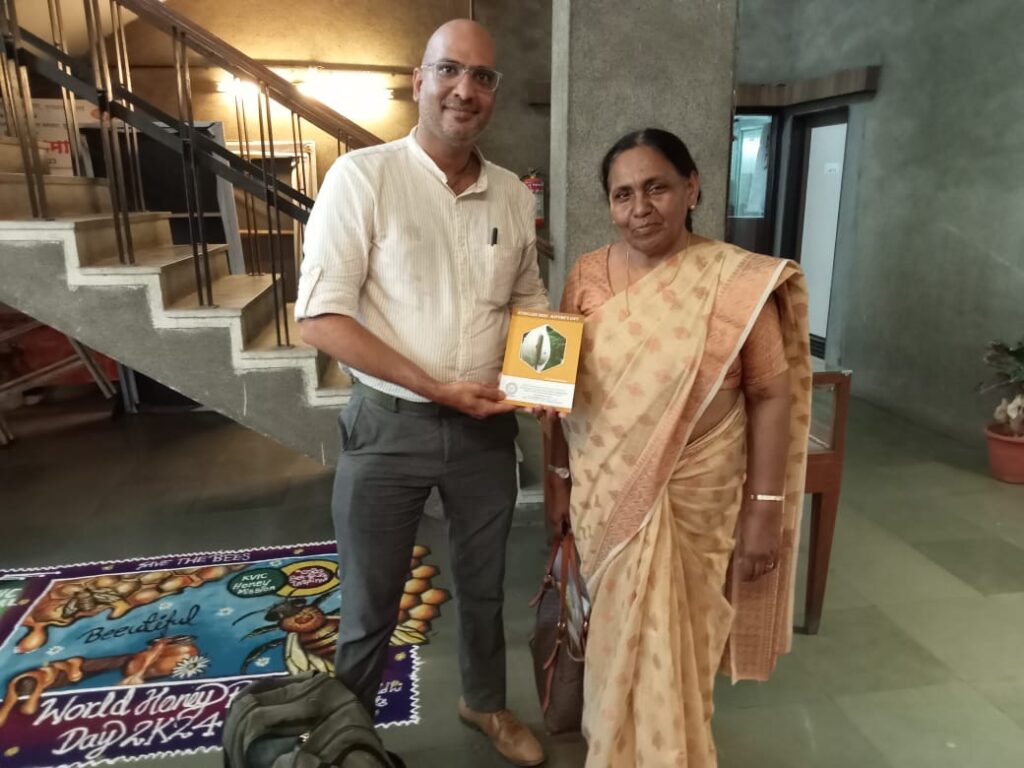
Dr. Daisy Thomas, deputy director, CBRTI has been researching on stingless bees and how they have differently been the good bees among all the species. She presents the different characteristics of these bees, the flora and fauna, how the bee boxes are different from the other bees (Apis Cerana), She mentions travelling to various locations in India and making these bees prominent with her research. The stingless bees are Tetraloguna, Eight named species of stingless bees are known from the Indian subcontinent: Lepidotrigona arcifera (Cockerell), Lisotrigona cacciae (Nurse), Lisotrigona mohandasi Jobiraj & Narendran, Tetragonula aff are found in the Indian Subcontinent. Meliponicultura, as the production of this honey is called, began over three thousand years ago.
The honey was used extensively by Mayan healers to treat eye, ear, respiratory, digestive, and postpartum conditions, and still is in many communities today. Its color varies depending on the native flowers visited by these bees, ranging from nearly transparent to dark amber, and it features more nutritional and curative properties than honey from the common honey bee.
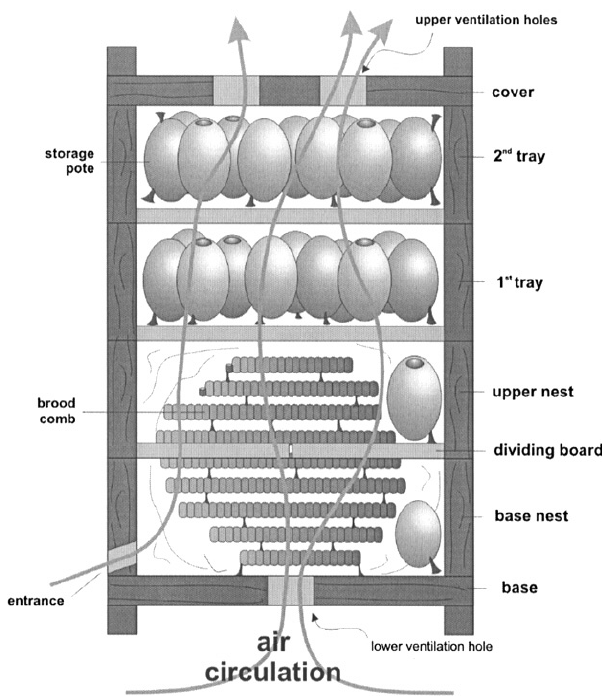
Interestingly stingless bees do their nesting in broken trees of coconut, pipes, majority of stingless bees favor nesting in pre-existing cavities within tree trunks or branches. Further launching her book on this day, about stingless bees available at the library of CBRTI.
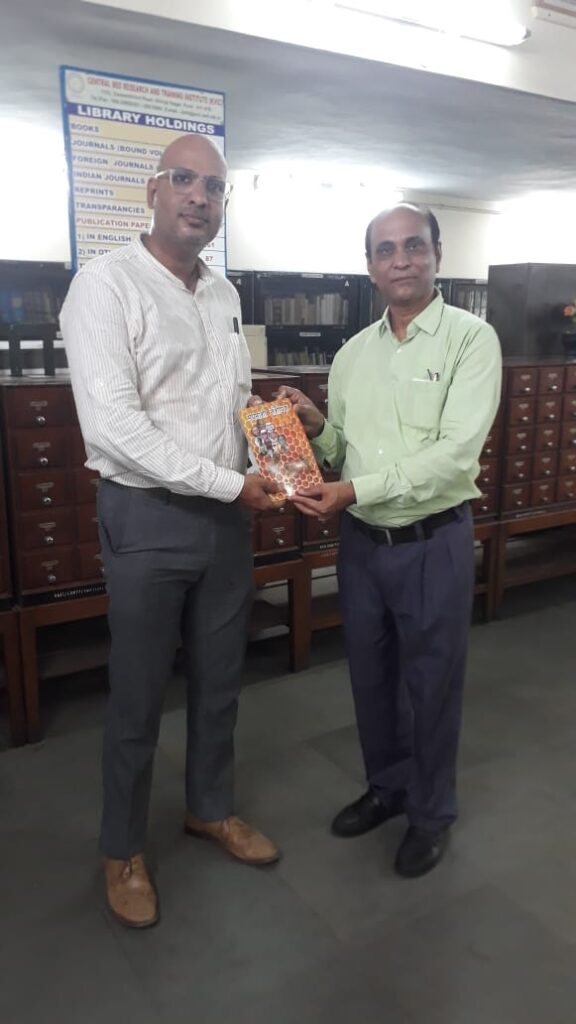
Dr. Sunil Pokare, former director of CBRTI, attends the afternoon session to help us understand more deeply about the celebration of world bee day. He shares about his attendance at the post office for launch of post cards by the Indian Postal Service marking this day of bees, apart form that he also shared his collection of stamps, letters of the bees from his collection. He also shared a few moments of his experiences at CBRTI and his early days as a bee scientist. He has published a book on bee keeping with autobiography of prominent bee keepers in Marathi and has a few Bee enthusiast who want to translate it in different languages.
After which many prominent personalities were invited to explain the stingless bees and their nature. Mr. Umesh Patil who has 250 colonies of bees has explained about the features of stingless bees and how they are arranged on a single wall with a pipe. The entrance pipe is used for bees and there are nine security bees who refrain entrance. He explains the process of the stingless bees honey collection.
To ease the process there are flow hives which has no need to dismantle the hives and remove the frames for extraction. No smokers, no centrifugal extractors, no back-breaking work of pulling honey supers. Instead, you just turn a lever which opens the channel within the honeycomb and the honey drains to a pipe at the back of the hive directly into your container of choice. Meanwhile, back in the hive, the bees are virtually undisturbed as the honey drains from under their feet. When you’re finished draining you just turn the lever back and the cells are reset and ready to be refilled. The bees then uncap the combs and start again without being disturbed.
Our very own Mr. Kamble a bee keeper explains his journey of transformation for a farmer to a bee keeper and how he has been praised and better his life. Kamble was assigned a bee box to be installed in a sugar factory at Atgaon near Latur, this factory is in a dilapidated condition and was an impossible task to reach or develop any bee colonies. But Kamble showed his grit and made it happen. Dr. Basavraj, further explains his recent visit to Kamble’s village or forest to inspect the bee colonies.
A master trainer Mr. Hemant Kumar Dumbre, who recently joined the institute in January 2024, explains his challenges of teaching good bee management practices to bee keepers and how that has helped them achieve increased honey produce. He began b y writing to different institute in England to send books on bee keeping.
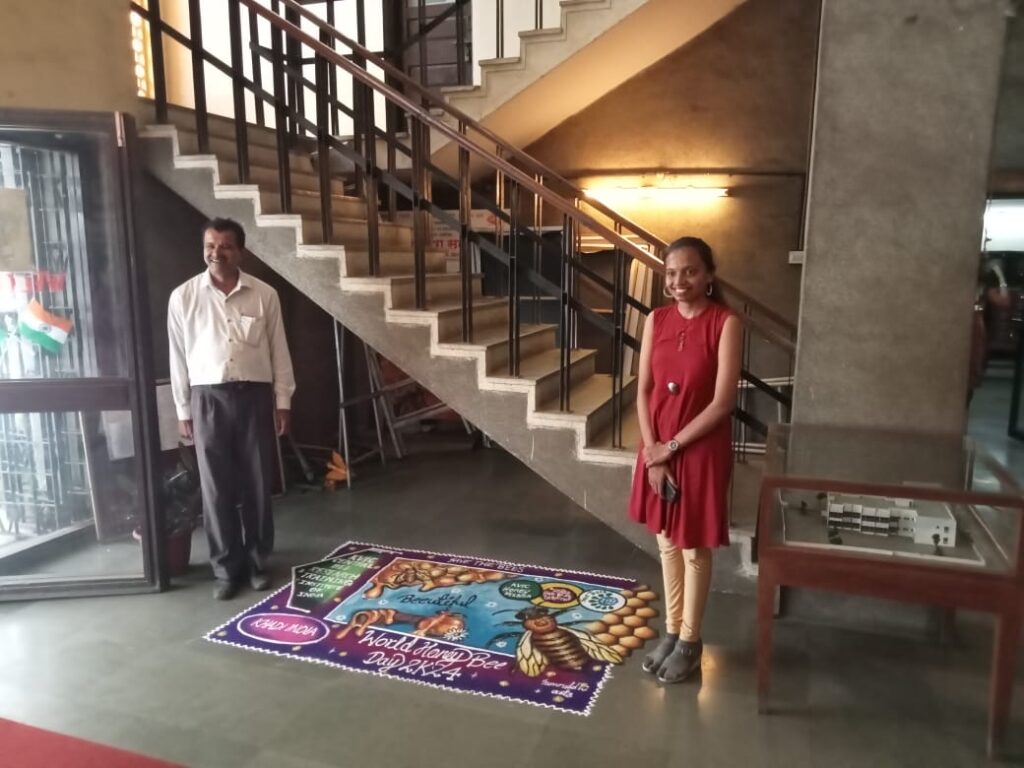
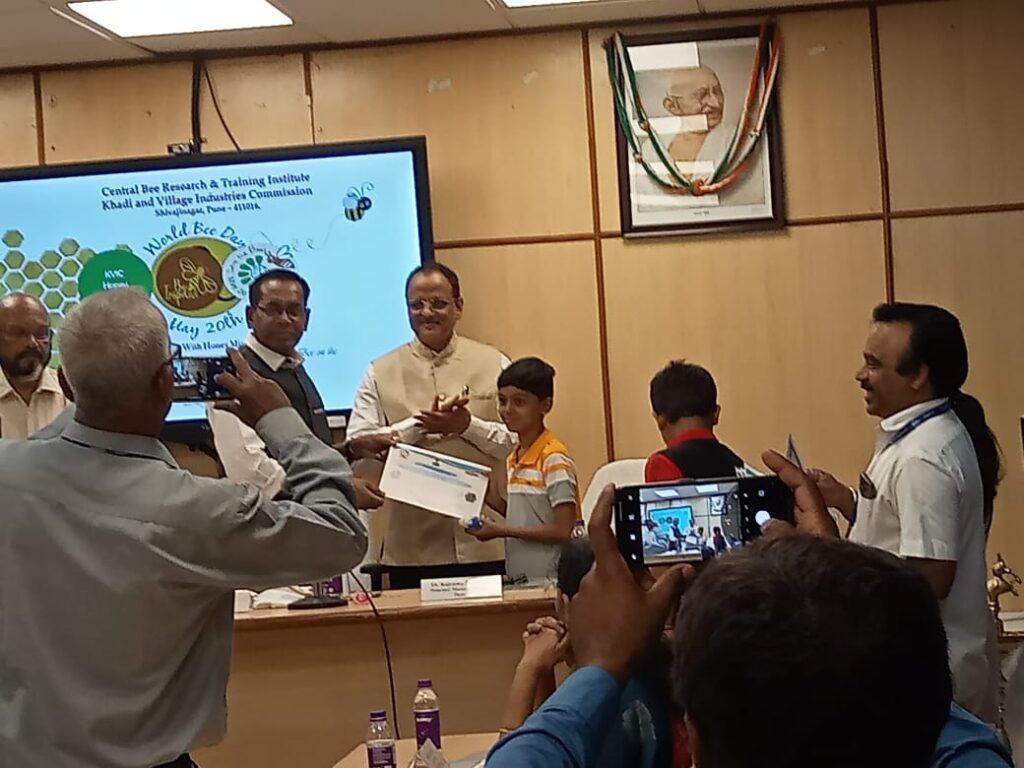
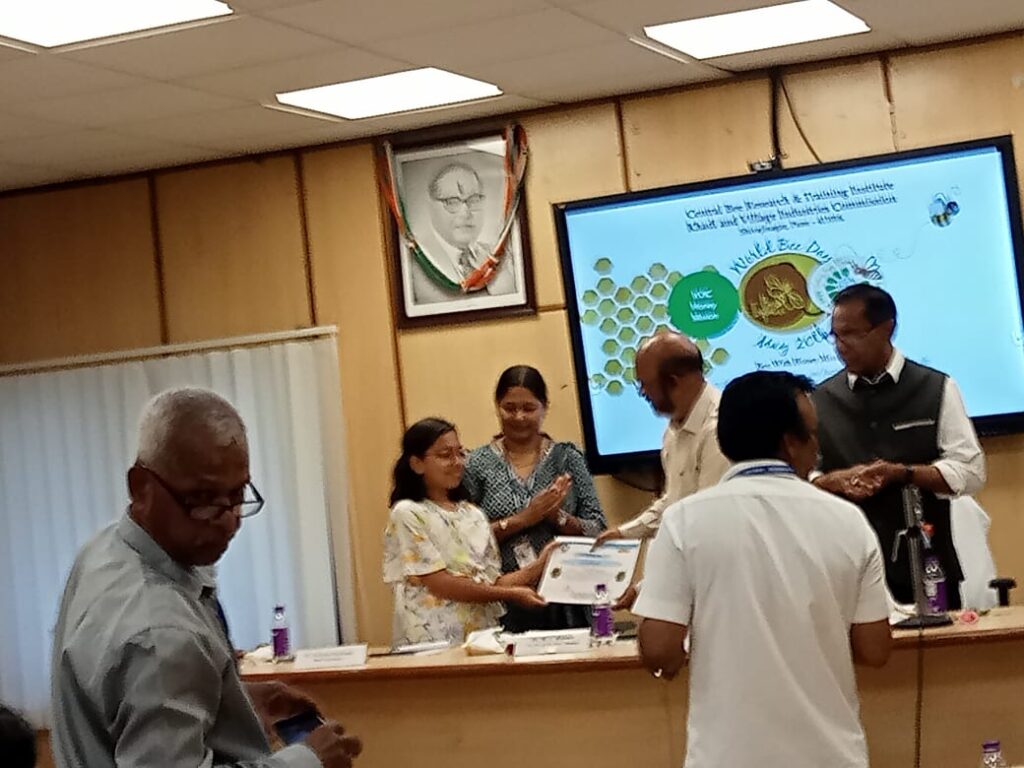
For a lighter moment Samrudhi recites a poetry on bees which explains why bees are important, their roles and all of us should own a bee box. A few kids were felicitated and all interns were given a honey bottle.
A national anthem to end this lovely session, this day will be a memorable one for all of us. Hoping to see many such occasions.